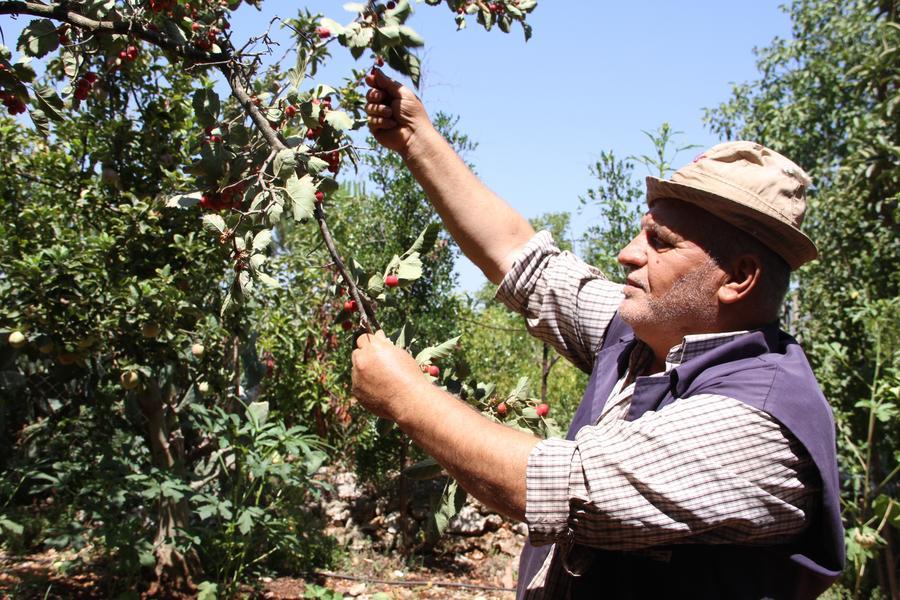
BEIRUT, Aug. 7 (Xinhua) -- From a hilltop overlooking Mount Sadana, 50-year-old farmer Mohammad Shibli stared at his distant vines. Just two kilometers from his orchard near the town of Shebaa, he hadn't been able to harvest for a second year, and was forced to watch the grapes, peaches, and cherries ripen and fall to the ground.
"I could see my livelihood in front of me, but I couldn't reach it," Shibli told Xinhua. "For the second year in a row, the harvest has been lost without us being able to pick a single fruit."
Like thousands of farmers across southeastern Lebanon, one of the country's most important summer fruit-growing regions, Shibli has been unable to reach his land because of the military tensions along the border.
A joint assessment by Lebanese authorities and the United Nations put the agricultural production losses at around 530.5 million U.S. dollars between March 2, when Israel-Lebanon cross-border fighting reignited, and April 16, when a ceasefire entered into force. Israeli airstrikes have continued intermittently since then.
It also estimated that more than 56,320 hectares have seen declining production of grapes, apples, cherries, persimmons, peaches and pears, caused by restricted access to farmland, disruption of agricultural activities, and the loss of productive seasons.
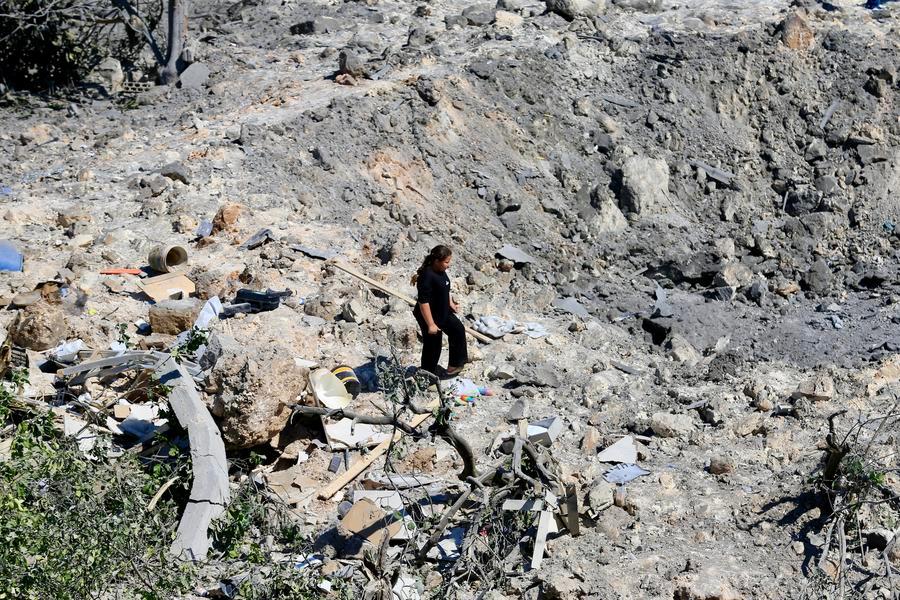
"In normal years, production reached around 27,000 tons annually," farmer Mohammad Yassin told Xinhua, saying the loss of the summer harvest has sharply reduced the income of thousands of households and agricultural workers.
The damage, however, extends far beyond one single missed harvest. As orchards remain untended for a second consecutive season, farmers fear that years of neglect could permanently weaken their treasured trees.
Mohammad Akl, another local farmer, told Xinhua the damage has gone beyond the fallen fruit.
"Orchards need plowing, pruning, irrigation, and regular pest control. Suspending these activities for two consecutive years weakens the trees and reduces their future production," he said.
Without this constant care, trees rapidly lose vitality and productivity, agricultural engineer Hassan Hamdan warned.
"Restoring orchards after years of neglect will be more difficult and costly," he said. "Some trees may not be able to recover their previous level of production."
Qassem Najm, mayor of Hebbariyeh in southern Lebanon's Arqoub region, told Xinhua that summer fruit orchards cover a quite large area in the country's southeast, sustaining many local families. But the season has hollowed out the harvest.
"Landowners have not only lost their harvests but also their ability to maintain and protect their orchards," Najm said, urging authorities to secure safe access so farmers can salvage what remains of the season.
Back on the hill overlooking Mount Sadana, Shibli kept watch. In the distance, leaves on his trees began to wilt, their branches baring.
"We asked for nothing more than the right to reach our land and work in it," he said. "A farmer cannot live separated from the land he has cultivated through years of hard work."■