
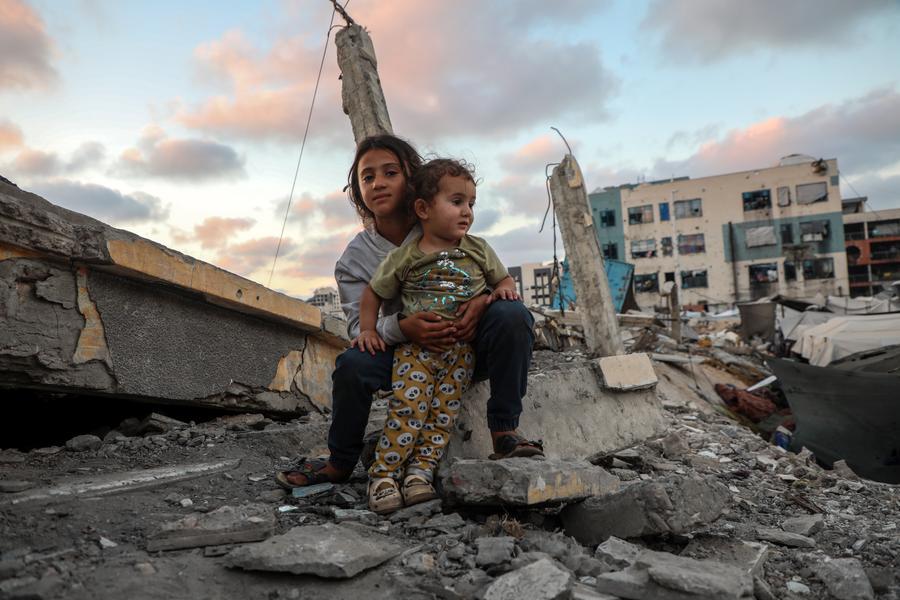
GAZA, Aug. 5 (Xinhua) -- U.S. President Donald Trump's recent announcement of an agreement to completely disarm Hamas and other armed groups in Gaza has drawn sharply conflicting responses from Israel and Hamas, exposing persistent unresolved differences over core issues between the two archenemies.
While Washington has portrayed the deal as a historic breakthrough, analysts have viewed it as a calculated U.S. political maneuver to shape negotiations rather than a finalized deal, with its viability hinging on whether mediators can bridge the fundamental gaps between the two sides.
STATEMENTS AT ODDS
Trump announced Thursday on his Truth Social platform that the so-called "Board of Peace" had secured a deal for the "complete disarmament" of Hamas and other armed factions in Gaza.
He described the deal as paving the way for a new Palestinian administration that will work with the U.S.-led "Board of Peace" to govern Gaza, saying it will enhance Israel's security and prevent the enclave from being used for future attacks.
According to Trump, Israeli forces will withdraw after the completion of the disarmament process and an international stabilization force, together with a new Palestinian police force, assuming security responsibilities.
A day after Trump's announcement of the deal, Hamas said it had agreed to the "latest version of the roadmap" for the second phase of the Gaza ceasefire agreement after "fierce" negotiations, but conditioned weaponry arrangements on a complete halt to "aggression," Israeli withdrawal from the enclave, and progress on reconstruction.
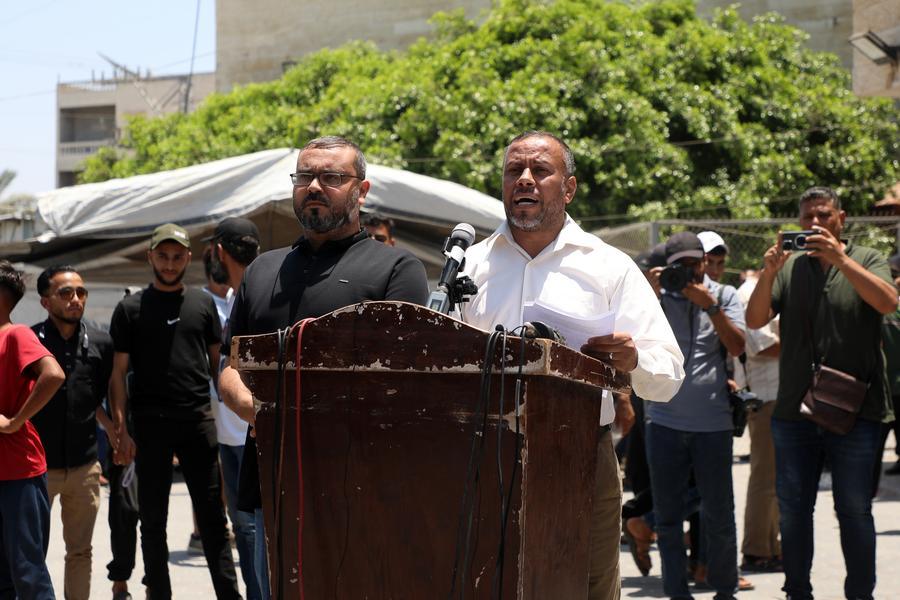
On Tuesday, Israeli Prime Minister Benjamin Netanyahu said Israel will not withdraw its forces from their current positions in Gaza until Hamas is fully disarmed.
Regarding the Trump-announced deal, Netanyahu said that the White House "sent us a draft," but "we did not agree to it."
"It is not our draft. We sent our comments," he said.
UNBREAKABLE DEADLOCK
Despite Washington's description of the deal as "historic," analysts have pointed to an irreconcilable structural problem.
Bao Chengzhang, an associate professor at the Middle East Studies Institute of Shanghai International Studies University, noted that Hamas conditions disarmament on an end to Israel's "occupation," while Israel insists on disarmament before any withdrawal. The two sides' fundamentally opposing positions have created an unbreakable impasse.
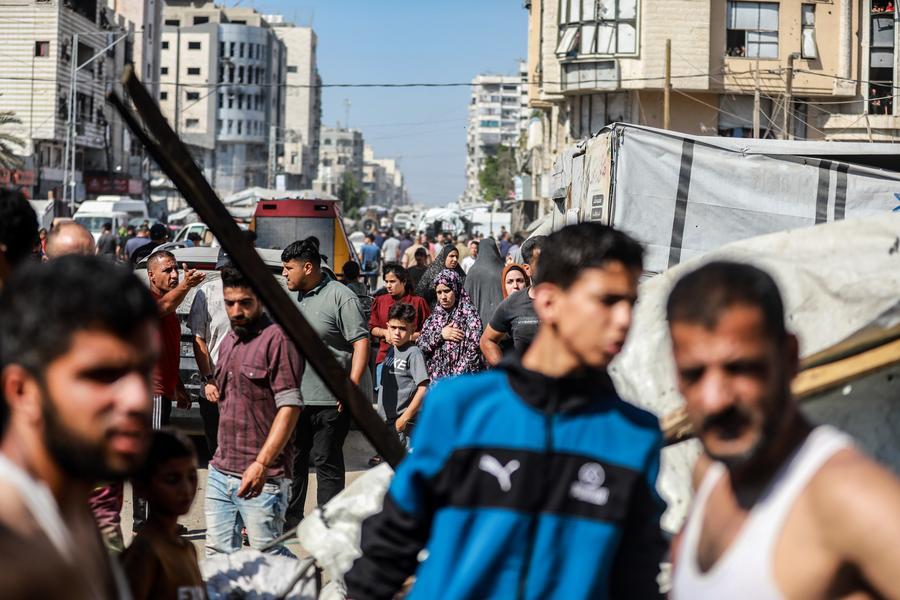
Gaza-based analyst Wissam Afifa said that while the Trump-announced deal links disarmament to a phased Israeli withdrawal, it lacks binding timetables, credible guarantees, and independent verification mechanisms. Without these, Afifa cautioned, each side retains the ability to accuse the other of violating the agreement, leaving it closer to a negotiating framework than an executable settlement.
Ramallah-based Israeli affairs expert Nizar Nazzal said Israel may seek only a limited withdrawal in exchange for long-term security arrangements, leaving a significant gap between Palestinian demands for a complete pullback and Israel's preference for conditional terms.
WASHINGTON'S BROADER CALCULATIONS
Analysts have viewed the timing and nature of Trump's announcement as reflecting Washington's broader strategic considerations beyond Gaza itself.
Palestinian political analyst Akram Atallah noted that Washington often announces political outcomes before implementation details are settled, with an aim to exert pressure on negotiating parties.
"Publicizing progress can itself become a negotiating tool," as it makes rejection politically costly, Atallah said.
"It raises expectations, shapes the political narrative and encourages all sides to adapt to the announced framework rather than return to square one in the negotiations," Atallah said.
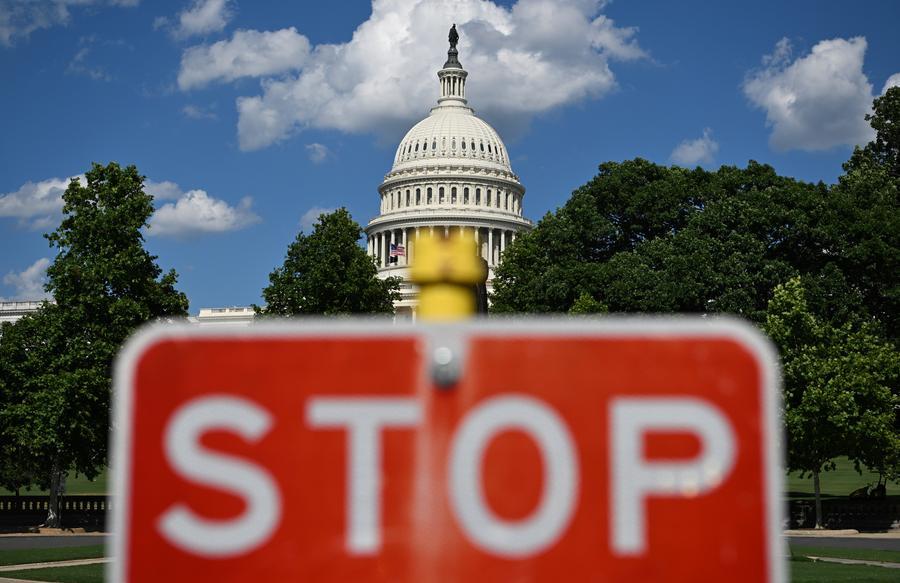
Meanwhile, as Trump's announcement came amid wider regional tensions, including Iran-related developments and security concerns in the Strait of Hormuz, analysts believe the timing shows Washington's deliberate effort to project diplomatic momentum and divert attention from other challenges.
Gaza has become one component of broader regional negotiations, with developments in the enclave increasingly linked to wider strategic calculations involving Iran and regional security, said Nazzal.
Presenting progress on Gaza enables Washington to project diplomatic engagement at a time when it faces multiple regional and domestic pressures, Afifa noted.■