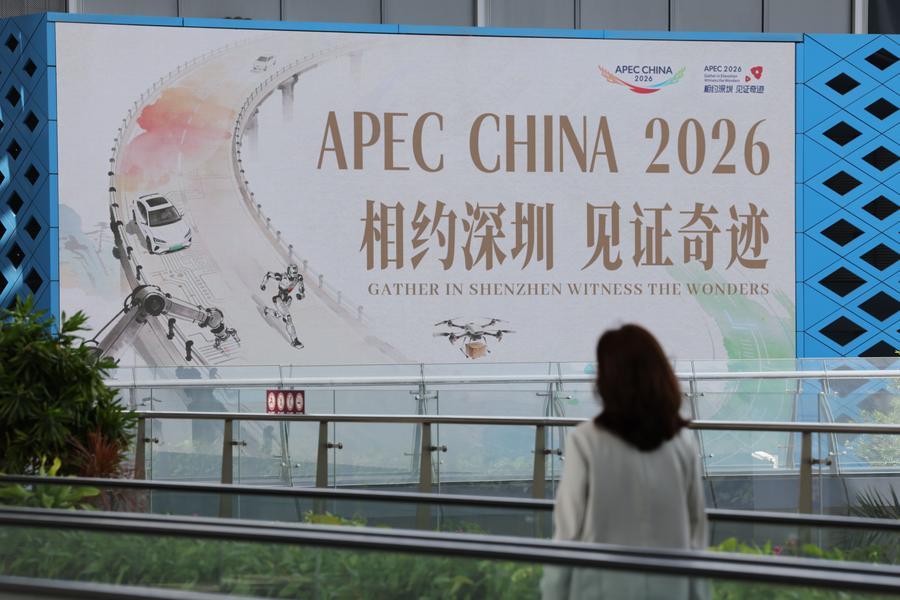
BEIJING, Aug. 6 (Xinhua) -- As southern China's metropolis of Shenzhen prepares to host the 33rd Asia-Pacific Economic Cooperation Economic Leaders' Meeting in November, China is once again extending its welcoming arms to leaders from around the world.
Over the years, China has hosted a series of major diplomatic gatherings that have brought together world leaders. More than simply platforms for dialogue, these occasions have showcased China's vision for global cooperation and offered a glimpse of President Xi Jinping's approach to diplomacy.
For Xi, hosting world leaders begins with hospitality.
In May 2023, on his 70th birthday, Kazakh President Kassym-Jomart Tokayev arrived in the ancient Silk Road city of Xi'an for a state visit to China and the inaugural China-Central Asia Summit. During their talks, Xi extended birthday wishes to his guest.
"On this special occasion, your visit speaks volumes about the strength of our bilateral ties and reaffirms your unique bond with China," Xi said with a smile.
"Thank you," Tokayev, who speaks fluent Mandarin, replied in Chinese.
An old Chinese saying goes: "Is it not a real delight to have friends coming to visit you from afar?"
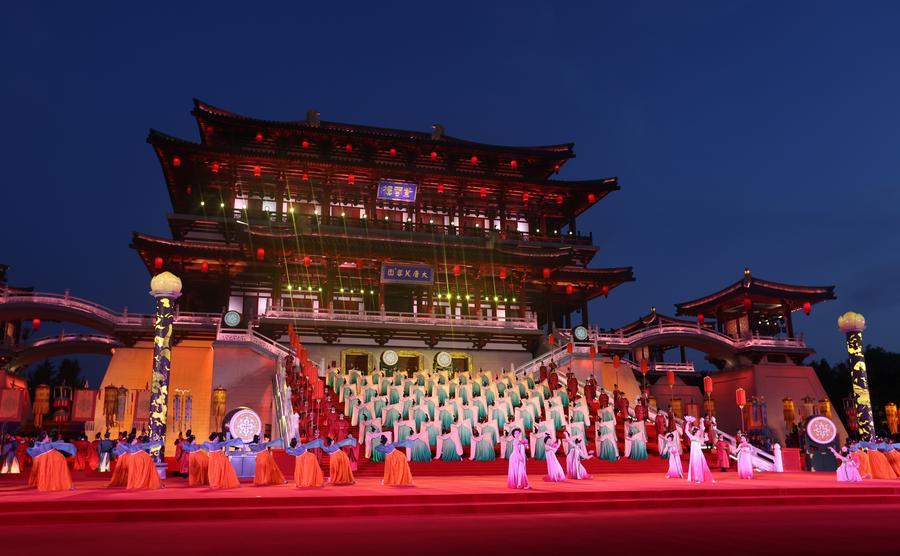
Whether welcoming old friends or first-time visitors, Xi's attentiveness has become a defining feature of China's diplomacy as a host, helping foster mutual trust and friendship.
Yet these gatherings are about more than hospitality.
In times of global uncertainty, they have also served as venues where China has called for dialogue, openness and cooperation while presenting its proposals to address shared challenges.
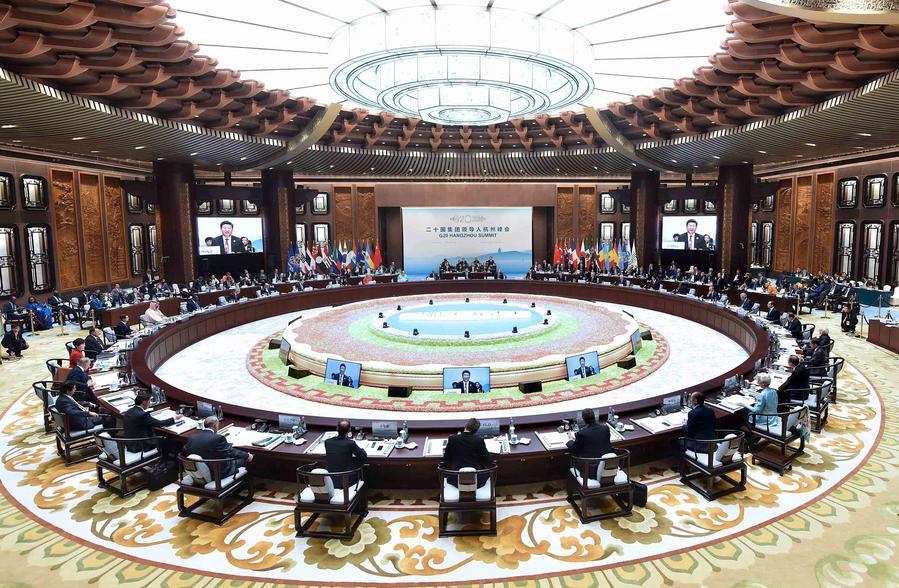
In 2016, China hosted the Group of 20 (G20) summit for the first time. Chaired by Xi, the summit marked a milestone in global economic governance.
At the summit, development was placed at the forefront of the global macro-policy agenda for the first time. The summit, which brought together a record number of developing countries, also witnessed the adoption of an action plan to advance the implementation of the UN 2030 Agenda for Sustainable Development, as well as the first-ever collective commitment to support industrialization in Africa and the least developed countries.
These initiatives, together with the summit's outcome documents, reflected China's commitment to common development and shared prosperity.
As today's world is struggling with mounting conflicts, as well as the rise of hegemonism, protectionism and other global challenges, Xi has chosen a series of major diplomatic events hosted by China to put forward his key proposals.
The Global Security Initiative was unveiled at the Boao Forum for Asia in 2022, followed by the Global Civilization Initiative at the Communist Party of China in Dialogue with World Political Parties High-level Meeting in 2023, the Global Governance Initiative at the Shanghai Cooperation Organization (SCO) Tianjin Summit last year, and a renewed call to implement the Global Development Initiative at the conference marking the 70th anniversary of the Five Principles of Peaceful Coexistence in 2024.
These proposals have been backed by concrete actions. Behind every summit lies an intensive diplomatic schedule personally led by Xi.
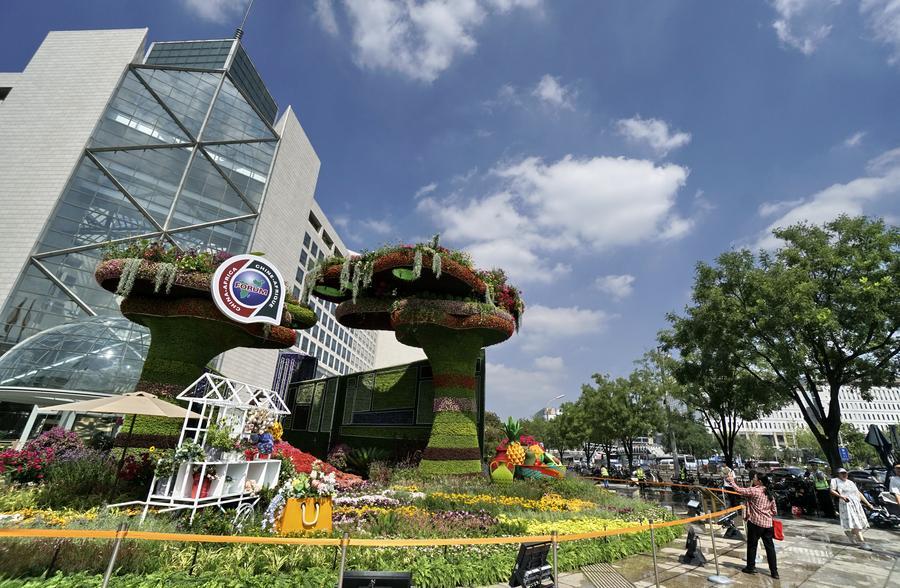
On Sept. 2, 2018, ahead of the opening of the Beijing Summit of the Forum on China-Africa Cooperation (FOCAC), Xi held 11 bilateral meetings with African leaders, with every engagement timed to the minute.
At the G20 Hangzhou Summit in 2016, Xi attended 13 meetings and various events within just over 80 hours, during which he delivered 11 speeches, and met with 27 foreign leaders. At the SCO Qingdao Summit in 2018, he participated in more than 20 official events in two days.
The tightly packed schedule underscores not only the intensity of China's diplomatic engagement, but also Xi's personal commitment to advancing international dialogue and cooperation.
China has sought not only to put forward ideas, but also to turn them into action.
Since the Belt and Road Initiative was launched in 2013, it has generated nearly 1 trillion U.S. dollars in global investment and created at least 500,000 jobs in partner countries. In Africa and many other parts of the world, the thriving Belt and Road cooperation has been widely considered a road to prosperity.
Following the successful implementation of the Ten Cooperation Plans, the Eight Major Initiatives and the Nine Programs, Xi announced a new positioning of China-Africa relations and 10 partnership actions at the 2024 FOCAC Beijing Summit, opening a new chapter in the joint pursuit of modernization.
Over the years, the major diplomatic events hosted by China have marked a journey, along which China and the rest of the world have moved forward together.
As China welcomes the world to Shenzhen, it also renews its commitment to working with countries around the world to build broader consensus on peace and development, strengthen openness and cooperation, and open a new chapter in building a community with a shared future for humanity.■