By sportswriters Zheng Zhi, Hu Jiefei
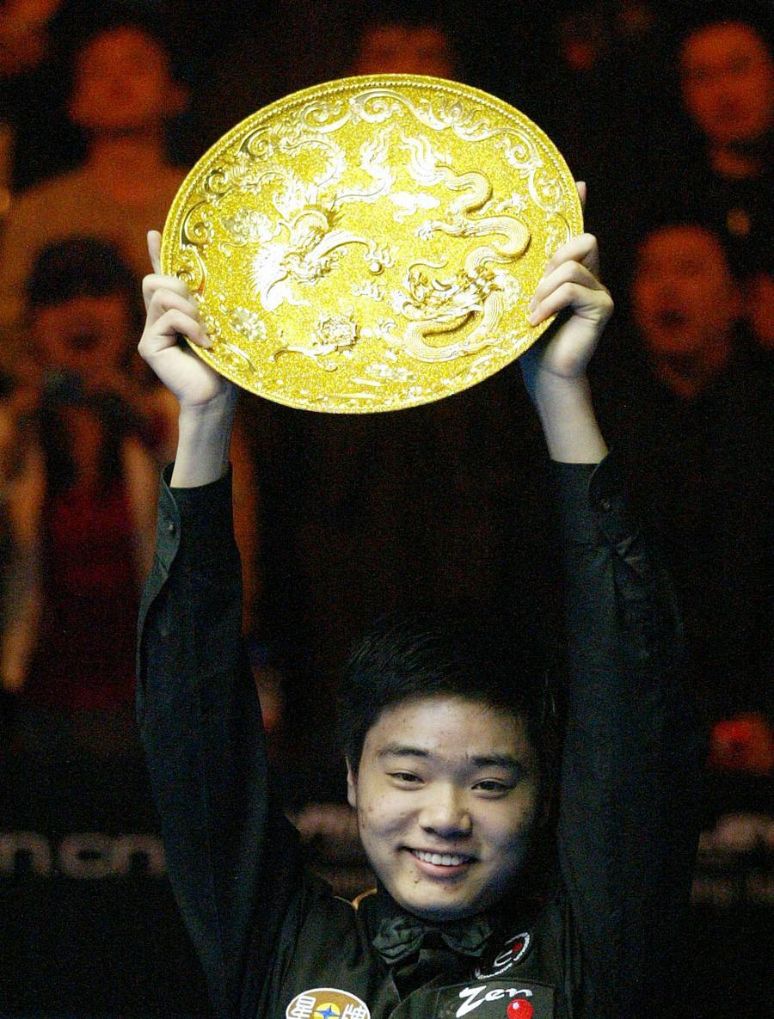
SHANGHAI, Aug. 5 (Xinhua) -- The World Snooker China Open returns to Taiyuan next week, 21 years after Ding Junhui claimed China's first ranking-event title and changed the trajectory of the sport in the country.
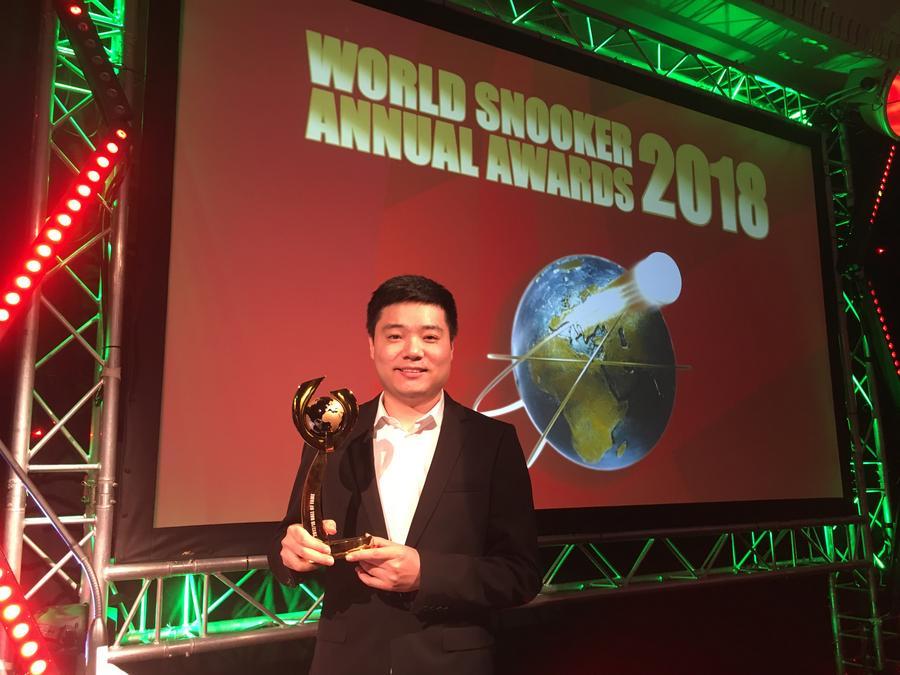
In an exclusive interview with Xinhua, the 39-year-old Ding said his ultimate ambition remained unchanged.
"Winning the World Championship is definitely the ultimate target. It is not only my dream, but also the dream of every snooker player," Ding said. "The goal is still there, and so is the dream."
Ding has won 15 ranking titles, including three UK Championships, but has never captured the world crown. He came closest in 2016, when he lost to Mark Selby in the final, and acknowledges that the challenge has only grown.
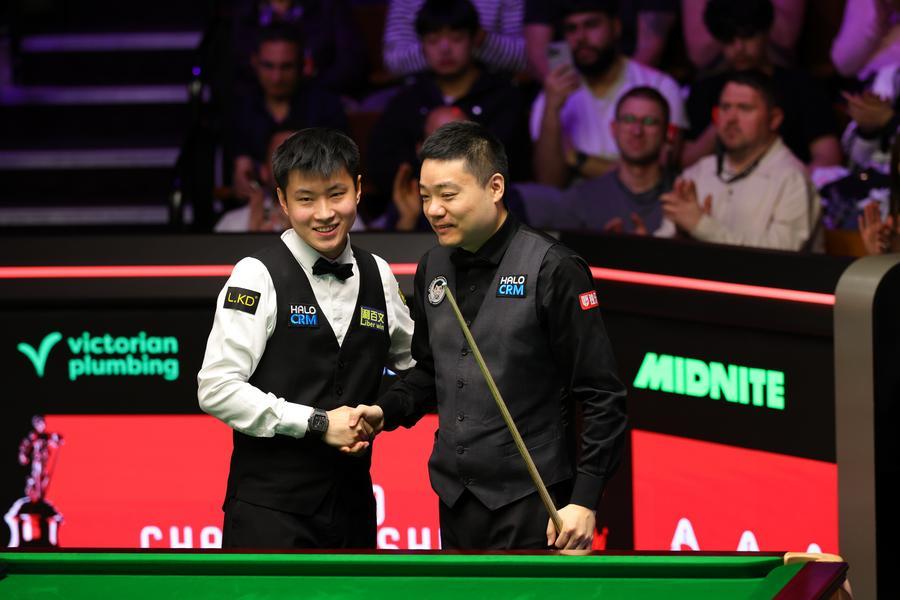
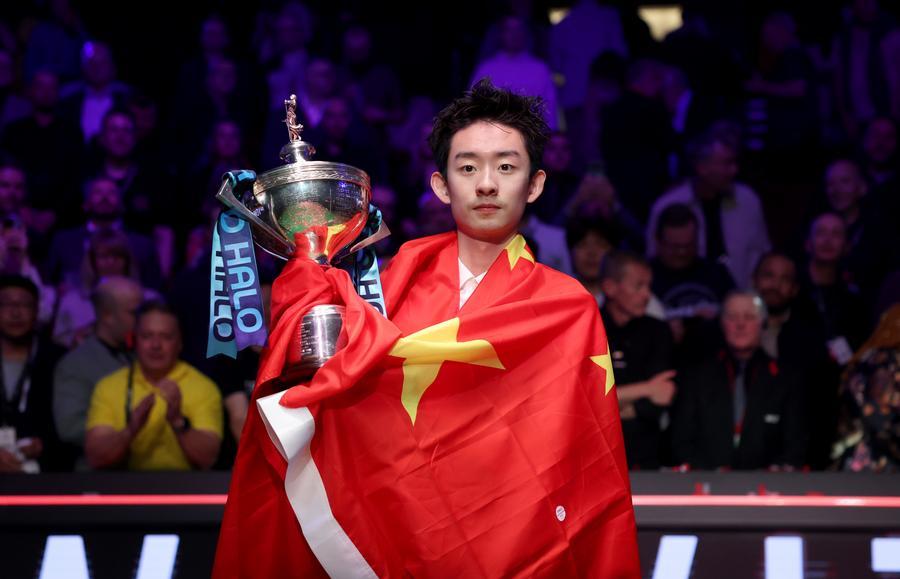
Zhao Xintong became the first Chinese player to win the World Championship at the Crucible last year, before Wu Yize followed this year. At last week's Shanghai Masters, Zhao, who had also eliminated Ding at the 2026 World Championship, again knocked him out in the round of 16. Ding had earlier compiled a break of 140 and made a bold attempt at a maximum 147.
Ding is a decade older than Zhao and two decades older than his first-round opponent Yao Dongcheng. Once hailed as "the prodigy" and "Xiao Hui" (Little Hui), he is now often called "Director Ding" or "Big Brother Hui."
In 2019, the Chinese Billiards and Snooker Association established a committee for professional players based in Britain and appointed Ding as its director. Although the role has no rigid job description, Ding had already been mentoring younger players for years.
"It is not only about competing myself," he said. "Drawing on my own competitive experience, I try to give them advice in daily life and offer maximum support to players eager to improve."
He also founded the Ding Junhui Snooker Academy in Sheffield. Fellow Chinese veteran Xiao Guodong, who trains there alongside Wu Yize, described the facility as spacious and deliberately understated.
"Big Brother Hui's academy is huge. It could have housed 30 tables, but ample space has been left between tables so players can train without disturbing one another," Xiao said. "He has never heavily promoted the academy publicly. Above all, he simply wanted to create a good training environment for Chinese players. It is a real privilege to train there."
When Wu won the world title, Ding celebrated on social media: "This is far more than one breakthrough. Our era is arriving!"
Ding sees the current generation as the beginning of something larger.
"I believe the best era for Chinese snooker may just be beginning. Many young players are steadily growing and developing," he said. "We have not only Wu Yize and Zhao Xintong. I also have high hopes for Chang Bingyu and several newly turned professional players. They have only just stepped onto the professional circuit and still need time to mature. Their prospects are highly promising."
He cautioned against placing too much pressure on them. "Some of these youngsters still need time to accumulate experience and build the belief required to win high-stakes tournaments."
Ding recalled his own early years alone in Britain, when his main goal was simply to qualify for major tournaments.
His breakthrough in 2005 established the belief that Chinese players could win ranking titles. That confidence has underpinned the rise of a strong Chinese contingent. Younger players are also developing more aggressive, attacking styles that contrast with the more defensive traditions of earlier generations.
"Every generation has its own style of play," Ding said. "Today's youngsters are exposed to top-level competitions at an earlier age and enjoy far better training resources. They bring different approaches to the table, and they execute them brilliantly."
Chinese players now carry significant weight at every major event. "We are being taken seriously, and world snooker cannot afford to overlook China," he said.
That growing influence is reflected in the calendar. A "China Swing" now runs from the Shanghai Masters through the China Open and Wuhan Open, spanning late July to late August.
"Everyone can see China's weight within the snooker market," Ding said. "Through this Chinese season, we hope to attract broader audiences to engage with the sport. Chinese spectators get to watch elite tournaments on home soil. Young children get the chance to experience top-flight snooker live. More outstanding talents may even earn pathways to professional competition via amateur events."
Looking further ahead, Ding hopes China will play an even greater role in the global game.
"I look forward to seeing wave after wave of young athletes grow into world-class stars. I hope more tournaments, even the Snooker World Championship, can be hosted in China. "
Asked how he would like to be remembered, Ding remained characteristically modest.
"I do not wish people to focus on the role I played in its development. Rather than remembering me or any single individual, I hope history will recall the continuous emergence of generations of elite talents." ■