BEIJING, Aug. 1 (Xinhua) -- Saturday marks the 99th founding anniversary of the Chinese People's Liberation Army (PLA) as it continues its journey from a fledgling revolutionary force to a modern military advancing toward its centenary.
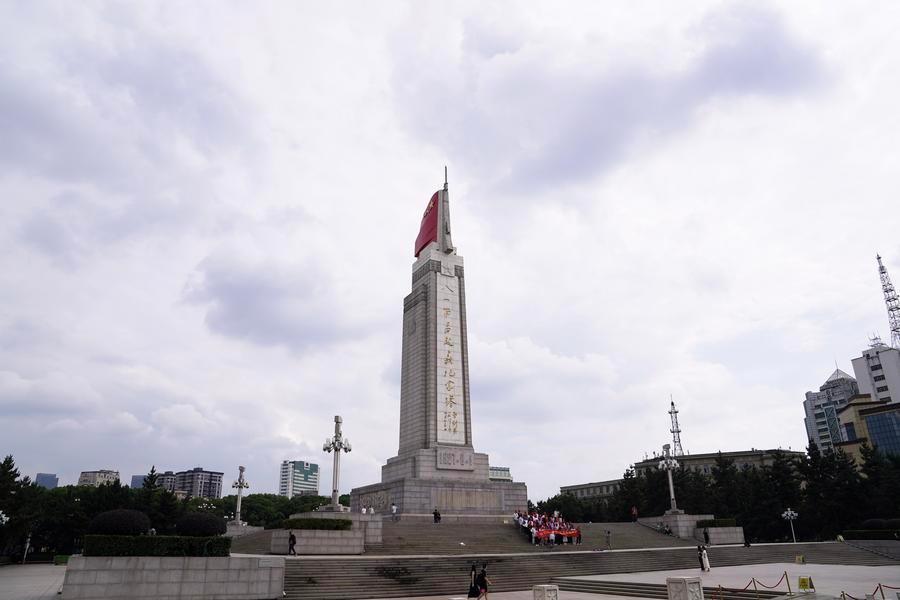
In Nanchang, in east China's Jiangxi Province, stands a memorial tower. At its summit are sculptures of an old-style rifle and the fluttering military flag, symbolizing the Nanchang Uprising led by the Communist Party of China (CPC) on Aug. 1 in 1927, a day now remembered as the starting point of the CPC-led people's armed forces.
From a humble beginning, the military has grown into a modern fighting force equipped with aircraft carriers, strategic missiles, stealth fighter jets and other advanced weaponry, and it is now marching with unstoppable momentum.
Since the 18th CPC National Congress in 2012, the CPC Central Committee with Xi Jinping at its core has led China's national defense and military development to historic achievements, achieving historic transformations.
On Thursday, while presiding over a group study session of the Political Bureau of the CPC Central Committee, Xi, general secretary of the CPC Central Committee, urged efforts to strengthen political guidance and deepen innovation-driven development to advance the high-quality modernization of national defense and the armed forces.
POLITICAL RECTIFICATION, RENEWED ETHOS
On April 8, when addressing the opening ceremony of a training session for high-ranking military officials, Xi, also Chinese president and chairman of the Central Military Commission (CMC), stressed efforts to deepen political rectification in the military to maintain the purity and glory of the people's armed forces.
Over the decades, loyalty to the Party has served as a key factor behind the military's transformation and its successive victories in different historical periods. The CPC Central Committee with Xi at its core has pushed forward political rectification within the military and strengthened the Party's leadership.
Since the 18th CPC National Congress, the PLA has pressed ahead with thorough investigations to root out corruption, resolutely punishing corrupt officials, no matter how high-ranking they were.
These efforts have effectively eliminated major political risks and reinforced the purity and glory of the armed forces.
At the April 8 session, Xi told senior military officials to take the lead in restoring and carrying forward the fine traditions of the Party and the military, put down the official airs, and remain true to the identity of revolutionary service personnel.
REFORM TO MODERNIZE
In the face of the global military revolution and the accelerated evolution of modern warfare, Xi has underscored that deepening the reforms of national defense and the armed forces is "a major test we cannot avoid."
Since the 18th CPC National Congress, the Party Central Committee, the CMC and Xi, with unprecedented resolve and effort, have launched the most extensive and profound reform of national defense and the armed forces since the founding of the People's Republic of China.
Through the reform, a new military structure has been established with the CMC exercising overall leadership, the theater commands responsible for military operations, and the services focusing on developing capabilities.
The entire military continues to deepen reform, accelerating the integrated military development through mechanization, informatization, and the application of intelligent technologies, with a large number of domestically developed advanced weapons commissioned in systems.
In May this year, the commissioning of new types of carrier-based aircraft -- the J-35, J-15T and KJ-600 -- was officially announced, marking the completion of the PLA Navy's carrier-based aircraft package to support a fully integrated carrier strike group's combat capability.
It also represents a major achievement in the modernization of the navy's weaponry and equipment.
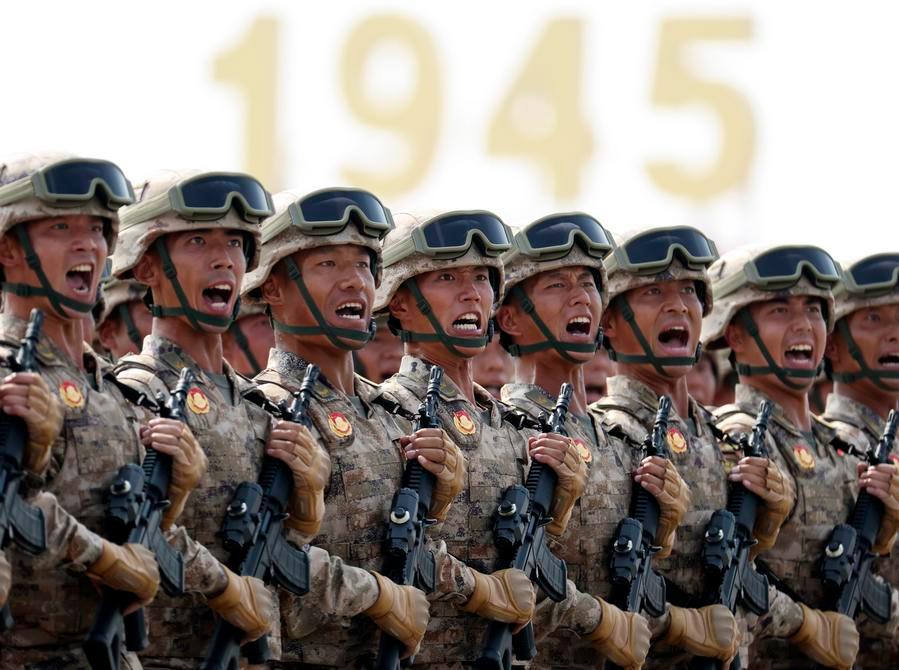
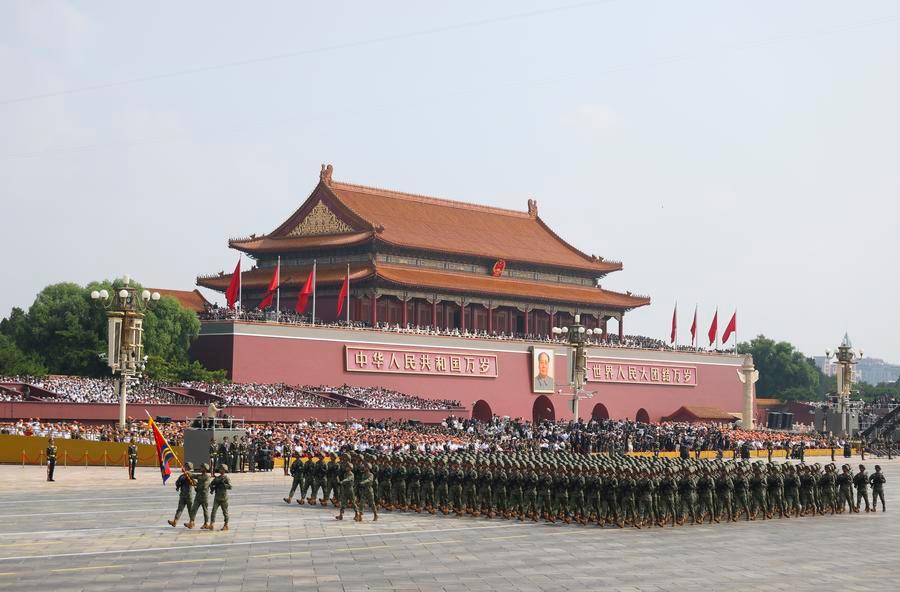
On Sept. 3, 2025, a grand military parade marking the 80th anniversary of the victory of the Chinese People's War of Resistance Against Japanese Aggression and the World Anti-Fascist War was held in central Beijing's Tian'anmen Square.
New-generation main battle tanks and infantry fighting vehicles, cutting-edge unmanned, underwater and cyber-electronic warfare systems, hypersonic missiles, strategic missiles, and other major military hardware were on display.
"We must strengthen our sense of mission and urgency and strive to achieve leapfrog development in the modernization of our armed forces," Xi stressed.
COMBAT READINESS FOR PEACE
The ability to fight and win is essential to building a strong military, Xi has stressed on many occasions.
The entire armed forces have focused all their efforts on combat readiness, enhancing their capability to prevail in future wars.
The PLA Navy's aircraft carriers Liaoning and Shandong deployed together in the western Pacific for the first time to conduct far-sea training. Combat readiness patrols were carried out in the South China Sea.
With enhanced combat preparedness, the Chinese military grows more capable of serving its ultimate goal of safeguarding peace.
China pursues a defensive national defense policy and is the only major power in the world to explicitly enshrine peaceful development in both its Constitution and the charter of its governing party.
China is the leading contributor of peacekeeping personnel among the permanent members of the UN Security Council, and the second-largest contributor to the UN peacekeeping operations.
The Chinese military's growing capabilities have also provided an important foundation for delivering international public security goods.
PLA Navy escort task forces have maintained routine anti-piracy missions in the Gulf of Aden and waters off Somalia to safeguard international shipping lanes. The naval ships also participated in evacuations of Chinese citizens and foreign nationals from some war-torn countries.
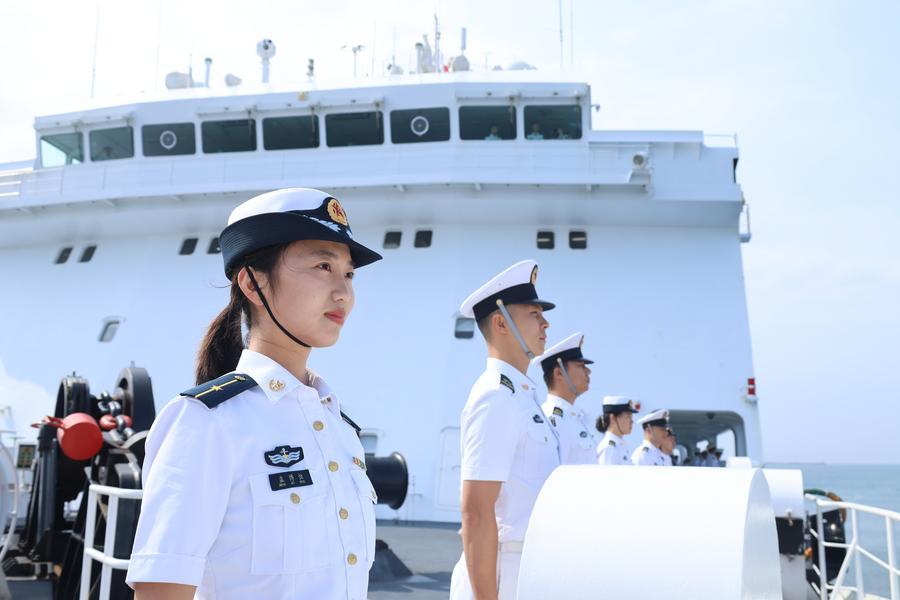
As one of the latest public security goods from China's military to the global community, the naval hospital ship Auspicious Ark departed in late July on Mission Harmony-2026, an overseas humanitarian medical deployment spanning Africa and South Asia.
The voyage came just months after another Chinese naval hospital ship, Silk Road Ark, wrapped up a 234-day medical mission across the South Pacific and Latin America, before it returned home. ■