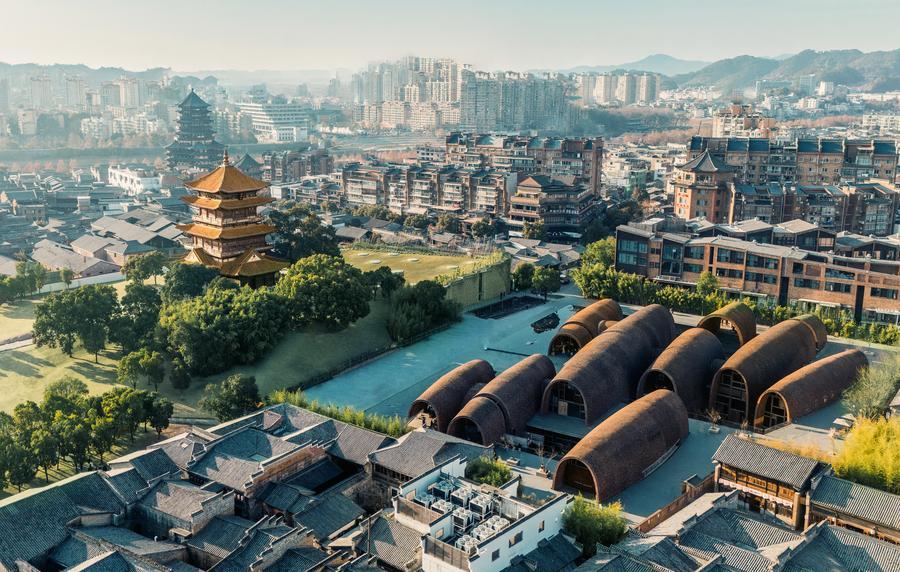
BEIJING, July 29 (Xinhua) -- The kilns of the eastern Chinese city of Jingdezhen have transformed mounds of humble clay into exquisite porcelain that has traveled across oceans, transcended cultural boundaries and fostered bonds between civilizations for over 2000 years.
On Saturday, the Jingdezhen Handicraft Porcelain Industry Sites were inscribed on the UNESCO World Heritage List, marking global recognition of a living tradition that remains a treasured gem of Chinese civilization.
The inscription also reflects China's years of efforts to preserve and make alive this centuries-old craft -- a cause that Chinese President Xi Jinping has consistently championed.
Porcelain has been widely taken as one of the most representative symbol of Chinese civilization. For years, Xi has remained deeply committed to China's cultural heritage and emphasized its preservation as a way to promote the finest traditional Chinese culture.
In October 2023, Xi visited Jingdezhen, globally renowned as the "Porcelain Capital," where the glow of kiln fires has illuminated 2,000 years of ceramic history. At the Taoyangli Historical and Cultural Block, he toured the Nanlu Ruins, the Ceramic Museum, and the Ming and Qing Dynasty (1368-1911) kiln complex, learning about the intricate processes and cultural legacy behind the city's celebrated porcelain craft.
During the visit, Xi met Sun Lixin, a fourth-generation craftsman carrying forward his family's porcelain-making tradition. Admiring the craftsmanship, Xi asked, "Do you paint according to a design, or do you rely on your sense of touch?"
"It's all in my heart," Sun replied.
"Devoting one's entire life to a single craft, with generations of a family committed to the same pursuit, is no simple undertaking," Xi said.
"The fine traditional culture passed down by our ancestors is something we must continue to hold in our hands, adapt to the times, and carry forward," he added.
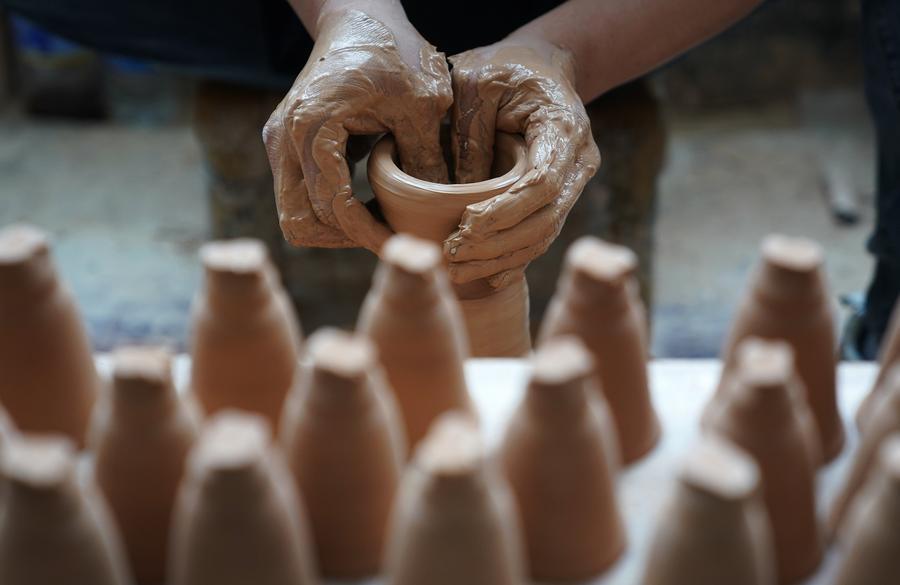
Xi's long-standing commitment to preserving Chinese porcelain culture can be traced back to his years working in east China's Zhejiang province in the early 2000s, when he placed great importance on protecting and promoting the country's rich ceramic heritage.
Xi made several visits to Longquan, a city in southwestern Zhejiang known for its centuries-old celadon tradition. He emphasized that Longquan celadon was a Chinese cultural treasure and called for the establishment of a museum to preserve and showcase this valuable heritage.
In 2009, the museum was officially opened. That same year, the traditional firing techniques of Longquan celadon were inscribed on UNESCO's Representative List of the Intangible Cultural Heritage of Humanity.
Longquan would become one illustration of a much broader agenda. Over the years, Xi has made cultural heritage protection a recurring theme of his domestic inspections, visiting sites ranging from the Forbidden City and the Grand Canal to Jiayuguan Pass and the Yin Ruins. With his push, more Chinese cultural sites have been added to UNESCO's World Heritage List.
"Protecting, preserving and making good use of these invaluable treasures is our shared responsibility," Xi once said. "It is also essential to ensuring the continuity of human civilization and advancing sustainable development around the world."■