In many cities, preserving history begins with saving old buildings. In Beijing's hutongs, it also means making sure history still has neighbors.
BEIJING, July 15 (Xinhua) -- The boy ignored the panda souvenirs.
Instead, after listening to a shopkeeper tell stories about modern Chinese literary giant Lu Xun and century-old alleyways, he picked a refrigerator magnet shaped like an entire neighborhood. Then he proudly paid for it with his smartwatch.
In many cities, history is something visitors admire from a distance. In Beijing's Fayuan Temple Historical and Cultural Area, it is becoming something people, young and old, lifelong residents and first-time visitors, are invited to explore, share and carry home.
STORIES MATTER
For Yuan Yi, every souvenir begins with a question. "What story will people take away?" she will ask.
The 44-year-old and her husband, Mi Di, are both Beijing natives. They were high school classmates who grew up only a few streets away.
Yet when it came time to open their own business, they returned to the neighborhood they knew best.
"This area has extraordinary cultural depth," Yuan said. "Lu Xun lived nearby for seven years. Late-19th century reformer Tan Sitong also worked here. Every alley seems to lead to another story."
When they opened Xiaoma Sahuaner Studio last year, it was only the second cultural creative shop in the neighborhood. Instead of selling generic souvenirs, they decided to design products rooted in local history.
They created a refrigerator magnet featuring seven playful versions of Lu Xun himself -- one with a sweet tooth, another raising pet geckos -- hoping children would first meet the writer as a fascinating person rather than simply a name in a textbook.
One customer repeatedly encouraged the couple to create a souvenir inspired by Tan Sitong. They eventually did. Today, that customer has become a close friend.
Another customer, a mother, was moved to tears after hearing Yuan explain the neighborhood's history. "She told me she had never realized there was so much behind these quiet alleys," Yuan recalled. "That was when I felt our work had really reached someone."
The couple now organize volunteer walking tours, leading small groups through former guild halls, historic residences and hidden lanes while telling stories they uncovered during years of research.
"We're not simply introducing old buildings," Mi said. "We're helping people understand why this neighborhood still matters."
NEIGHBORS STAY
Seventy-eight-year-old Zheng Enqing has lived in the neighborhood for more than 30 years.
Seeing familiar faces, he stepped outside to say hello before returning to sweep leaves scattered by the morning rain.
Before retiring, Zheng helped install electrical and mechanical systems for some of Beijing's best-known public buildings. Today, his attention is focused on a much smaller place -- the lane outside his own front door.
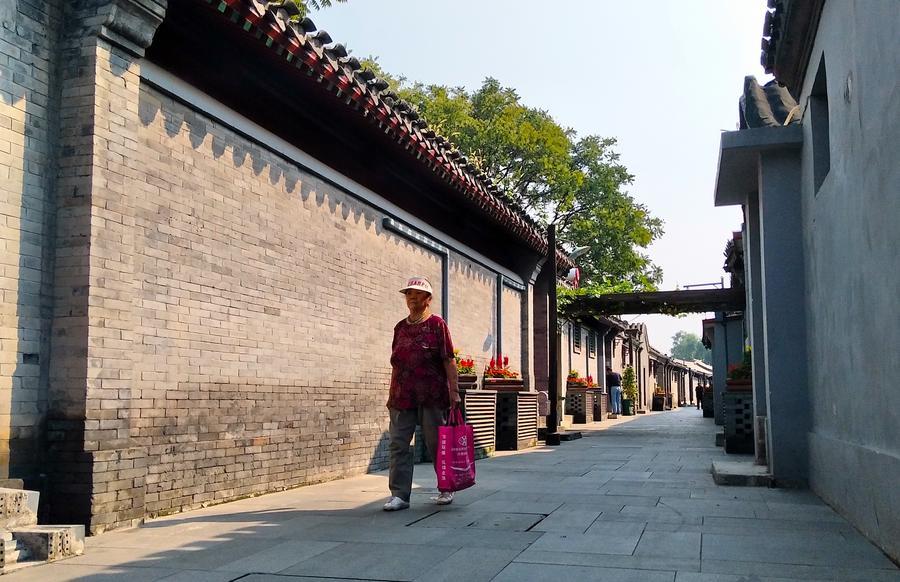
He remembers when the hutongs looked very different.
Cars, bicycles and pedicabs crowded the narrow alleys. Overhead utility wires dangled from the roofs. Rain turned the roads muddy, while coal briquettes heated homes through Beijing's long winters.
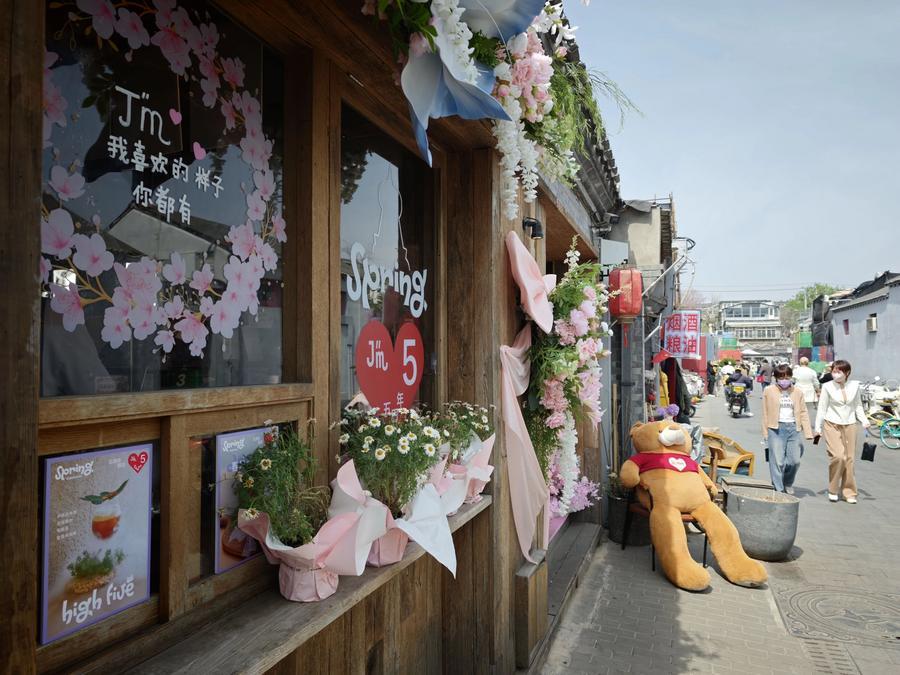
"Life is much better now," he said. Underground cables have replaced the ones overhead, stone-paved lanes stay clean after rainfall, electric heating has replaced coal, and flower beds have appeared where vehicles once stood.
But for Zheng, the most important change was the new cafes, bookstores and creative businesses that moved into restored courtyards, giving the neighborhood new energy and, inevitably, some new disagreements.
When air-conditioning units from one business blew hot air toward a grapevine that residents had cared for over many years, the issue was raised through the neighborhood committee. The equipment was moved to the rooftop. When renovation work became too noisy, construction hours were adjusted after residents voiced concerns. Even a curtain was quickly installed after the lights from a newly opened shop shone into a neighboring courtyard.
"Everyone gave a little," Zheng said. "That's why people get along."
He says he does not know many of the young entrepreneurs well. They come from different generations and have different careers. But they greet one another in passing, just as neighbors always have.
"This is an old neighborhood," he said. "But it's still growing."
GROWING TOGETHER
Around the world, efforts to revitalize historic neighborhoods often face challenges. The Fayuan Temple Historical and Cultural Area has struck a balance between heritage conservation and living of local residents.
Instead of starting over, the project upgraded the neighborhood while keeping its historic street pattern. Aging infrastructure was modernized, neglected spaces became small public gathering areas, and former homes reopened as bookstores, cafes, studios and community venues, said Chen Qinghong of Beijing Deyuan Dade Real Estate Investment Co., which oversees the area's redevelopment and operation.
Just as important was who stayed.
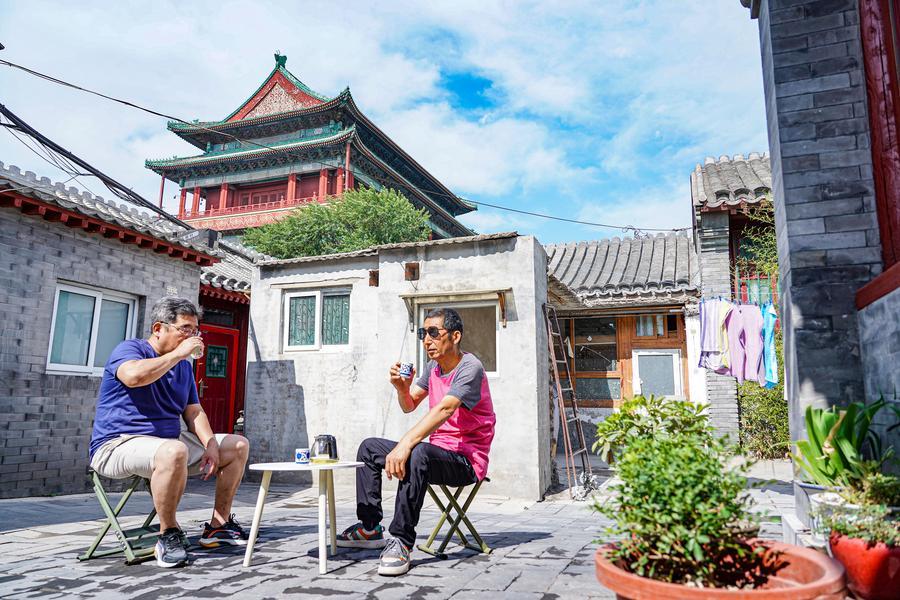
About 30 percent of the original residents chose to remain, living alongside a new generation of entrepreneurs rather than watching their neighborhood become a destination for tourists alone. To encourage that mix, the project also offers temporary rent-free spaces where university students and young designers can test business ideas before opening permanent shops, Chen said.
Urban scholars and institutions, including the World Bank, have noted that China's rapid urbanization has avoided some of the challenges seen elsewhere. Projects like this are attracting attention for asking a different question: Can a historic neighborhood evolve without losing the community that gives it life?
Only weeks ago, the answer attracted international attention when the Fayuan Temple Historical and Cultural District Urban Renewal Project was named one of the International Outstanding Practices on Urban Regeneration, a joint initiative of United Nations (UN)-Habitat and Shanghai University, during the World Urban Forum in Azerbaijan.
As the visit drew to an end, Xiaoma Sahuaner Studio was still bustling with visitors. Another family had just stepped inside. Not far away, Zheng Enqing was back outside his courtyard, greeting passersby as he always did.
One generation was sharing the neighborhood's stories. Another was quietly looking after its streets.
In many cities, preserving history begins with saving old buildings. In Beijing's hutongs, it also means making sure history still has neighbors. ■