NANNING, July 15 (Xinhua) -- When torrential rains and typhoons unleash devastation, the traditional battle against natural disasters has often been a grueling test of human endurance. But across China, the rules of engagement are changing. From autonomous aerial fleets to artificial intelligence (AI), high-tech solutions are profoundly transforming emergency management.
This technological pivot is replacing reactive physical struggles with proactive, data-driven science, constructing a resilient "digital shield" to safeguard lives and infrastructure.
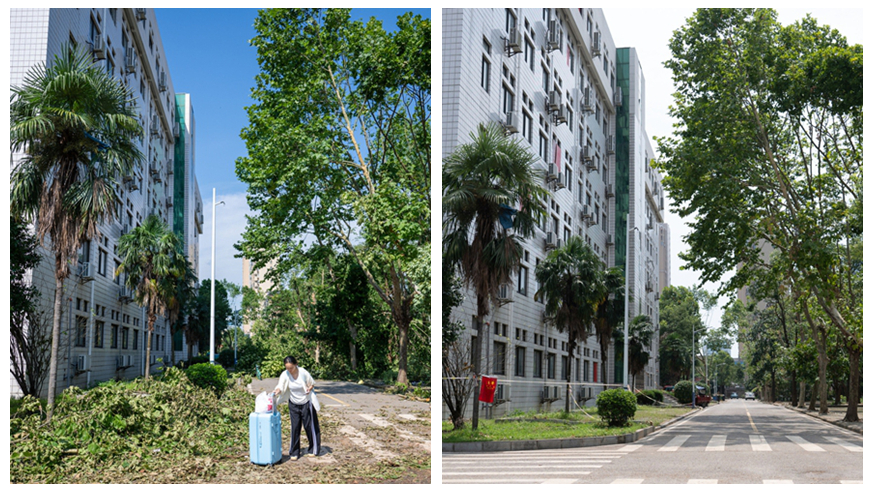
The real-world impact of this shift was vividly demonstrated during the recent response to a severe typhoon in south China's Guangxi Zhuang Autonomous Region.
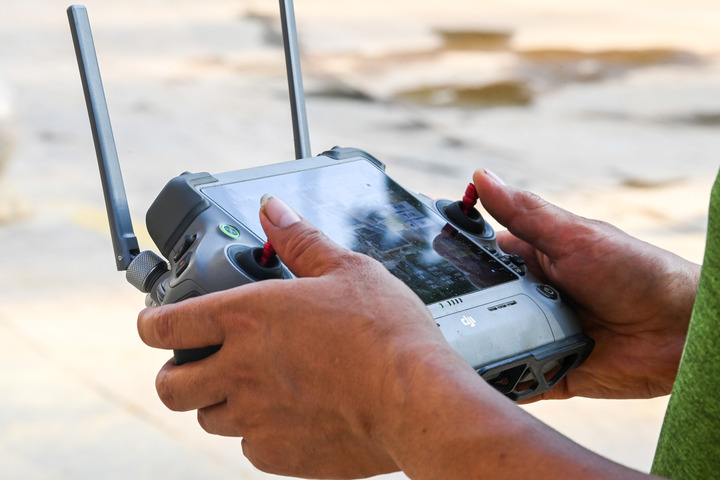
As floods crippled critical infrastructure and isolated communities, ground-based assessments became impossible. Local emergency responders deployed fleets of drones to conduct high-altitude assessments over the hardest-hit areas. These unmanned aerial vehicles provided real-time video feeds and delivered essential supplies to stranded residents, serving as eyes and lifelines for command centers when roads could not be used.
Beyond the skies, AI has emerged as a critical force multiplier in urban flood management. During a recent severe rainstorm in Shenzhen, a major tech hub in south China's Guangdong Province, local authorities relied on an AI-powered monitoring system to manage a red alert.
Rather than exhausting personnel to manually scan countless camera feeds, the system autonomously analyzed over 243,000 surveillance images, successfully flagging more than 1,500 potential flood risks with precise locations and detailed descriptions.
Local emergency management officials noted that these AI "sentinels" have drastically improved response efficiency, eliminating the oversights that once plagued manual monitoring.
In addition to immediate crisis response, digital technologies are also reshaping long-term disaster mitigation. In east China's Zhejiang Province, a vast network of over 7,000 rivers has been given a "smart brain" through digital twin technology. Local authorities developed a coupled water resources scheduling model for complex river networks, which automatically forecasts the water network's status over the next seven days under various scenarios to guide daily dispatch decisions.
During a typhoon in July 2025, this platform forecast water levels three days ahead of time, allowing operators to preemptively release water and significantly ease flood pressures.
This integration of smart infrastructure extends to critical utilities as well. In Beijing, reservoir management centers are now equipped with automated sensors that continuously monitor water levels and rainfall.
A reservoir official along the Yongding River noted that data is instantly processed by intelligent platforms that trigger automatic alerts when safety thresholds are breached, freeing human operators to focus on strategic decision-making rather than manual data entry.
This technological evolution reflects a broader national strategy outlined in China's latest emergency management blueprint, which sets ambitious targets for 2030 to significantly enhance the country's capacity to handle major emergencies and strengthen grassroots emergency response via law-based, scientific and intelligent decision-making.
As climate change results in increasingly unpredictable and extreme weather, China's approach signals a definitive departure from relying solely on physical labor. By constructing a "digital levee" powered by AI, drones and big data, the nation is fundamentally redefining how it prepares for, responds to, and recovers from natural disasters. ■