* Green and smart technologies are featuring prominently at the China-Eurasia Expo.
* A green development exhibition zone and a quality productive forces zone debuted at the expo.
* The expo's green and smart cooperation extends to in-depth cross-border economic and trade collaboration.
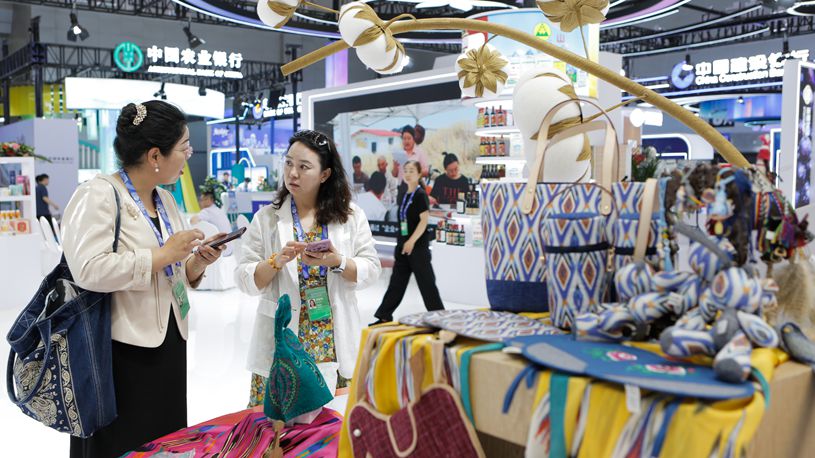
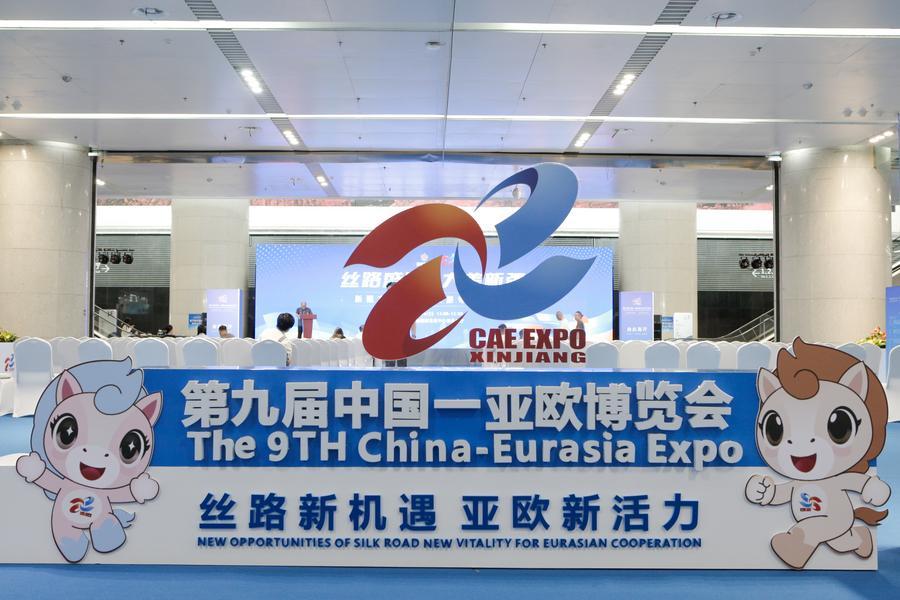
URUMQI, June 26 (Xinhua) -- Green and smart technologies are featuring prominently at the China-Eurasia Expo in Urumqi, capital of northwest China's Xinjiang Uygur Autonomous Region, as new exhibition zones highlight low-carbon and high-tech elements in Eurasian trade cooperation.
The 9th China-Eurasia Expo has drawn participants from 49 countries, regions and international organizations, with 27 countries and regions setting up exhibition pavilions. More than 3,000 companies and institutions have signed up to attend.
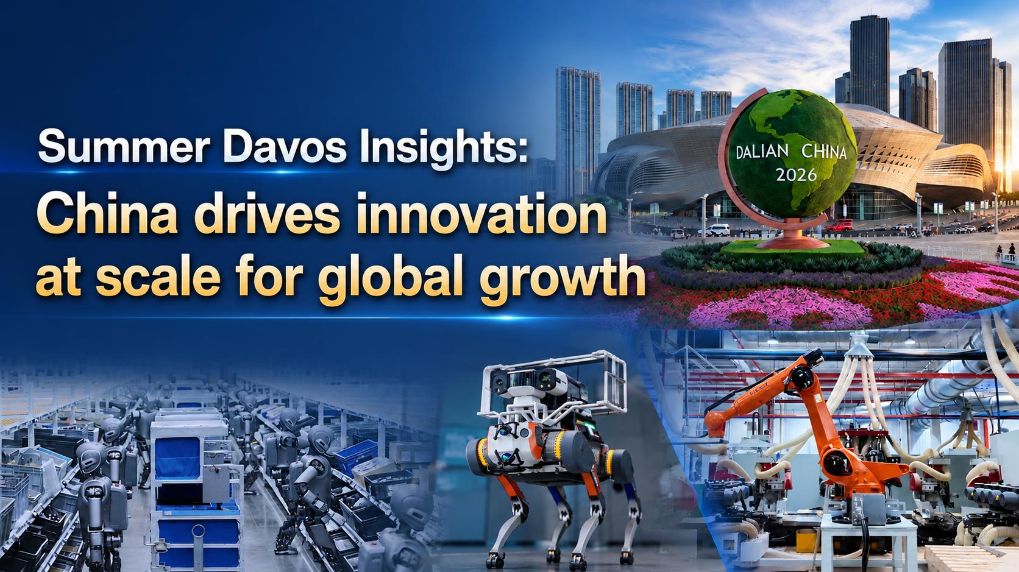
Against a global landscape pursuing low-carbon transition and tech-driven growth, a cluster of high-profile economic gatherings taking place in China this week, including the Summer Davos forum and the China International Supply Chain Expo, have all highlighted the green and smart innovation trend driving global industrial and trade collaboration.
LOW-CARBON PUSH
At the expo in Urumqi, a green development exhibition zone set up for the first time showcases low-carbon energy development plans and clean mining technologies, as well as full-electric, zero-emission construction equipment that reduces energy use and carbon emissions.
At the booth of the CRRC Corporation Limited, a Chinese rail transit equipment supplier, a sand table displays over 30 cutting-edge equipment models spanning new-energy commercial trains, photovoltaic energy storage, green hydrogen equipment, smart mining, logistics, urban rail transit, and intelligent maintenance services.
During the expo, CRRC unveiled its "VELFORCE" new-energy locomotive series, which offers three power options -- hybrid, pure battery, and hydrogen fuel cell.
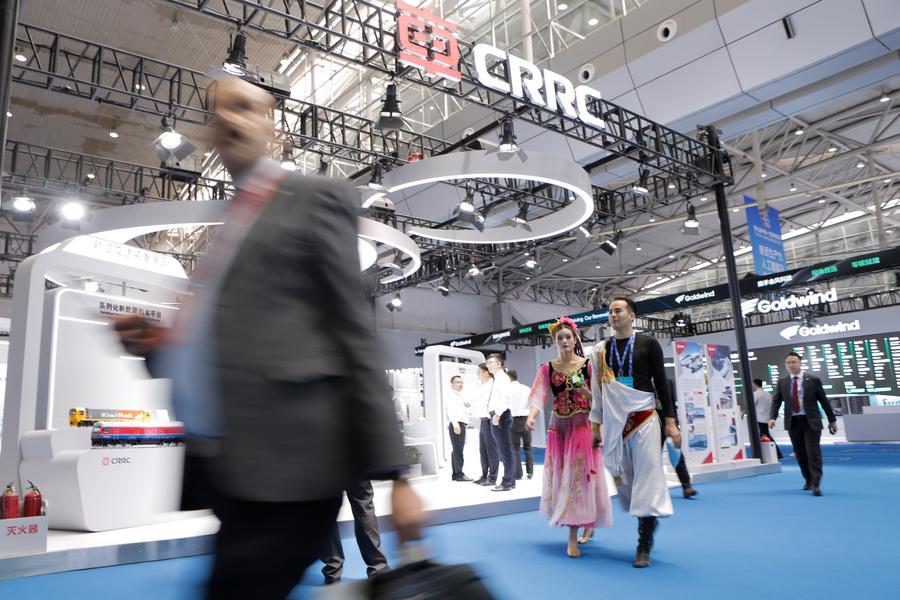
Li Rongkang, a staff member at the booth, said the hybrid model cuts nitrogen oxides, hydrocarbons, and carbon monoxide emissions by 45 percent, 73 percent, and 83 percent, respectively, compared with traditional locomotives, and each unit saves more than 370 tonnes of carbon dioxide emissions per year.
Green concepts run through the entire expo operation. Adopting reusable modular facilities, energy-efficient lighting and full-process carbon accounting and offset mechanisms, the expo strives to achieve carbon neutrality, setting a benchmark for sustainable large-scale exhibitions.
HIGH-TECH DRIVE
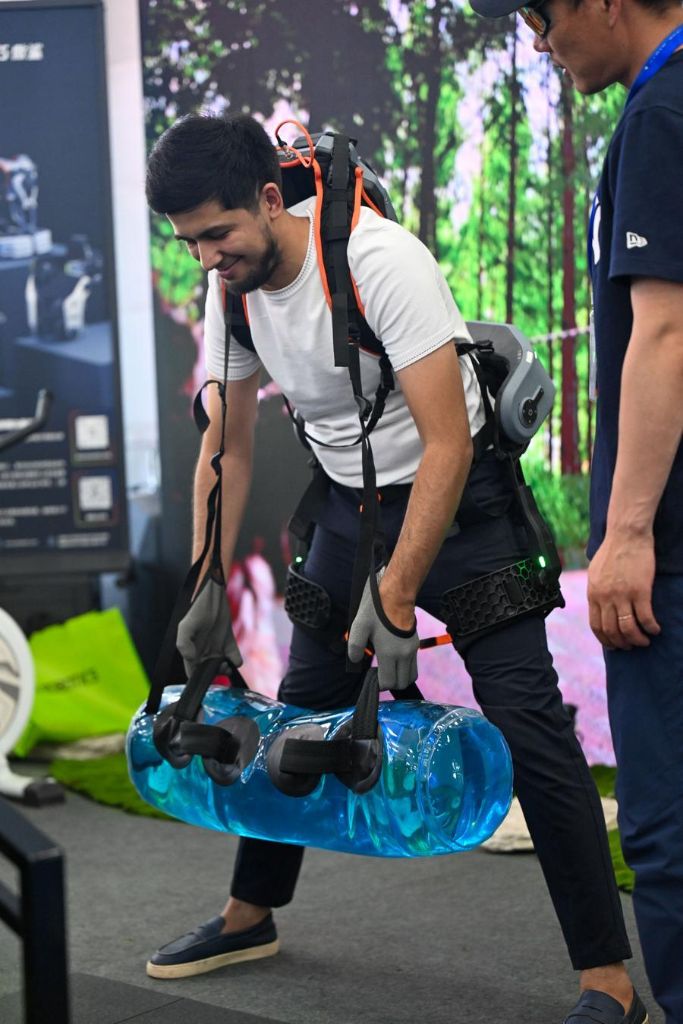
A new quality productive forces zone also debuted, featuring artificial intelligence, digital economy and bio-manufacturing.
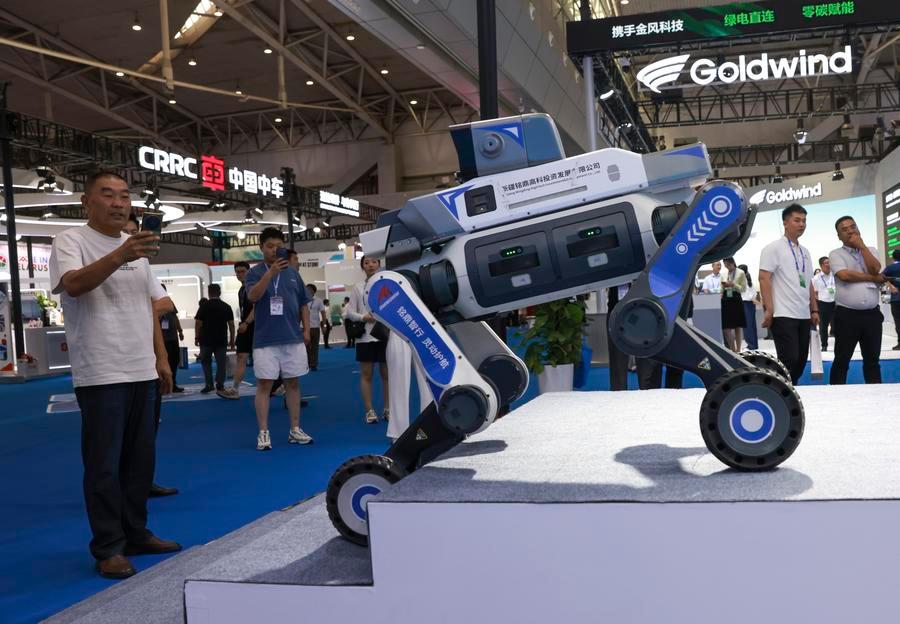
An exoskeleton robot drew crowds for hands-on trials, while an intelligent robotic dog demonstrated agile gaits with integrated capabilities in image recognition, gas detection, voiceprint recognition and laser scanning.
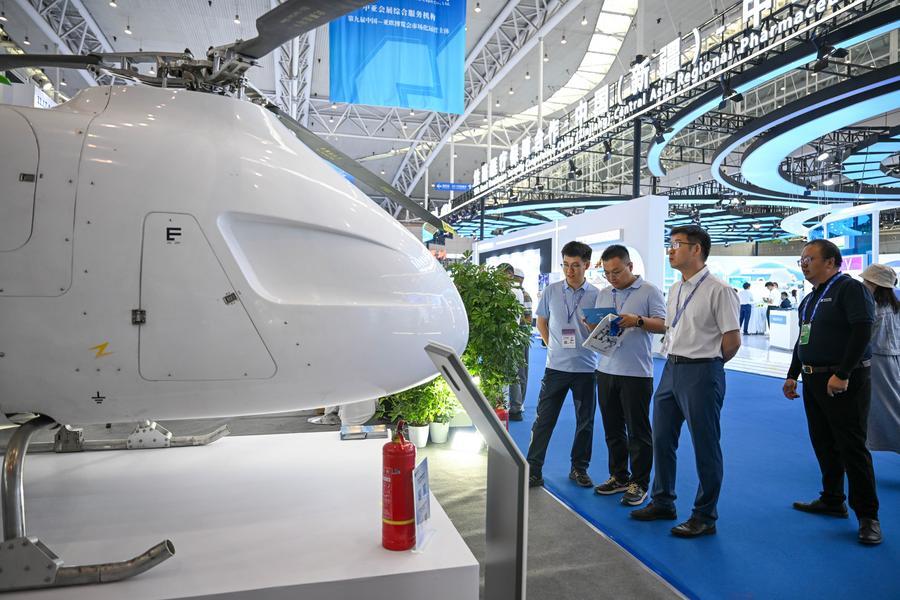
At the low-altitude economy section, which is a standalone segment for the first time, multiple tonne-class industrial drones made their collective display.
United Aircraft Group showcases five flagship models, covering applications from cargo transport, high-altitude emergency rescue, to oil-and-gas pipeline and power line patrols.
Tian Gangyin, chairman of the group, noted that Xinjiang serves both as a fertile ground for low-altitude technology deployment and as a frontline gateway for China's opening-up to the west, making the expo a strategic platform to demonstrate the company's full-spectrum capabilities and connect with regional partners.
BEYOND EXPO
The expo's green and smart cooperation extends far beyond exhibition displays to in-depth cross-border economic and trade collaboration.
At the expo, TBEA, a Chinese power equipment maker, showcases its core technologies in new energy power generation, power transmission and smart energy services, along with overseas projects. The company has built localized service teams to tailor new-energy projects for Central Asia's energy upgrading needs, having launched a photovoltaic power generation project in Kyrgyzstan.
As Central Asian countries, once heavily reliant on fossil fuels, accelerate their clean energy transition, TBEA will leverage the expo to expand cross-border green cooperation and deploy more new-energy projects overseas, said a company representative.
The expo's green and smart positioning is underpinned by booming China-Eurasian economic ties. China's trade with the five Central Asian countries hit a record 106.3 billion U.S. dollars in 2025, up 12 percent year on year, marking the first breakthrough above 100 billion U.S. dollars.
Having emerged as Central Asia's largest trading partner, China sees its regional trade structure steadily optimizing, with green energy equipment, electromechanical and high-tech products becoming major export growth drivers.
The booming China-Europe Railway Express strongly underpins trade in the Eurasian regions. Over the past decade, the China-Europe Railway Express has seen its annual trips surge from 1,702 in 2016 to 20,022 in 2025, now linking 129 Chinese cities with over 330 cities across 26 European and 11 Asian countries.
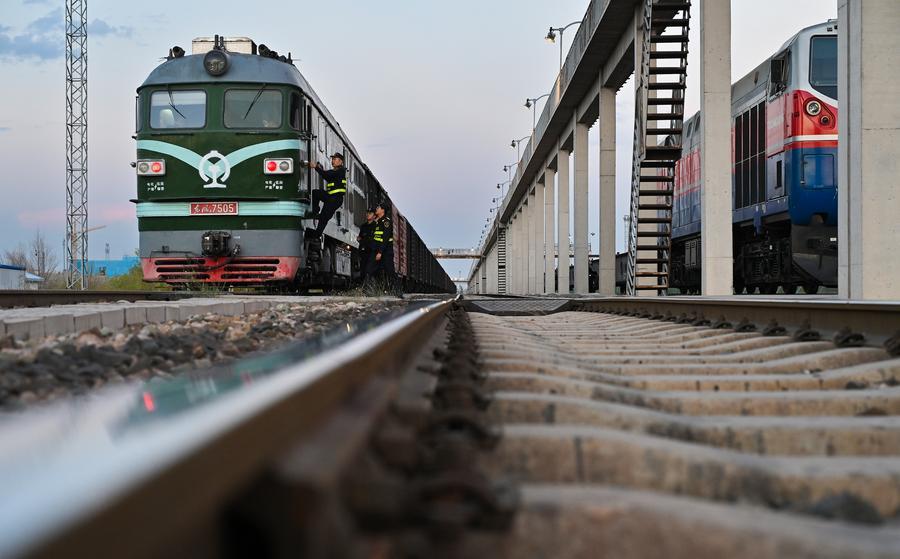
High-value-added products -- including solar photovoltaic modules, auto parts, intelligent electronic devices and new-energy vehicles -- are taking up a growing share of the cargo manifest of the cross-border logistic train service.
Green and smart technologies are moving from booths to markets, and from China across the Eurasian continent, injecting fresh momentum into regional industrial synergy and sustainable development. (Video reporters: Mei Yuanlong and Zhang Xiaocheng; Video editors: Zhang Nan and Zhu Cong) ■