
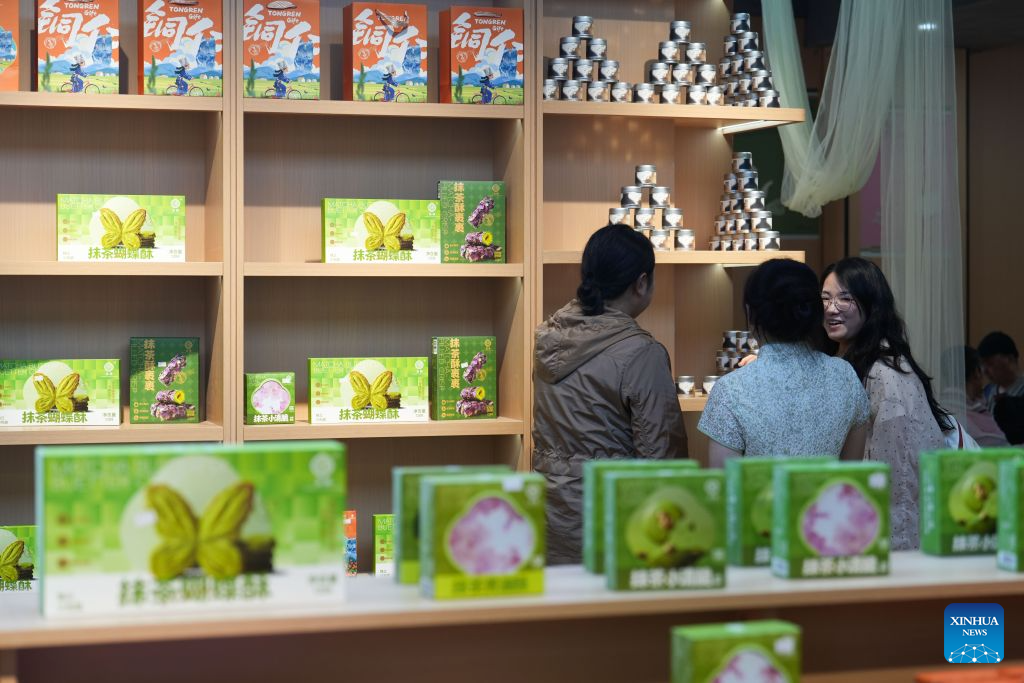
Tourists buy matcha products at a store in Jiangkou County, Tongren City, southwest China's Guizhou Province, May 29, 2026. (Photo by Shen Yikai/Xinhua)
GUIYANG, June 25 (Xinhua) -- The unlikely success of an instant noodle formula is adding a more diversified flavor to the current matcha boom in southwest China's mountainous Guizhou Province -- the latest product to do so.
In May, a sweet potato instant noodle product from Sinan County in Tongren became a consumer hit after adding a matcha flavor to its traditional sour-and-spicy formula. Made mainly from local sweet potatoes and blended with matcha powder produced in Tongren, the product kept its familiar spicy-sour taste, while using matcha's fresh aroma to cut through greasiness.
Noodle consumers responded quickly, the product drawing more than 200,000 orders in its first month, generating over 6 million yuan (about 880,000 U.S. dollars) in sales. During a trial sale at a matcha store in Tongren over the May Day holiday, 100 boxes sold out in one day.
For Guizhou, the noodles are more than a viral product. The product shows how matcha, a finely ground green tea rooted in China's traditional tea culture, is being turned into a broader business spanning packaged food, retail shelves and tourism spending.
Behind that, consumer demand is a mature supply chain that has helped turn Guizhou into one of the world's key matcha production bases. Data from the China Tea Marketing Association showed that China's matcha output exceeded 12,000 tonnes in 2025, accounting for about 60 percent of global production.
Gui Tea Group, a Tongren-based company, sold more than 2,500 tonnes of matcha in 2025, with output value exceeding 500 million yuan. The group says its products have been exported to more than 50 countries and regions, including the United States, Japan and Indonesia.
The success of the noodles shows how Guizhou producers are looking beyond traditional tea consumption. Backed by strong local production capacity, companies are testing matcha in a wider range of foods, turning a once niche tea powder into an ingredient for snacks, desserts and packaged products.
In July 2025, Gui Tea Group completed a matcha-themed food production base. According to Li Yun, retail sales director of the company's matcha division, its "Guigui Matcha" factory is equipped with four production lines covering five categories: chocolate, cookies, preserved fruit products, snacks and powdered drinks.
The product lineup has expanded from just over 10 items to more than 30. Li said Gui Tea Group's total retail sales reached 100 million yuan in 2025, including about 30 million yuan from matcha food products. The company aims to triple its retail sales to 300 million yuan in 2026.
The momentum has continued into this year. In the first five months, Gui Tea Group's matcha food sales approached 50 million yuan, while total retail sales had already surpassed 100 million yuan.
"More consumers are coming to Guizhou specifically for matcha-related experiences, and matcha drinks and foods on the market are becoming increasingly diverse," Li said.
At the foot of Mount Fanjingshan, a UNESCO-listed world heritage site in Tongren, the trend has taken physical form. A specialty store called Fumo Matcha opened on May 23, offering more than 20 matcha products, from ice cream and milk tea to craft beer, noodles and jelly.
The store's founder, Wu Li, is a Tongren native. She said she had tried matcha foods elsewhere in China before realizing that most of the matcha powder used in the domestic market came from her hometown. That discovery led her to return and open a shop linking production bases more directly with consumers.
Since opening, the store has recorded peak daily revenue of 15,000 yuan, with out-of-town tourists making up about 80 percent of customer traffic.
"The recent matcha craze has helped bring renewed attention to China's long-standing powdered-tea traditions, including the 'diancha' culture, or tea whisking, of the Song Dynasty (960-1279)," Wu said.
Wu said she hopes more people will understand matcha's historical roots: it is not an imported commodity, but a traditional Chinese tea product with deep cultural heritage.
Major retailers are also moving in. In April, Walmart launched a "matcha season" product campaign under its private-label food brand Marketside, introducing dozens of items across baked goods, snacks, dairy products, beverages and ice cream. The products use matcha sourced from quality production areas, including Tongren in Guizhou and Jingshan in east China's Zhejiang.
But using matcha in mass-produced baked goods is not as simple as adding tea powder to the recipe.
Liu Hai, deputy general manager of Gui Tea Group, said applying matcha to baked goods is technically demanding. High-temperature baking can easily affect the color of matcha, while the ingredient also needs to blend well with flour, cream and other materials used in food processing. To make matcha more suitable for different products, the company has adjusted grinding fineness, improved color-protection methods and developed low-temperature grinding techniques to reduce chlorophyll breakdown during baking.
In addition, Liu said the company has developed a physicochemical mapping system that matches different aging stages and grinding mesh sizes with specific application scenarios, helping pave the way for wider industrial and retail use of matcha.
For Guizhou, matcha is becoming more than a specialty agricultural product. It is emerging as a platform for "matcha-plus" growth, linking tea production bases, food factories, retail stores and travelers through a flavor rooted in Chinese tradition and newly popular with young consumers. ■
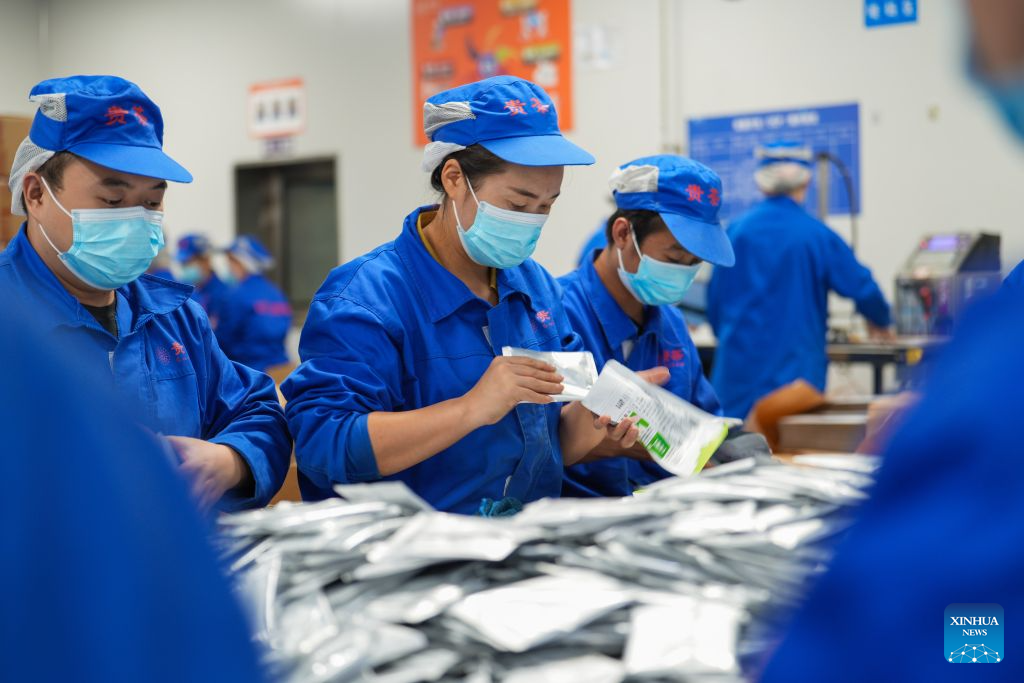
This file photo taken on Sept. 14, 2025 shows workers packaging matcha products at a workshop of Gui Tea Group in Jiangkou County, Tongren City, southwest China's Guizhou Province. (Photo by Shen Yikai/Xinhua)
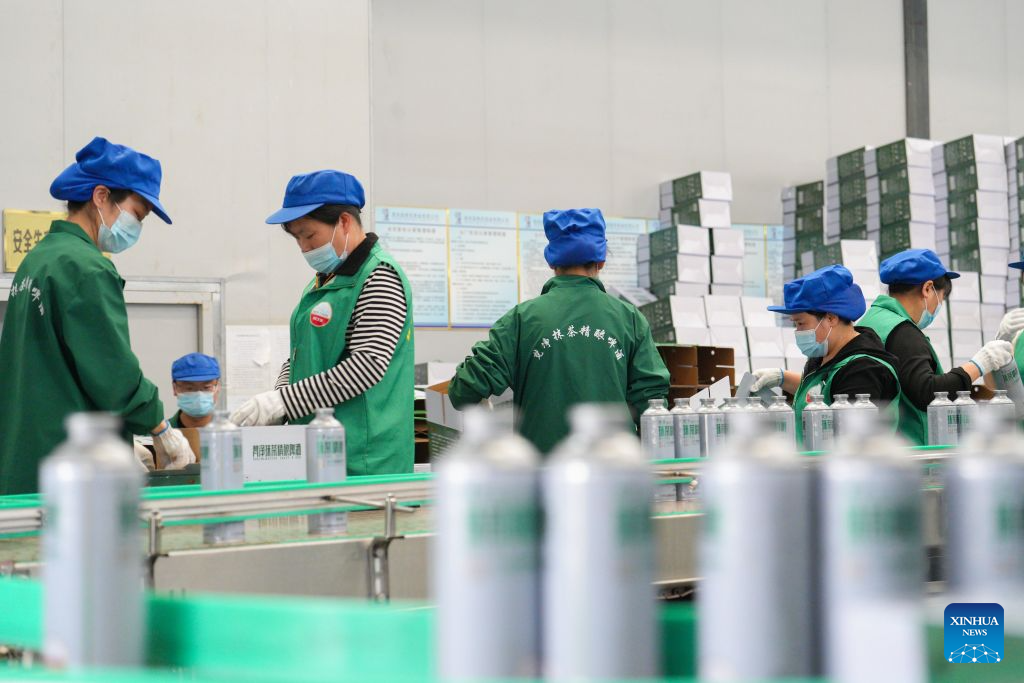
Workers package matcha-flavored beer at a workshop in Jiangkou County, Tongren City, southwest China's Guizhou Province, April 23, 2026. (Photo by Shen Yikai/Xinhua)
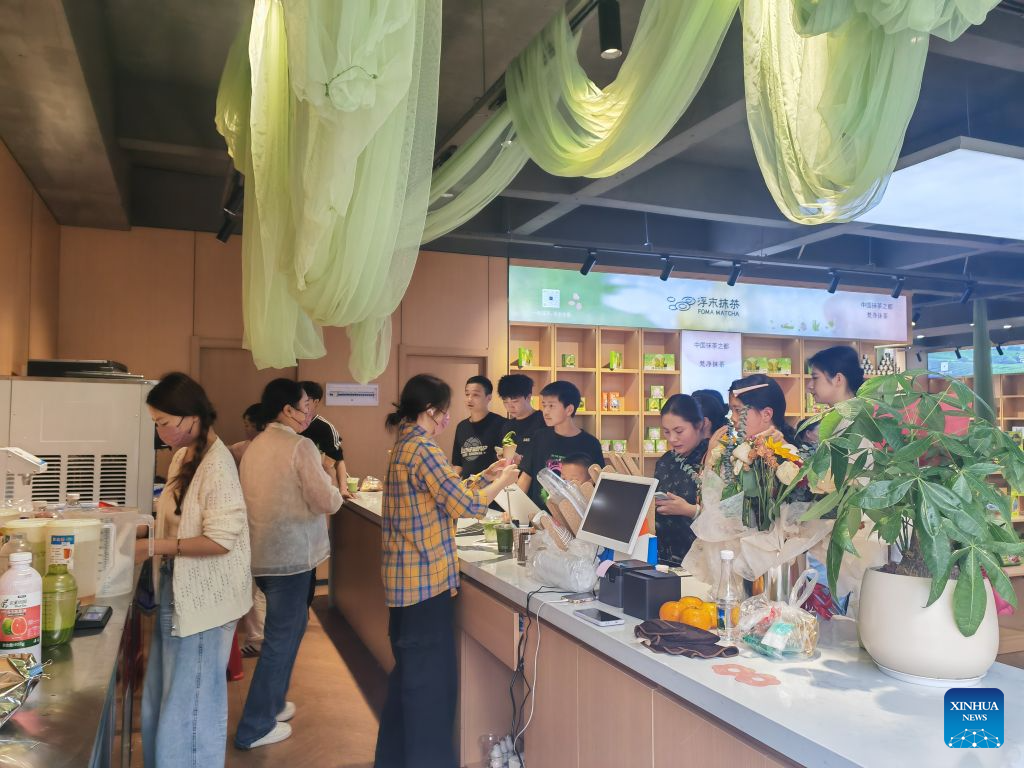
Tourists buy matcha-flavored ice creams at a store in Jiangkou County, Tongren City, southwest China's Guizhou Province, May 30, 2026. (Xinhua/Wu Si)


