by Xinhua writer Xia Xiao
KHASAB, Oman, June 23 (Xinhua) -- As the United States and Iran locked themselves in a drawn-out standoff over the reopening of the Strait of Hormuz, I travelled to Khasab, an Omani coastal town on the southern shore of the waterway.
My trip came on the second day after Washington and Tehran reached a memorandum of understanding and committed to reopening the strait. Yet the uncertainty surrounding the strategic waterway was underscored the following day, when Iran's military, citing Israeli violations of the ceasefire in Lebanon, said it had closed the strait again, while U.S. Central Command said traffic continued to flow.
As we drove out of Dubai, crossed the northern reaches of the United Arab Emirates, and entered Oman's Musandam Governorate, the coastal road wound through limestone mountains before opening onto the sea.
After nearly four hours, we reached Khasab. Summer had settled quietly over the small town. With temperatures topping 40 degrees Celsius, the streets were largely empty, except for the occasional container trucks moving slowly along the coastal road.
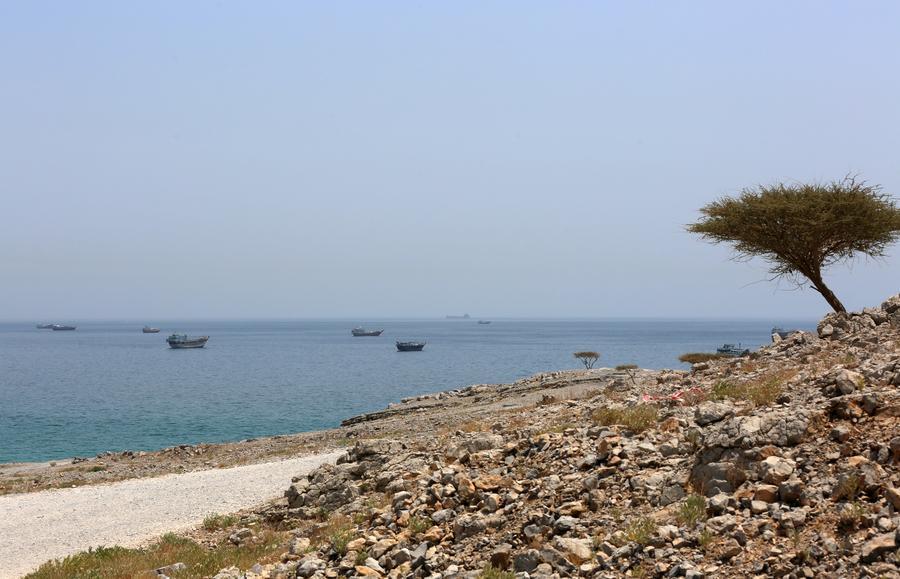
From a high vantage point, the waters south of the Strait of Hormuz stretched toward the horizon. To the north, beyond the strait, lay Iran.
Even on clear days, a thin veil of mist often hangs over the strait, obscuring the opposite shore.
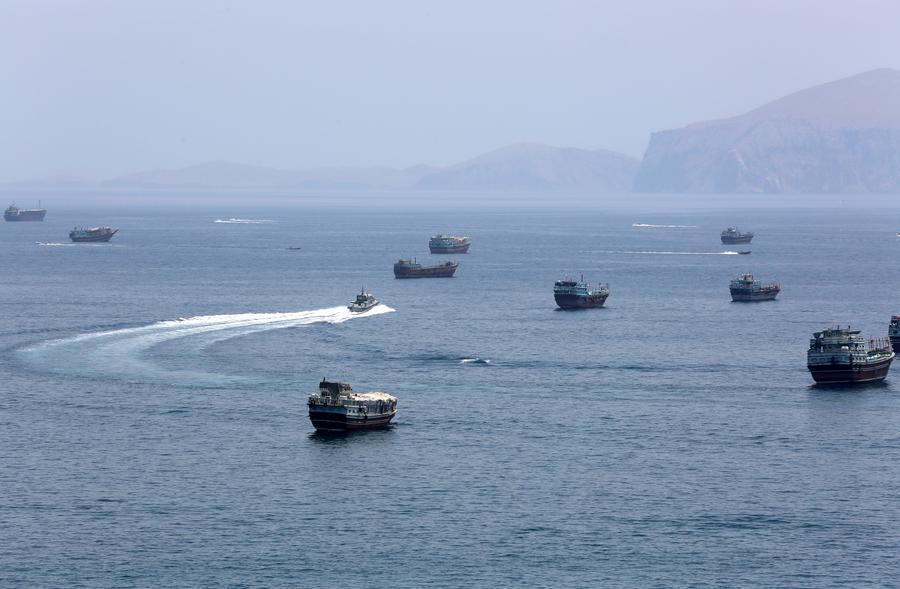
At a small bay along Khasab's coast, dozens of small cargo vessels remained anchored offshore -- fewer, however, than my colleagues had counted during a visit in late May.
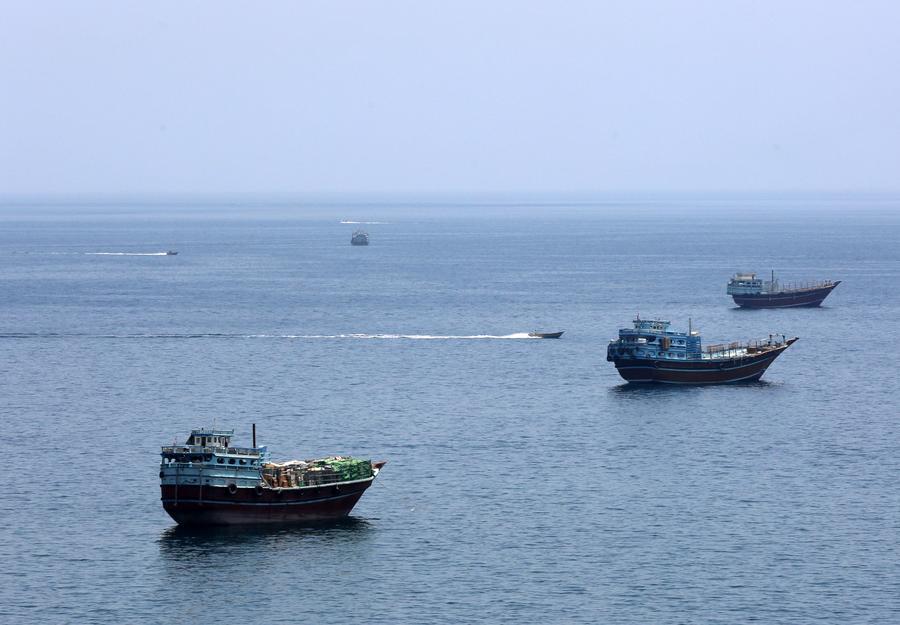
"Most of the ships here carry goods between the UAE and Iran," said Bader, a local resident. "Some have resumed operations in recent days, while others are still waiting for signals from Iranian ports."
He added that larger vessels were operating farther north, closer to the main shipping lanes and out of public view.
The Strait of Hormuz, a maritime chokepoint that carries roughly one-fifth of the world's daily oil and liquefied natural gas shipments, has been at the center of the ongoing tensions.
Iran effectively blocked the strait after the United States and Israel launched joint strikes on the country on Feb. 28. Washington imposed a naval blockade on Iran from April 13 to pressure Tehran into reopening the waterway.
Before the crisis, around 130 vessels passed through the strait daily, according to maritime tracking data. During the conflict, traffic fell to single digits.
The disruption sent global oil prices soaring, adding to the mounting economic and political pressure the U.S. administration faced at home.
For residents on the Omani side of the strait, the impact has been felt in daily incomes.
Known for its dramatic desert fjords, Musandam has long attracted visitors seeking a quieter side of the Gulf. Tourists typically cruise its inlets aboard traditional wooden dhows and venture into open waters to watch dolphins.
One dhow captain told me that the conflict had dealt a heavy blow to local tourism. "Everyone is hoping for stability to return, and for visitors to come back," he said.
Signs of recovery have slowly begun to emerge. Shipping data showed rising traffic through the strait since the U.S.-Iran memorandum was reached, though well below prewar levels. Maritime tracking firm Kpler recorded at least 36 commodity carriers on Monday.
Yet the recovery remains fragile. Iranian media, citing a source close to the country's negotiating team, reported Sunday that Iran would not reopen the strait unless the war in Lebanon ended.
Also on Sunday, U.S. and Iranian representatives held their latest round of negotiations in Switzerland, with Pakistan and Qatar mediating.
After lengthy talks, the mediators described "encouraging progress," including the establishment of a communication line to ensure "safe passage for commercial vessels" through the strait, and a "de-confliction cell" to end military operations in Lebanon.
U.S. President Donald Trump said Monday at the White House that the Strait of Hormuz was "totally open," though Iran had not confirmed the claim.
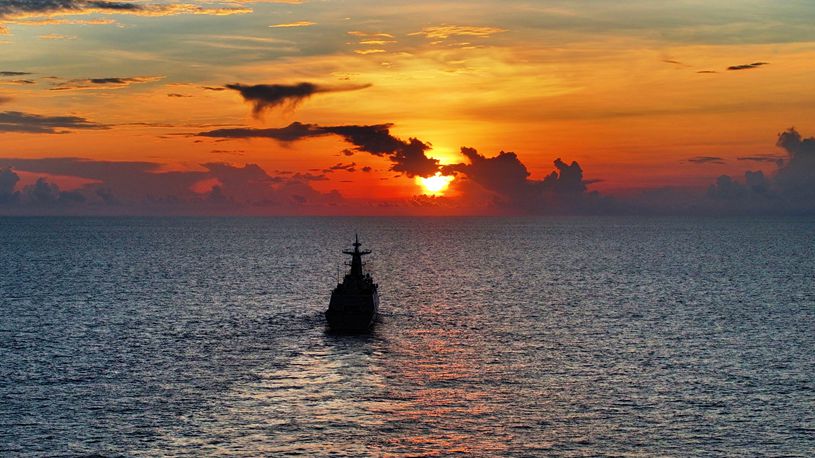
As I left the coast after nightfall, the waters off Khasab were dotted with the lights of anchored ships, their glow suspended between sea and sky. Across the haze-covered water, distant shipping lanes appeared to take shape, yet remained indistinct.■