Starmer's resignation sets up a Labour leadership contest, with Andy Burnham favored to succeed him and inherit a government under pressure over migration, energy and Reform UK's electoral rise nationally.
by Xinhua writer Zhao Jiasong
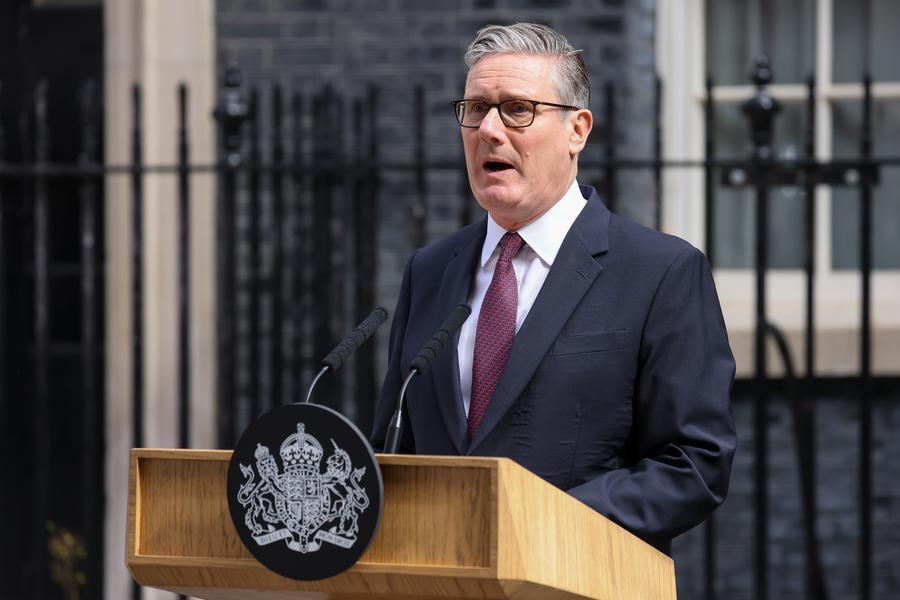
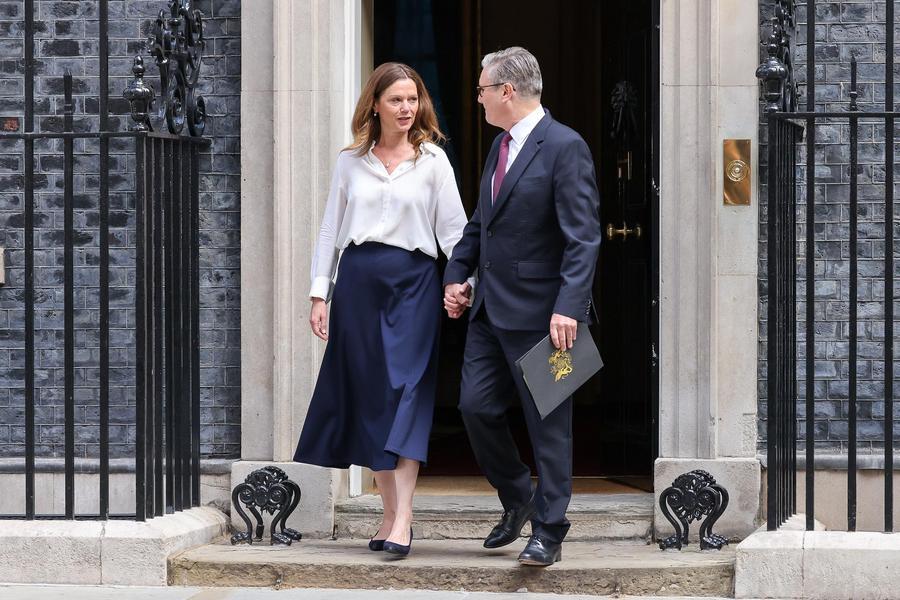
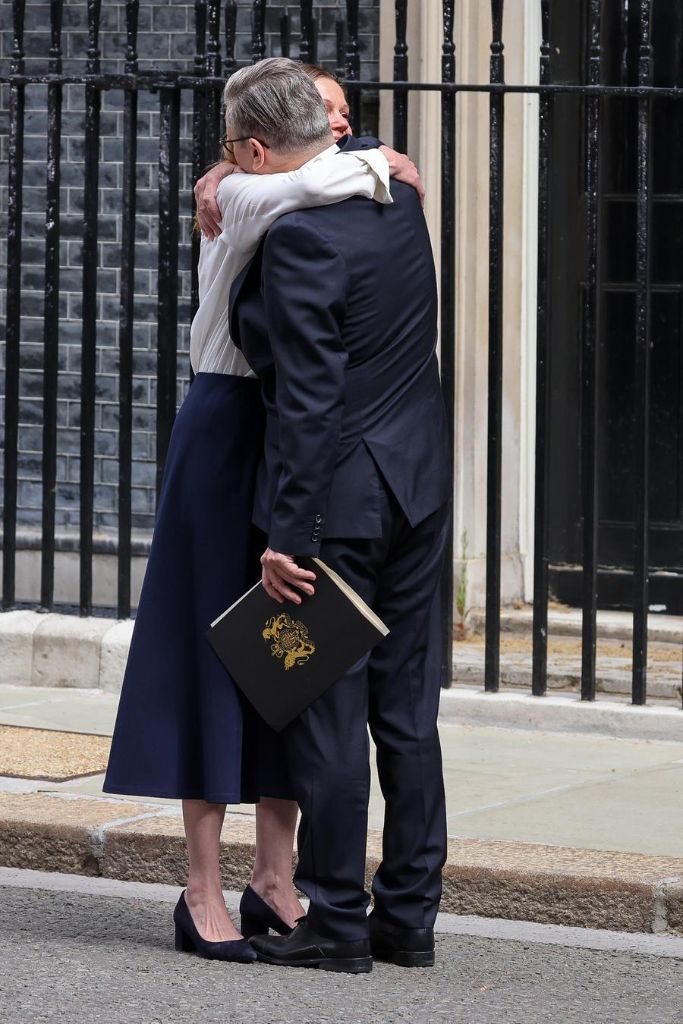
LONDON, June 22 (Xinhua) -- British Prime Minister Keir Starmer announced in a speech outside 10 Downing Street on Monday that he would resign as leader of the ruling Labour Party, while remaining prime minister until his successor is chosen.
His resignation follows a rapid collapse in support inside Labour, accelerated by the return to parliament of Andy Burnham, the figure now widely regarded as the favorite to replace him.
Why did Starmer resign now? How will the transfer of power work? And who is most likely to become Britain's next prime minister?
WHAT HAPPENED?
Starmer entered Downing Street on July 5, 2024, after leading Labour to a landslide victory, winning 411 seats in the House of Commons and ending 14 years of Conservative rule.
He had campaigned on a promise to revive economic growth, improve public services, curb irregular migration and restore stability after years of political turmoil. But less than two years later, he had lost the confidence of a substantial part of his own party.
His position had been weakened by criticism of the government's handling of migration and energy policy, as well as by the continuing controversy surrounding Peter Mandelson, the former British ambassador to the United States, over his links to the late financier Jeffrey Epstein.
Pressure from within Labour had also been building for months.
The decisive moment came on Friday, when Burnham won a parliamentary by-election in Makerfield and returned to the House of Commons. His victory gave him the platform he needed to mount a formal challenge for the Labour leadership and was widely seen as the immediate trigger for Starmer's departure.
After Burnham's victory, calls for Starmer to stand down intensified.
Transport Secretary Heidi Alexander urged him on Friday to set out a timetable for his departure. Home Secretary Shabana Mahmood and other senior ministers had previously made similar demands. Sky News reported on Sunday that Foreign Secretary Yvette Cooper had also privately told Starmer to step down.
The Financial Times reported on Sunday that over 100 Labour members of parliament, a quarter of the party's parliamentary caucus, had called for Starmer's resignation.
WHAT'S NEXT?
Starmer said in his resignation speech that he had asked Labour's National Executive Committee to draw up a timetable for the leadership election. Nominations will open on July 9. The contest is expected to be completed before the parliament's summer recess, meaning a new Labour leader will be in place before the parliament returns in September.
Under Labour's current rules, a candidate must first secure nominations from at least 20 percent of Labour members of parliament. Based on the party's current strength in the House of Commons, that's at least 81 lawmakers. Candidates must also be nominated by "at least three affiliates of the Labour Party (at least two must be trade unions) where the combined membership of nominating affiliates should be at least 5 percent of affiliated membership," according to the rules.
If more than one candidate reaches the nomination threshold, Labour members and eligible affiliated supporters will vote to choose the new leader.
Once a successor has been elected, Starmer will formally visit Buckingham Palace and tender his resignation to King Charles III. The King will then invite the person most likely to command the confidence of the House of Commons to form a government.
Because the Labour Party still holds a majority in the parliament, the King is not expected to play any role in deciding the outcome of the party contest. The new Labour leader would normally be appointed prime minister immediately and would then begin forming a new cabinet.
According to British think tank Institute for Government, a change of prime minister does not necessitate a general election. The next Labour leader could continue governing until the end of the current parliamentary term or choose to call an early election.
WHO'S NEXT?
Burnham is the clear frontrunner.
A former cabinet minister under former prime minister Gordon Brown, he previously stood twice for the Labour leadership and has served as Mayor of Greater Manchester since 2017.
Burnham's victory in Makerfield, where he defeated the candidate of Reform UK, a far-right political party, by a wide margin, strengthened the argument among his supporters that he is better placed than Starmer to win back working-class voters and contain Reform's advance.
Stuart Wilks-Heeg, an elections expert at the University of Liverpool, told Xinhua that Burnham is expected to become the next prime minister, and the scale of his victory would give him a major political advantage. "Momentum is everything in politics, and Andy Burnham has got it right now," he said.
Burnham has presented himself as offering a more substantial break with the current government. He has called for fundamental changes to Britain's economic, migration, education and industrial policies, rejected what he describes as a failed trickle-down economic model and advocated a new program of industrial development for northern England.
Polling suggests that he has a commanding lead among Labour members. A YouGov survey published in May found that 47 percent named Burnham as their first choice for leader. In a hypothetical contest against Wes Streeting, the former health secretary, Burnham led by 80 percent to 10 percent.
Streeting said on May 16, two days after he resigned, that he would stand if a leadership election were held and is regarded as Burnham's most plausible challenger.
But not everyone in the party favors an uncontested transfer of power. ITV reported on Sunday that Business and Trade Secretary Peter Kyle opposed allowing Burnham to take over without a formal contest. Kyle argued that Labour should use the leadership election to debate how best to stop Reform UK, while also ensuring that the transition from Starmer to a new prime minister remained orderly.
Other possible candidates include former Deputy Prime Minister Angela Rayner, Energy Secretary Ed Miliband and Home Secretary Shabana Mahmood.■