*Dragon boat racing is expanding beyond its traditional roots, attracting younger participants and international teams while maintaining a strong cultural link to the legacy of Qu Yuan and the Dragon Boat Festival.
*As a living heritage practice, the sport is increasingly recognized as a platform for cultural exchange, connecting communities across countries through shared teamwork and competition.
*The Dragon Boat Festival is driving tourism and local economies nationwide, boosting travel, hotel bookings, cultural consumption and small-business growth while turning traditional customs into new sources of economic vitality.
by sportswriters Yue Wenwan, Li Siyuan
WUHAN, June 20 (Xinhua) -- For nearly three months, 70-year-old boat builder Zheng Xianglong worked side by side with his son and a group of craftsmen, most of them in their 60s, transforming cedar wood into 14 dragon boats.
After the boats were finished, Zheng spent another three weeks on the riverbank in Zigui County in central China's Hubei Province. He watched crews train under the summer sun and inspected each vessel before practice sessions. His skin grew darker, but Zheng refused to slack off.
"These boats are my life's work," he said. "If the race wasn't a success, I wouldn't be able to sleep."
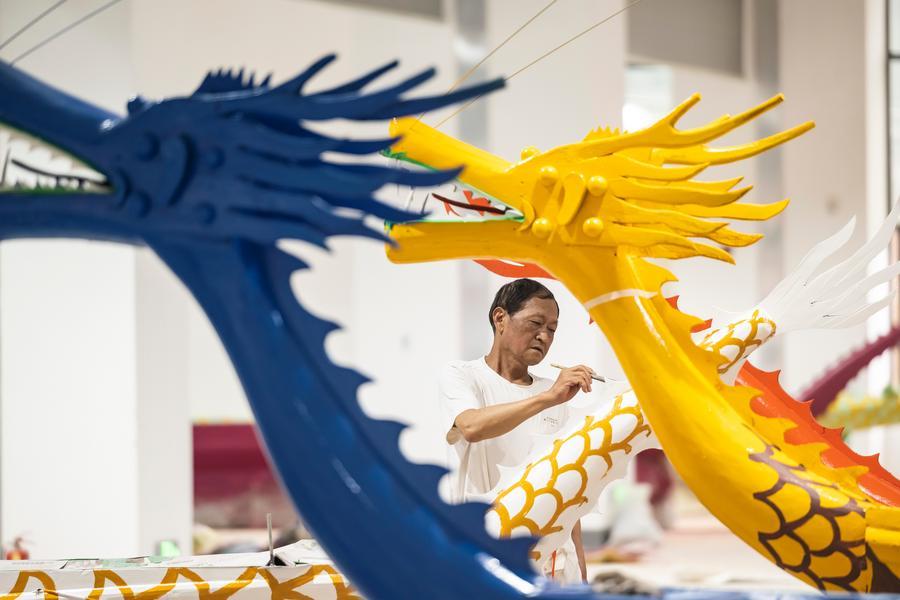
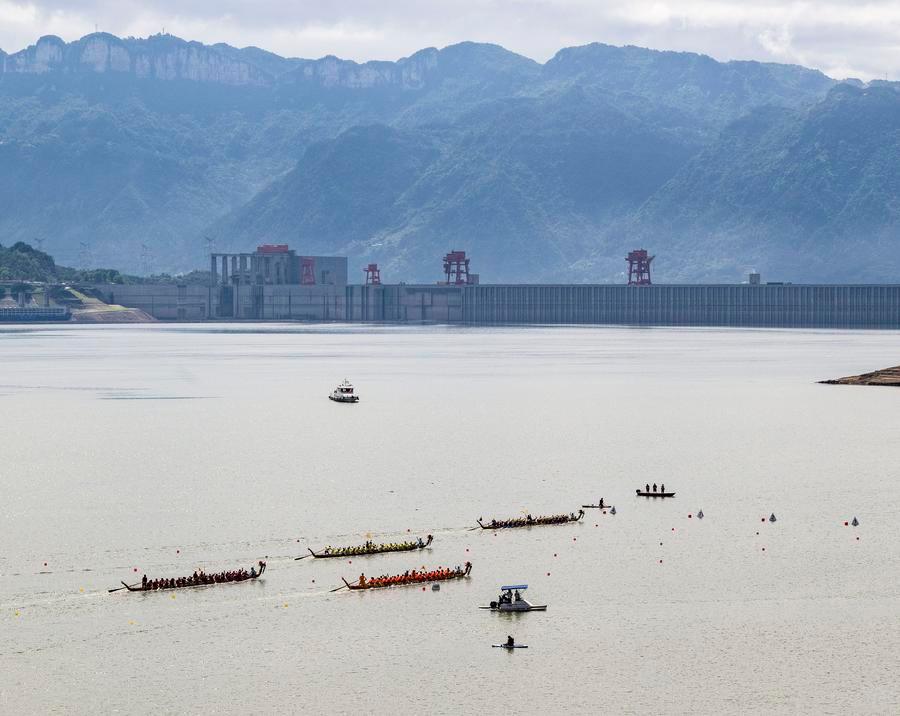
As the two-day dragon boat races started on Friday, Zheng witnessed something that he had feared might never happen again: the return of traditional handcrafted wooden dragon boat racing to Zigui, the hometown of the ancient Chinese poet Qu Yuan, after more than 20 years of absence.
Since 2000, lighter and more durable fiberglass boats, widely used in international-standard dragon boat races, have gradually replaced handcrafted wooden vessels across China. This year, however, local authorities brought the traditional races back to Zigui, describing the move as both a return to cultural roots and a way to strengthen the region's cultural identity.
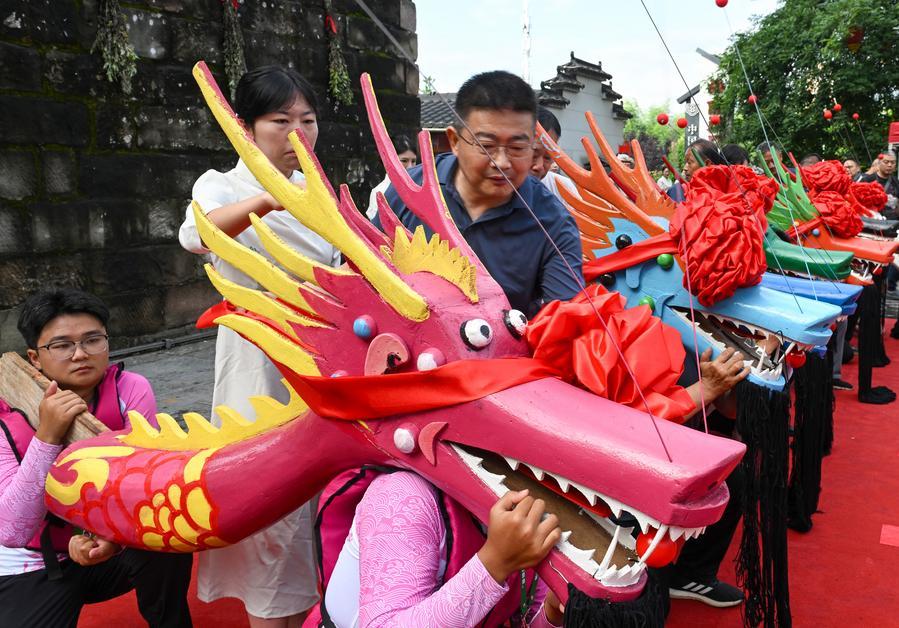
The revival reflects a broader trend across China, where centuries-old Dragon Boat Festival traditions are drawing new participants, preserving cultural heritage and creating fresh economic opportunities.
AN ANCIENT SPORT FINDS NEW AUDIENCES
For millennia, dragon boat racing has been at the heart of the Duanwu Festival, China's first traditional celebration to be inscribed on UNESCO's list of Intangible Cultural Heritage. It is this iconic boat racing that has made the festival widely known around the world as the Dragon Boat Festival.
Closely associated with Qu Yuan, a patriotic poet who lived more than 2,000 years ago, the tradition has long served as a cultural symbol that connects generations. Nowadays, dragon boat racing is finding audiences far beyond its traditional base.
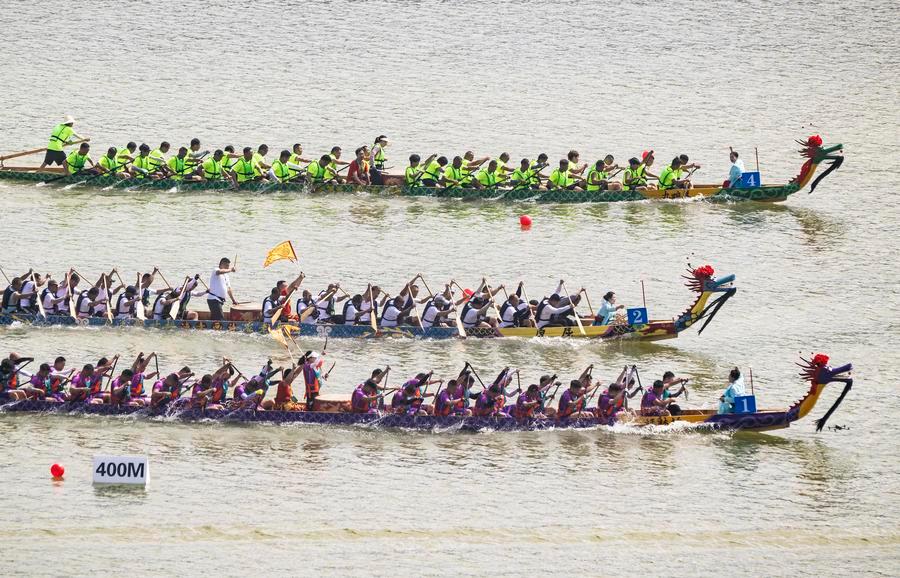
This year, in Guangdong Province alone, more than 500 dragon boat competitions involving nearly 100,000 participants were scheduled during the three-day festival break.
In east China's Jiangxi Province, teams from around the world gathered for the Nanchang International Dragon Boat Race. Among them was Andreas Willms from Germany, who has competed in the event three times.
"Everyone on a dragon boat has to pull their oars in perfect unison," said Willms, a manager at a German-funded company in Shanghai. "This sport relies entirely on teamwork. We compete not just for ourselves, but for the whole team."
Dragon boat racing has been practiced in Germany for nearly four decades, increasingly serving as a cultural bridge between Chinese traditions and international enthusiasts.
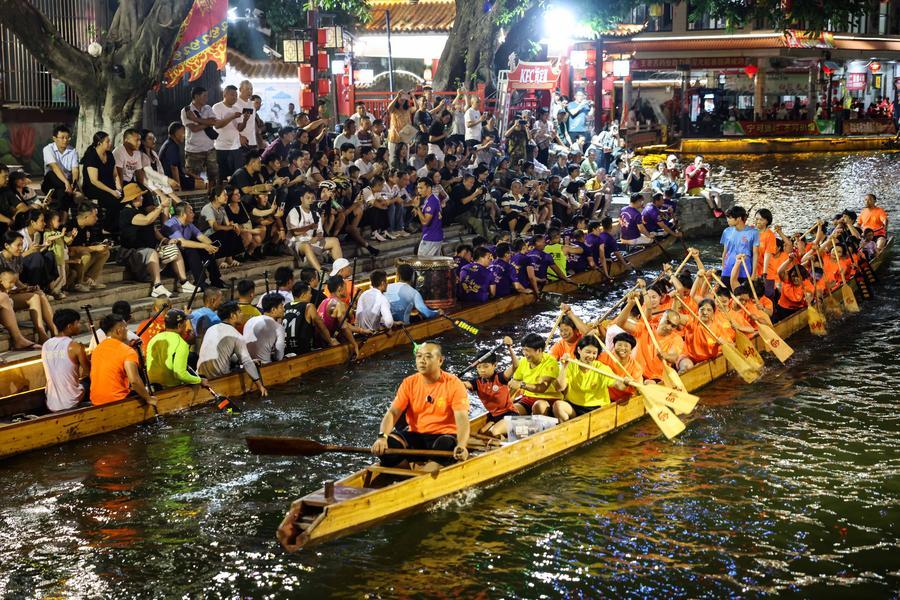
Back in Zigui, local teams raced in handcrafted wooden boats while students from 12 Chinese universities competed about 30 kilometers downstream on the Yangtze River using fiberglass vessels.
For Zhang Pushao, a student from northwest China's Shaanxi Province, the experience carried a deeper meaning.
"We don't have rivers this large in my hometown," he said. "But once I sat in the boat, I felt a connection with Qu Yuan. It's as if a culture from thousands of years ago came rushing toward me."
KEEPING TRADITIONS ALIVE
In Zigui, dragon boat racing is more than a sport. For many residents, the Dragon Boat Festival holds even greater significance than the Chinese New Year.
"Unlike most parts of China, where the festival centers on the fifth day of the fifth month of the Chinese calendar, Zigui observes a month-long festival in three stages," said Li Li, an official with Zigui's culture and tourism bureau.
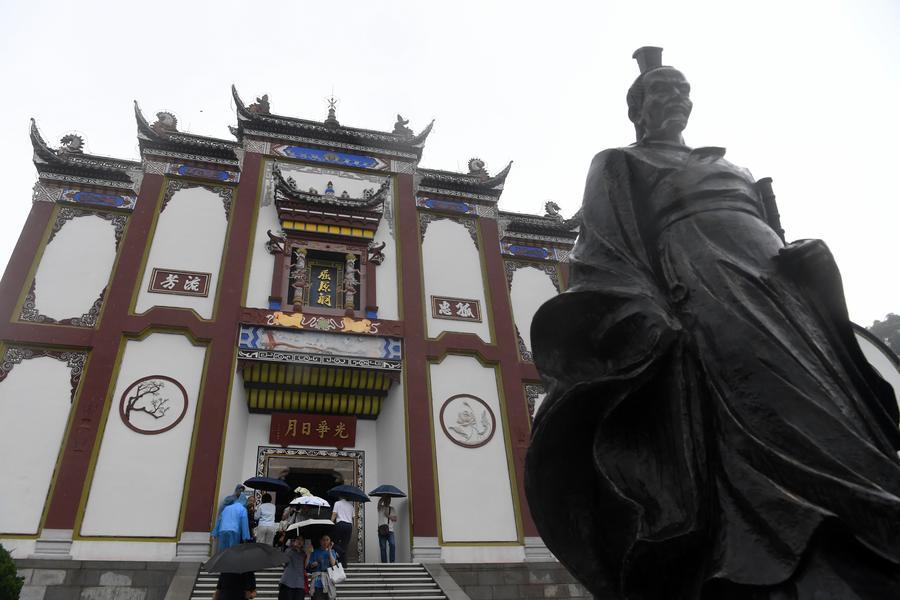
According to Li, one of the most distinctive traditions in Zigui is the hanging of festival couplets, which often contain wishes for good health and references to Qu's patriotic spirit.
Qu's literary legacy also endures. Works, including "Li Sao" and "Tian Wen," remain widely studied and recited, and annual poetry gatherings have been held in his hometown for generations during the Dragon Boat Festival.
"The festival is also a precious opportunity for my family to get together. Relatives who live away from Zigui would come back. We can make zongzi (sticky rice dumplings), watch dragon boat races and enjoy the festive atmosphere," said Tan Guoqing, a local resident.
Beyond the riverbanks, visitors also participated in traditional activities such as making herbal sachets, hanging mugwort and learning Zigui embroidery, a local intangible cultural heritage craft.
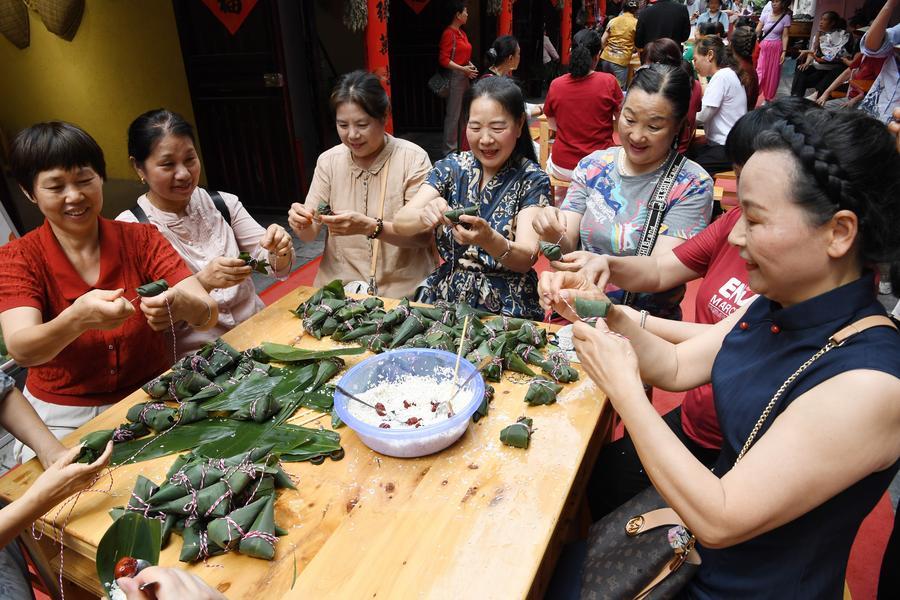
Chen Yuqiang, a tourist from east China's Fujian Province, traveled to watch the races and visit sites connected to Qu in Zigui. "In the past, I learned about him from textbooks," Chen said. "Coming here allows me to understand his patriotism and values in a much deeper way."
According to Xiang Siqing, a veteran folk dragon boat rower in Xiantao City, Hubei, the revival of traditional wooden dragon boats has also been witnessed in other cities.
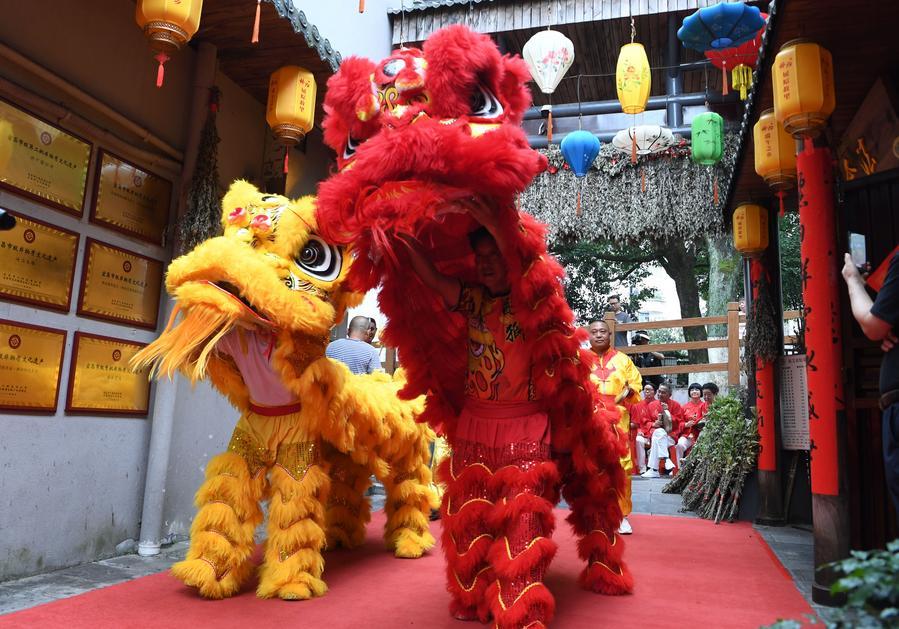
"In recent years, more and more villages have restored the wooden dragon boats in Hubei. These traditional boats would gather to parade and compete, creating an incredible festive atmosphere for the Dragon Boat Festival," he said.
FUELING TOURISM AND LOCAL ECONOMIES
The cultural celebrations are also generating significant economic benefits.
According to China's railway operator, an estimated 83 million passenger trips were expected nationwide during the Dragon Boat Festival travel period. Catering to the needs arising from tourism, dragon boat races and folk cultural events across the country, 44 tourist trains have been put into operation.
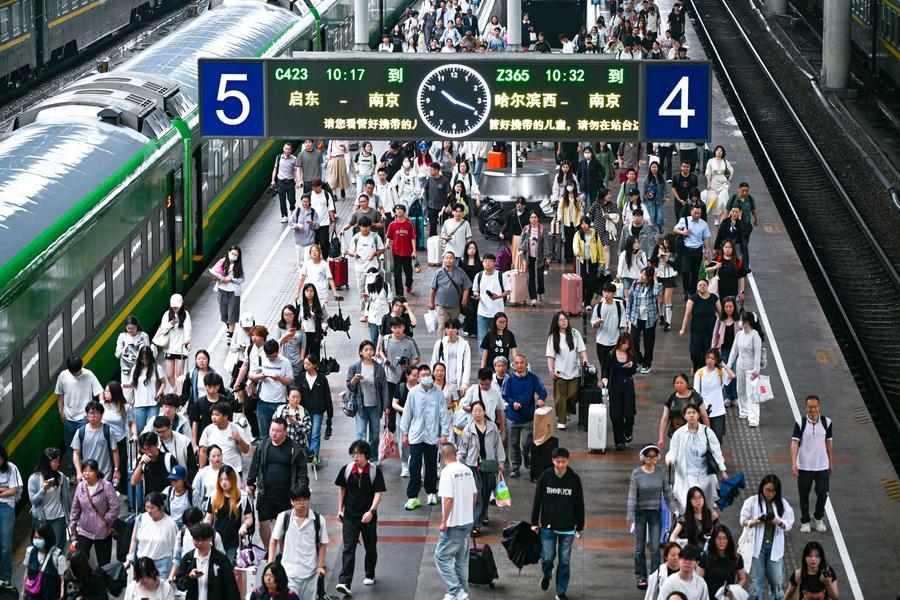
In Yichang, the city that administers Zigui, bookings for five-star hotels rose 55 percent year-on-year during the holiday period, while online searches for local cuisine increased 34 percent, according to Meituan, a major online lifestyle platform in China.
Elsewhere, the economic impact is visible as well. Online searches for dragon boat-related events in the southern Chinese cities of Guangzhou and Foshan rose about 183 percent from the previous month, while hotel search volumes near race venues more than tripled.
Diejiao, a village known for its narrow and winding waterways, in Foshan, Guangdong Province, saw its dragon boat races go viral and generate more than 832 million yuan (around 123 million U.S. dollars) in consumer spending during last year's Dragon Boat Festival.
According to local authorities, since 2023, about 130 new businesses have opened in Diejiao, while dozens of dragon boat-themed cultural products have been introduced.
In Zigui, some of the handcrafted wooden boats will remain on display at tourist sites long after the races end.
For Zheng, however, the greatest reward is not economic. It is seeing younger generations embrace a tradition he once feared might disappear.
"More and more young people are becoming interested in building and racing dragon boats," said his son, Zheng Da. "We will work harder to pass this tradition on."
(Video reporters: Yue Wenwan, Li Siyuan; video editors: Hong Yan, Roger Lott, Zhang Mocheng, Hong Ling)■