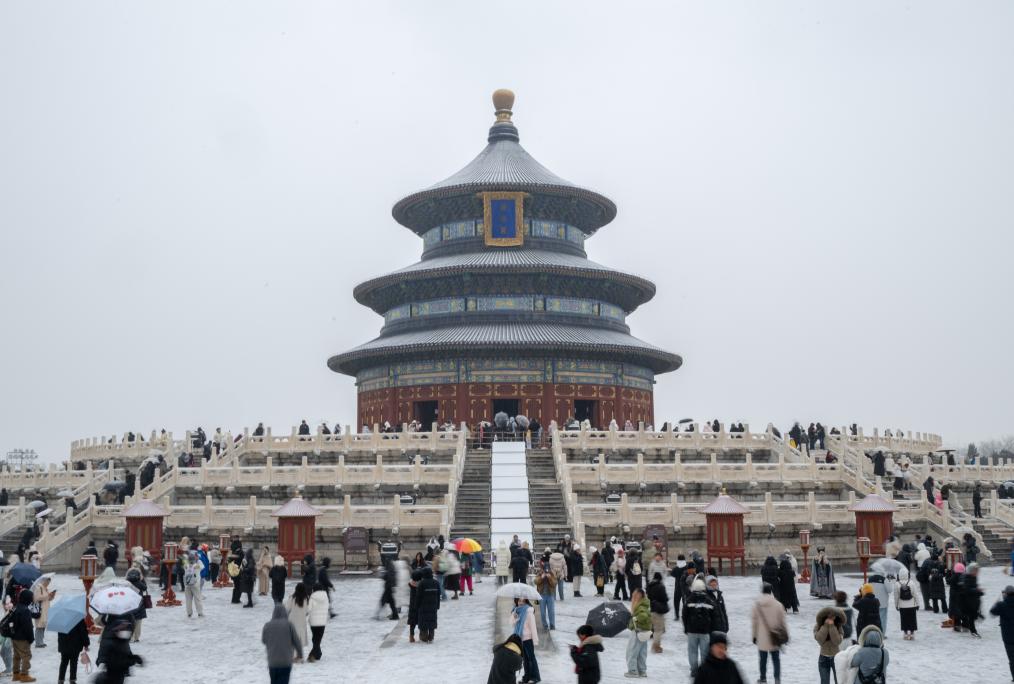
BEIJING, June 13 (Xinhua) -- During U.S. President Donald Trump's China trip last month, Chinese President Xi Jinping invited him to visit the Temple of Heaven, and shared with him how this ancient architecture embodies the Chinese understanding of the universe and approach to life.
The more than 600-year-old architectural complex is one of many cultural heritage sites through which Xi has shared his profound understanding of Chinese civilization and promoted inter-civilization exchanges.
As China observes its Cultural and Natural Heritage Day on Saturday, the occasion offers an opportunity to revisit Xi's vision for cultural heritage protection, which holds that safeguarding the past is essential not only for preserving cultural roots but also for fostering understanding among civilizations.
PRESERVING SHARED HERITAGE
Visiting Uzbekistan in September 2022, President Xi presented Uzbek President Shavkat Mirziyoyev with a special gift: a miniature model of the ancient city of Khiva.
Built more than a millennium ago, Khiva was once an important hub along the ancient Silk Road. An old saying -- "I'd trade a bag of gold just for one glimpse of the ancient city of Khiva" -- describes the city's legendary past. The city was inscribed on the UN Educational, Scientific and Cultural Organization (UNESCO) World Heritage List in 1990, though parts of it later fell into disrepair due to age and insufficient conservation.
The gesture reflected a longer-running effort to preserve the site. Back in 2013, during Xi's first trip to the Central Asian country as Chinese president, the two countries agreed to jointly launch a preservation and restoration project in Khiva, marking China's first cultural heritage conservation project in the region.
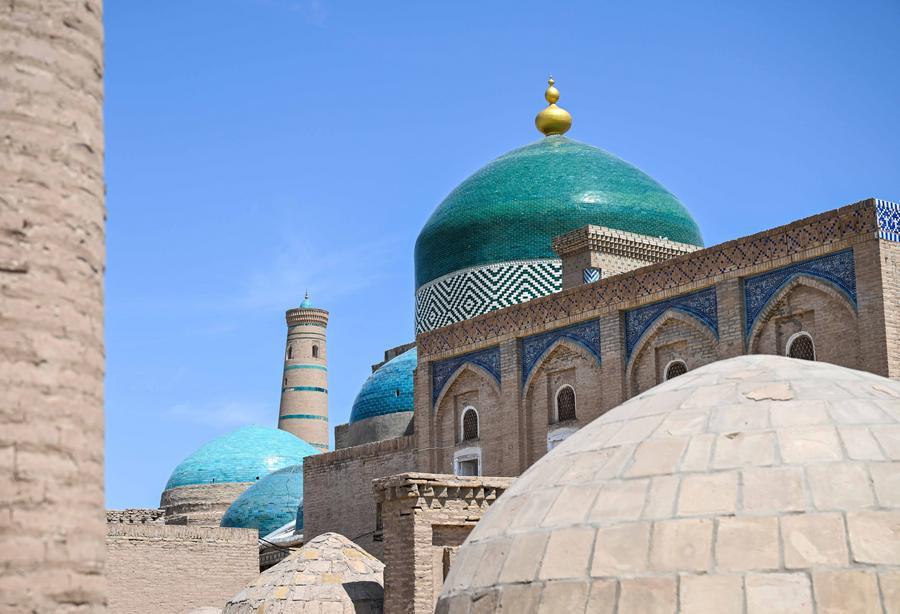
When he revisited Uzbekistan in 2016, Xi met with Chinese archaeologists and restoration experts working at the site, urging them to protect the cultural relics well. With Xi's support, the project was completed in 2019, further enhancing the appeal of this ancient Silk Road hub and helping preserve its historic character.
Xi also attaches importance to the recovery of Chinese relics lost overseas. During his state visit to Italy in 2019, Xi joined then Italian Prime Minister Giuseppe Conte in witnessing a milestone in international cultural heritage cooperation as the two countries confirmed the return of 796 sets of Chinese cultural relics that had been lost overseas for decades.
Spanning some 5,000 years of history from the Neolithic Age to the Qing Dynasty (1644-1911), this batch of artifacts represents the largest repatriation of Chinese cultural relics in nearly 20 years.

In recent years, under Xi's leadership, China has stepped up its cooperation with countries worldwide in heritage protection. At the Conference on Dialogue of Asian Civilizations in 2019, Xi called for efforts to conserve cultural heritage in Asia. In 2021, China and nine other Asian countries jointly launched the Alliance for Cultural Heritage in Asia.
China is willing to strengthen experience sharing on cultural heritage preservation, promote international cooperation in the cultural heritage sector, and establish a network for dialogue and cooperation among civilizations, Xi said in a congratulatory letter to the general assembly of the alliance in 2023.
LONG-STANDING COMMITMENT
Xi's commitment to cultural heritage preservation dates back decades.
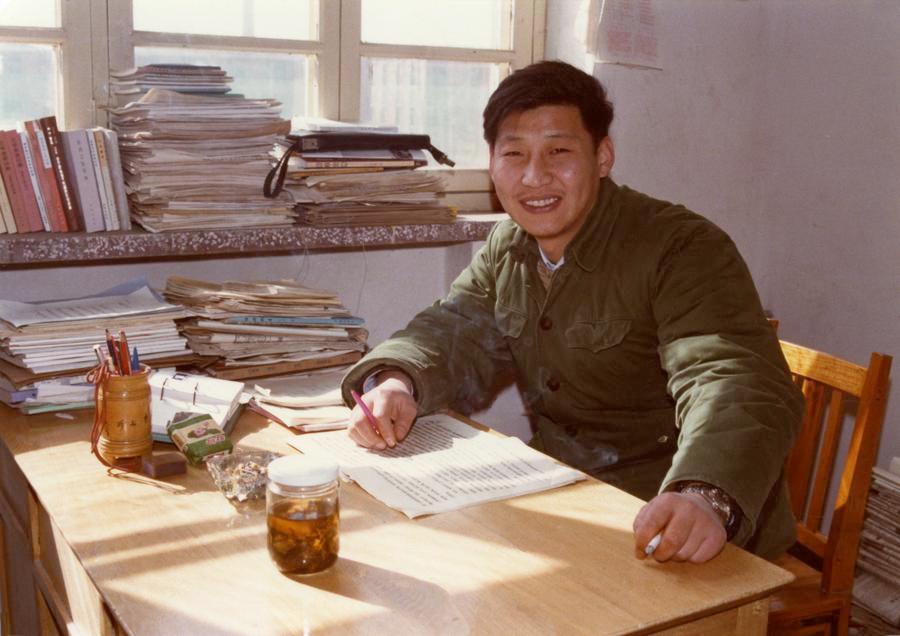
In the early 1980s, while working in Zhengding County in north China's Hebei Province, Xi showed deep interest in the county's rich historical legacy, spending considerable time visiting ancient temples, city walls and stone tablets recorded in local chronicles.
During his tenure in the county, he spearheaded efforts to secure special funds for restoring major historical landmarks, including parts of Longxing Temple, one of China's oldest Buddhist sites.
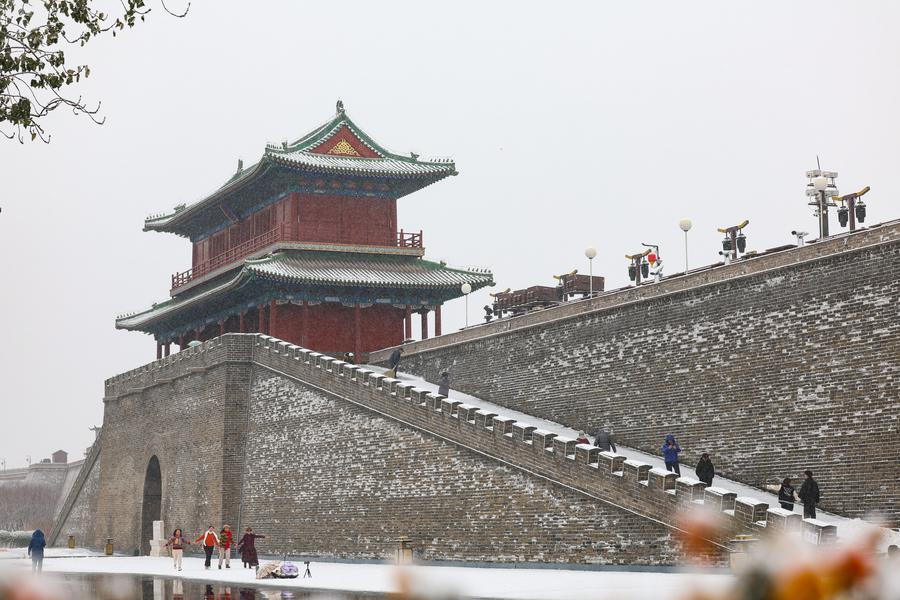
Years later, Xi brought the same sense of urgency to the protection of Liangzhu, an archaeological site in east China's Zhejiang Province dating back more than 5,300 years.
In the early 2000s, mining operations around the Liangzhu ruins had filled the area with dust and noise. Archaeologists described the scene as resembling "a war zone."
After learning of the situation in 2003, Xi, then Party chief of the province, ordered the mines to be shut down. At a time when cultural preservation was often compromised in the pursuit of economic growth, the decision reflected his determination to protect cultural heritage.
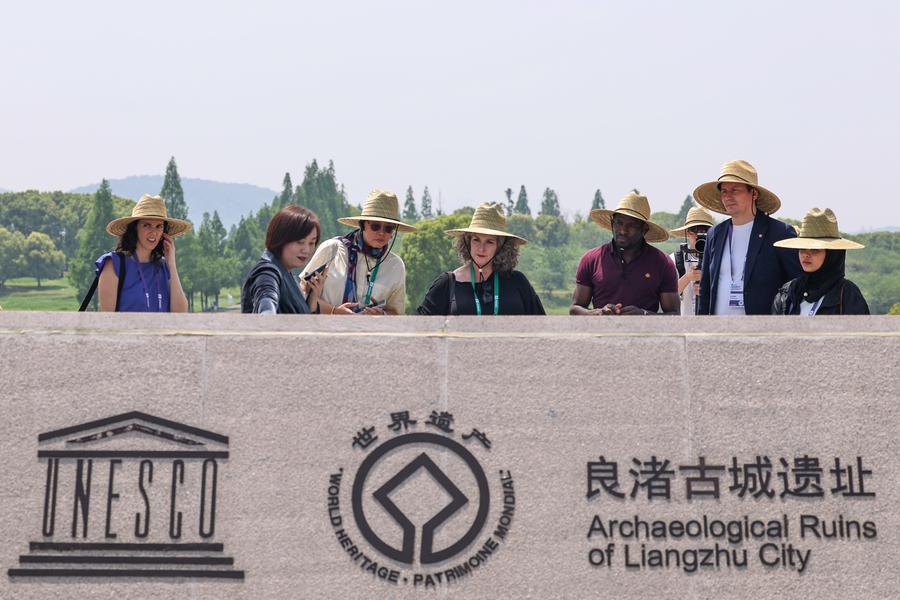
"The Liangzhu archaeological ruins bear testimony to the existence of at least 5,000 years of Chinese civilization," Xi said, calling the site "an invaluable treasure that cannot be replaced."
After leaving the province, Xi remained closely engaged in efforts to preserve Liangzhu. He supported the inscription of Liangzhu, in addition to other heritage sites including the West Lake, the Grand Canal and the Beijing Central Axis, on the UNESCO World Heritage List. He also promoted the establishment of the Liangzhu Forum, a platform for cultural exchanges and mutual learning among civilizations.
Xi's reflections on cultural heritage have often extended beyond preservation itself to the roots and continuity of Chinese civilization. In an article published in Qiushi Journal in 2024, he noted that cultural relics and cultural heritage carry inherent features of the nation and are "nonrenewable and irreplaceable" cultural resources of China.
During a visit to the Yin Ruins in central China's Henan Province in 2022, Xi carefully observed oracle bone inscriptions, bronze ware and other relics dating back more than 3,000 years.
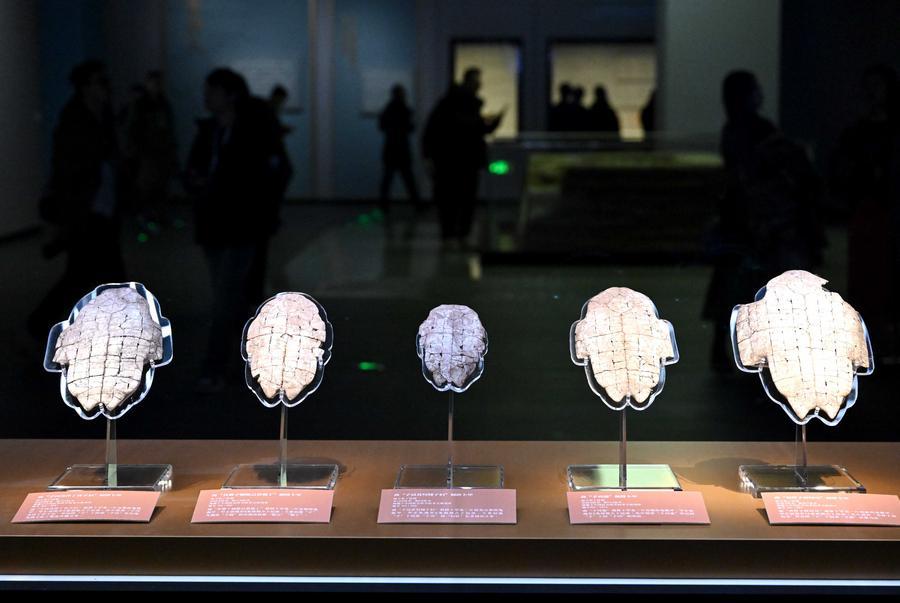
"I have long been yearning to visit here. This time I come here to gain a deeper understanding of Chinese civilization so that we can make the past serve the present, and draw inspiration for better building modern Chinese civilization," he said.
In addition to protecting ancient cities and artifacts, Xi also highly values safeguarding intangible cultural heritage, repeatedly emphasizing that intangible cultural heritage is an important carrier of traditional Chinese culture. Under his vision, China secured the inscription of the Spring Festival on UNESCO's Representative List of the Intangible Cultural Heritage of Humanity in 2024, marking the 44th Chinese cultural element or practice recognized by UNESCO.
BRIDGING CIVILIZATIONS THROUGH HERITAGE
Over the years, Xi has consistently advocated cultural diversity and mutual learning among civilizations. In his eyes, cultural heritage can play a unique role.
During Trump's first China visit in 2017, Xi invited him to visit the Forbidden City, another historic site along the Beijing Central Axis. The two presidents toured the three main halls inside the palace complex -- the Hall of Supreme Harmony, the Hall of Central Harmony and the Hall of Preserving Harmony -- whose names embody the Chinese people's enduring pursuit of harmony.
Trump was among the foreign leaders with whom Xi shared traditional Chinese wisdom through visits to cultural heritage sites in China.
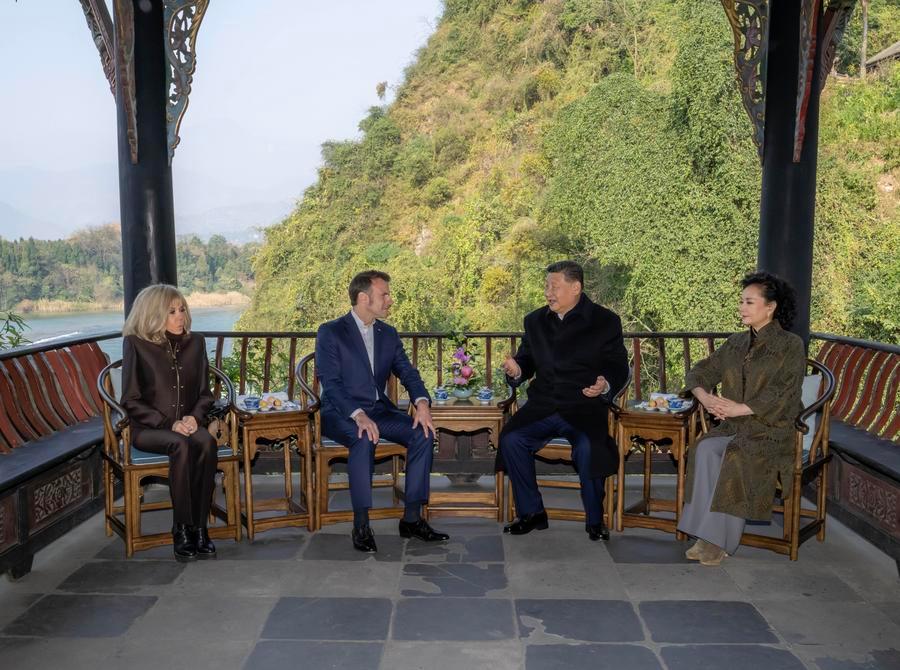
In 2025, Xi and visiting French President Emmanuel Macron visited Dujiangyan, the ancient irrigation system in southwest China that has functioned continuously for more than 2,000 years.
"Every time I come to Dujiangyan, I can deeply feel the greatness of our ancestors in adapting to local conditions, following the natural course, achieving harmony between human and nature, and harnessing water resources for the benefit of the people," Xi told his French counterpart. "From this, I draw wisdom for state governance."
A key reason why Xi pays so much attention to cultural exchanges is that he believes that "civilization can flourish only through exchanges and mutual learning with other civilizations."
In the meantime, he believes that cultural relics are not silent remains of the past, but living witnesses to the continuity of civilizations and enduring bridges connecting different peoples, cultures and generations.
To promote inter-civilization exchanges and mutual learning and advance the progress of human civilizations, Xi proposed the Global Civilization Initiative in 2023.
"As the futures of all countries are closely connected, tolerance, coexistence, exchanges and mutual learning among different civilizations play an irreplaceable role in advancing humanity's modernization process," Xi said when introducing the initiative.
British scholar Martin Jacques said that for China, it is unsurprising to put forward such a global initiative. "It lies at the very heart of its identity. Its success over several millennia is ultimately to be explained by the remarkable continuity of its civilization," he noted.
In Xi's eyes, the world has become what it is today amid the exchanges and interactions between different civilizations of mankind. "Promoting such exchanges and mingling as well as mutual learning and reference is an indispensable path toward a better world and better lives for people of all countries," Xi once said. ■