
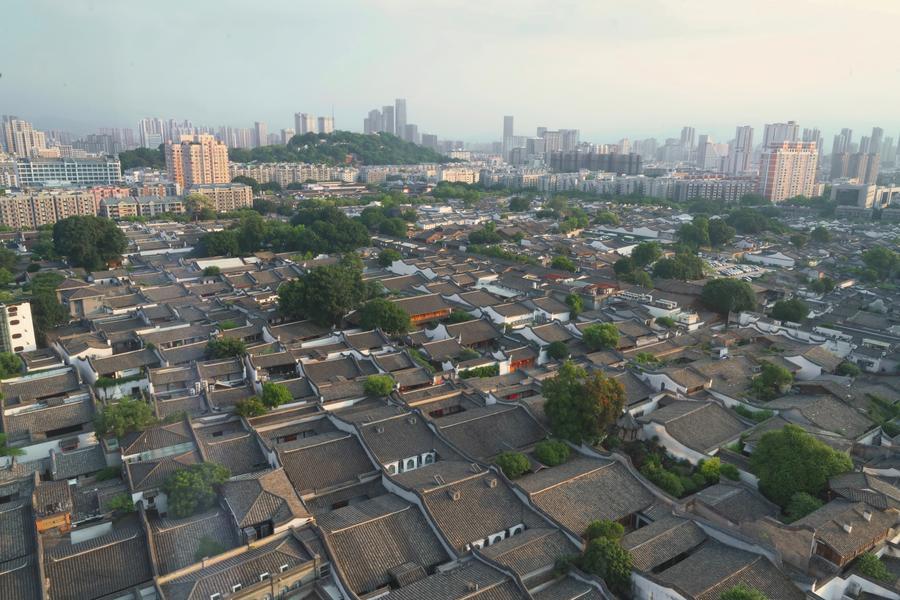
FUZHOU, June 12 (Xinhua) -- In the late 1980s, waves of development swept Chinese cities into the throes of a property boom, and the fate of a crumbling compound in the heart of Fuzhou, capital of east China's Fujian Province, seemed all but sealed.
A glaring Chinese character meaning "demolish" had been painted on the front wall of the historic residence at Fuzhou's Sanfangqixiang, meaning "Three Lanes and Seven Alleys," a neighborhood steeped in over 1,000 years of history.
Scholars and cultural heritage specialists pleaded for the demolition to be halted as concerns mounted over the neighborhood's future.
They pointed to the compound's historical significance: it had once been home to Lin Juemin, a martyr of the 1911 Revolution, which overthrew China's last imperial dynasty, and later became the childhood residence of Bing Xin, one of the country's best-known modern writers.
The appeals reached Xi Jinping shortly after he took office as Party secretary of Fuzhou in 1990. Recognizing the value of the neighborhood's cultural legacy, he ordered the demolition suspended.
On March 10, 1991, Xi gathered local officials for an on-site meeting at Lin's former residence. "We'll preserve it and restore it," his message was unequivocal.
"We must protect, repair, and make good use of the city's cultural relics in our hands. Not only should we prevent them from being damaged, but also help them flourish and pass them on to future generations," he told those gathered at the residence.
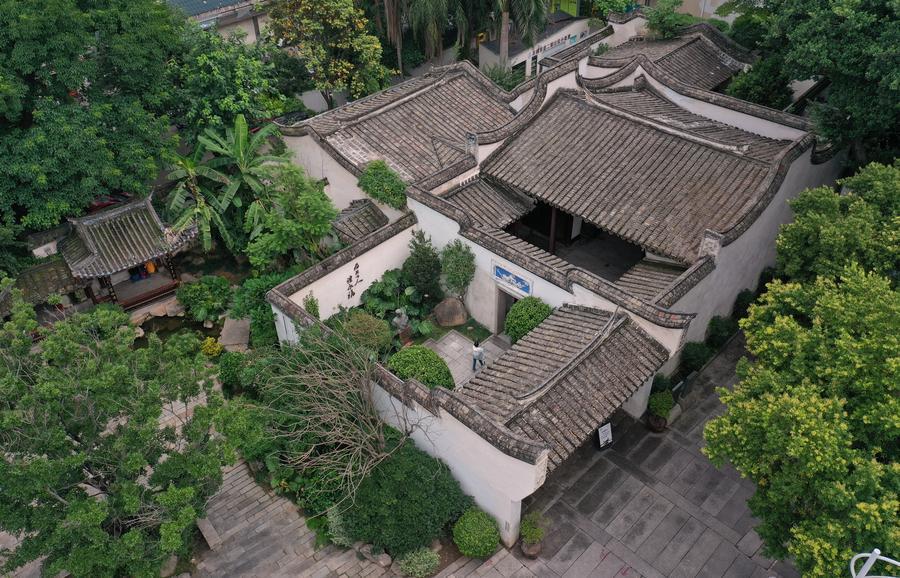
Restoration soon followed, and the residence reopened later that year as the museum of the 1911 Revolution in Fuzhou. Xi attended the opening ceremony and served as a guide for visitors. He went back three times over the following month to get feedback and discuss improvements.
The March meeting also introduced stronger protection measures for historic sites, including the former homes of prominent figures in Sanfangqixiang, and laid out a series of measures to strengthen cultural heritage preservation in Fuzhou, Huang Qiquan, then head of the Fuzhou Museum, once recalled.
"A key test of whether a political system or social force is truly progressive lies in its attitude toward history and culture," Xi stressed at the meeting.
During his tenure in Fuzhou, regulations on cultural relic preservation were promulgated, one of the earliest local ordinances of its kind in China, and the city's cultural heritage bureau and an archaeological team were established. Xi's work laid the foundation for the long-term protection of Fuzhou's cultural heritage.
After more than 30 years of conservation and restoration, Sanfangqixiang now blends historical heritage protection with cultural tourism development, standing as one of China's most influential examples of historic relics preservation.
More than 5 billion yuan (around 734 million U.S. dollars) has been invested in conserving and restoring the block, with over 300 historic buildings already refurbished. Between 2021 and 2025, the area recorded more than 104 million visits.
Zhang Ying, deputy general manager of the conservation and development company of Sanfangqixiang, said the conservation-led revitalization of the block has boosted tourism and the cultural sector, offering visitors immersive performances, cultural and creative products, and digital interactive experiences.
During the 2026 Spring Festival holiday, the block attracted a record 1.72 million visits.
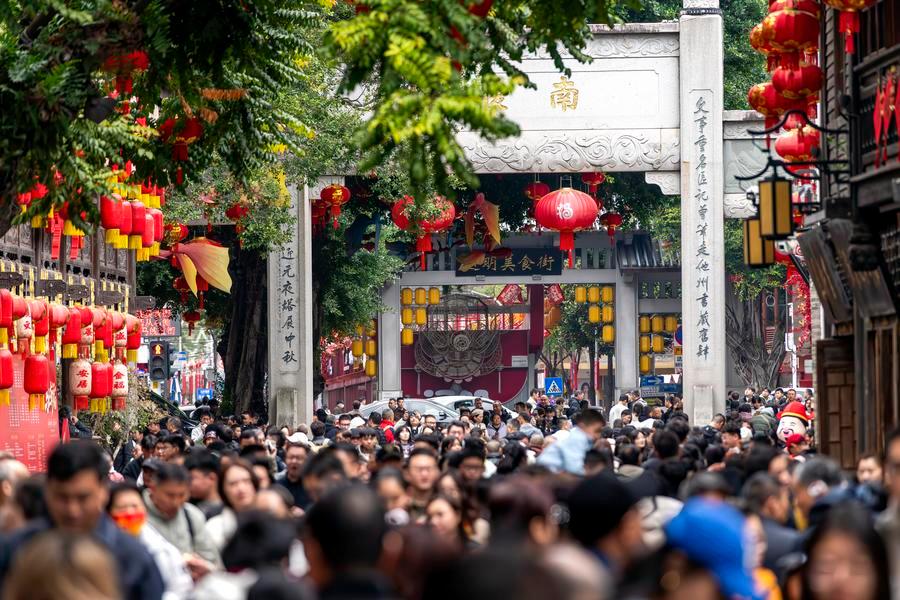
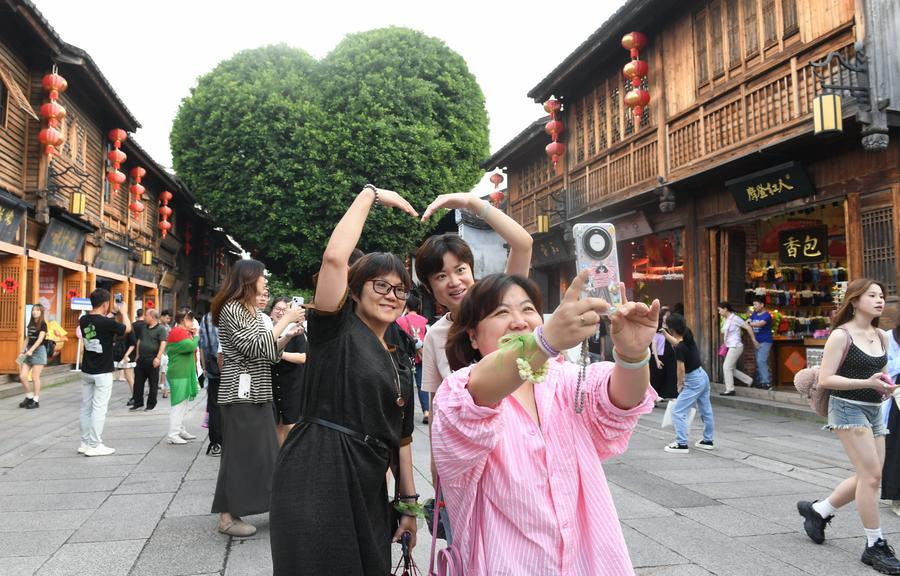
"Watching the area change over time has never been tedious, but I never imagined it would become this popular," said Shi Ying, a 57-year-old resident who was born and raised in the neighborhood. She knows the maze-like alleys by heart -- attending kindergarten in one lane, school in another, and now walking just five minutes from her home to work each day.
For three generations, Shi's family has called Sanfangqixiang home. She learned the trade at a young age from her grandfather, who owned a tailor shop in the area; many locals came for their custom clothing needs.
The renovation of Sanfangqixiang, she said, made the area cleaner, more convenient and easier to live in. Her father, deeply attached to the neighborhood, would often take visiting friends on walks through the alleys, sharing stories about the neighborhood's history and the families who once lived there.
"He always told me, 'Being born in Sanfangqixiang is such a blessing,'" she recalled.
Xi's emphasis on cultural heritage protection extended well beyond Sanfangqixiang. During his tenure in Fujian, he promoted Mount Wuyi's inscription as the province's first UNESCO World Heritage Site, helped save the Wanshouyan Paleolithic relics in Sanming from damage, and supported Fujian Tulou's application for World Heritage status.
In the years that followed in Zhejiang Province, similar priorities were reflected in his attention to the preservation and restoration of the West Lake in Hangzhou, the ancient Grand Canal, and the archaeological ruins of Liangzhu.
After taking the top office as the general secretary of the Communist Party of China Central Committee in 2012, Xi continued to emphasize cultural heritage protection, regularly visiting heritage sites during inspection tours and issuing directives on preservation on various occasions.
These efforts embodied a principle that Xi has consistently upheld throughout his career.
As he wrote in a preface to a book on Fuzhou's historic architecture, "Promoting economic development is an important responsibility of government leaders. Equally important is the protection of historic architecture, traditional neighborhoods, cultural heritage and historic cities."
In 2021, nearly 20 years after leaving his post in Fujian, Xi revisited Sanfangqixiang. He walked through the alleys, visited historic compounds, and listened to briefings on restoration efforts.
"Protecting traditional neighborhoods, historic buildings and cultural relics means preserving a city's history and cultural roots," President Xi said. ■