
From quirky "Lose Fat, Gain Beef" campaigns to medically supervised fitness clinics and daily school playground activity, China is embedding scientific exercise into healthcare, education, and community life as part of a nationwide push toward sustainable weight management and chronic disease prevention.
by sportswriter He Leijing
NANJING, May 30 (Xinhua) -- Since signing up for a community weight-loss campaign, Wang Zhibin has settled into a nightly routine of jogging, stepping on the scale every few days to track his progress, and hoping that each kilogram shed might translate into fresh cuts of beef.
Wang is among thousands of participants in a quirky "Lose Fat, Gain Beef" initiative in Jiangsu's Wuxi. The rules are simple: for every half-kilogram participants lose, they receive the same amount of beef, with rewards capped at 10 kilograms per person.
"The beef is only an extra surprise," Wang said. "Even without the reward, I would still want to lose weight for my health. But now exercise feels like it has an added motivation." With a body mass index of 32, Wang falls into the obesity category and has seen worrying signs in his blood pressure and cholesterol levels.
Organizers said the campaign is designed not to glorify thinness, but to encourage gradual, healthy weight loss through exercise and lifestyle changes. Residents are advised against crash dieting or misuse of weight-loss drugs, while doctors are available to provide professional guidance.
The campaign reflects a broader national movement unfolding across China as the country approaches the final year of its three-year "Weight Management Year" health initiative in 2026.
Similar programs have appeared elsewhere, including a competition in southwest China's Yunnan Province where residents exchange lost weight for potatoes. Online, such government-backed wellness campaigns have drawn widespread attention and praise.
EXERCISE AS MEDICINE
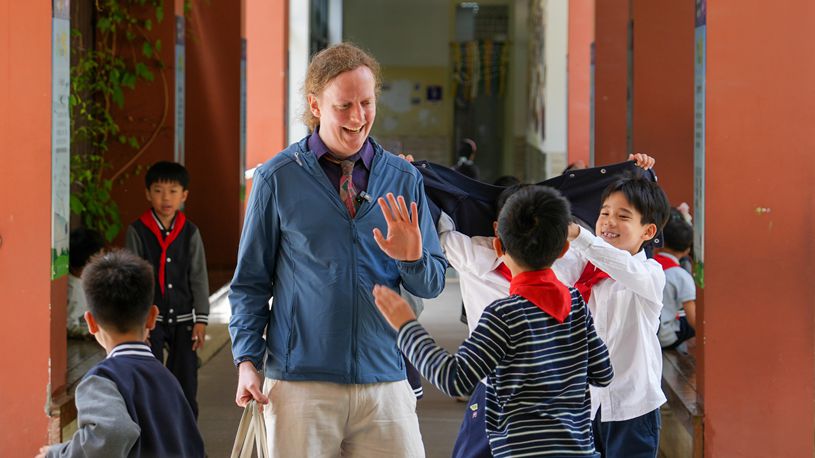
At an elementary school in Nanjing, the playground erupts into life the moment the class bell rings. During a 15-minute recess, children crowd the schoolyard playing games such as shuttlecock kicking, spinning tops and tossing sandbags - traditional folk sports once fading from urban childhoods, now revived as part of a growing emphasis on physical education.
"I especially like spinning tops," said fourth-grader Wu Zehao. "It helps me exercise. I've noticed I'm getting muscles and becoming stronger."
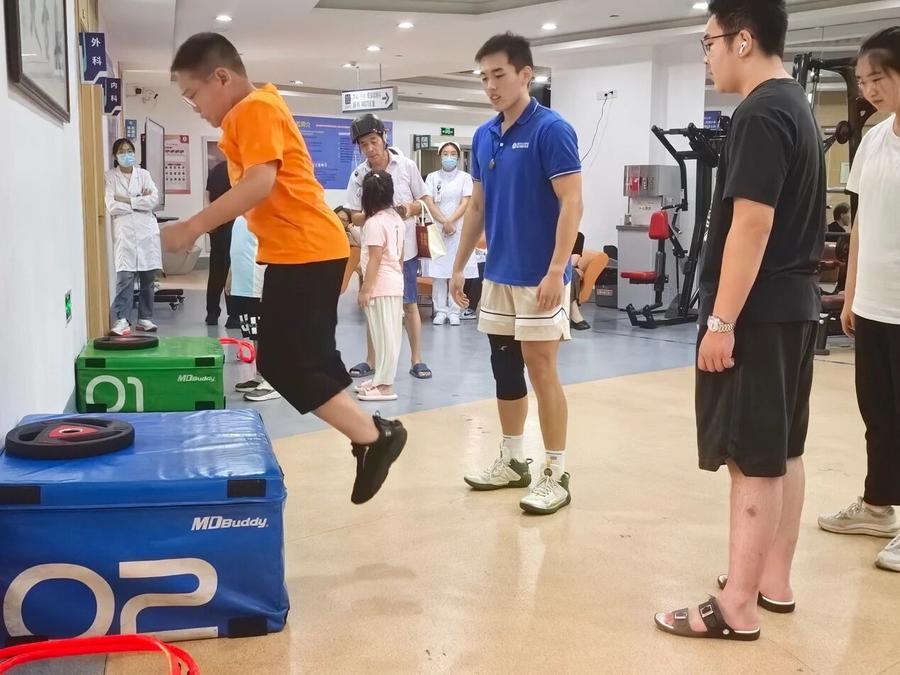
For years, concerns over rising obesity and worsening eyesight among Chinese children fueled anxieties. But education reforms emphasizing diversified school sports programs and policies requiring at least two hours of daily exercise for students have begun to yield results.
"When children spend enough time outdoors every day, they become more focused in class, emotionally steadier and get along better with classmates," said Xia Jing, a physical education teacher at the Nanjing school. "If growth is entrusted to sports, children not only develop stronger bodies, but also stronger minds and greater resilience."
Across China, the idea that exercise is central to long-term health is taking root. Fitness bands and smartwatches that track exercise and health metrics have become hot-selling consumer products, while outdoor sports like marathons and trail running continue to surge in popularity.
On the running tracks of a sports park in downtown Wuxi, hundreds of runners train daily, many preparing for marathon races that have become increasingly difficult to enter due to overwhelming demand.
"Getting selected for some marathons in China today can be even harder than buying concert tickets," said marathon enthusiast Zhang Aiping. Four years ago, Zhang struggled with being overweight, fatty liver disease and insomnia. He later took up long-distance running, training more than 10 days each month.
"I don't obsess over race results," said Zhang, now nearing 50. "But through marathon running, my health indicators have improved significantly. I feel healthier physically, and mentally more positive too."
China's General Administration of Sport has issued guidelines to call for greater integration of scientific fitness into disease prevention, health promotion and rehabilitation services, emphasizing the need for accessible and diversified exercise programs tailored to different populations.
Supporting the country's growing embrace of exercise is also an expanding network of sports facilities. In Jiangsu, officials said more than 97 percent of urban communities are now covered by a 10-minute fitness circle, while rural areas have achieved similar coverage through 15-minute fitness circles.
By the end of 2025, China's per capita sports venue area had reached 3.11 square meters. Official surveys show that 38.52 percent of Chinese residents aged seven and above now participate regularly in physical exercise, up 1.3 percentage points from 2020.
Zheng Jiakun, a professor at Shanghai University of Sport, said Chinese society is increasingly shifting toward a more scientific understanding of fitness.
"The core idea is moving from simply 'doing more exercise' to exercising scientifically and maintaining sustainable health," Zheng said. "People are no longer just following along blindly. They want to understand why they exercise, how to exercise properly and how to sustain it."
To support that transition, China has steadily expanded its network of social sports instructors. By the end of last year, the country had around four million certified social sports instructors nationwide. A national training initiative targeting women in rural villages has already cultivated 94,000 female instructors across 33,000 administrative villages.
SPORTS MEET HEALTHCARE
For 71-year-old Nanjing resident Ren Daqing, exercise has become possible again thanks to a new kind of neighborhood clinic. "When I was younger, I loved outdoor running," Ren said. "But after developing heart disease, I became afraid to exercise."
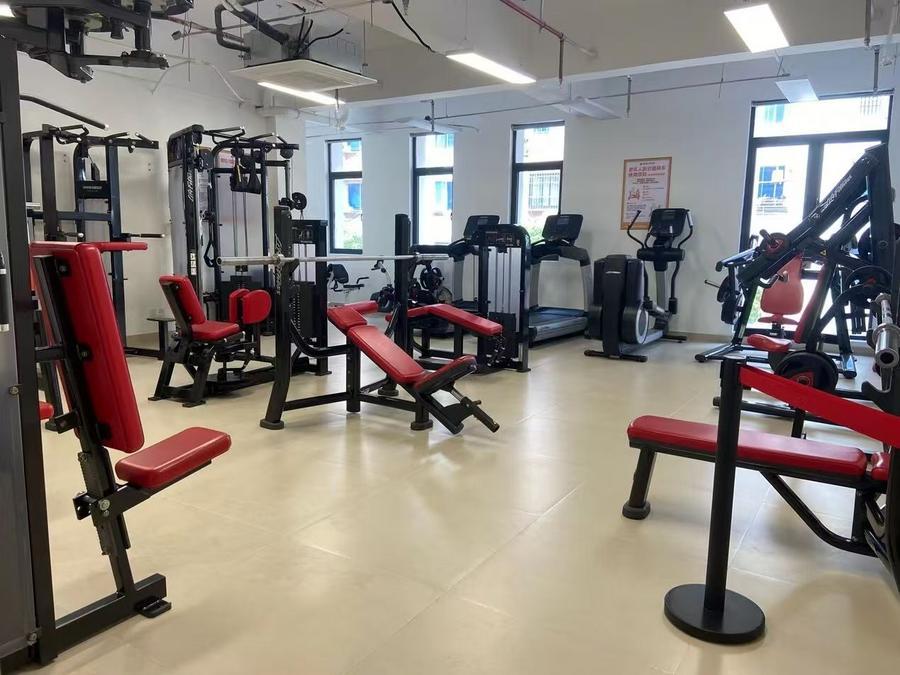
That changed last year when a nearby community clinic opened a medically supervised fitness center complete with professional trainers and physicians on-site. "Now I feel reassured exercising here," Ren said. "My physical condition has improved a lot."
Yue Qingping, head of the clinic, said the facility was created in response to China's rapidly aging society, where many senior residents live with chronic illnesses yet lack access to safe, professional exercise guidance.
"Many seniors are reluctant to go to gyms because of underlying health conditions," Yue said. "So we created a place specifically focused on exercise for health promotion."
Inside the clinic, residents can undergo physical fitness assessments and cardiopulmonary testing before receiving personalized exercise prescriptions. Medical staff track participants throughout their training, helping ease anxiety among people with chronic illnesses.
"Our professional team includes exercise prescription specialists, community sports instructors, general practitioners, traditional Chinese medicine physicians and rehabilitation therapists," Yue said. "All are trained in emergency response skills such as cardiopulmonary resuscitation (CPR), and the facility is equipped with automated external defibrillator (AED) devices."
"In the past, doctors could only offer vague advice like 'exercise more and stay up less late,'" she added. "Now, the integration of sports and healthcare allows exercise prescriptions to become far more precise."
Such integration is becoming increasingly common across China. For example, more than 5,500 medical and healthcare institutions nationwide have now established healthy weight management clinics.
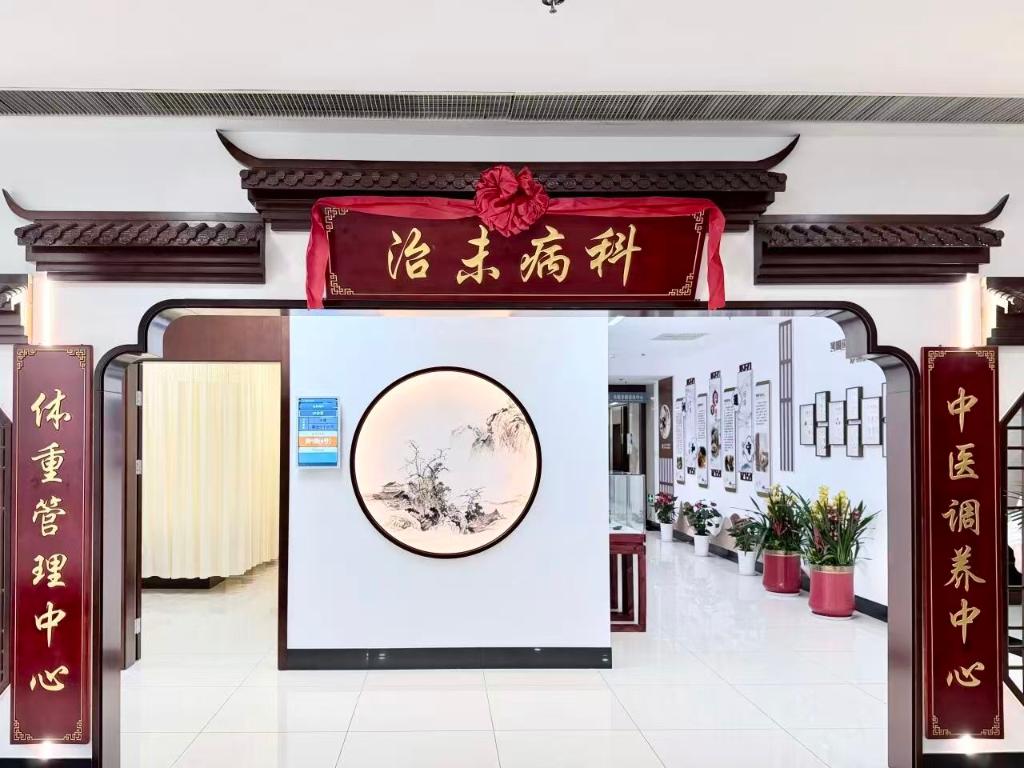
In 2025, Wuxi Traditional Chinese Medicine Hospital established a dedicated weight management center that combines multidisciplinary consultation services under a preventive healthcare model, serving nearly 20,000 patients annually.
Beijing's Chaoyang District has embedded online exercise-health platforms into its healthcare system, allowing residents to receive personalized digital exercise prescriptions based on different body conditions. In Miyun District, community clinics are partnering with schools to develop fun sports programs that integrate posture correction and weight management into children's daily routines.
In Shanghai, multiple medical institutions have opened weight management and exercise intervention clinics, using more than a dozen physical indicators to generate tailored fitness recommendations and long-term health tracking. Similar services are also being introduced into nursing homes.
Jiangsu alone has built more than 200 exercise-health service institutions spanning provincial, municipal, county and village levels, while establishing 100 pilot programs focused on exercise intervention for chronic diseases. They provide exercise-related health services to more than 100,000 people annually.
"But scientific fitness awareness is still uneven across the country," Zheng said. "In the future, exercise management will increasingly shift from experience-based approaches to data-driven, intelligent and life-cycle-oriented systems, with much deeper integration between sports and medicine."
"In that process, scientific exercise will become an important force driving the development of China's health industry and innovation in social governance," he added. ■