
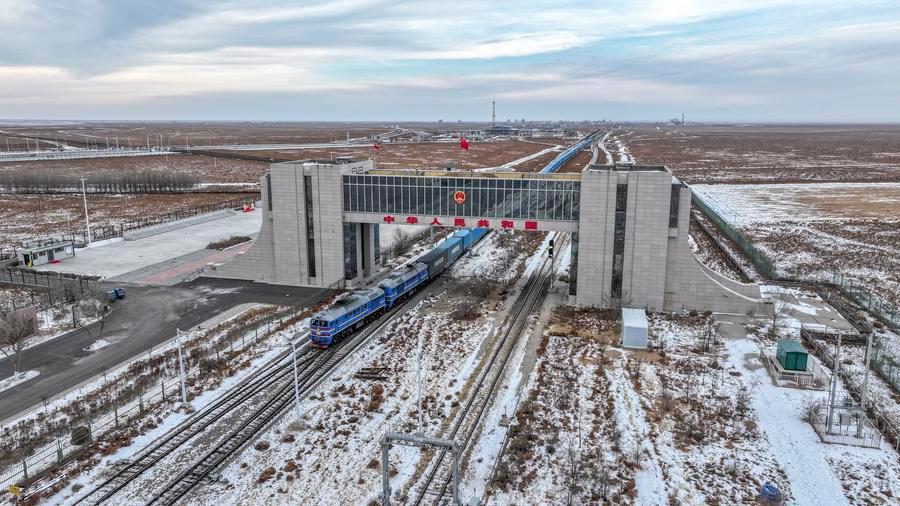
With improving infrastructure, expanding areas of cooperation and growing strategic mutual trust, China-Russia cooperation in regions such as Zabaykalsky is embracing new historic opportunities, which will inject stronger momentum into the development of the border areas of both countries, said Governor Alexandr Osipov of the Zabaykalsky region.
MOSCOW, May 24 (Xinhua) -- Russia-China border cooperation is highly active, and the two sides are expected to unlock the potential for cooperation in this area, Governor Alexandr Osipov of the Zabaykalsky region has said.
Located in Russia's Far East and bordering both China and Mongolia, the Zabaykalsky region lies along the Tea Road, a historic international trade route primarily used for tea shipments connecting China to Europe, and serves as an important hub of the China-Mongolia-Russia Economic Corridor.
In a recent interview with Xinhua, Osipov said mining and mineral processing are one of the region's priority industries and a major area of cooperation with China. Dozens of joint projects are currently underway, covering various mineral resources. He noted that bilateral cooperation is shifting from basic extraction and primary processing toward deeper processing.
To support this transition, the regional government has introduced a range of incentives for enterprises engaged in advanced processing, including infrastructure support, tax breaks and customs preferences.
Transport and logistics are also key development areas, he said, highlighting the vast potential for cooperation between Russia and China in Siberia and the Far East, with border crossings playing a crucial role.
The renovation and expansion of the Zabaykalsk border checkpoint are already underway, with the main construction expected to be completed this year, Osipov said, adding that the upgrade is set to significantly enhance both passenger and cargo handling capacity.

Tourism is another important pillar of bilateral cooperation. Osipov said the region boasts unique natural landscapes, rich historical heritage and "red tourism" resources. It is developing new attractions, eco-trails and themed travel routes, hoping to attract Chinese tourists.
The Zabaykalsky region is also one of Russia's largest suppliers of timber products to China. Osipov welcomed Chinese enterprises to participate in timber harvesting and processing through joint ventures, adding that Russia's organic agricultural products also have broad prospects in the Chinese market.
Expressing strong expectations for the 2026-2027 China-Russia Years of Education, Osipov said cooperation in sports, culture and education has been steadily expanding. The region maintains close ties with Chinese schools and universities and is actively participating in related activities.

Having visited China frequently in recent years, Osipov said he has witnessed the country's rapid socio-economic development. He noted that China's 15th Five-Year Plan (2026-2030) aims to improve the well-being of its people while promoting win-win development with countries and regions, including Russia.
Russia hopes to learn from China's innovative technologies to boost productivity and industrial competitiveness, he added.
"We must recognize that the importance of border cooperation has reached a new level," Osipov said, noting that against the backdrop of potential disruptions to maritime transport routes, it is vital to develop land transport corridors, ensure efficient border operations, and create favorable conditions for businesses and investors.
He said that through border cooperation, Russia and China have deepened ties in economic, infrastructure and people-to-people exchanges.
With improving infrastructure, expanding areas of cooperation and growing strategic mutual trust, China-Russia cooperation in regions such as Zabaykalsky is embracing new historic opportunities, which will inject stronger momentum into the development of the border areas of both countries, the governor said. ■