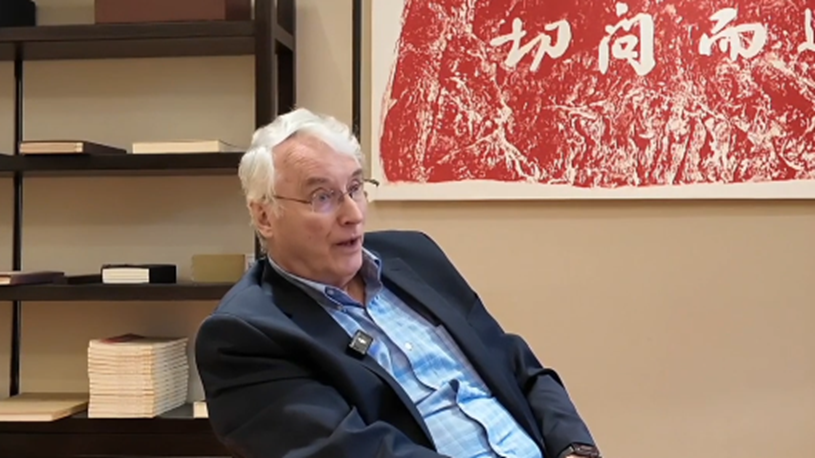
The ties between Naples and China were rooted deeply in history, said Naples city councilor Luigi Carbone.
by Xinhua writer Diao Ze
NAPLES, May 3 (Xinhua) -- From archives, local college to street names, the southern Italian port of Naples has developed close links with China for centuries, becoming an eyewitness to the development of cultural exchanges between China and Italy.
Luigi Carbone, Naples city councilor and president of the City Council's commission for culture, tourism and productive activities, said recently that the ties between Naples and China were rooted deeply in history.
It has "already become part of our DNA," said Carbone.
Besides having a winding lane named "Salita dei Cinesi" (Chinese Slope), Naples became home to the Collegio dei Cinesi (Chinese College) almost 300 years ago, which was founded by Italian missionary Matteo Ripa.
Serving as a painter and translator at the royal court of the Qing Dynasty (1644-1911), Ripa returned to Italy in 1723 and established the college with a clear mission to overcome language and cultural barriers by nurturing truly inclusive, cross-cultural talent.
The college later turned into one of the earliest institutions in Europe to systematically study Chinese language and culture.
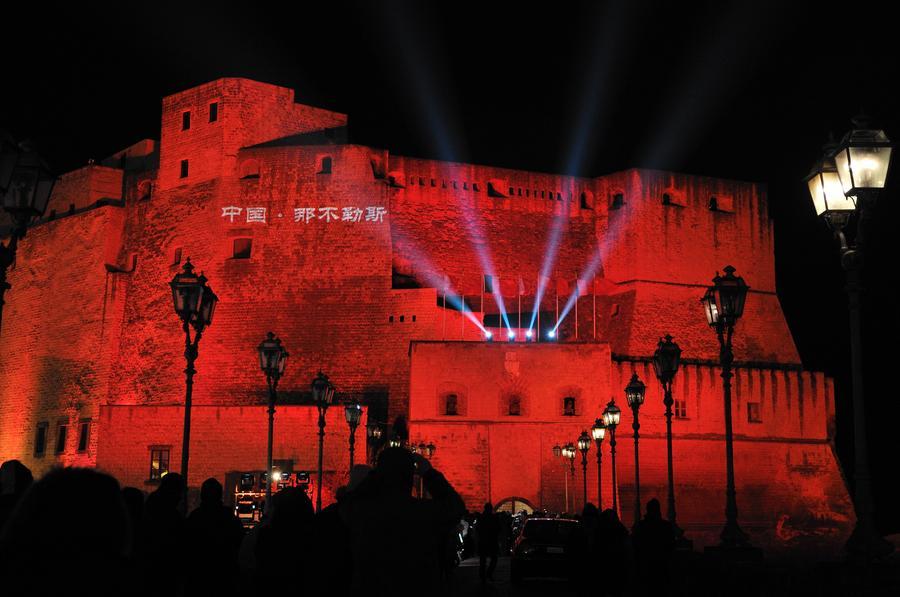
After several name changes, the college evolved into the University of Naples L'Orientale, remaining a leading center for Sinological studies in Italy.
According to Antonella Vurchio, a librarian of L'Orientale, the earliest core collection of the library came from the Collegio dei Cinesi.
Roberto Tottoli, rector of the university, said the "illuminating legacy" of Collegio dei Cinesi went directly to L'Orientale. In his view, the studies on Chinese language and culture have become the core of the university's mission from the beginning.
Tottoli said the university's cooperation with Chinese institutions has been expanded from language teaching, history, to international relations and archaeology. It has signed multiple memoranda of understanding with Chinese partners and kicked off the cooperation with the Chinese Academy of Social Sciences.
In addition, the Confucius Institute at L'Orientale has promoted cultural exchanges and people-to-people understanding and friendship between China and Italy.
Valeria Varriano, Italian director of the Confucius Institute, said many Italians are first attracted by Chinese traditional culture, and then surprised by China's vitality.
The institute has become a real hub in Naples, connecting schools with the university and promoting the exchanges between Chinese students in Italy with Italian students, added Varriano.
Wu Junru, Chinese director of the Confucius Institute of Naples, said the institute serves not only as a language-teaching body, but also a platform of cultural exchanges.
Italian student Davide Saracino said figures such as Matteo Ripa and Marco Polo helped build bridges across civilizations in their era; today, it is up to younger generations to continue the work. ■