Observers say that China's zero-tariff policy will further dismantle trade barriers, deepen China-Africa cooperation, and generate lasting benefits for the people of China and Africa, opening new avenues for jointly advancing modernization.
BEIJING, May 1 (Xinhua) -- In the rolling, lush fields of Ibiza Village in Kayonza District, eastern Rwanda, farmers are busy cultivating red chili peppers. Growing demand from the Chinese market is likely to keep them even busier, thus bringing higher incomes.
For hundreds of farmers in Kayonza, expanding chili exports to China is opening a viable path out of poverty, driven by China's zero-tariff policy and strong market demand. What began as a small farming operation has rapidly evolved into a life-changing opportunity for farmers, workers and exporters alike across the continent.
Starting May 1, China's zero-tariff policy takes full effect for 53 African countries with which it has diplomatic relations, as announced by Chinese President Xi Jinping in a congratulatory message to the 39th African Union Summit on Feb. 14.
Observers say that the policy will further dismantle trade barriers, deepen China-Africa cooperation, and generate lasting benefits for the people of China and Africa, opening new avenues for jointly advancing modernization.
ZERO TARIFFS, BIG GAINS
In Rwanda, many local companies are looking to capitalize on the zero-tariff policy to gain better access to the Chinese market and, by extension, the global market. Fisher Global, a Rwandan agricultural company that began exporting dried chili to China in 2022, is now aiming to turn chili into a major cash crop for rural communities.
"At first, we had only about 15 hectares under chili cultivation, but now we have expanded to 300 hectares," Herman Uwizeyimana, general manager of Fisher Global, told Xinhua.
According to Uwizeyimana, the company now has 31 permanent employees and up to 600 casual workers, creating much-needed jobs and boosting local incomes.
"Exporting to China has been a great opportunity for us. With the memorandum of understanding between Rwanda and China to export dried chili, it has really opened doors," he said. "Having access to such a huge and stable market has empowered us to keep improving both the quantity and the size of our planting area."
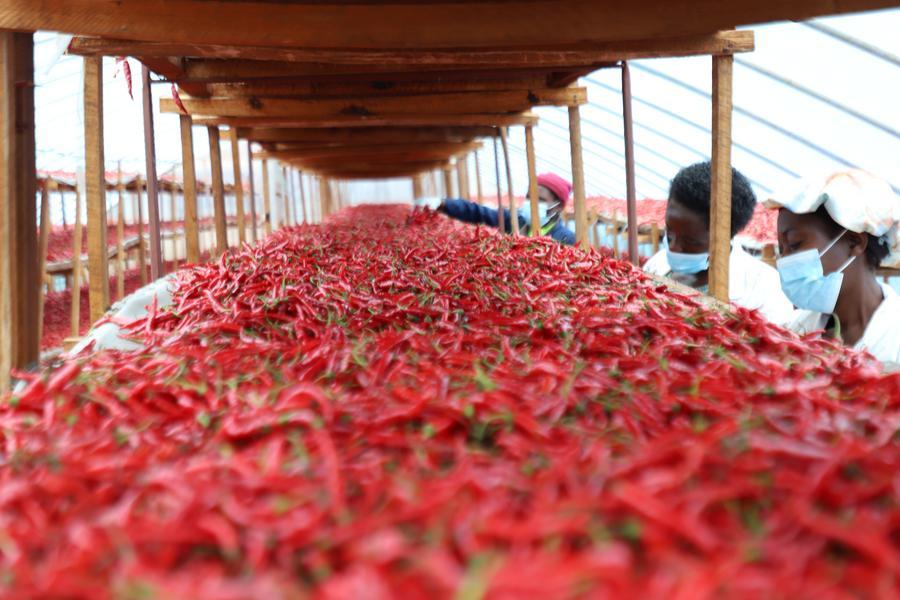
Fisher Global's chili exports to China have grown rapidly -- from just one container in 2022 to around 10 containers in 2023. The company now exports some 300 metric tons of dried chili annually and aims to surpass 1,000 metric tons in the coming years.
Profound changes are becoming visible among farmers as their incomes rise from chili cultivation. For 28-year-old farmer Emmanuel Bihoyiki, his income has more than tripled. With his increased earnings, he has been able to purchase land for himself and his parents.
"Chili farming was the first business opportunity I found that has brought significant income, not only to me but also to my fellow villagers, improving our livelihoods," he said.
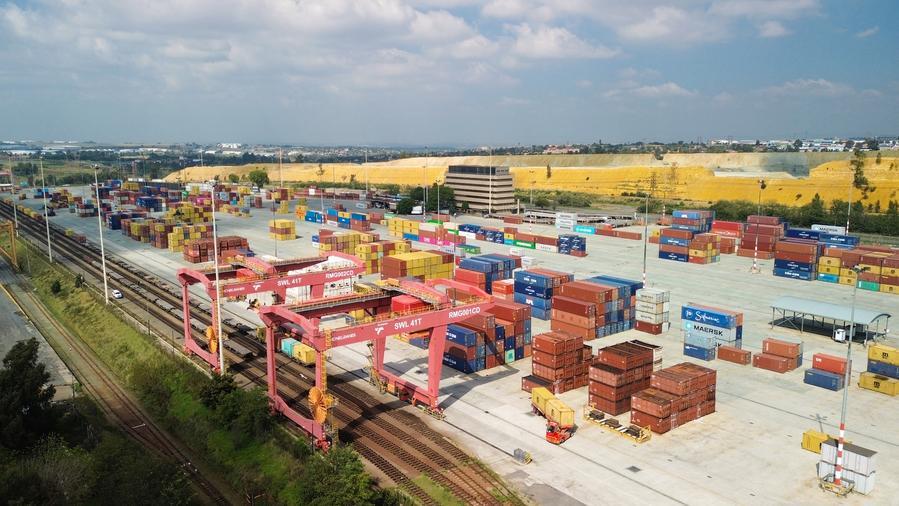
In recent years, China has broadened market access for African goods by granting zero-tariff treatment and improving "green channels" for customs clearance, while actively supporting African companies' participation in major trade events such as the China International Import Expo (CIIE) and the China International Supply Chain Expo.
These measures have helped connect African specialty products with global markets. In 2025, China-Africa trade grew by 17.7 percent year on year to reach 348 billion U.S. dollars, while Africa's exports to China exceeded 123 billion dollars.
China's zero-tariff policy "offers an opportunity for market diversification," said Cobus van Staden, a senior researcher at the South African Institute of International Affairs.
The policy is expected to facilitate African exporters' entry into the Chinese market, he said, adding that it "will help exporters diversify their markets and hopefully gain access to a large group of new customers" and "could help African industrialization."
FACILITATING AFRICA'S MODERNIZATION
China's zero-tariff treatment for African countries also builds on 10 partnership actions initiated at the Beijing Summit of the Forum on China-Africa Cooperation (FOCAC) held in September 2024. China has consistently acted as a true friend on Africa's path to modernization.
In Niassa Province, northern Mozambique, a new graphite processing plant built and funded by China's Jinan Yuxiao Group is expected to deliver an annual output of 200,000 tonnes. Mozambican President Daniel Chapo said that the project will help his country shift away from a single development model based on raw material exports and promote higher value-added exports.
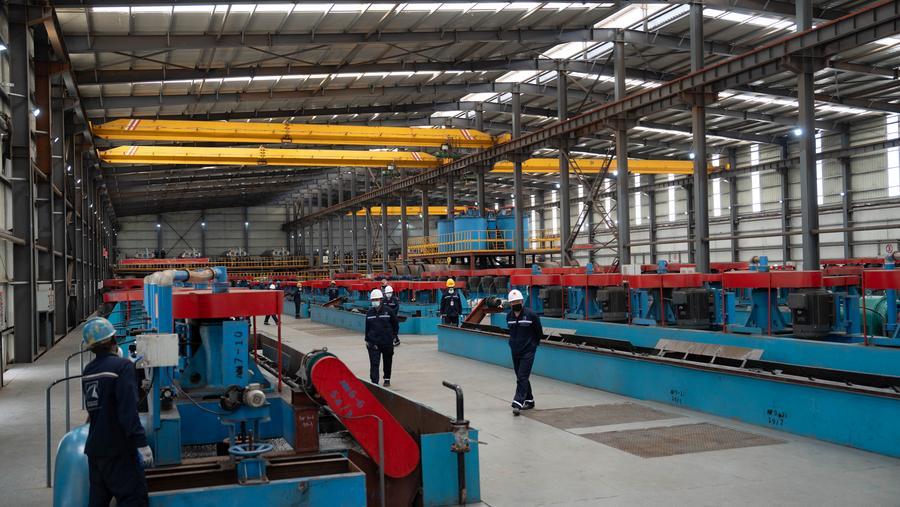
Agricultural cooperation between China and Mozambique is deepening. In Gaza Province, local farming and farmers have benefited from a partnership with the Wanbao rice farm supported by the China-Africa Development Fund. The yields rise from 1-2 tonnes to 5-7 tonnes per hectare, and land-use efficiency is up by about tenfold.
The Chinese expert team has been instrumental in advancing this cooperation. With their technical support, a dedicated seed laboratory has been set up for seed quality evaluation.
"When seed quality improves, output naturally increases," said agronomist Germano Manuel of the Agricultural Research Institute of Mozambique, expecting to see a nationwide use of related technologies to lift the country's overall agricultural capacity.
Mozambique boasts vast land resources and holds immense potential for agricultural cooperation with China. It is willing to find more agro products beyond rice for cooperation, and seek more projects like the Wanbao farm, Chapo told Xinhua in an interview ahead of his state visit to China on April 16-22.
Mozambique will capitalize on China's zero-tariff treatment to push the export of its agro products in particular, he said.
Chapo said that he hopes to strengthen strategic cooperation with China in agriculture, tourism, infrastructure, industrialization, and digitalization within the framework of South-South cooperation and the Belt and Road Initiative.
CLOSER SOUTH-SOUTH COOPERATION
Against the backdrop of rising global trade protectionism, China's initiative to work together to build an open and inclusive world economy has won widespread support.
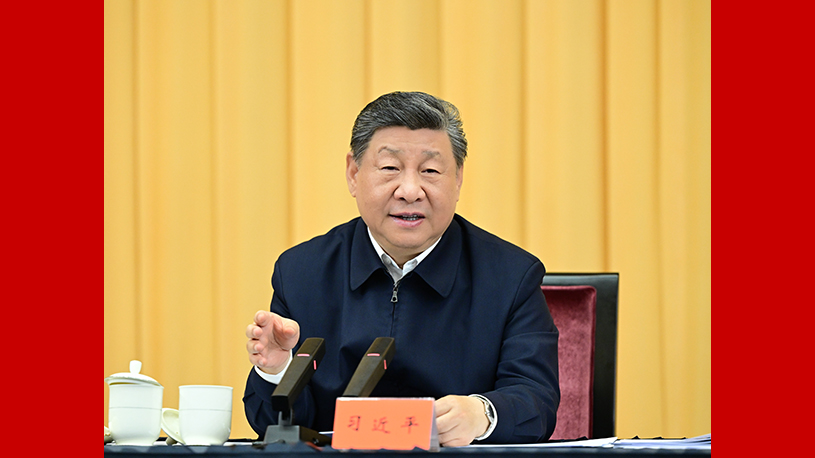
"What we need is to remove barriers rather than erect walls, (and) open up rather than close off. We should carry out extensive consultation and make joint contributions for shared benefit, reject the winner-takes-all approach, and build an open world economy where developing countries are better involved in the international division of labor and share the fruits of economic globalization," Xi said in August 2023 at the China-Africa Leaders' Dialogue held in Johannesburg, South Africa.
The Chinese president called on China and Africa to "work together to create a sound environment for realizing our respective development visions."
The zero-tariff treatment for Africa reaffirms China's commitment to building an open world economy, promoting shared development across the Global South through practical cooperation, and injecting stability into the global trading system and economic growth.
During the 39th African Union Summit, UN Secretary-General Antonio Guterres applauded the Chinese move, calling for similar measures by developed countries. "We have witnessed multiple occasions of tariffs in recent times," he noted.
African Union Commission Chairperson Mahmoud Ali Youssouf said that China's "very timely" zero-tariff treatment is particularly vital as Africa bears the brunt of global uncertainties, which impact the African economies with structural vulnerabilities the hardest.
"We also see isolationist policies across the world, while protectionism is growing," he added.
"The system of global economic governance that has been with us for about eight decades is coming under significant strain," said Melaku Geboye, coordinator of the African Trade Policy Center at the UN Economic Commission for Africa.
At such a critical time, he said, China's continued commitment to openness is both "timely and significant" for Africa, in addition to the "enduring and growing importance of the China-Africa partnership and its promise for mutually beneficial development and ensured prosperity."
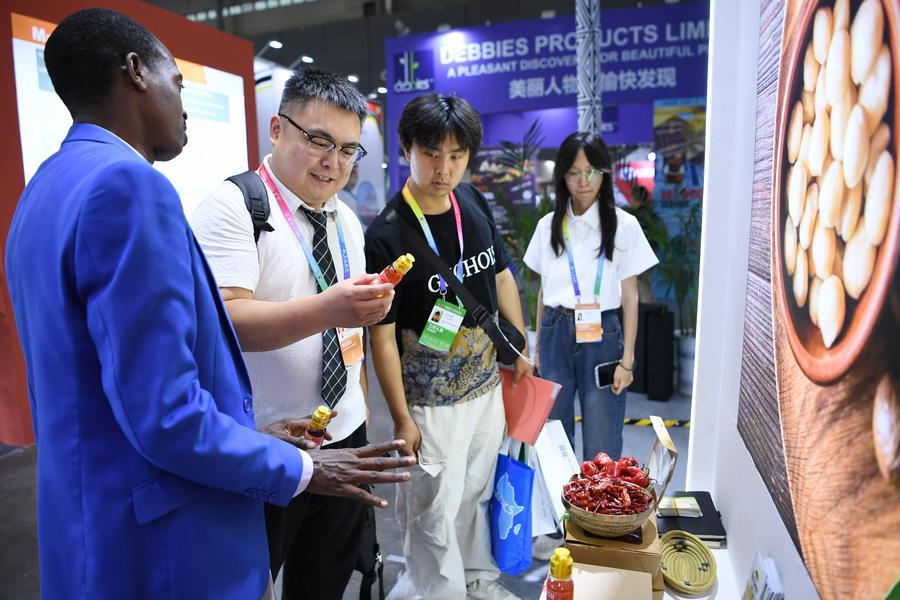
For Fisher Global and many other African companies, the Chinese market has become central to their future growth plans. At exhibitions in Shanghai and Changsha, the company's chili products highlighted Rwanda's organic, pesticide-free produce and aroused strong interest from Chinese buyers looking to source overseas.
"China is the number one market in the world for chili, so it is very important to us," Uwizeyimana said. "We are hopeful for stronger and higher exports to China."
China's initiative marks a structural shift in bilateral ties and will further strengthen South-South cooperation, said Afonso Gomes, a Guinea-Bissau economic analyst.
"China realized very early that the future of the world economy requires multilateralism. The decision ... confirms its strong medium- and long-term strategic vision," said Gomes. ■