BEIJING, April 24 (Xinhua) -- To make his remarks more relatable to global audiences, Chinese President Xi Jinping often references foreign literature as a way to foster closer ties while advancing his ideas. For him, literature and art are "the best medium for creating understanding and communication between different countries and cultures."
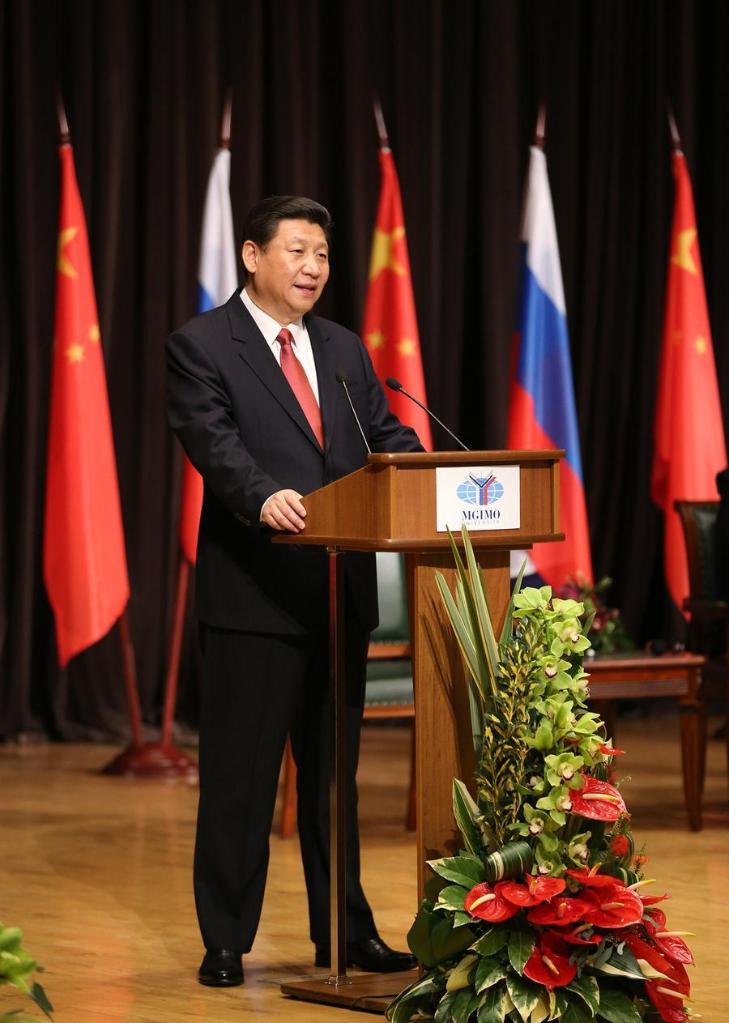
Back in March 2013, during his first state visit to Russia since becoming Chinese president, Xi first proposed his landmark vision of building a community with a shared future for humanity while addressing over a thousand teachers and students at the Moscow State Institute of International Relations.
"The path of history is not paved like Nevsky Prospekt; it runs across fields, either dusty or muddy, and cuts across swamps or forest thickets," Xi cited a line from Chernyshevsky, indicating that while humanity has every reason to believe that the world will become a better place, the path toward it can be tortuous.
In the same speech, Xi spoke about the profound influence of Russian literature on multiple generations in China, and mentioned several Russian literary giants, including Pushkin, Lermontov and Tolstoy, whose works he had read extensively.
"President Xi mentioned several Russian literary classics ... which made everyone feel very close to him," said Taras Ivchenko, a Russian sinologist, who was among those met by Xi following the speech. "As soon as he referred to these works, the whole atmosphere changed and became much more relaxed."
"Why do I share these stories with foreigners? I do it because literature and art are a universal language," Xi stressed the crucial role of literature in cultural exchanges. "This makes it one of the easiest ways to create understanding and connection with others."
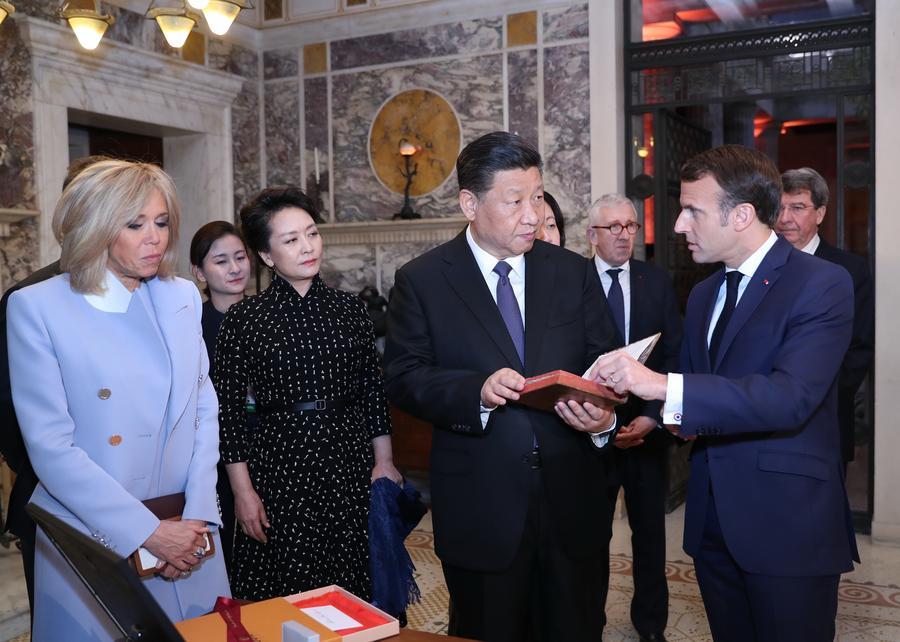
In his interactions with world leaders, Xi has at times given books as gifts, particularly to those who share his passion for reading and literature, such as French President Emmanuel Macron.
In May 2024, during Xi's third state visit to France, the Chinese leader presented a selection of classic French novels in Chinese translation to Macron, including "Ninety-Three," "Madame Bovary" and "The Red and the Black." In return, Macron gave Xi an antique edition of "Les Contemplations" by Victor Hugo, a French author whose works Xi enjoys reading.
As representatives of Eastern and Western civilizations, China and France should respect each other, exchange with and learn from each other, Xi told Macron.
In Xi's eyes, exchanges and mutual learning between civilizations can serve as a bridge of friendship among peoples, a driving force for human progress, and a strong bond for world peace.
And through exchanges, Xi argued, "we need to encourage different civilizations to respect each other and live together in harmony."■