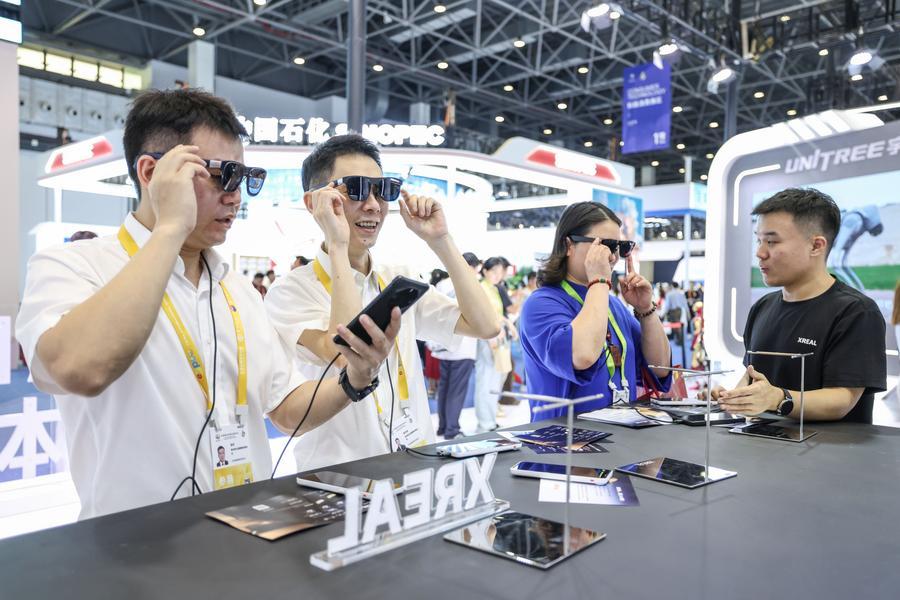
HAIKOU, April 18 (Xinhua) -- In a crowded exhibition hall at the China International Consumer Products Expo (CICPE), a pair of AI-powered glasses drew a steady stream of visitors. Among them was Ye, a 41-year-old employee at a private company, who placed an order shortly after trying them on.
With a simple voice command, the glasses translate spoken English into Chinese and project the text onto the lenses. "As the text appeared before my eyes, it felt like a scene from a movie coming into reality," she said, adding that the device could ease communication with her foreign clients.
The AI glasses were developed by Rokid, a company based in Hangzhou. Weighing 49 grams and resembling ordinary eyewear, the device also supports photo and video capture, real-time navigation, and payments.
Xiang Wenjie, co-founder of the company, said the company is focused on bringing AI technology into everyday scenarios and will continue refining its products to improve user experience.
Elsewhere on the expo floor, the same trend was on display. At Zerith's booth, a Hefei-based robotics firm, a robotic arm moved along a shelf, identifying and sorting items. The system operates at roughly three times the efficiency of human workers, according to the company.
Min Yuheng, founder of the firm, said the robots are designed to take over repetitive tasks, allowing retailers to reduce labor costs while advancing automation in the sector.
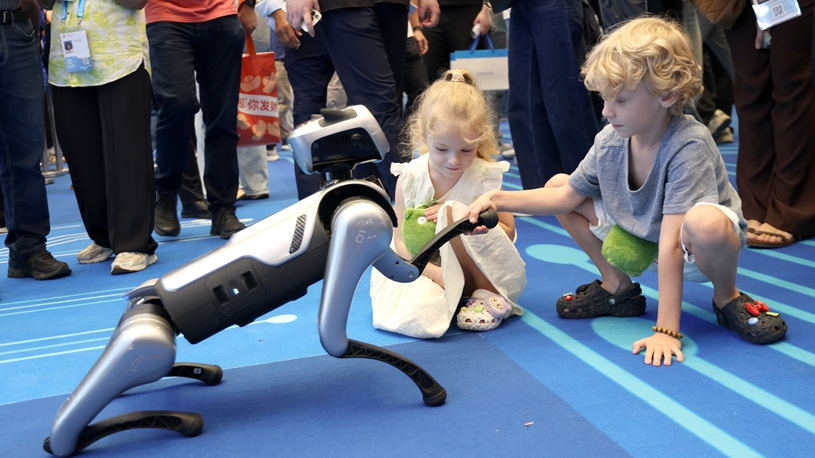
From lightweight smart rings that monitor sleep apnea to massage chairs that incorporate AI to offer more tailored experiences, this year's CICPE provided a snapshot of how AI is increasingly woven into the ordinary moments of daily life across consumption, living and business.
"AI is not about replacement, but empowerment," said Yan Jia, general manager of public affairs at Taobao and Tmall Group. Yan added that the technology is transforming consumer markets by changing both what people buy and how they experience products.
These developments have been closely aligned with policy support. China has stepped up efforts to promote the integration of AI across sectors. The country released an "AI+" action plan in 2025, emphasizing the upgrade of consumption through intelligent terminals and ecosystems. The full implementation of the "AI+" initiative has also been written into the country's latest five-year plan (2026-2030).
The shift is already driving new consumer demand. AI-related household appliances and 3C products are emerging as fast-growing categories, with sales of smart products on JD.com rising by more than 200 percent year-on-year in 2025, data showed.
Analysts say 2026 could mark a pivotal year for the widespread adoption of AI consumer devices.
"AI has moved beyond a tool and is becoming a key force in reshaping the relationship between supply and demand in services, providing sustained momentum for expanding domestic demand," said Hong Yong, an expert of the digital-real economies integration Forum 50. ■