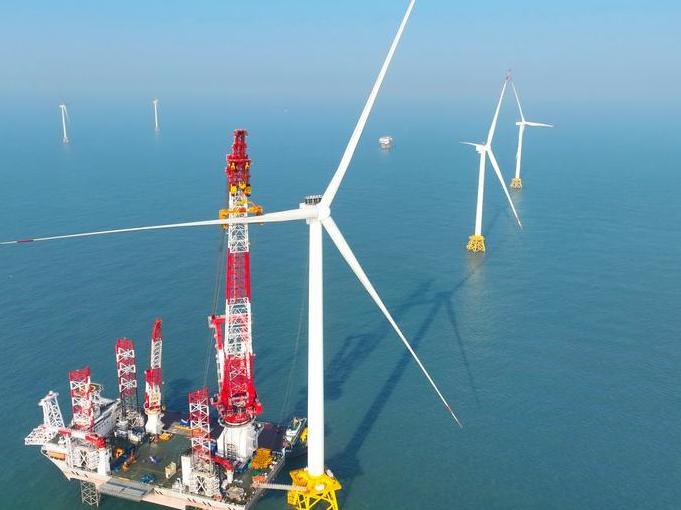
* In south China's Guangdong Province, a bold experiment is underway to answer one of the country's most pressing questions: What is the best way to bridge the gap between wealth and poverty?
* In 2011, Guangdong established the Shenzhen-Shanwei Special Cooperation Zone. Initially co-managed by the cities of Shanwei and Shenzhen, the zone embarked on a major shift at the end of 2018, when Shenzhen took full control of its development and construction.
* As the 15th Five-Year Plan prioritizes common prosperity, the zone offers a glimpse of one possible future: a wealthy megacity reaching back to lift its struggling neighbor.
SHENZHEN, April 17 (Xinhua) -- In south China's Guangdong Province, a pioneer in China's reform and opening up, a bold experiment is underway to answer one of the country's most pressing questions: What is the best way to bridge the gap between wealth and poverty?
The Shenzhen-Shanwei Special Cooperation Zone, which is currently under large-scale construction, might have the answer. It represents the latest experiment in China to accomplish common prosperity.
Today the zone looks much like Shenzhen in the 1990s -- filled with brand-new highways and factory buildings, with high-rises erecting among the rural hills and mountains. Since 2018, the zone has maintained an average annual economic growth rate of 24 percent.
INSTITUTIONAL INNOVATION
The Hong Kong-adjacent Shenzhen, one of China's first special economic zones which were products of the reform and opening up drive since the late 1970s, posted a GDP of 3.87 trillion yuan (about 564 billion U.S. dollars) in 2025, or per-capita GDP exceeding 215,000 yuan.
Last year, Shenzhen's Nanshan District became China's first county-level economy to cross the one-trillion-yuan GDP threshold, with per-capita GDP exceeding 540,000 yuan.
Yet just 60 kilometers away in Shanwei, the economic reality could not be more different. A mountainous region prone to typhoons and long plagued by poverty, Shanwei's per-capita GDP stood at just around 57,200 yuan in 2025 -- a fraction of Shenzhen's.
The imbalance reflects a broader challenge for Guangdong, China's largest provincial economy for 37 consecutive years, where rapid coastal development has often left inland areas behind.
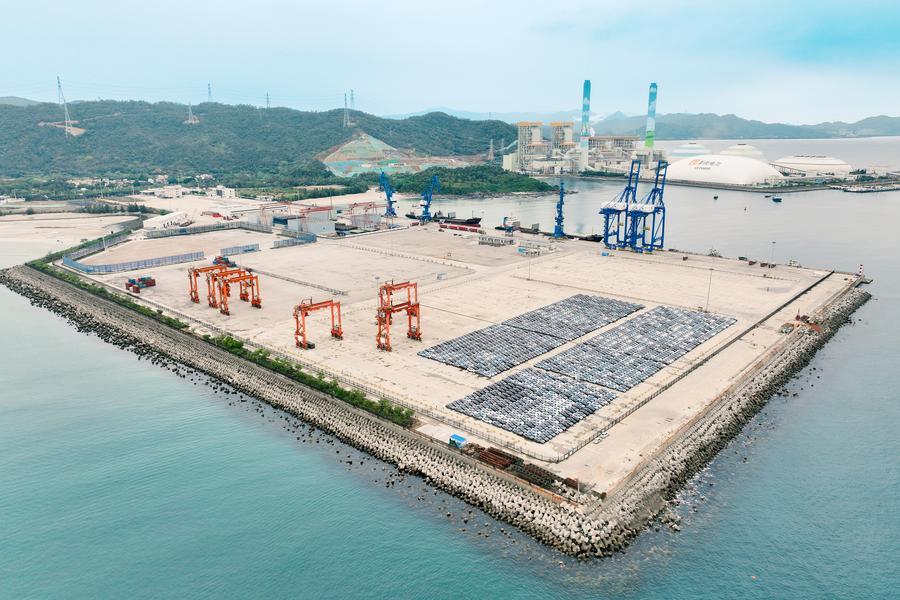
In 2011, Guangdong established the Shenzhen-Shanwei Special Cooperation Zone across four townships (now subdistricts) in Shanwei's Haifeng County. Initially co-managed by both cities, the zone embarked on a major shift at the end of 2018, when Shenzhen took full control of its development and construction.
In November 2023, the province enacted a regulation making Shenzhen fully responsible for the zone's construction and management. It was China's first provincial-level law granting an "enclave" to a developed area. The policy innovation allows Shenzhen to develop the zone under its own economic functional zone standards.
The cooperation zone represents Guangdong's innovative attempt to bridge regional development gaps, creating a new economic engine driven by Shenzhen that can lift lagging regions. Shenzhen is transferring its industries, infrastructure, and governance concepts to the new zone in a bid to explore a replicable path.
China's late leader Deng Xiaoping proposed at the beginning of the reform and opening up: Let some people get rich first, so they can help others get rich afterward, ultimately achieving common prosperity.
Over the past 40-plus years, China has lifted 770 million rural residents out of poverty, a historic achievement that reflects the essential characteristics of socialist modernization. With common prosperity written into the 15th Five-Year Plan (2026-2030) outline, this endeavor has accelerated.
This form of modernization differs from that seen in some capitalist countries, where capital returns are the ultimate objective. In such contexts, the wealthy become wealthier while the poor are left behind, wealth becomes concentrated in the hands of a few, slums persist in major cities, and the streets are often marked by homelessness, drug abuse and violence.
FROM NO STREETLIGHTS TO EV HUB
When Wu Qubo, secretary of the Party Working Committee of Shenzhen-Shanwei Special Cooperation Zone, arrived seven years ago, the main road had no streetlights and accidents were common. His first priority was to install them.
"Even this was an arduous job and took a lot of efforts," he recalled.
During the 14th Five-Year Plan period (2021-2025), the zone entered a phase of rapid growth. Major investments in transportation and urban infrastructure followed, attracting modern enterprises -- most notably, electric vehicle giant BYD.
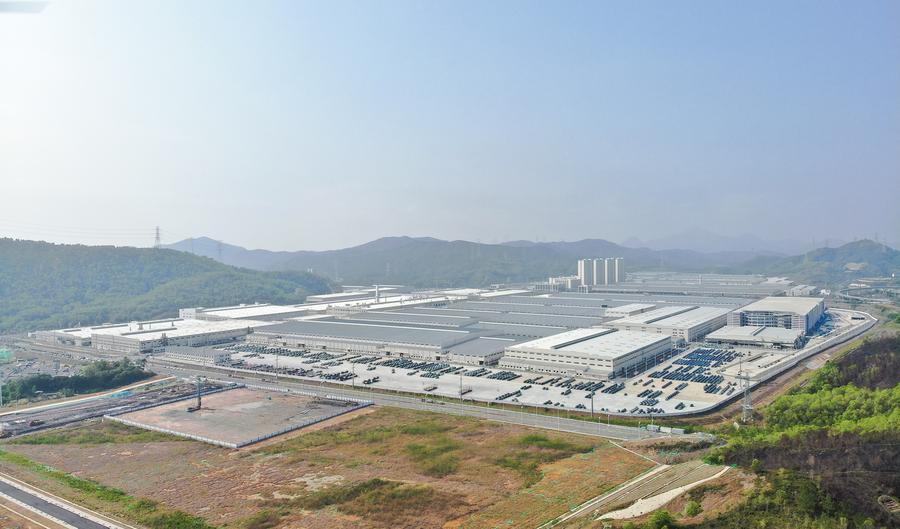
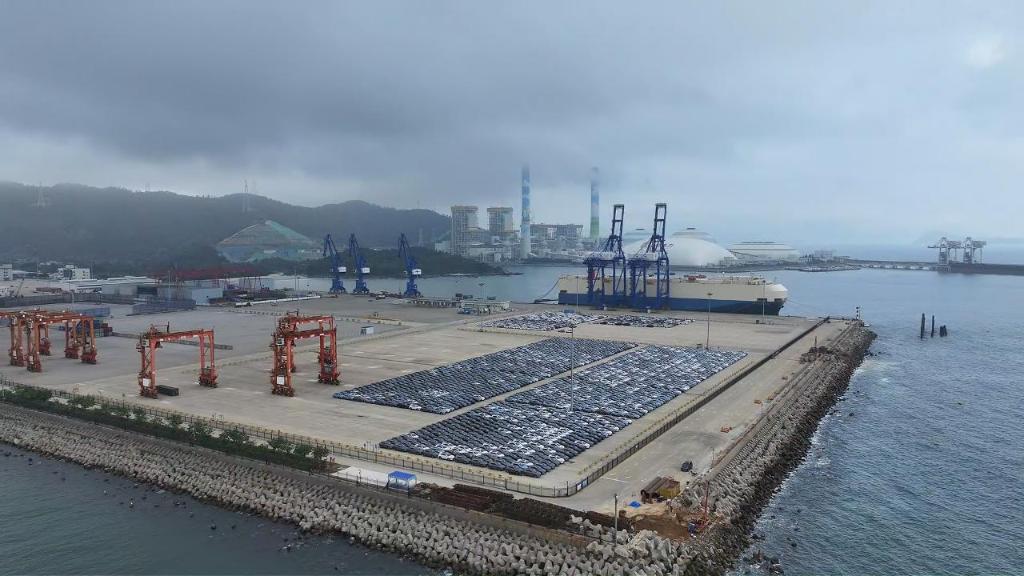
"BYD's investment in the zone has exceeded 31.5 billion yuan," a company executive told Xinhua. "We have built a complete industrial system here, from batteries and motors to vehicle assembly. And with a seaport just three kilometers from the plant, cars can be shipped directly to seven major global markets."
In 2025, BYD produced 290,000 vehicles in the zone, generating over 74 billion yuan in output value. The presence of BYD has drawn nearly 30 upstream and downstream suppliers.
Yanfeng, a key interior parts supplier, moved its factory from Dongguan to a site just across the road from BYD's assembly plant. This has allowed their products to be delivered in under five minutes to BYD.
Before the zone's development, poverty drove many local villagers to seek work elsewhere. The four subdistricts had a permanent population of less than 60,000. Today, with returnees and newcomers, the population has rebounded to 150,000.
Many villagers have found jobs at BYD and other firms. Some have started their own businesses. Weng Chuhao and his wife, who were among the first to sign a village relocation agreement, now run a restaurant serving company employees, with daily revenue of 3,000 to 4,000 yuan. Chen Zhenbo started a construction crew serving local factories and infrastructure projects. He now leads three teams.
Village collective incomes have increased significantly, with dozens of villages now earning over one million yuan and some exceeding 10 million yuan. Prior to the establishment of the zone, most villages generated only modest income.
Li Xianglin, a 53-year-old resident of Houmen Subdistrict, upgraded his simple seafood stall into a full restaurant last year. "As more companies move in, our business will only get better," he said. "It will also boost seafood and homestay businesses."
SPILLOVER EFFECTS AND CHANGING MINDSETS
Shanwei's broader economy is also accelerating. Its GDP reached 154.63 billion yuan in 2025, an increase of more than 40 billion yuan from 2020, with an average annual growth rate of 5.8 percent -- second highest in the province. For three consecutive years, Shanwei has ranked first in Guangdong in per-capita disposable income growth.
"People's mindsets are changing," said Chen Guitian, Party chief of Yunxin Village. "They have a new understanding of modern lifestyles."
To support the zone's development, authorities at different levels have introduced a range of pioneering reforms, including establishing a court, procuratorate, and public security bureau in the zone, along with flexible tax measures.
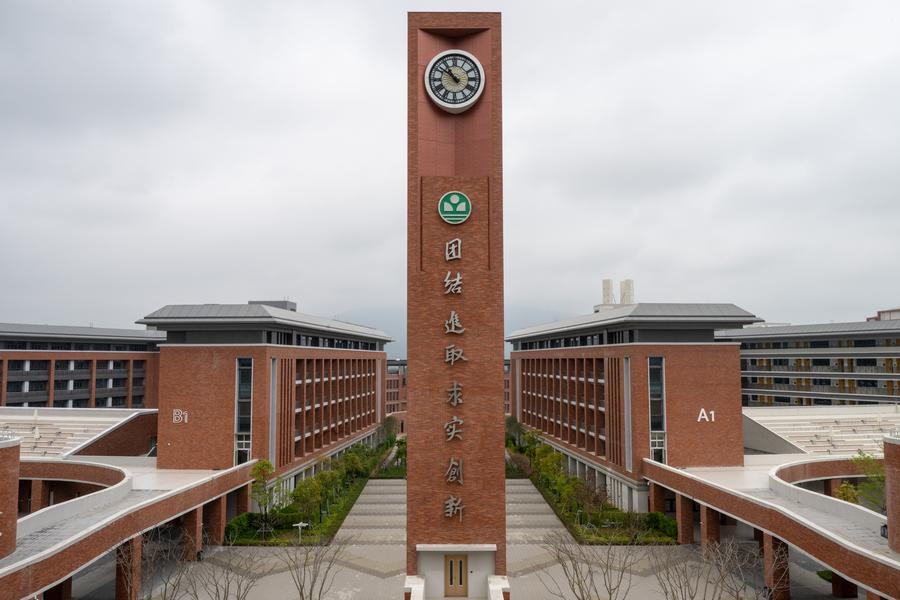
Education and healthcare are also being transformed. A Shenzhen middle school has opened a campus in the zone, enrolling 9,900 students. "No one from this area has ever been admitted to Tsinghua or Peking University," said Guo Shenghong, the vice principal. "Now, that could change."
Other infrastructure includes a Shenzhen Polytechnic University campus enrolling 15,000 students and a hospital with 800 beds.
Guangdong's experiment is just one pathway in China's broader push for common prosperity. Other provinces are also pursuing their own models. Jiangsu is promoting cooperation between its economically advanced southern areas and less-developed areas in the north. Zhejiang has implemented a "mountain-sea collaboration," which also pairs developed and underdeveloped areas.
As the 15th Five-Year Plan prioritizes common prosperity, the Shenzhen-Shanwei Special Cooperation Zone offers a glimpse of one possible future: a wealthy megacity reaching back to lift its struggling neighbor.
"The ultimate goal," Wu said, "is to meet the people's aspirations for a better life."
(Video reporters: Liang Xizhi; video editors: Zhang Nan, Luo Hui and Wang Han) ■