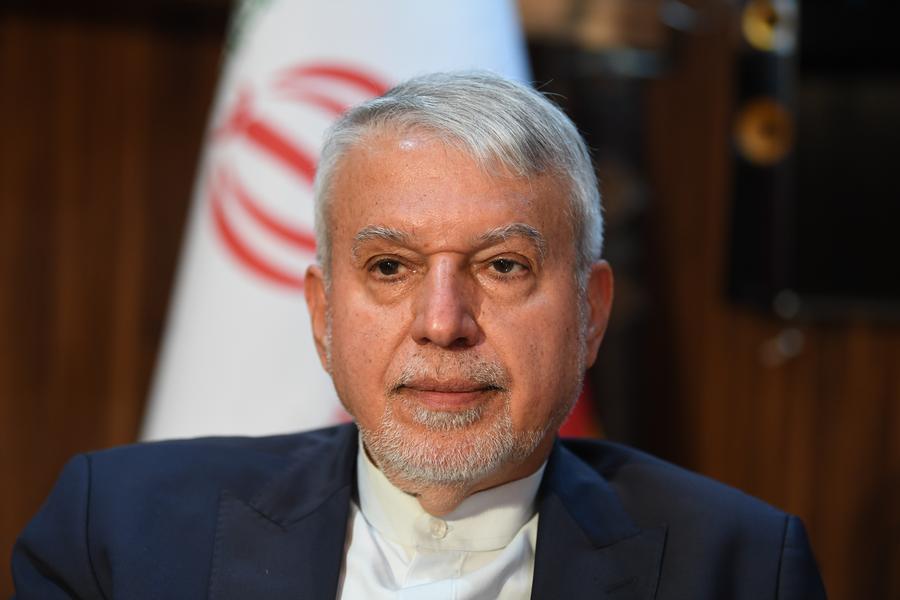
TEHRAN, April 10 (Xinhua) -- Iran's Minister of Cultural Heritage, Tourism and Handicrafts Seyed Reza Salehi-Amiri said 131 historical and civilizational monuments across 20 Iranian provinces were damaged during attacks by the United States and Israel.
"They have suffered serious damage, ranging from 10 percent to over 50 percent. The largest number, 63, of the damaged historical, cultural and civilizational monuments are located in Iran's capital Tehran," he told Xinhua in a recent interview.
On Feb. 28, Israel and the United States launched joint attacks on Tehran and several other Iranian cities, killing Iran's then Supreme Leader Ali Khamenei, along with senior military commanders and civilians. Iran responded with waves of missile and drone strikes targeting Israel and U.S. bases and assets in the Middle East.
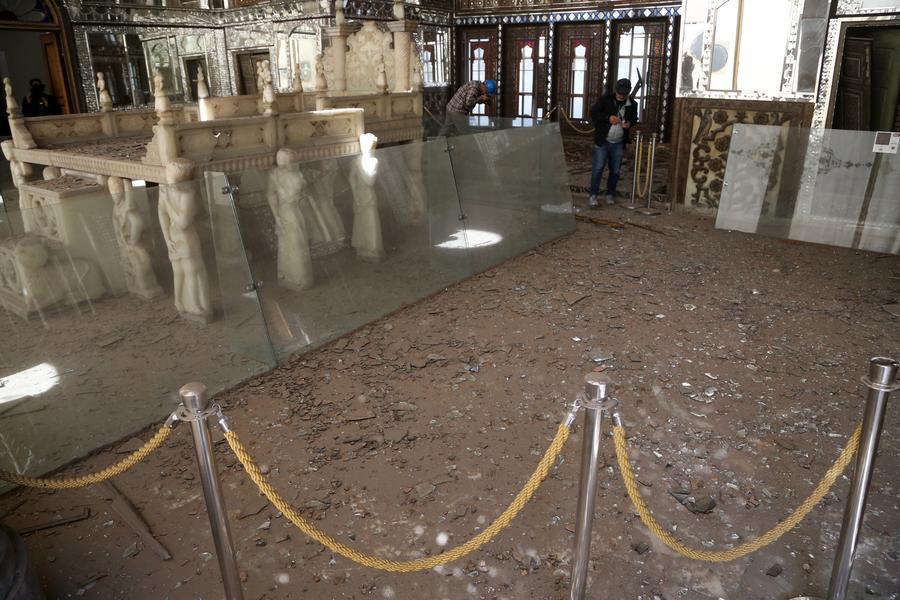
Salehi-Amiri said one of the most important war-damaged historical sites in Tehran is the UNESCO World Heritage Site, the Golestan Palace, "which is a masterpiece of the Safavid and Qajar eras' architecture," adding that the Sa'dabad Palace, with an area spanning about 100 hectares and around 20 museums, also suffered serious damage in the U.S. and Israeli attacks.
In the central province of Isfahan, 23 historical and civilizational sites were damaged, with the most important one being the UNESCO-listed Chehel Sotoun Palace, "a great masterpiece of the Iranian architecture," the minister noted.
He said in addition, 12 historical monuments have been damaged in the western province of Kurdestan alone.
Salehi-Amiri added that Iran has sent letters to eight international organizations, such as the United Nations, UNESCO, the Islamic World Educational, Scientific and Cultural Organization and the International Council of Museums, to inform them of the damages and risks, regretting that unfortunately, international organizations have no power to prevent the U.S. and Israeli "crimes against humanity."
Following the damage to the Golestan Palace on March 2, UNESCO expressed concern over the protection of cultural heritage sites amidst escalating conflict in the Middle East, saying that "it continues to closely monitor the situation of cultural heritage in Iran and across the region, with a view to ensuring its protection."
Later, UNESCO issued a warning about the fate of Iran's heritage sites, which include 29 UNESCO World Heritage sites.
Salehi-Amiri added that the U.S. and Israeli attacks have not spared even a 63,000-year-old UNESCO World Heritage Site located in western Iran, known as the Khorramabad Valley.
"Wherever the Americans have set foot, they have brought nothing but destruction, crimes, war, or exploitation," the minister said.
After 40 days of deadly fighting, the United States and Iran reached a two-week ceasefire agreement on Wednesday. Both sides are set to hold talks later this week in Pakistan to discuss the future situation.■