BEIJING, March 18 (Xinhua) -- China is embarking on a new journey to advance Chinese modernization as its latest grand blueprint unfolds. The outline of the 15th Five-Year Plan (2026-2030) for national economic and social development was approved at the fourth session of the 14th National People's Congress, China's national legislature, earlier this month.
"A well-conceived 15th Five-Year Plan and its effective implementation will ensure we have even stronger foundations for basically achieving socialist modernization by 2035," Xi Jinping, general secretary of the Communist Party of China (CPC) Central Committee, once said.
Xi, also Chinese president and chairman of the Central Military Commission, stressed that socialist modernization can only be realized through a historical process of gradual and ongoing development. It requires the unremitting hard work of one generation after another.
BUILDING NEW GROWTH MOMENTUM
The world is undergoing accelerated changes unseen in a century, with the challenges of securing peace, development, security and governance intensifying, while geopolitical risks are increasing, and global economic growth momentum remains weak.
Notably, China's economic transformation and upgrading are deepening, with reform efforts tackling deep-seated problems. In addition, new quality productive forces are being fostered at an accelerated pace.
"Efforts should be redoubled to gain experience in analyzing new situations and solving new problems," Xi said during China's "two sessions" earlier this month.
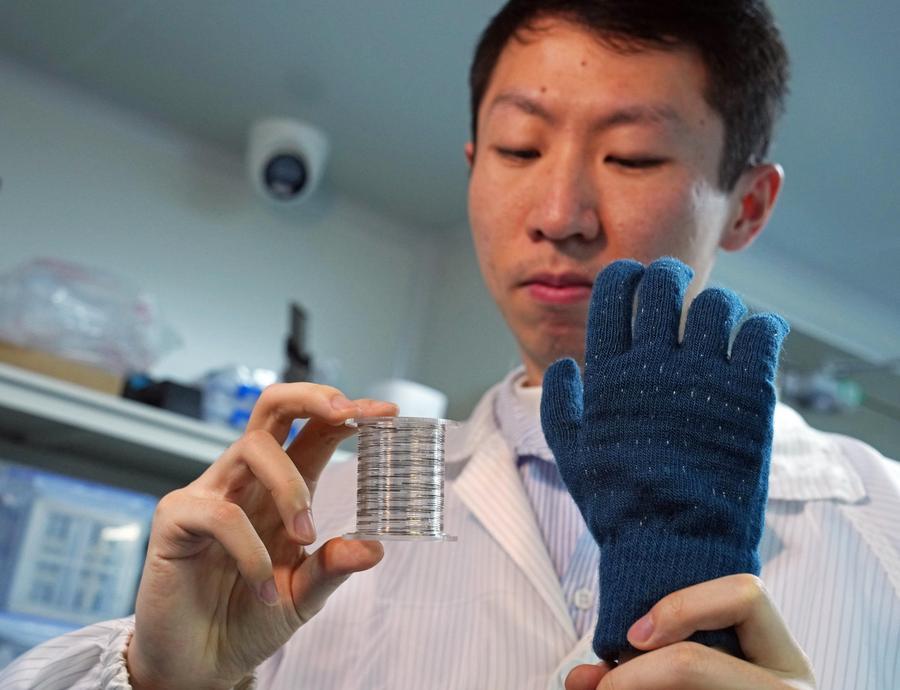
Developing new quality productive forces is an essential requirement for building a modern industrial system and fueling a powerful engine for advancing high-quality development.
As a new driver of future development, new quality productive forces should be cultivated in line with local conditions. It is necessary to leverage local resource endowments, industrial foundations and research capabilities to selectively foster emerging industries, new business models and new growth drivers.
Guided by scientific and technological innovation and anchored in the real economy, efforts should be made to speed up the transformation and upgrading of traditional industries and foster the growth of emerging industries and future-oriented industries, so as to accelerate the development of a modern industrial system.
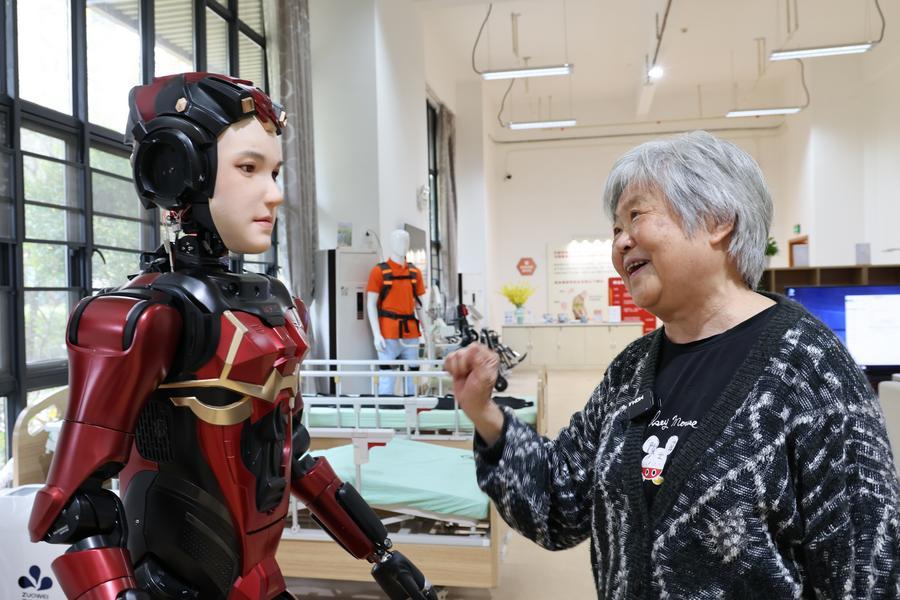
Meanwhile, improving the national innovation system and stimulating the vitality of various innovation entities remain key priorities. With a focus on the frontiers of global science and technology, sustained efforts should be made to strengthen basic research and enhance original innovation capacity, while intensifying breakthroughs in core technologies in key fields and frontier technologies.
Amid a rapidly changing international environment and various uncertainties, focusing on managing the country's own affairs well and enhancing its development quality is crucial in ensuring a good start to the 15th Five-Year Plan.
For China, it is imperative to advance high-quality development, build a unified national market and expand high-standard opening up to explore global markets.
China still faces challenges of uneven and inadequate development, including declining labor demand in traditional industries due to technological and industrial transformations, and growing pressure on public services and social security because of an aging population. Addressing these issues is essential for sustaining growth and ensuring that development benefits all.
GLOBAL VISION OF CHINA'S MODERNIZATION PATH
"Chinese modernization delivers benefit to the Chinese people and also advances common development of the world. It is a sure path for us to build a stronger nation and realize the rejuvenation of the Chinese nation. It is also a path we must take to seek progress for humanity and harmony for the entire world," Xi said in a keynote address at the CPC in Dialogue with World Political Parties High-level Meeting in 2023.
These remarks situated Chinese modernization within the historical context of China's relations with the world, highlighting its inclusive character and pursuit of win-win outcomes.
Chinese modernization is fundamentally characterized by proactive global engagement. Since the reform and opening up, China's developmental trajectory, guided by successive five-year plans, has been inseparable from international cooperation.
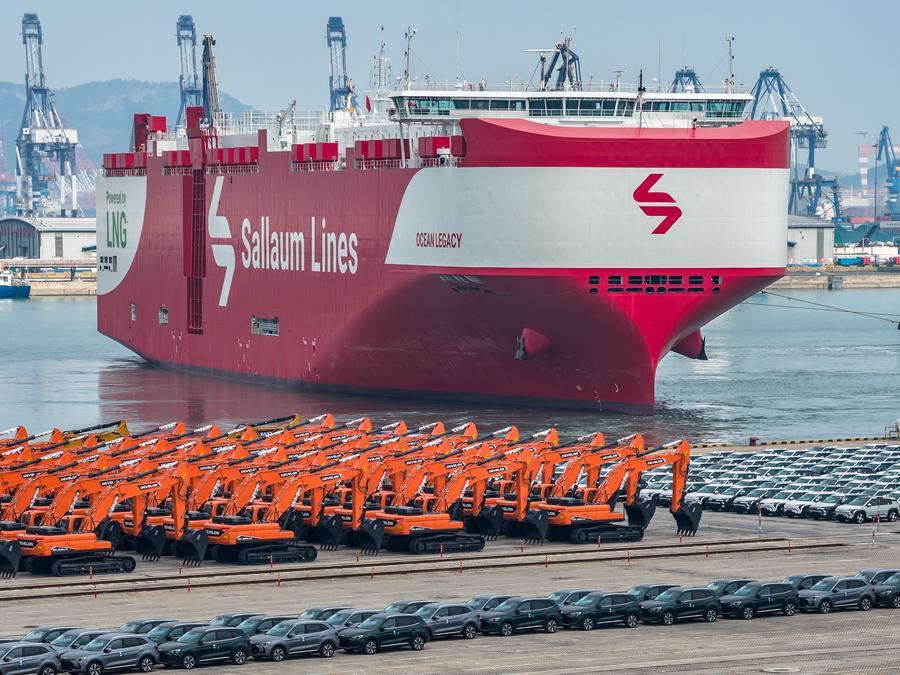
Openness has always been the defining feature of Chinese modernization. From "the world factory" to "the world market," and from a land for global investment to a global innovation hub, each leap in China's development drives cooperation with the world into broader areas and deeper levels.
As industrial transformation accelerates, China's massive market will continue to offer significant demand for countries worldwide. In pursuit of smart, green and integrated growth, China aims to share its manufacturing experience and technical innovations to drive global sustainable development.
Beyond that, the global significance of the Chinese model of modernization lies in its success in shattering the myth that modernization is synonymous with Westernization, thereby creating a new form of human advancement.
"China will do well only when the world does well, and vice versa," Xi once said.

Leveraging the China-proposed Global Development Initiative, Global Security Initiative, Global Civilization Initiative and Global Governance Initiative, the world's second-largest economy is committed to the building of an open, inclusive, clean and beautiful world of lasting peace, universal security and common prosperity.
Faced with global changes not seen in a century, China will continue to stand on the right side of history and remain a steadfast, reliable and constructive force in a turbulent world.
CPC LEADERSHIP AS CORE
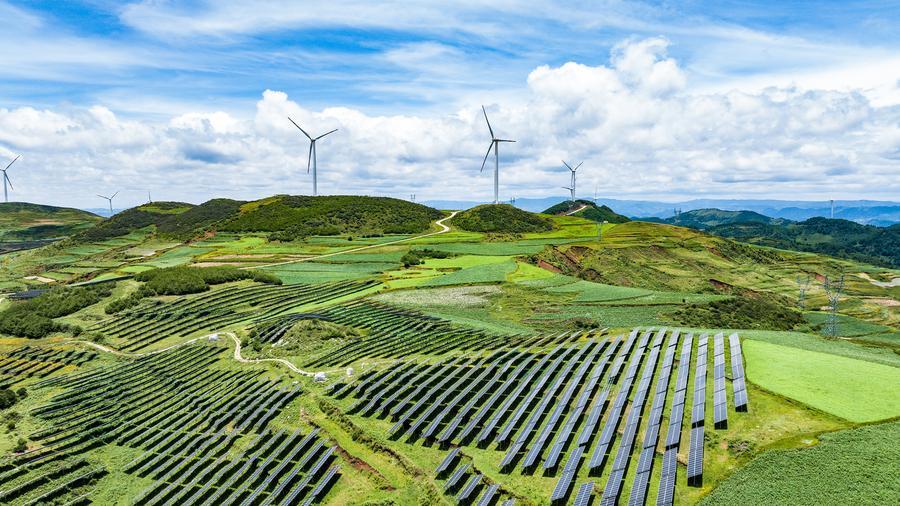
Chinese modernization is characterized by unique features: the modernization of a huge population, the modernization of common prosperity for all, the modernization of material and cultural-ethical advancement, the modernization of harmony between humanity and nature, and the modernization of peaceful development.
In advancing Chinese modernization, the key lies in upholding the overall leadership of the CPC, which has been the strong leadership core in developing socialism with Chinese characteristics.
By integrating the basic tenets of Marxism with China's specific realities and its fine traditional culture, the Party has, through years of dedicated efforts, deepened its understanding of the laws that underlie governance by a communist party, the development of socialism, and the evolution of human society.
The Party has led China in building one of the world's most complete industrial systems, in eliminating absolute poverty, in growing into an economy of 140 trillion yuan (about 20.32 trillion U.S. dollars), and in becoming a major trading partner for more than 150 countries and regions.
Advancing Chinese modernization requires solid work and sustained efforts over time, and sound planning must go hand in hand with effective implementation. Party members and officials are urged to establish and practice a correct view on governance performance, remain committed to serving the public and improving people's well-being, make well-grounded decisions, and focus on practical work. ■