China's 15th Five-Year Plan (2026-2030) focuses on high-quality development, technological self-reliance, green transition, and national security, with goals for modernization and global engagement by 2035.
by Robert Lawrence Kuhn
With the 2026 "two sessions" concluded and the 15th Five-Year Plan (2026-2030) now underway, China has reached a telling moment in its modern history. It is an opportune time to assess China's grand vision, as set forth by President Xi Jinping, to become a fully modernized socialist country by 2049, the nation's 100th anniversary, and to "basically" achieve this goal by 2035. It is the "Chinese Dream," which Xi proclaimed in 2012 as "the great rejuvenation of the Chinese nation." He cast that aspiration in sweeping terms: a China that is "a prosperous, strong, democratic, culturally advanced, harmonious, and beautiful modern socialist country." One economic benchmark for 2035 is to roughly double 2020 GDP per capita, bringing it to about 20,000 U.S. dollars.
It is an opportune time because the roadmap to 2035 consists of four five-year plans (FYPs), and China now stands almost precisely at their midpoint: the 13th FYP (2016-2020) and 14th FYP (2021-2025) are complete, and the 15th FYP (2026-2030) and 16th FYP (2031-2035) lie ahead. That gives the present moment unusual analytical value: it is the point from which to judge what China has achieved and, more importantly, where it now intends to go.
Five-year plans may have originated in the planned economy era, but in China's contemporary "socialist market economy," they remain essential instruments of strategic direction. They do not chiefly command output; rather, they indicate where policy preference, sources of financing, regulatory accommodation, and political endorsement are likely to converge. Chinese business leaders study FYPs closely to align products, services, and investments with national priorities. International business leaders should similarly identify where opportunities may emerge in the large Chinese market.
Taken together, the 13th and 14th FYPs mark a consequential shift in China's development model: away from rapid, quantity-driven growth and toward one centered on higher-quality development, technological self-reliance, a green transition and enhanced social services.
According to official accounts, the 13th FYP (2016-2020) delivered the long-promised "moderately prosperous society in all respects." Its defining achievement, championed by President Xi, was the declared elimination of extreme rural poverty by the end of 2020 -- roughly 100 million formerly intractably poor people, including about 55 million during the 13th FYP itself. In China's 832 nationally designated impoverished counties, incomes rose substantially, and access to basic services improved materially.
The 13th Plan also brought sweeping upgrades in infrastructure and connectivity: high-speed rail (the world's largest network), highways, airports, logistics systems, and "new infrastructure" -- broadband, early 5G rollout, and data centers. Environmental progress was tangible, though uneven. Renewable energy expanded rapidly, with non-fossil energy consumption reaching 15.9 percent. Urbanization rose, social protections broadened, and public services improved, reflecting Xi's emphasis on "people-centered development." China's GDP surpassed 100 trillion yuan (15 trillion U.S. dollars), and GDP per capita exceeded 10,000 dollars.
According to official sources, the 14th FYP (2021-2025) produced what Beijing describes as resilient growth under pressure. Despite the pandemic and its aftermath, weakness in the property sector, and mounting external constraints, China maintained expansion and macroeconomic stability. Employment, urban job creation, and livelihood protection remained central. Life expectancy rose to 79 years, the social security system expanded to cover almost the entire population, and "dual circulation" became the economic theme: domestic demand as the principal engine of growth, with openness and trade still integral. GDP surpassed 130 trillion yuan in 2024, average annual growth was 5.5 percent, and China contributed around 30 percent of global economic growth.
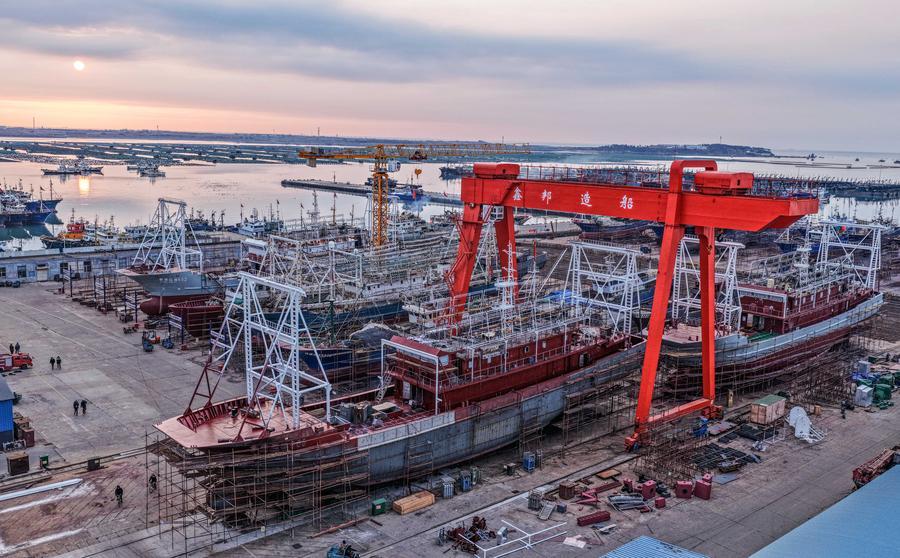
Higher-standard opening-up continued. Pilot free-trade zones multiplied. Shrinking "negative lists" widened the sectors in which private and foreign investment would be welcomed. At the same time, indigenous innovation, technological self-reliance, and industrial upgrading became even more central, especially amid U.S.-led restrictions on advanced technologies. "New quality productive forces" emerged as the watchword of development policy, with priority given to high-end semiconductors, advanced manufacturing, artificial intelligence (AI), and robotics. The 14th FYP also saw a sharp rise (about 50 percent) in research and development spending, advances in high-end shipbuilding (from cruise ships to aircraft carriers), and a green transition that began to scale, with renewable installation capacity surpassing thermal power and China consolidating global leadership in new energy vehicles.
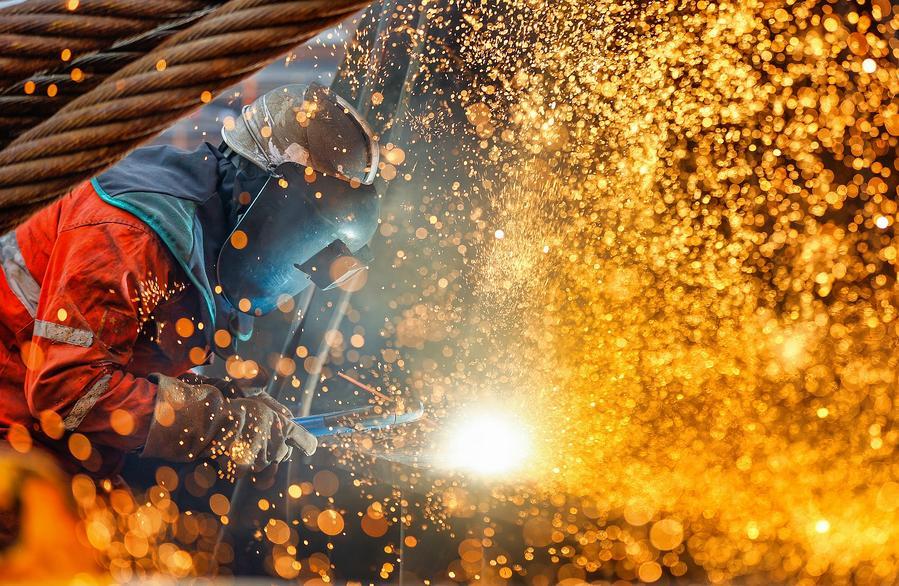
If the 13th and 14th FYPs effected a transition in China's development model, the 15th FYP is about its trajectory. It sets the national agenda for 2026 to 2030 and defines the policy pathway to the 16th FYP, which culminates in 2035, the target year. In broad terms, the 15th Plan combines continuity and advance: stability and policy consistency on the one hand, innovation and strategic upgrading on the other. It joins high-technology industrial transformation with people's livelihood, green transition, and security-resilience as coequal pillars of development. Expanding domestic demand is a central priority, and people-centered policy remains a recurring theme.
The animating headline of the 15th FYP is "new quality productive forces," Xi Jinping's overarching strategic formulation. Its logic unfolds through a nested sequence of concepts that frames China's politico-economic vision. The grand goal is the great rejuvenation of the Chinese nation. That rejuvenation is to be achieved through Chinese modernization. Chinese modernization is driven by high-quality development. High-quality development is powered by new quality productive forces. And those new quality productive forces are grounded in indigenous innovation, above all in science and technology.
Several principles define the 15th FYP:
The Primacy of the "Modern Industrial System." The Plan calls for diffusing new quality productive forces across the entire industrial chain, with innovation as the decisive accelerator. AI is accorded special prominence, with its comprehensive application mandated across almost every economic and industrial sector.
Innovation and High-Level Self-Reliance. In effect, a whole-of-nation mobilization to reduce dependence on foreign chokepoints in critical technologies, including advanced semiconductors, industrial software, advanced materials, and, of course, AI.
Green, Low-Carbon Development. A core pillar of Chinese modernization is the building of a "Beautiful China." Headline objectives include a 17 percent cumulative reduction in carbon dioxide emissions per unit of GDP, raising the share of non-fossil energy in total consumption to 25 percent, and a 10 percent reduction in energy consumption per unit of GDP. Ecological improvement and ecosystem diversity, stability, and sustainability are treated as strategic necessities.
National Security in a Comprehensive Sense. Security is now embedded within development. The concept extends beyond military modernization to include supply-chain resilience, technological independence, food security, and energy security. China continues to encourage foreign trade and investment, but it is also fortifying the domestic market so that the economy can remain robust even if external markets are restricted or cut off.
Common Prosperity via Public Services Equalization. Rural revitalization is essential, narrowing the gap between rural and urban areas. The Chinese government insists that for China to become a fully modernized socialist country, there must be rough equivalence in the standards of living between rural and urban areas. The Plan reframes social welfare not simply as a fiscal burden, but as a source of demand and therefore of growth. This signals the long-sought reform to the hukou (household registration) system: granting migrant workers fuller social benefits in the cities they helped build, in the expectation that their expanded consumption will, over time, offset the added social costs. With China's population aging and shrinking, the Plan also promotes a "birth-friendly society" and the "silver economy" of elder care and related services.
International Engagement. The Plan emphasizes high-standard opening-up: balancing trade, stabilizing exports, expanding imports, widening access to service sectors, and continuing pilot openings in telecommunications, biotechnology, and wholly foreign-owned hospitals. The broader message is clear: China seeks to make its market more transparent, more predictable, and more accessible to foreign investors, even as it strengthens internal resilience.
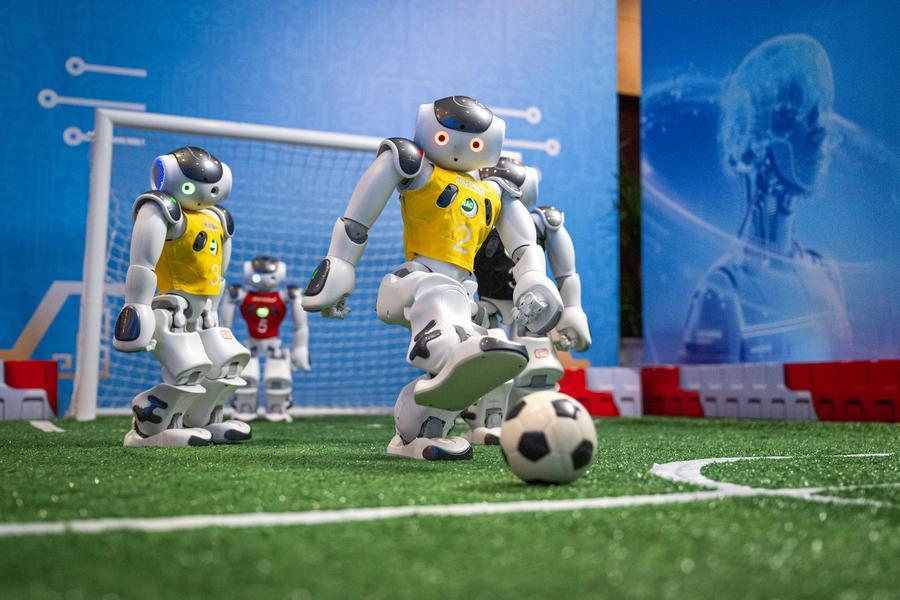
The 15th Five-Year Plan contains 20 principal indicators across five broad clusters -- economic development, innovation, people's well-being, green and low-carbon development, and security. It highlights strategic sectors including AI, new energy, new materials, new energy vehicles, robotics, biomedicine, high-end equipment, aviation and aerospace, deep sea, and polar regions, and drones. It also identifies future growth frontiers, including quantum technology, biomanufacturing, hydrogen, nuclear fusion power, brain-computer interfaces, embodied AI and 6G.
Taken as a whole, China's ambition is stunning. Foreign analysts often underestimate the state's capacity to use industrial policy not merely to stimulate development, but to channel and sustain it over time. Look no further than China's commanding global position in green technologies -- especially electric vehicles, batteries, and solar equipment.
Challenges, of course, remain serious: inadequate consumer demand, the real estate overhang, and heavy local government debt among them. These are not incidental obstacles; they are structural constraints, and the 15th Plan is, in part, an effort to manage and mitigate them.
In sum, the 15th FYP prioritizes "building a modernized industrial system" and reinforcing "the real economy" -- precisely the themes Xi Jinping emphasized in his remarks to the Jiangsu delegation at the "two sessions". These aims are to be pursued through Chinese modernization, high-quality development, new quality productive forces, scientific and technological self-reliance, AI-enabled optimization, strategic industries, and continued opening-up. No less important are common prosperity, stronger domestic demand, people-centered social progress, demographic adaptations, greener and lower-carbon growth, and tighter integration of security with development.
What, then, are the implications for the international community? A more successful Chinese economy would support greater overseas investment, particularly through the Belt and Road Initiative, which builds infrastructure in developing countries, and its Global Development Initiative, which provides economic and social programs, such as business support, education, and healthcare. China is sensitive that trade should be balanced and local industry encouraged. It would also mean a larger Chinese market for foreign goods and services.
The 15th FYP is, in the end, more than a planning document. It is a statement of national vision, a roadmap of politico-economic intent, and a measure of how Xi Jinping imagines the full flowering of Chinese society and China's place in the global community by 2035 and beyond. For this reason, the wider world and China should each understand the other with greater clarity, focus and care.
Editor's note: Robert Lawrence Kuhn is chairman of The Kuhn Foundation, creator/host of Closer to Truth, a nonprofit digital-media and TV series on science and philosophy, and a recipient of the China Reform Friendship Medal.
The views expressed in this article are those of the author and do not necessarily reflect those of Xinhua News Agency.■