Sun Degang, director of the Middle East Studies Center at Fudan University, said that Mojtaba's personal drive for family revenge aligns closely with a national sense of resentment and is expected to push him toward an even tougher stance against the United States and Israel, prolonging the ongoing conflict.
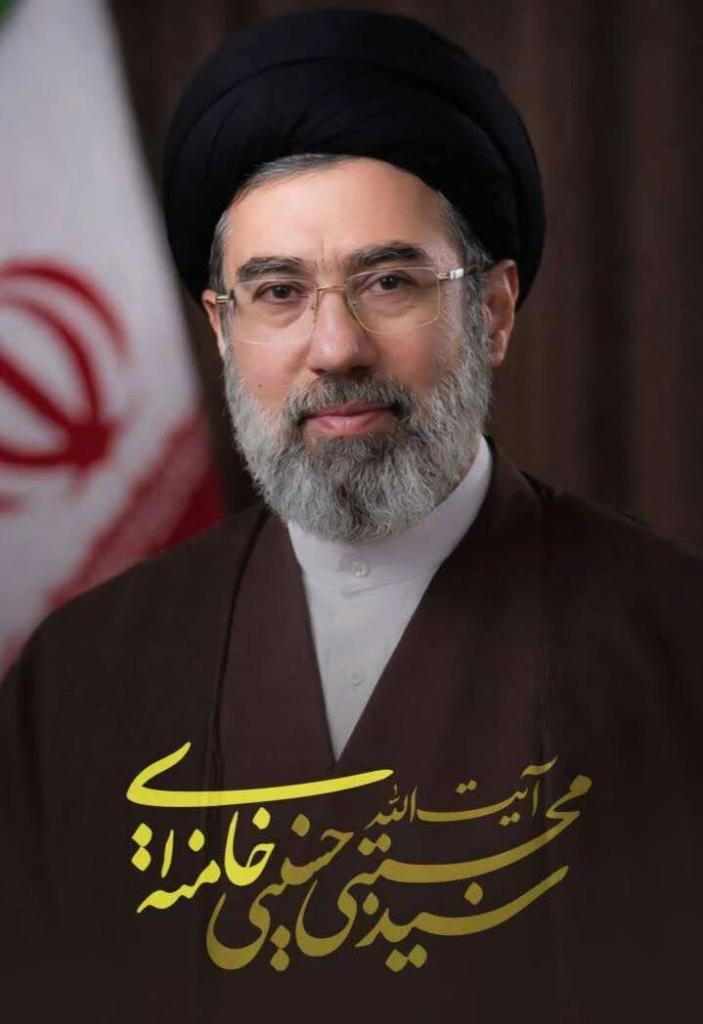
BEIJING, March 9 (Xinhua) -- Two weeks into the war that claimed his parents, Mojtaba Khamenei, son of Iran's late Supreme Leader Ali Khamenei, has been named his father's successor, the country's Assembly of Experts announced on Sunday.
With Iran's Islamic Revolutionary Guard Corps (IRGC) immediately pledging allegiance, the appointment signals Tehran's decision to cement its hardline stance against the United States and Israel, pushing the region into uncharted waters.
WHO IS MOJTABA KHAMENEI?
Born in 1969, Mojtaba is the second son of Ali Khamenei and has long been a hardliner against the West.
Though he has never held formal office, Mojtaba wields influence through close ties to senior clerics and the IRGC, hence is widely seen as his father's gatekeeper and successor -- effectively a "mini-supreme leader" -- and has been sanctioned by the United States since 2019 for representing his father in an official capacity.
Vali R. Nasr, an expert on Iran and Shiite Islam at Johns Hopkins University, said that the choice of Mojtaba is the "choice of continuity with his father," adding that "he is more ready than other candidates to quickly consolidate power and assert control over the system."
Alan Eyre, a former U.S. diplomat and Iran specialist, said Mojtaba is "more hardline than his father," noting that "he's going to have a lot of revenge to exact."
Similarly, Alex Vatanka, a senior fellow at the Middle East Institute in Washington, D.C., said, "It's a big humiliation for the United States to carry out an operation of this scale, risk so much, and end up killing an 86-year-old man, only to have him replaced by his hardline son."

WHAT IS THE U.S.-ISRAELI REACTION?
Washington and Jerusalem were already issuing stark warnings even before Mojtaba was formally appointed.
On Wednesday, Israel threatened that whoever Iran chooses as its new supreme leader would be "a target for elimination."
The following day, U.S. President Donald Trump echoed the hawkish stance, telling news outlet Axios that it is "unacceptable" to have Mojtaba to assume the role, noting that Trump himself must be personally involved in selecting Iran's next leader.
Trump also signaled a similar position shortly before Mojtaba's ascension. On Sunday, he told ABC News that Iran's new leader "is not going to last long" without U.S. approval.
"He's going to have to get approval from us," Trump said. "If he doesn't get approval from us, he's not going to last long. We want to make sure that we don't have to go back every 10 years, when you don't have a president like me that's not going to do it."
"I don't want people to have to go back in five years and have to do the same thing again, or worse, let them have a nuclear weapon," he added.
Also on Sunday, Trump told The Times of Israel that ending the war with Iran will be a "mutual" decision made between him and Israeli Prime Minister Benjamin Netanyahu.
"I think it's mutual ... a little bit. We've been talking. I'll make a decision at the right time, but everything's going to be taken into account," Trump said, indicating that while Netanyahu will have input, the U.S. president will have the final say.

"A NEW DAWN"?
"This election marks a new dawn and the beginning of a new phase in the Islamic Revolution and the Islamic Republic," the IRGC said in a statement.
Paul Salem, a senior fellow at the Middle East Institute, said Mojtaba is not a figure poised to strike a deal with the United States or pivot diplomatically.
"Nobody emerging now is going to be able to compromise," Salem said. "This is a hardline choice, made in a hardline moment."
Sun Degang, director of the Middle East Studies Center at Fudan University, said that Mojtaba's personal drive for family revenge aligns closely with a national sense of resentment and is expected to push him toward an even tougher stance against the United States and Israel, prolonging the ongoing conflict.
Patrick Clawson, a senior fellow at the Washington Institute for Near East Policy, said that Mojtaba would likely embrace a strategy of "defiant consolidation" -- that is, relying on the IRGC, seeking to expand missile strikes, continuing to support regional allies, and accelerating Iran's nuclear program.
"Over the medium term, he and the IRGC may decide that Iran must move quickly to obtain nuclear weapons in order to forestall future U.S. and Israeli attacks," he said. "Whether this approach stabilizes the regime or accelerates fragmentation, it will shape the next phase of the conflict."■