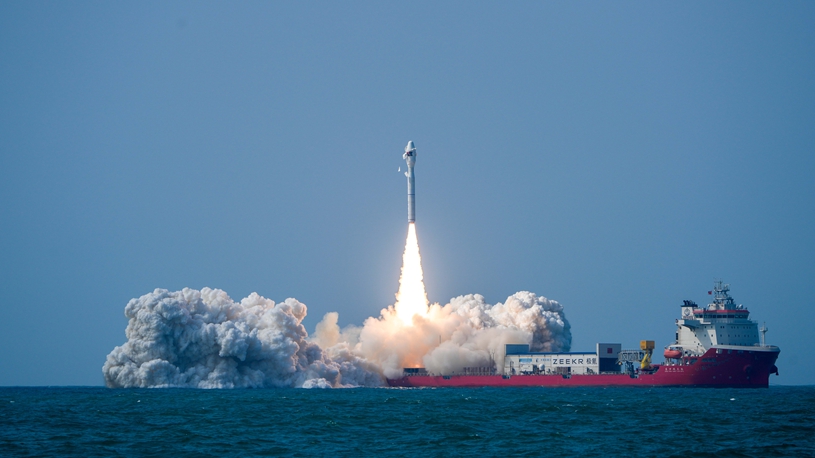
WENCHANG, Hainan, Feb. 13 (Xinhua) -- The recent successful key tests have laid the groundwork for the maiden flight of China's Long March-10 rocket series, a launch vehicle designed to support the country's manned lunar exploration missions, according to the China Aerospace Science and Technology Corporation (CASC).
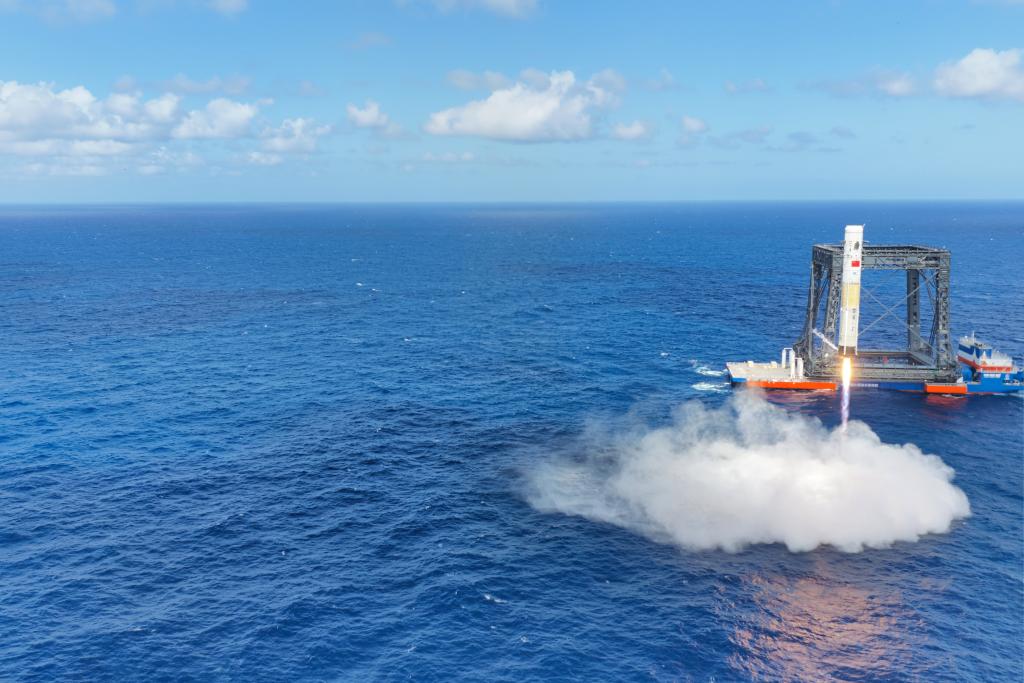
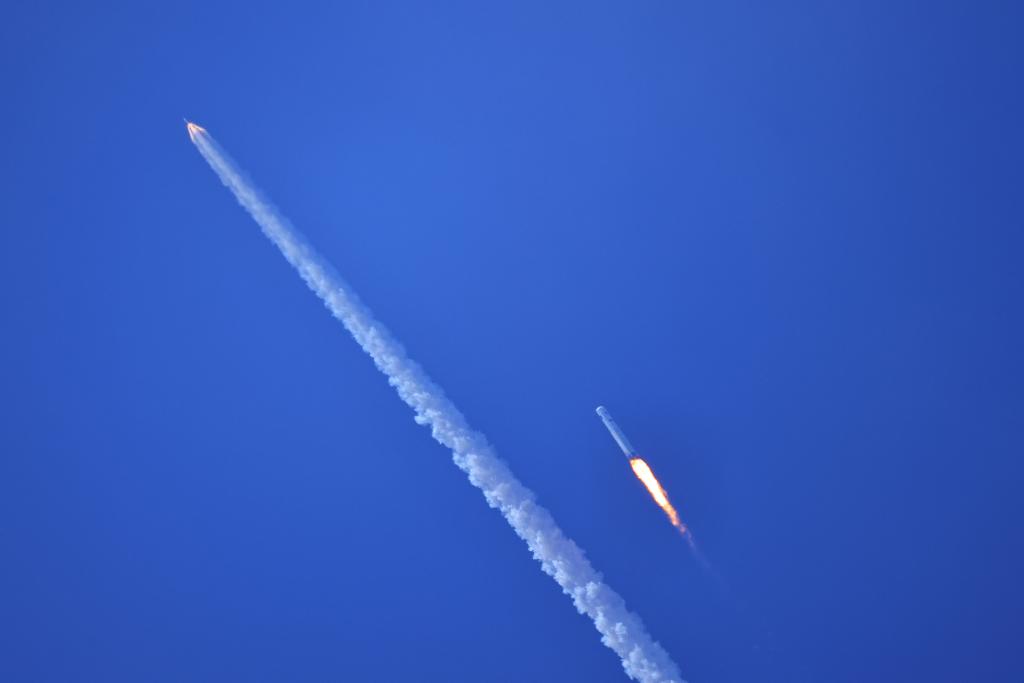
On Wednesday, China successfully conducted a low-altitude demonstration and verification flight test of the Long March-10 carrier rocket, along with a maximum dynamic pressure abort flight test of its new-generation crewed spaceship Mengzhou, with both the rocket and spaceship still in their prototype phases.
During the tests, the rocket prototype undertook three tasks -- verifying the maximum dynamic pressure abort conditions during the Mengzhou spaceship's ascent, demonstrating the reliability of its multi-stage parallel operations, and testing critical return-phase technologies, according to Yang Shutao, an expert from the CASC.
The Long March-10 rocket series includes two configurations: the Long March-10 with three stages and bundled boosters, and the Long March-10A with two stages and no boosters.
Approximately 55 meters in length, the prototype rocket tested on Wednesday is powered by seven liquid oxygen/kerosene engines in parallel, generating nearly 1,000 tonnes of thrust. It currently has the largest single-module thrust among China's rockets, Yang said.
In the future, the Long March-10 rocket will integrate two identical boosters in parallel with its seven-engine core stage, giving it a significantly larger carrying capacity, according to Yang.
MULTIPLE RECOVERY STEPS
To ensure the safety of the abort operation during the tests, the rocket and spacecraft systems were jointly designed, with careful optimization of the separation and escape timeline, and meticulous planning of the relative positions, speeds and angular relationship between the rocket and the spaceship, Yang said.
After the spaceship separated, the rocket continued its flight until the first stage reached the predetermined height and speed, at which point its engines were shut down.
During the unpowered upward glide phase, the rocket continuously adjusted its attitude, shifting from nose-forward to tail-forward, to meet the subsequent ignition requirements.
At an altitude of about 110 km, the rocket deployed its four grid fins, just like a bird spreading its wings, getting ready for the return and recovery.
Then came the powered deceleration phase. Two engines were ignited for the second time to decelerate while correcting the rocket's flight position and attitude.
When the engines shut down and the rocket entered the aerodynamic deceleration phase, it further slowed down by relying on its own drag and the aerodynamic forces generated by the grid fins, while deflecting the fins to adjust its position and attitude.
During the final landing phase, three engines ignited successively, and the rocket maneuvered toward the predicted landing site. At about 120 meters above sea level, the onboard tether mechanism was deployed to simulate the capture by a ground-based recovery net system. When reaching about 5 meters in altitude, the rocket achieved a quasi-hovering state before executing a controlled splashdown in the sea.
WAY TO FUTURE REUSES
Before the latest flight tests, China conducted two static fire tests on the same rocket, in August and September 2025, respectively.
After the second static fire test, the development team completed the streamlined maintenance of the rocket's engines, a comprehensive examination of the rocket, and the replacement of a small amount of consumable items, Yang said.
Multiple tests on the same rocket not only reduced research and development costs, but also accumulated continuous and genuine experimental data, providing valuable experience for the subsequent maintenance and repair of the rockets for future reuse.
Yang noted that the Long March-10 rocket series will adopt a rocket-ground coordinated recovery solution. It involves "four tethering structures onboard the rocket and a ground-based grid-shaped net recovery device," which will transfer the functions of capture, buffering and stabilization from the rocket to the ground-based net. It will reduce the onboard complexity, thereby enhancing the rocket's carrying capacity.
"Rocket reuse can significantly reduce launch costs and increase launch frequency. It is an essential path for large-scale free access to space in the future and provides important support for the progress of China's space sector," Yang said. ■