BEIJING, Jan. 22 (Xinhua) -- As some technology pioneers sound alarms about artificial intelligence replacing human jobs, China is racing to train its massive workforce to stay competitive in a technology-driven future.
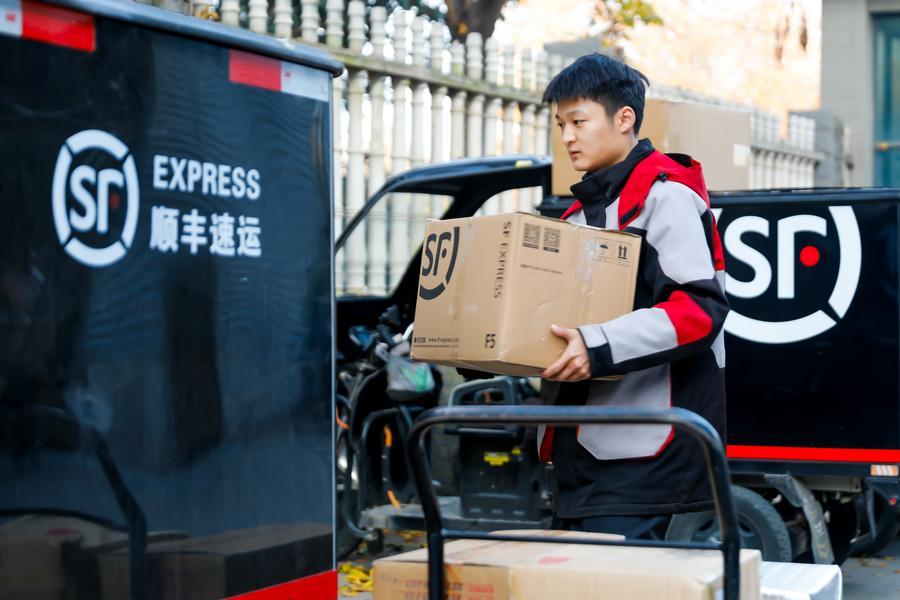
Part of that response took shape last month with the opening of the country's first "rider academy" in south China's Guangdong Province.
The initiative is a partnership between provincial education authorities and Chinese e-commerce giant JD.com, which together have launched a vocational training college for couriers at a local vocational and technical university.
The academy's curriculum begins with fundamentals such as traffic safety and workers' rights, but its advanced tracks are what stand out. These include operating AI-driven dispatch platforms, maintaining autonomous delivery hardware, managing cold-chain logistics, and undertaking comprehensive training in station operations and regional fleet coordination.
The school offers tiered, voluntary training for frontline workers such as delivery riders and couriers, with the platforms they work for required to cover the basic tuition.
The timing could not be more critical. With a growing number of workers engaged in the country's rapidly expanding "new forms of employment" -- including delivery riders, couriers and ride-hailing drivers -- the stakes are high.
Today, driven by smart technologies, drones and autonomous delivery vehicles are handling logistics in more scenarios, such as transporting agricultural products from remote areas or operating within advanced AI demonstration zones.
Rather than viewing technology as a replacement for human workers, Chinese policymakers are positioning AI as an evolution that raises skill requirements, equipping its workforce to master emerging technologies and cultivate their specialized roles.
More recently, a new phrase -- "investing in human capital" -- has gained prominence in official documents. It has appeared repeatedly in the 2025 government work report, long-term development planning documents, and a high-level economic meeting last month that set priorities for 2026.
Across China, a growing number of county governments are establishing flight schools in rural areas. They fund drone technology training programs in rural areas, with the dual aim of creating jobs for workers returning from cities and boosting agricultural productivity.
In 2025, the city of Yichang in central China's Hubei Province held 30 drone training sessions, subsidizing 606 trainees with 808,000 yuan (about 115,400 U.S. dollars).
In Baiyin, northwest China's Gansu Province, local authorities have partnered with professional training institutions to offer free drone operation courses for job seekers, including the unemployed, rural migrant workers and college graduates.
"We also provide job referrals to trainees, delivering a one-stop service from training to employment," said Gao Minqiang, an official from the local human resources department. So far, three sessions have been held, training over 100 residents.
Wu Xuejiao, a 34-year-old trainee, said the program armed her with practical drone skills and knowledge of their use in agriculture and logistics. "I feel I've gained a new means to earn a living." ■