BEIJING, Jan. 22 (Xinhua) -- As the first sunrise of 2026 touched the peak of Mount Tai, Geng Yan, a sports enthusiast from Lanzhou City, capital of northwest China's Gansu Province, celebrated with a cup of mulled wine and a social media post that resonated with millions, writing, "A packed holiday. Love you, Laoji!"
"Laoji," literally "Old Self," has emerged as a playful yet affectionate moniker for Chinese social media users near the end of 2025, who address themselves as they would a lifelong friend.
Dubbed the "kindest meme of the year," the term reflects a profound shift among young Chinese, marking a move from meeting external expectations to prioritizing self-care and emotional fulfillment.
By calling themselves "Laoji," young people use a psychological strategy to make self-care feel more comfortable. This helps them sidestep the sense of shame that older generations usually associate with self-praise.
The trend is reshaping consumption. Data shows that "purchasing for happiness" is now a primary driver for over 56 percent of Gen Z consumers, a jump of 16.2 percentage points from the previous year.
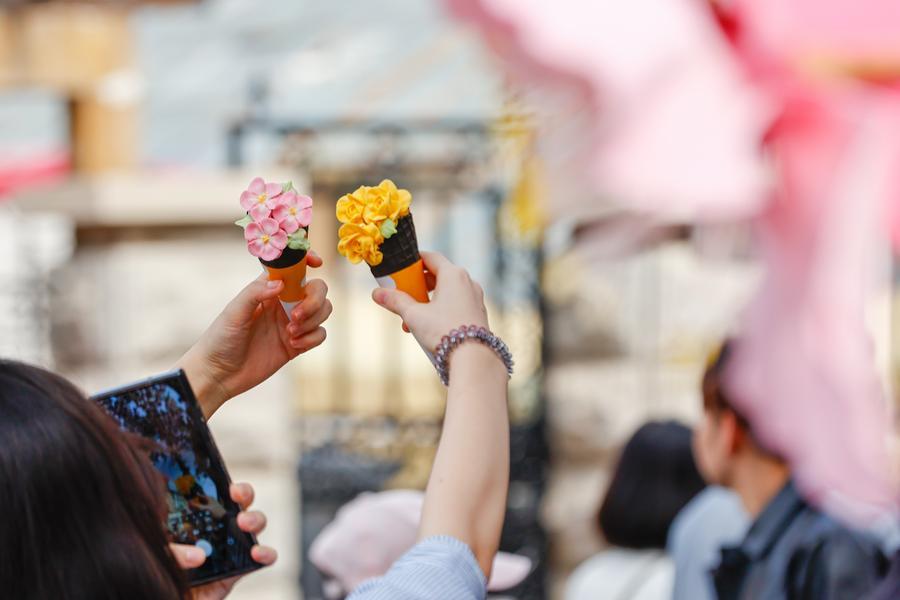
Ma Lin, a florist in Lanzhou, saw her orders double during the New Year holiday. Her bestseller was a "mini-bouquet" designed to be held in one hand for a perfect selfie. "They aren't just buying a product; they are buying a memorable fragment of life," Ma said.
The trend is just as visible in the way people pursue their achievements. It challenges the old "no pain, no gain" upbringing that for decades made young people feel guilty for enjoying themselves unless they had first endured significant hardship.
Zhang Cong, 32, from Lanzhou, once saw relaxation as a form of laziness. He recently completed a 22-kilometer run shaped like "2026," outfitted with new gear costing 1,800 yuan (about 257.1 U.S. dollars)
"This run wasn't for a medal; it was a gift to myself to mark how far I've come," Zhang said.
Educators like Chen Ruichun, a high school teacher and content creator, have also embraced the shift. She encourages her students to "live for your own fulfillment rather than being confined by others."
"Because the person who has supported you most unconditionally is yourself, you are the one most deserving of your own care," Chen said.
Psychologists say the popularity of "Laoji" reflects a collective shift toward internal healing. By calling themselves an "old friend," young people are softening the harsh "internal critic" fueled by a competitive society.
"The term 'Laoji' shifts the internal dialogue from a cold, judgmental hierarchy to a warm, equal friendship," said Du Jing, a psychotherapist at Shanghai Tongji Hospital of Tongji University. "It makes self-care actionable. You aren't just 'being selfish'; you are taking care of a lifelong companion."
"True self-care isn't about filling a void with luxury goods," Du explained. "It's about recognizing your own resilience and setting boundaries."
As the first month of 2026 progresses, the buzz around "Laoji" shows no sign of fading, evolving from a festive greeting into a daily philosophy. Whether through a grueling mountain hike or a quiet moment with a favorite song, China's youth are learning that the most important relationship they will ever nurture is the one with their "Old Self." ■