Together, these efforts -- spanning commercial ventures, artisan exchanges and museum cooperation -- illustrate how 2025 has deepened historical ties and enhanced mutual understanding between China and Türkiye, setting the stage for continued cultural and civilizational exchange.
ISTANBUL, Dec. 28 (Xinhua) -- In 2025, a string of porcelain-themed exchanges gave fresh impetus to China-Türkiye cultural and economic ties, rekindling a centuries-old artistic dialogue. Porcelain, long both a shared craft and a traded luxury, once again served as an effective bridge between the two civilizations.
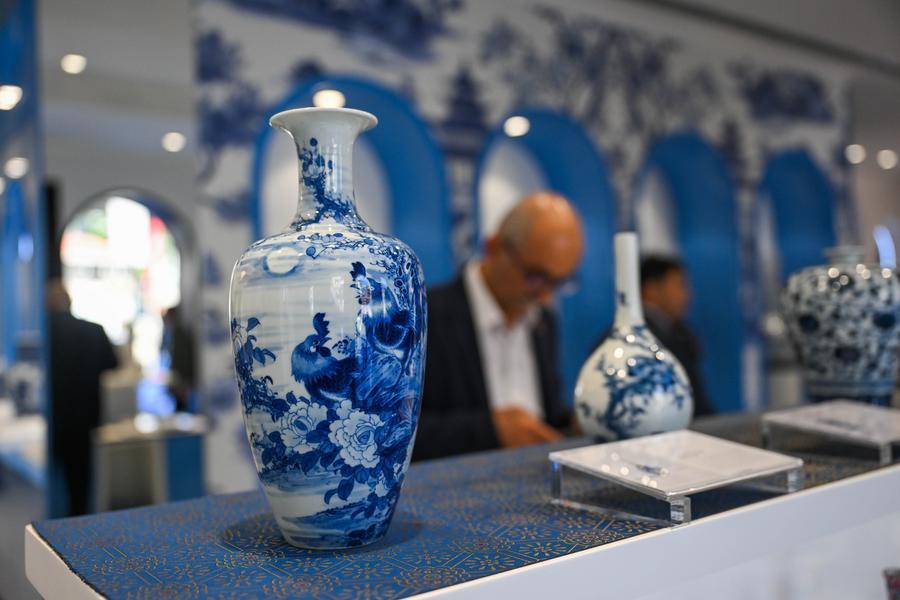
In a notable development in May, China's renowned porcelain hub Jingdezhen opened its first official flagship store in Istanbul, showcasing fine tableware and decorative ceramics from the Jiangxi city, famed for producing imperial porcelain since the Song dynasty (960-1279).
Since its opening, the store has attracted strong interest from Turkish customers, who account for nearly 90 percent of visitors, with contractors, interior designers and high-end gift buyers forming the bulk of the clientele.
The Istanbul flagship aims not only to introduce Jingdezhen porcelain to Turkish consumers but also to serve as a platform for long-term cultural exchange, with plans to invite a Chinese artist to Istanbul in 2026 for a workshop and talk.
Beyond commerce, these exchanges have increasingly brought together Chinese and Turkish artisans and cultural institutions.
In the historic town of Iznik in northwestern Türkiye, renowned for its centuries-old ceramic tradition, master artisan Adil Can Guven, widely recognized as a "culture bearer," continues to preserve and revitalize the ancient art of Iznik tiles.
Recalling a 2023 visit to Jingdezhen, where he observed restoration techniques and collaborated with local artisans, Guven said: "The techniques may differ, but the passion is the same. It reminded me that ceramic art transcends borders -- it is a universal language."
Guven has also mentored young Iznik artisans, sharing techniques inspired by his time in Jingdezhen. Preserving the craft not only honors the past but also deepens cross-cultural collaboration, helping secure the future of ceramic art, he said.
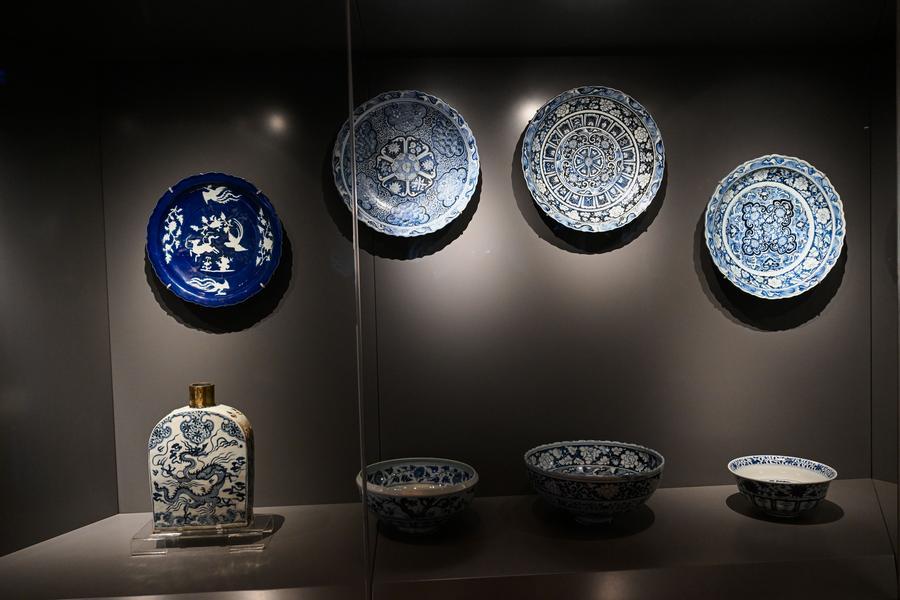
The year 2025 also saw Istanbul's Topkapi Palace make extensive efforts to open a new museum showcasing one of the world's most extensive porcelain collections outside China, with rare pieces from the Yuan and Ming dynasties at its core.
After a four-year restoration of the historic Darphane-i Amire complex -- formerly the Ottoman Empire's mint -- the museum is set to exhibit over 4,500 porcelain artifacts, including 1,442 prized Chinese pieces, underscoring the cultural and historical significance of Chinese porcelain in the Ottoman Empire.
"Topkapi Palace's inventory includes around 22,000 porcelain items, about 12,000 of which are Chinese. This collection is globally unparalleled outside China," said Director Ilhan Kocaman, noting that many pieces arrived via diplomatic exchanges and trade during the height of the Ottoman Empire.
According to Wang Guangyao, director of the Institute of Ceramics at Beijing's Palace Museum, the figures reflect both the historical impact of Chinese ceramics in Türkiye and the long-standing appreciation of Chinese porcelain by the Ottoman court and society.
Wang, who visited Istanbul in November, said the expanding exchanges in 2025 had laid a solid foundation for deeper cooperation between Chinese and Turkish museums in ceramics. He added that both sides are exploring plans for joint exhibitions, research exchanges and conservation projects in the coming years.
Together, these efforts -- spanning commercial ventures, artisan exchanges and museum cooperation -- illustrate how 2025 has deepened historical ties and enhanced mutual understanding between China and Türkiye, setting the stage for continued cultural and civilizational exchange.■