* Territorial disputes and diplomatic missteps cast a shadow over regional harmony in 2025. Longstanding border tensions between nations erupted into multiple military flare-ups across the Asia-Pacific.
* Despite occasional tensions in the region, solidarity remains the prevailing focus: Asia-Pacific countries stood side by side, tackling pressing challenges such as natural disasters and climate upheavals, while embracing promising new opportunities.
* Looking ahead, while geopolitical uncertainties persist, the region is widely expected to remain a cornerstone of global stability and economic growth in 2026.
HONG KONG, Dec. 28 (Xinhua) -- In 2025, the Asia-Pacific region stood at a crossroads of contradiction: border skirmishes and diplomatic rifts tested its stability, yet multilateral cooperation and economic integration forged a pathway to resilience.
As military clashes flared in pockets of the region, geopolitical missteps fueled unease, and natural disasters unleashed chaos and casualties, enhanced regional frameworks such as APEC and ASEAN, alongside strengthened bilateral partnerships, emerged as vital counterweights, fostering innovation, collective action and deeper trade ties.
UNDERLYING TENSIONS
Territorial disputes and diplomatic missteps cast a shadow over regional harmony in 2025. Longstanding border tensions between nations erupted into multiple military flare-ups across the Asia-Pacific.
In May, India launched airstrikes on Pakistani targets in retaliation for an April attack that claimed 26 lives at a popular tourist site in Indian-controlled Kashmir. The two countries exchanged military strikes before agreeing to a ceasefire.
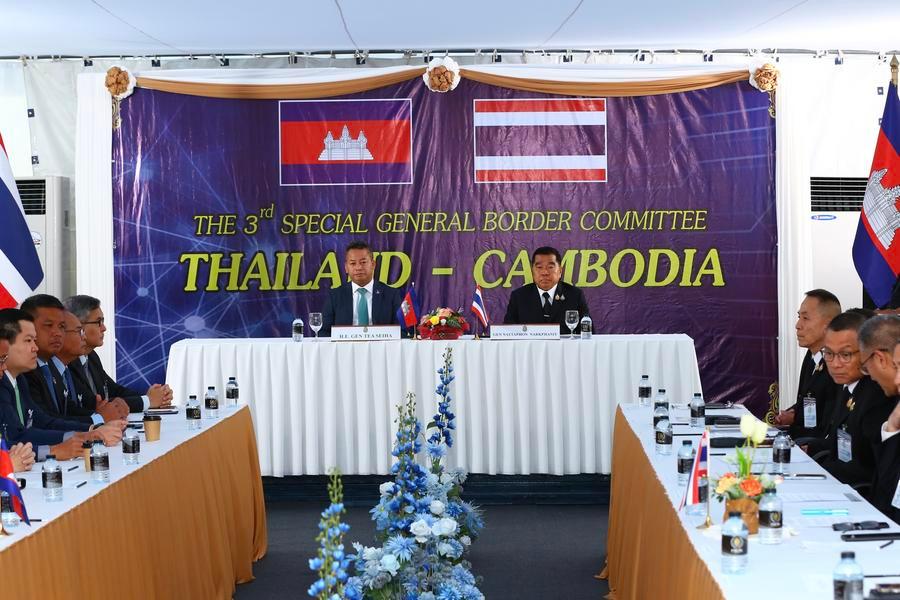
Also in May, clashes broke out in a disputed border area between Thailand and Cambodia. Fresh armed conflicts reignited in the region in late July. Though the two sides signed a joint peace declaration in October, hostilities resumed less than two months later, with both parties accusing each other of initiating the attacks. On Saturday, the two sides signed a joint statement agreeing to a ceasefire at the Special General Border Committee meeting.
Provocative diplomatic and military postures further stoked regional anxiety.
Shortly after taking office in October, Japan's new Prime Minister Sanae Takaichi made erroneous and dangerous remarks on Taiwan, drawing sharp rebukes both at home and abroad, most notably from China and other regional partners.
"China's stance is very clear: We urge the Japanese side to reflect on and correct its wrongdoing, and retract Prime Minister Takaichi's erroneous remarks. This is an issue of principle," a Chinese foreign ministry spokesman has said.
She also pushed for discussions on revising Japan's three non-nuclear principles, further heightening security concerns among neighboring countries.
Lee Chang-ho, chairman of the Korea-China Exchange Promotion Committee, condemned Takaichi's comments as irresponsible, as they "fundamentally undermined Northeast Asia's security."
The Taiwan question must be handled on the basis of the one-China principle, which has long been acknowledged by the international community, including Japan, Lee said. "Remarks from a leader that disregard this principle are detrimental not only to Japan but also to the trust and stability of the entire Asia region."
GREATER INTEGRATION
Despite occasional tensions in the region, solidarity remains the prevailing focus: Asia-Pacific countries stood side by side, tackling pressing challenges such as natural disasters and climate upheavals, while embracing promising new opportunities.
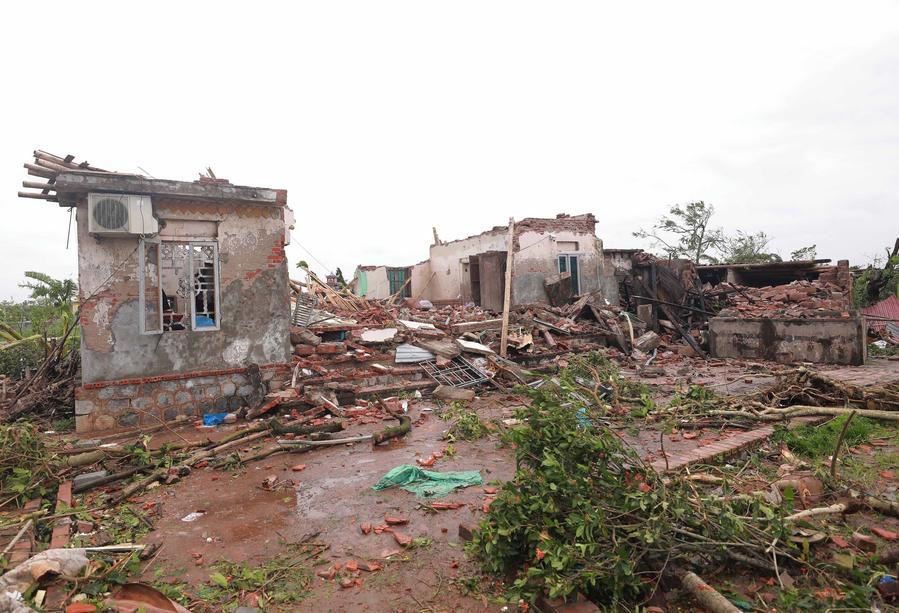
A devastating 7.9-magnitude earthquake struck Myanmar on March 28, inflicting heavy casualties and widespread property damage across Myanmar and neighboring Thailand. The disaster triggered an immediate, coordinated regional response, with China taking the lead in providing humanitarian aid and rescue support.
Climate-related disasters further underscored the need for cross-border cooperation. Catastrophic floods brought on by typhoons swept through several Southeast and South Asian nations, killing over 1,000 people and displacing millions. Regional relief efforts were swiftly mobilized, with emergency supplies, technical teams and financial assistance delivered to the affected areas.
Beyond collective disaster relief, the region rallied to push the boundaries of cooperation into new fields.
APEC, an anchor of regional economic cooperation, integrated artificial intelligence (AI) and demographic change into the core agenda of its 2025 Economic Leaders' Meeting. The meeting adopted an AI initiative aimed at helping the region unlock AI's potential as a catalyst for economic growth while addressing challenges in the rapidly evolving digital landscape.
Economic integration reached new heights with the conclusion of negotiations on the China-ASEAN Free Trade Area (CAFTA) 3.0 Upgrade Protocol. This landmark agreement is set to deepen economic ties between the world's second-largest economy and the ASEAN bloc, injecting fresh growth momentum into the Asia-Pacific amid rising protectionism from some Western countries.
The CAFTA 3.0 will not only be an important engine driving the region toward more inclusive and resilient growth, but also play a key role in strengthening regional economic resilience and withstanding external shocks, according to Phan Cao Nhat Anh, deputy head of South Asia, West Asia and Africa Research Institute at the Vietnam Academy of Social Sciences.
BUCKING UNCERTAINTY
Looking ahead, while geopolitical uncertainties persist, the region is widely expected to remain a cornerstone of global stability and economic growth in 2026.
In its 2026 annual economic outlook, the Mastercard Economics Institute (MEI) said, "Asia Pacific's growth remains broadly stable even as the global economy adapts to rapid tariff changes, accelerating AI investment, and evolving consumer trends."

Despite global headwinds, MEI expects GDP growth across Asia Pacific to hold steady in 2026. "Given its centrality to global trade, Asia Pacific has shown remarkable resilience at a time when tariff uncertainty and shifting supply chains have threatened to upend international commerce," said David Mann, chief economist for Asia Pacific at Mastercard.
"Asia and the Pacific's solid economic fundamentals are underpinning robust export performance and steady growth, despite a global trade environment clouded by historic levels of uncertainty over the past year," said Albert Park, chief economist at Asian Development Bank.
"Trade agreements have partly eased that uncertainty, but external and other challenges could still weigh on the outlook. Governments in the region should continue to foster open trade and investment to sustain resilience and growth," Park added.
China's push for greater openness and global collaboration was prominently showcased at this year's APEC Economic Leaders' Meeting.
With its steadfast commitment to high-level opening up and strong innovative capabilities, the world's second-largest economy is well-positioned to drive a prosperous future for the Asia-Pacific region and sustain its role as a hub of global economic growth.
Furthermore, China's upcoming APEC presidency is expected to further reinforce regional resilience. With openness, innovation and cooperation as the three priorities for the APEC "China Year," and "Building an Asia-Pacific Community to Prosper Together" as its theme, China is set to make greater contributions to forging a more interconnected, prosperous and resilient Asia-Pacific.
"We live in very uncertain times," said Eduardo Pedrosa, executive director of the APEC Secretariat. "But the uncertainty can be addressed through dialogue and increasing understanding." Enditem
(Video reporters: Li Yuhui, Xu Langxuan, Zhang Zhongkai, Gao Yang, Tang Peipei, Wu Xia, Shu Chang; video editors: Hong liang, Zheng Qingbin, Zhang Mocheng)■