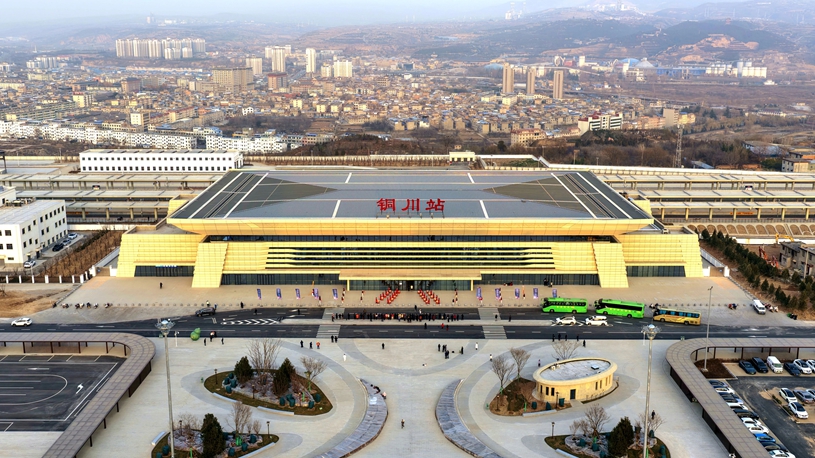
* A bullet train departed Yan'an on Friday, linking the sacred revolutionary heartland to the country's high-speed rail network.
* More than half of the new route crosses soft, water-sensitive loess, presenting world-class engineering challenges.
* The line's opening has brought China's high-speed rail mileage to over 50,000 km.
XI'AN, Dec. 26 (Xinhua) -- Some 90 years ago, American journalist Edgar Snow spent nearly two days bouncing along in a truck on the bumpy road from Xi'an to the revolutionary heartland of Yan'an in northwest China. Today, the same journey takes just about one hour.
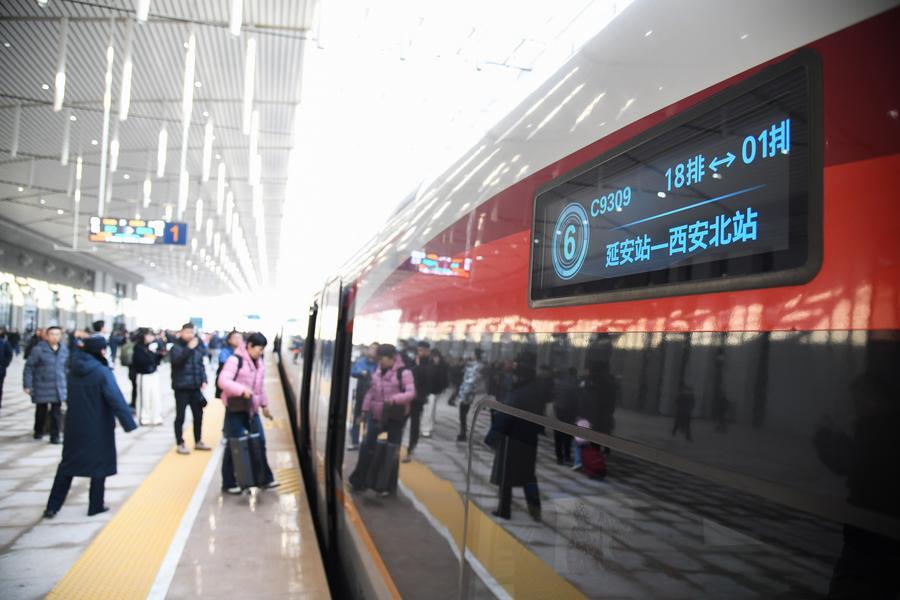
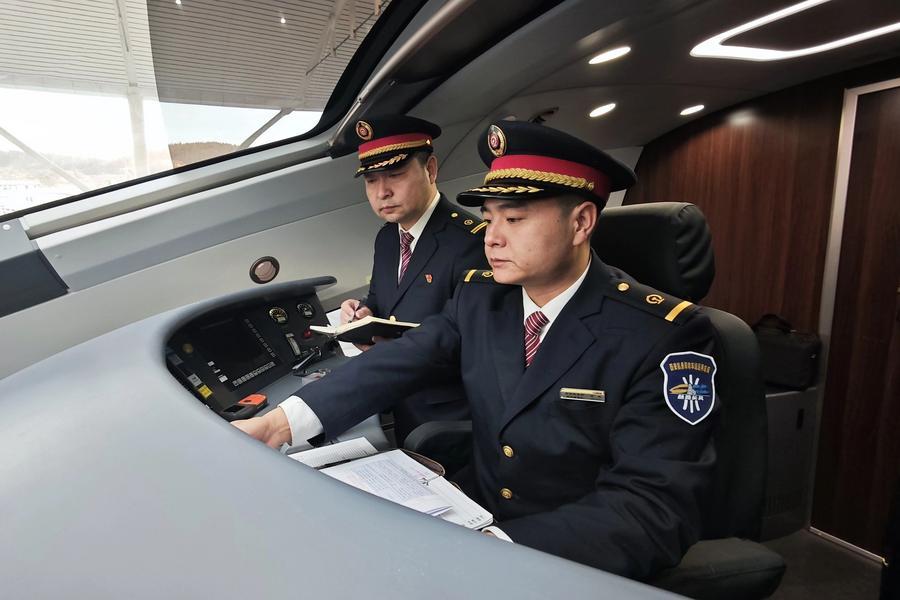
On Friday, a sleek silver bullet train departed Yan'an, Shaanxi Province, for the provincial capital Xi'an, home to the famed Terracotta Warriors, with the newly opened 299-km high-speed railway connected to the country's rapidly expanding high-speed rail network.
"It gives us another perspective of 'China speed,'" said the 28-year-old Moroccan student Abdelkader Rachdi, onboard the C9309 train on the inaugural trip, noting that the new 350-km-per-hour train service is both faster and more convenient than before, and affordable too.
LINKING LEGACY WITH FUTURE
Yan'an, perched on the loess hills of northern Shaanxi, gained international attention through Snow's 1937 classic "Red Star Over China," which depicted the region as one of China's poorest areas but also as a beacon of hope, with the Communist Party of China (CPC) leading the country toward independence and liberation.
During the Long March (1934-1936), Mao Zedong and his comrades reached Yan'an, where they established the CPC headquarters and lived and worked for 13 years. This was the place where they led the Chinese People's War of Resistance against Japanese Aggression and where the War of Liberation commenced against the reactionary Kuomintang regime, before the People's Republic of China was founded in 1949.
"Yan'an is of great significance as it symbolizes the turning point of the Chinese revolution led by the CPC, and is the cradle of the great Yan'an Spirit," said He Lei, a professor at the China Executive Leadership Academy, Yan'an.
As a strategic stronghold in northwest China, Yan'an opened an airport nearly 90 years ago. However, due to difficult geological conditions on the Loess Plateau and other factors, it was not until 1992 that the first conventional railway connecting it to Xi'an was opened.
The arrival of high-speed rail in Yan'an comes 17 years after China opened its first high-speed railway line between Beijing and Tianjin in 2008, when the Olympics were held in the Chinese capital.
Since the 18th CPC National Congress in 2012, Yan'an has emerged as both a spiritual landmark for the Party's continued "self-revolution" and a symbol of successful poverty alleviation. New museums, Party education institutes, and upgraded infrastructure have drawn increased national attention. A visit by the newly elected top leadership days after the 20th CPC National Congress concluded in 2022 has further raised the city's profile.
"The Yan'an Spirit of maintaining the correct political direction, seeking truth from facts, serving the people wholeheartedly, and being diligent and enterprising will continue to lead the country to overcome difficulties and forge ahead bravely, and basically achieve modernization by 2035," He said.
Yan'an has become a destination for an increasing number of tourists seeking historical and contemporary inspiration. It is renowned for exporting fine thoughts, as well as abundant goods and resources -- from apples and intangible cultural heritage craftsmanship to mineral products. The city's GDP grew by 5.5 percent in 2024, outpacing the national average level.
TACKLING WORLD-CLASS ENGINEERING CHALLENGES
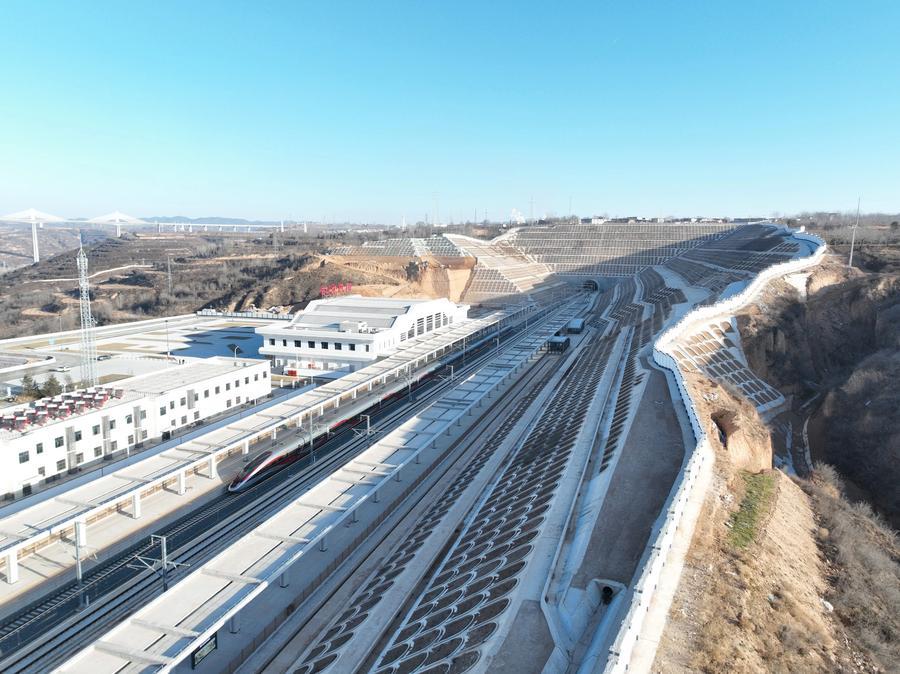
Construction of the high-speed rail project started in 2021. Designed for operations of up to 350 km per hour, the line marked the fastest train running on the Loess Plateau.

More than half of the new route crosses soft, water-sensitive loess, presenting world-class engineering challenges in controlling ground settlement and ensuring structural stability.
"Boring tunnels through loess soil is like piercing holes in a block of tofu. Once excavation begins, the surrounding structure quickly fails to stay stable," said chief designer Liu Wentao. Through innovative support and waterproofing techniques, engineers succeeded in reducing ground settlement by over 80 percent, achieving the precision required for high-speed rail operations.
As the Loess Plateau is one of the most ecologically fragile areas in China, ecological restoration and conservation were given high priority during construction.
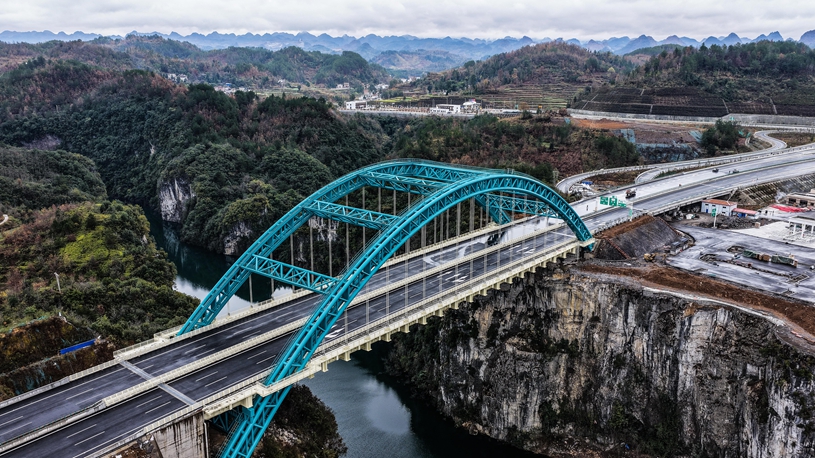
The route is largely elevated or underground, with 91 percent running on bridges or through tunnels. Its 47 tunnels span over 169 km, more than three times the length of the Channel Tunnel between Britain and France.
The opening of this line has brought China's high-speed rail mileage to over 50,000 km, exceeding the total of all other countries combined.
High-speed rail connects 97 percent of Chinese cities with populations over 500,000 and carries up to 16 million passengers daily, equivalent to relocating the population of a megacity across the network each day, said Li Xiaoyong, a manager from the China State Railway Group Co., Ltd.
Further efforts will be made to improve the modern integrated transportation system, strengthening cross-regional coordination and planning, promoting multimodal integration, and improving transportation links and services in remote areas, as noted in a recommendations document for the formulation of the 15th Five-Year Plan (2026-2030). (Video reporters: Fu Ruixia, Liang Aiping, Lin Juan and Chen Changqi; video editors: Li Ziwei and Luo Hui) ■