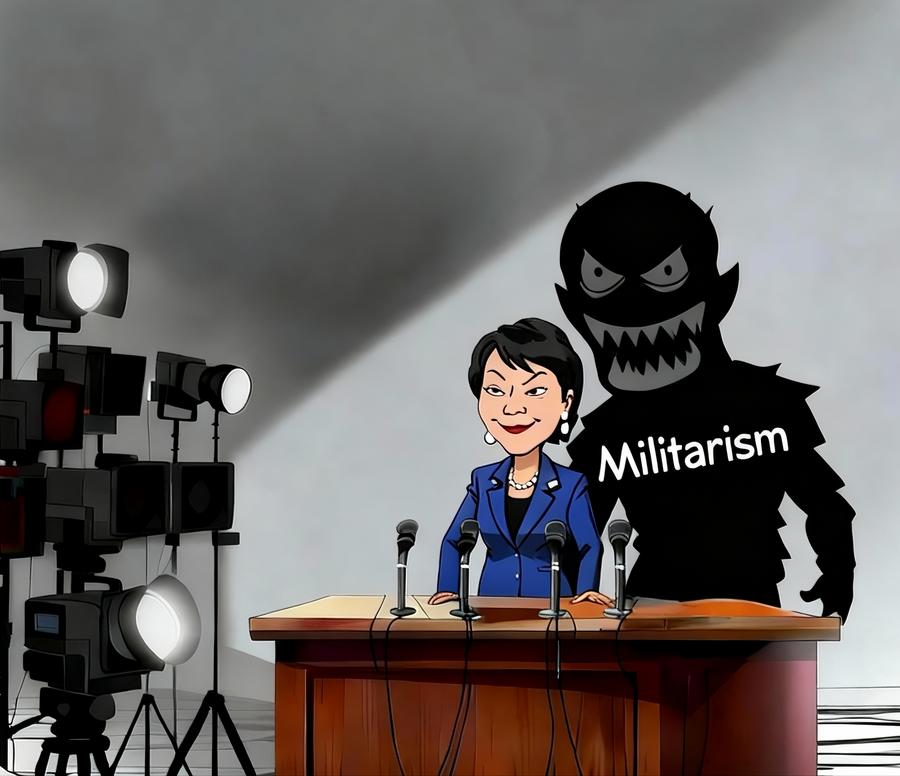
The remarks of Japanese Prime Minister Sanae Takaichi have triggered widespread shock and concern. They represent not only a blatant intrusion into China's internal affairs, but also an open challenge to the post-war international order.
BEIJING, Dec. 23 (Xinhua) -- Eighty years ago, the world won a great victory in the war against fascism. At the cost of tens of millions of lives, humanity crushed fascist forces, defended human civilization, and, amid the ruins of war, built the post-war international order with the United Nations at its core in the hope of preventing future calamities.
Yet as the world marks the 80th anniversary of the victory of the great war, Japanese Prime Minister Sanae Takaichi has chosen to move against the tide of history. Speaking before the Diet, she linked Japan's "survival-threatening situation" with a "Taiwan contingency," implying the use of force against China.
Her remarks have triggered widespread shock and concern. They represent not only a blatant intrusion into China's internal affairs, but also an open challenge to the post-war international order, sending a profoundly dangerous and deeply misguided message to the world.
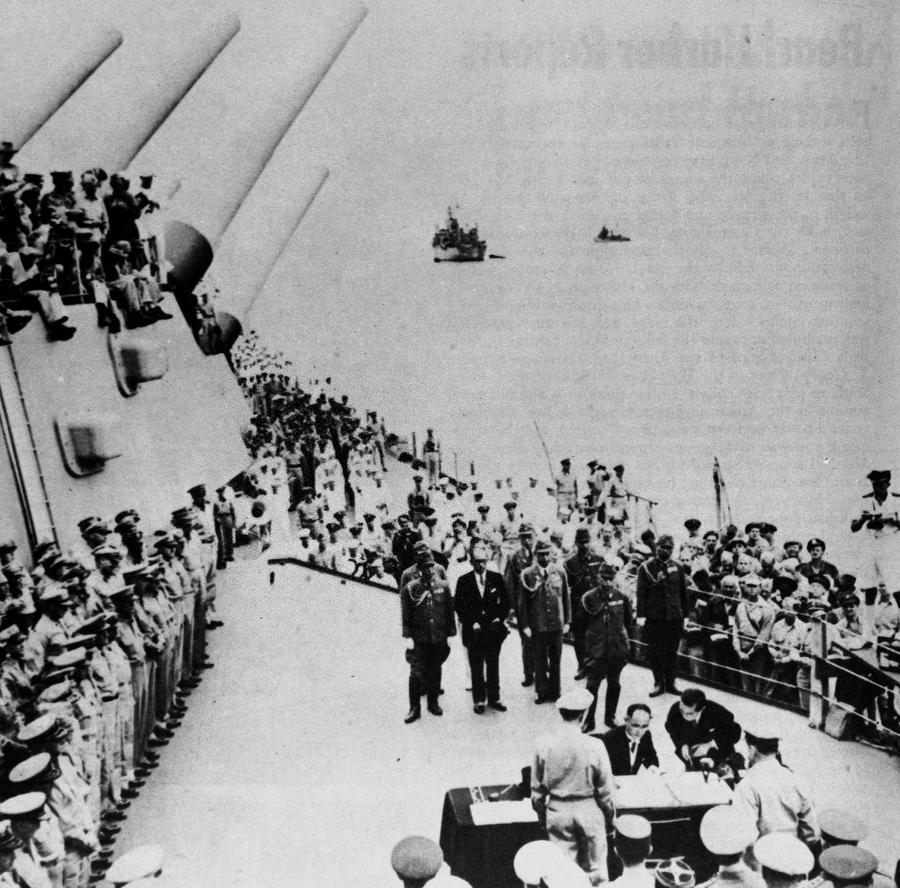
Japan's defeat was a key historic juncture that led to the building of the post-war international order, which codifies Taiwan's return to China.
Taiwan has been a part of the sacred territory of China since ancient times. Japan launched the First Sino-Japanese War in 1894 and later forced the Qing government to sign the unequal Treaty of Shimonoseki, which led to Japan's colonization of Taiwan for 50 years -- the darkest chapter in the island's history marked by countless atrocities.
In December 1943, China, the United States and the United Kingdom issued the Cairo Declaration, which stipulated that all the territories Japan has stolen from China, including Taiwan and the Penghu Islands, should be restored to China. The term "restore" signified both acknowledging historical facts and a legal claim that Taiwan originally belonged to China.
In July 1945, the three countries signed the Potsdam Proclamation, which the Soviet Union subsequently recognized. It reiterated: "The terms of the Cairo Declaration shall be carried out and Japanese sovereignty shall be limited to the islands of Honshu, Hokkaido, Kyushu, Shikoku and such minor islands as we determine."
This legally binding document provided an unshakable legal basis for Taiwan's return to China. Japan, in its documents of surrender, pledged to "carry out the provisions of the Potsdam Declaration in good faith."
On Oct. 25 of the same year, the Chinese government announced that it was resuming the exercise of sovereignty over Taiwan, and the ceremony to accept Japan's surrender in Taiwan Province of the China war theater of the Allied powers was held in Taipei. From that point forward, China had recovered Taiwan de jure and de facto through a host of documents with international legal effect.
In October 1971, the 26th Session of the UN General Assembly adopted, with an overwhelming majority, Resolution 2758, which decides to restore all its rights to the People's Republic of China and to recognize the representatives of its government as the only legitimate representatives of China to the United Nations.
This resolution settled once and for all the political, legal and procedural issues of China's representation in the United Nations, and it covered the whole country, including Taiwan. It also spelled out that China has one single seat in the United Nations, so there is no such thing as "two Chinas" or "one China, one Taiwan."
The one-China principle not only became international consensus but also laid the political foundation for the normalization of China-Japan relations. The 1972 Sino-Japanese Joint Statement explicitly states that "the Government of Japan recognizes the Government of the People's Republic of China as the sole legal Government of China" and that "the Government of the People's Republic of China reiterates that Taiwan is an inalienable part of the territory of the People's Republic of China. The Government of Japan fully understands and respects this stand of the Government of the People's Republic of China, and it firmly maintains its stand under Article 8 of the Potsdam Proclamation."
This position has been explicitly reaffirmed in three subsequent political documents signed by China and Japan. They constitute the solemn commitment made by the Japanese government and international obligations it must fulfill as a defeated country of World War II.
Therefore, Takaichi's provocative statements concerning Taiwan shortly after taking office marked a series of "firsts" for a Japanese leader since World War II. This marks the first time since Japan's defeat in 1945 that a Japanese leader has advocated in an official setting the notion that "a contingency for Taiwan is a contingency for Japan" and linked it to the exercise of the right of collective self-defense; the first time Japan has expressed ambitions to intervene militarily in the Taiwan question; and the first time Japan has issued a threat of force against China.
These provocative remarks constitute a grave violation of international law and the basic norms governing international relations, seriously undermine the post-war international order, and contravene the spirit of the one-China principle and the four political documents between the two countries. They have also seriously jeopardized the political foundation of China-Japan relations, and deeply offended the Chinese people.
The so-called "Treaty of San Francisco" cited by Takaichi was issued with the exclusion of important parties to the WWII, such as the People's Republic of China and the Soviet Union, in order to seek a separate peace deal with Japan. The document goes against the provision of not making a separate armistice or peace with the enemies in the Declaration by United Nations signed by 26 countries in 1942, including China, the United States, the United Kingdom and the Soviet Union, and violates the UN Charter and the basic principles of international law.
Historical facts cannot be altered. Taiwan's status as an inalienable part of China is well-documented, verifiable and legally supported. It will not change over time or be weakened by political manipulation.
Japan must face up to its history of aggression, deeply reflect upon its crimes, and offer a sincere apology. Takaichi's erroneous remarks on Taiwan, framed as a response to Japan's "survival-threatening situation," along with her threats of military intervention, openly challenge the victorious outcomes of World War II, essentially seeking to deny the post-war international order and revive Japanese militarism.■