EyesOnSci |China's 2025 space endeavors have seen new milestones-Xinhua
EyesOnSci |China's 2025 space endeavors have seen new milestones
Source: Xinhua
Editor: huaxia
2025-12-23 18:50:17
BEIJING, Dec. 23 (Xinhua) -- From orchestrating a groundbreaking in-orbit emergency rescue to launching its first asteroid mission and making a wealth of breakthroughs in frontier science, China's 2025 space endeavors have mapped out new dimensions for cosmic exploration.
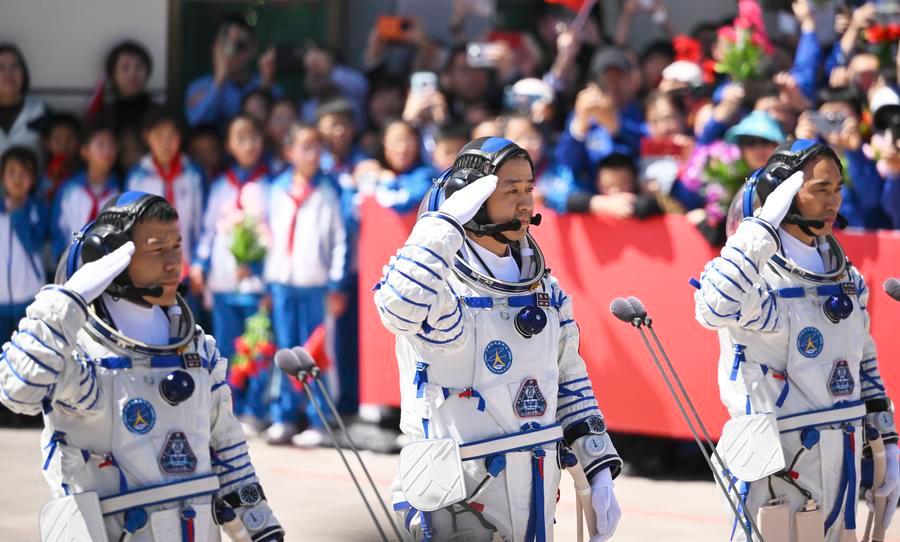
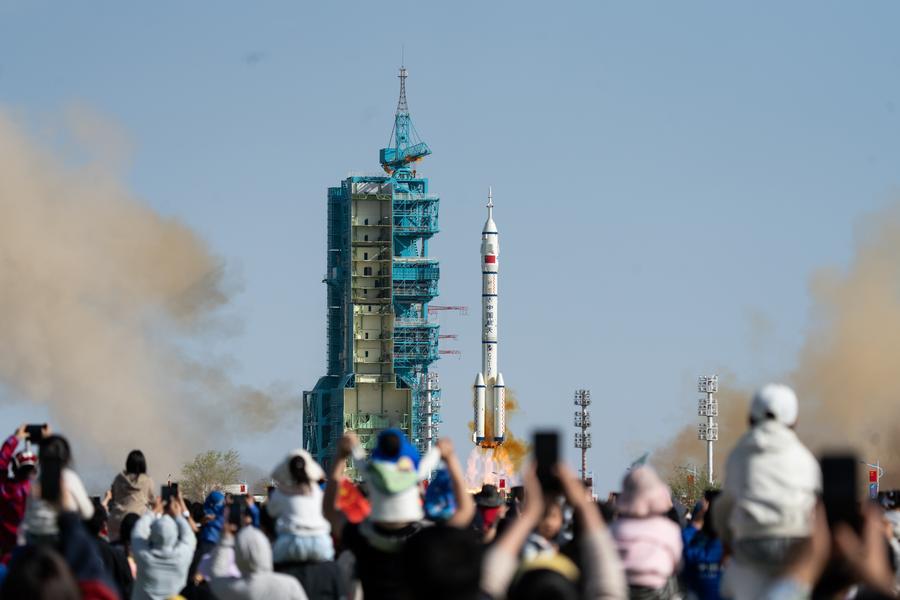
China's space station operations have had a sustained human presence this year, beginning with the launch of the Shenzhou-20 crewed spacecraft on April 24, which brought astronauts Chen Dong, Chen Zhongrui and Wang Jie to the orbiting station for a planned six-month mission. The Shenzhou-19 crew then concluded their mission and returned to Earth with the results of fruitful experiments.
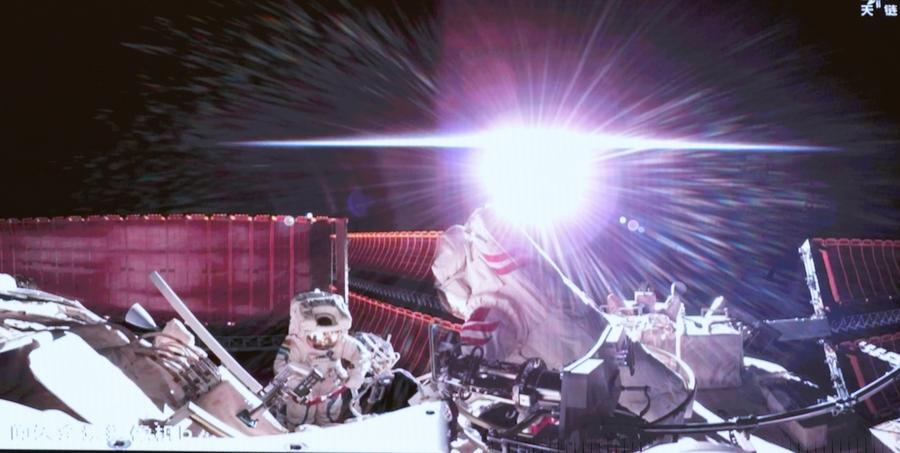
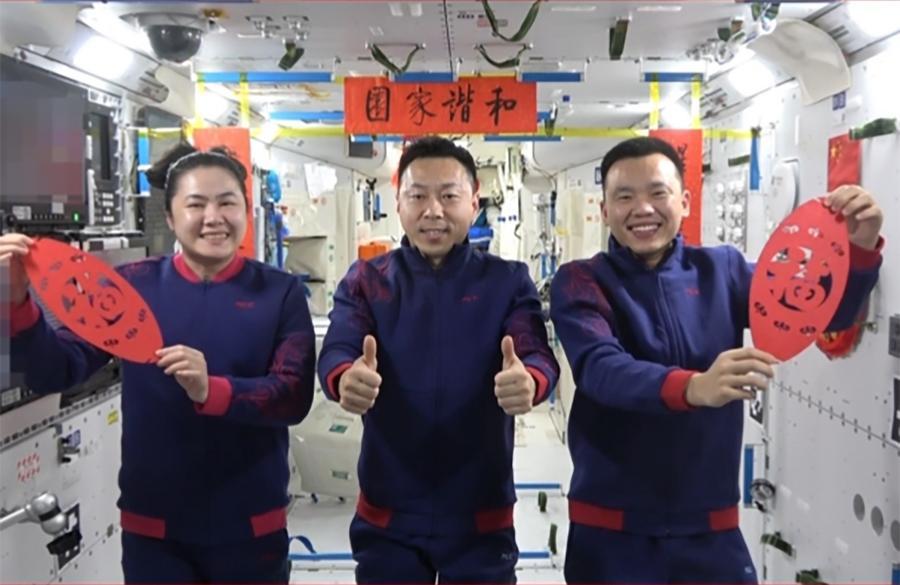
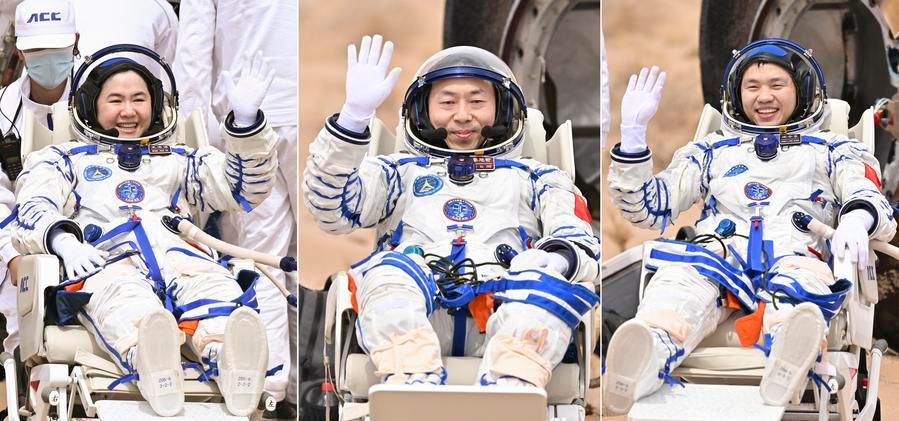
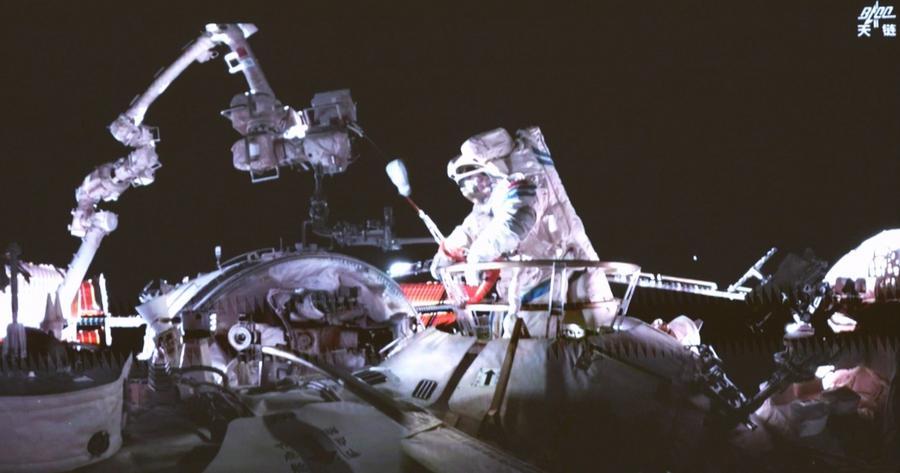
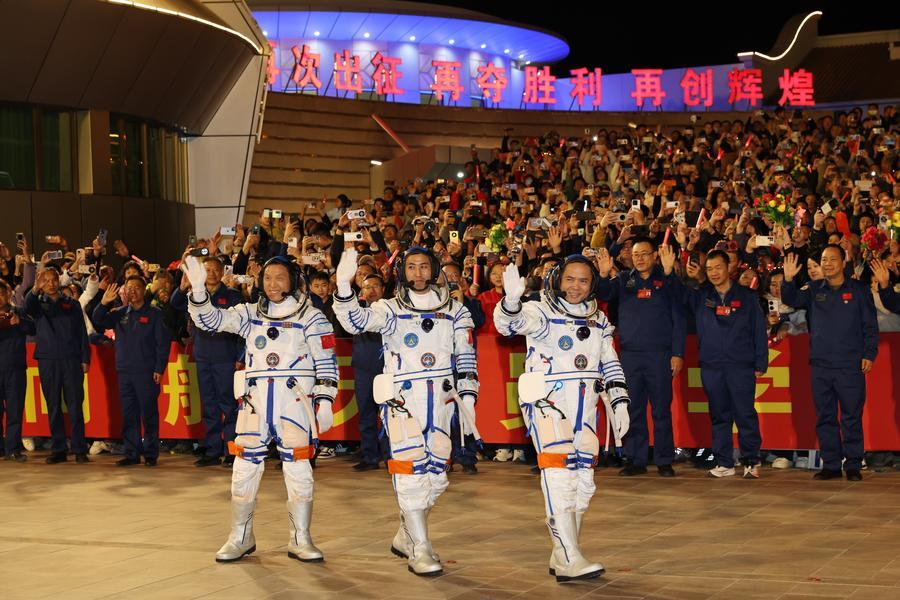
This screen image captured at Beijing Aerospace Control Center on Jan. 20, 2025 shows Shenzhou-19 astronauts Cai Xuzhe (R) and Song Lingdong (L) performing extravehicular activities outside China's orbiting space station. (Xinhua/Liu Fang)This undated video grab shows Shenzhou-19 astronauts sending their Spring Festival greetings from China's Tiangong space station. Shenzhou-19 astronauts Cai Xuzhe, Song Lingdong and Wang Haoze sent their Spring Festival greetings from China's Tiangong space station in a video released by the China Manned Space Agency (CMSA) on New Year's Eve. The trio, dressed in blue jumpsuits adorned with red traditional auspicious cloud patterns, held two pieces of Chinese paper-cutting featuring the character "fu," symbolizing good luck. (Xinhua)Chinese astronauts Chen Dong (C), Chen Zhongrui (R) and Wang Jie attend a send-off ceremony at the Jiuquan Satellite Launch Center in northwest China on April 24, 2025. A send-off ceremony for the three Chinese astronauts of the Shenzhou-20 crewed space mission was held here on April 24, according to the China Manned Space Agency. (Xinhua/Lian Zhen)The Shenzhou-20 crewed spaceship, atop a Long March-2F carrier rocket, blasts off from the Jiuquan Satellite Launch Center in northwest China, April 24, 2025. China successfully launched the Shenzhou-20 crewed spaceship on April 24, sending three astronauts to its orbiting space station for a six-month mission. (Photo by Han Qiyang/Xinhua)This combo photo taken on April 30, 2025 shows astronauts Wang Haoze, Cai Xuzhe and Song Lingdong (from L to R) out of the return capsule of the Shenzhou-19 crewed spaceship at the Dongfeng landing site in north China's Inner Mongolia Autonomous Region. The three astronauts of the Shenzhou-19 crewed mission were all out of the return capsule in the afternoon on April 30, and the China Manned Space Agency (CMSA) declared the mission a success. (Xinhua/Li Xin, Lian Zhen)This video screenshot taken at Beijing Aerospace Control Center on May 22, 2025 shows Shenzhou-20 astronaut Chen Dong leaving China's orbiting space station for extravehicular activities. The Shenzhou-20 crew on board China's orbiting space station completed their mission's first series of extravehicular activities on May 22, according to the China Manned Space Agency. (Xinhua/Li Yanchen)
Prior to Shenzhou-20's scheduled return on Nov. 5, the spacecraft was found to have developed tiny cracks in the viewport window of its return capsule, which were most likely caused by external impact from space debris. This rendered it unsuitable for a safe crew return.
In a demonstration of operational flexibility and safety-first design, China executed two critical, novel procedures. First, the Shenzhou-20 crew safely returned to Earth on Nov. 14 aboard the Shenzhou-21 spacecraft, which had been launched on Oct. 31 with a new trio of astronauts -- Zhang Lu, Wu Fei, and Zhang Hongzhang. This marked the first successful implementation of an alternative return procedure in the history of the country's space station program.
Second, to ensure the new Shenzhou-21 crew had a dedicated return vehicle, China undertook an emergency launch. On Nov. 25, the uncrewed Shenzhou-22 spacecraft blasted off from Earth, carrying crucial supplies, including devices to repair Shenzhou-20's window, and securing the continuous safety of astronauts on the station. This first-ever emergency crew-backup launch underscored the program's growing maturity and contingency response capabilities.
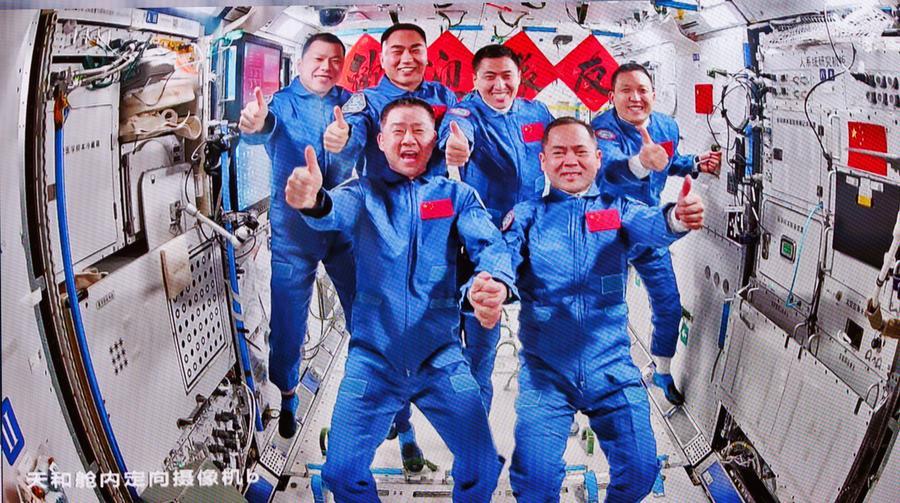
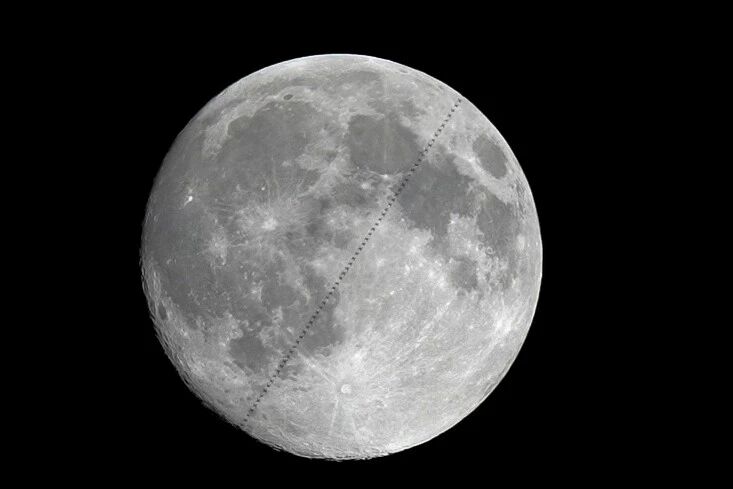
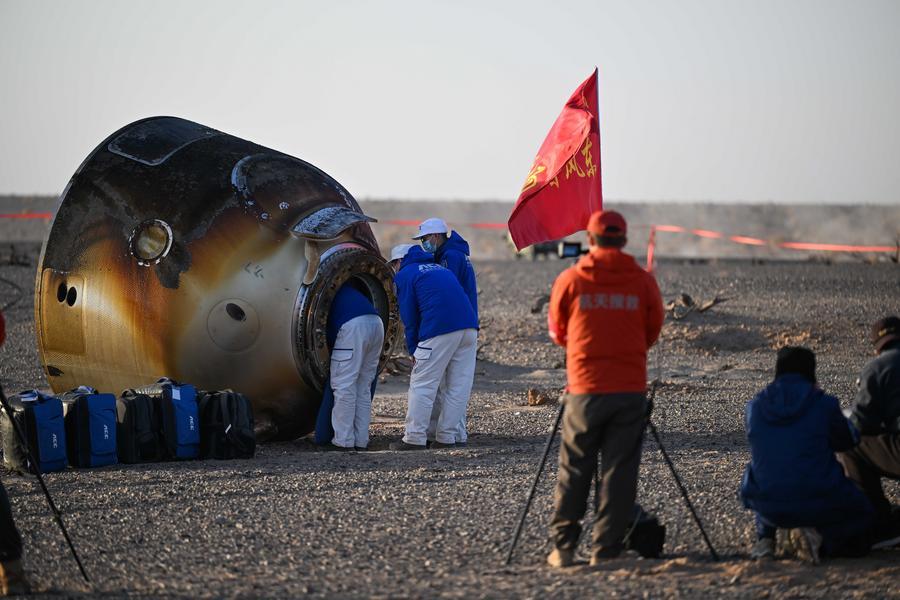
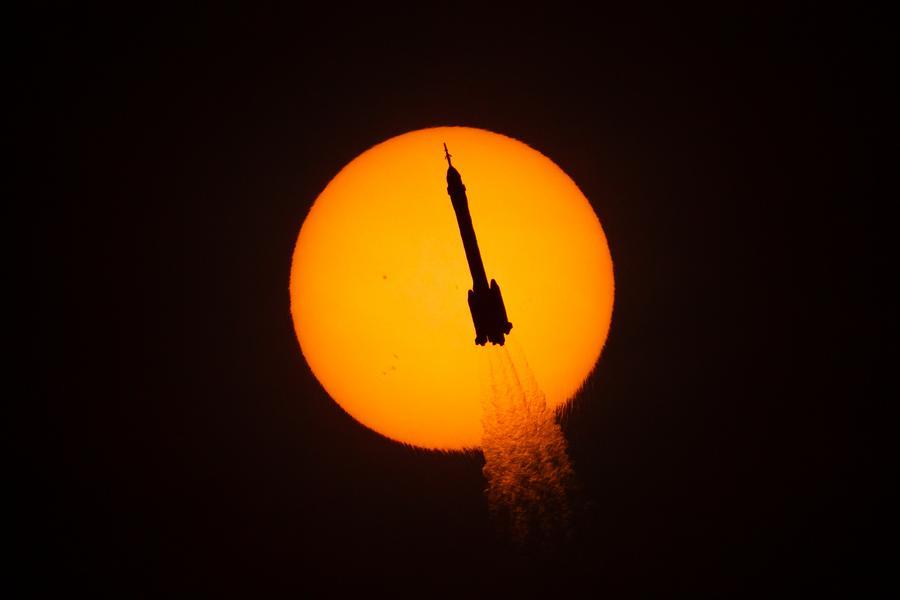
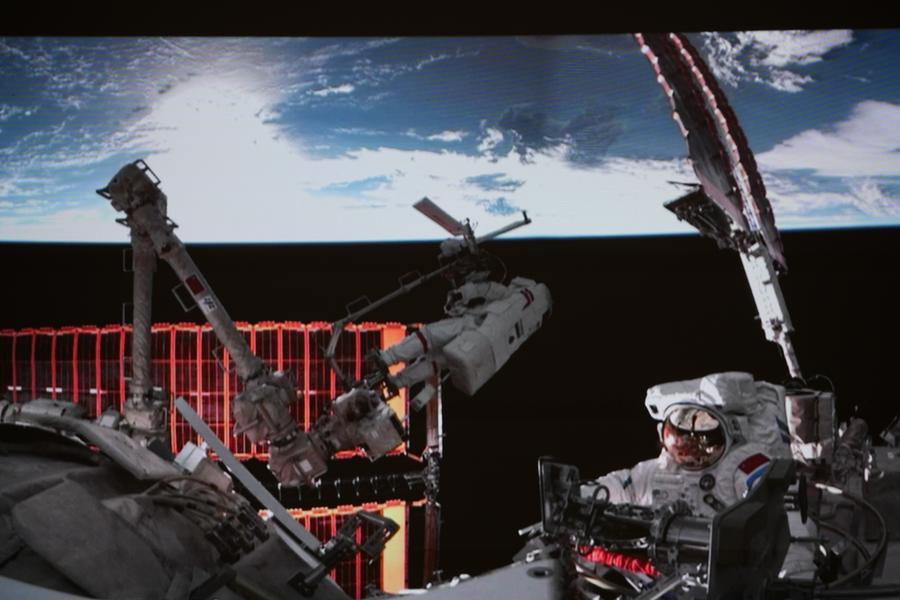
Chinese astronauts Zhang Lu (R), Wu Fei (C) and Zhang Hongzhang attend a send-off ceremony at the Jiuquan Satellite Launch Center in northwest China on Oct. 31, 2025. A send-off ceremony for the three Chinese astronauts of the Shenzhou-21 crewed space mission was held on Oct. 31 at the Jiuquan Satellite Launch Center in northwest China, according to the China Manned Space Agency. (Photo by Wang Jiangbo/Xinhua)This image captured at Beijing Aerospace Control Center on Nov. 1, 2025 shows a group picture of the crew of Shenzhou-20 and Shenzhou-21 spaceships.(Xinhua/Jin Liwang)A stacked composite photo taken on Nov. 4, 2025 in Beijing, China, shows the Chinese space station passing in front of the Moon. (Xinhua/Xing Guangli)The return capsule of the Shenzhou-21 spaceship, carrying the Shenzhou-20 astronauts Chen Dong, Chen Zhongrui and Wang Jie, touches down at the Dongfeng landing site in north China's Inner Mongolia Autonomous Region, Nov. 14, 2025. (Xinhua/Li Zhipeng)A Long March-2F Y22 rocket carrying the Shenzhou-22 spaceship blasts off from the Jiuquan Satellite Launch Center in northwest China, Nov. 25, 2025. China launched the Shenzhou-22 spaceship from the Jiuquan Satellite Launch Center in northwest China at 12:11 p.m. (Beijing Time) on Nov. 25, successfully accomplishing the first emergency launch mission in the country's manned space program. About 10 minutes after the launch, the spaceship separated from the rocket and entered its designated orbit. The China Manned Space Agency declared the launch mission a complete success. (Photo by Ge Lixin/Xinhua)This screen image captured at Beijing Aerospace Control Center on Dec. 9, 2025 shows Shenzhou-21 astronauts Zhang Lu and Wu Fei (R) performing extravehicular activities outside China's orbiting space station. The Shenzhou-21 crew aboard China's orbiting space station completed their mission's first series of extravehicular activities on Dec. 9, according to the China Manned Space Agency (CMSA).(Xinhua/Liu Yi)
This year has also seen progress in international space cooperation, with China and Pakistan signing an agreement in February on selecting and training Pakistani astronauts for future space station missions, highlighting China's commitment to partnering with developing nations in the field of crewed spaceflight.
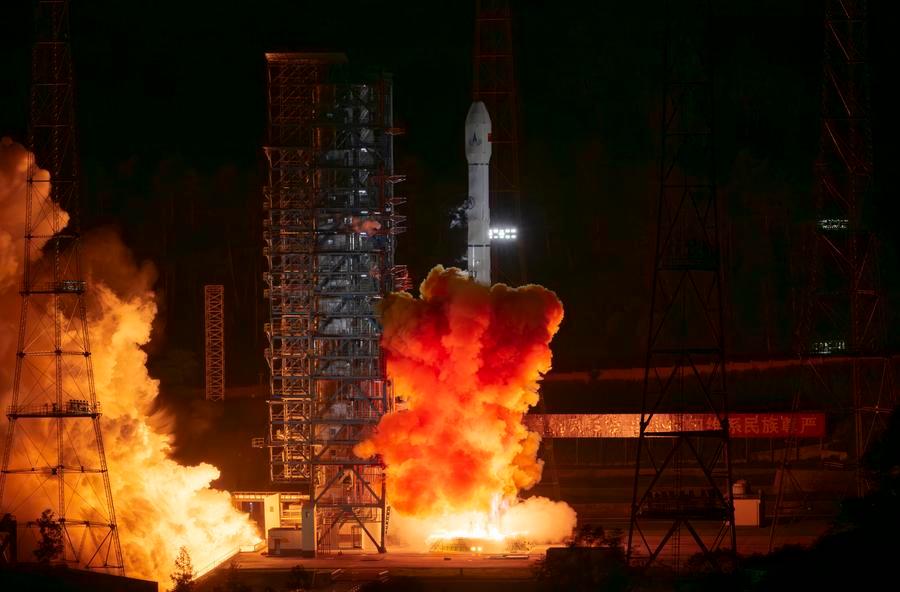
China's deep space endeavors have advanced significantly in 2025. On May 29, the Tianwen-2 probe was launched successfully, embarking on the country's first asteroid exploration and sample-return mission.
With a designed cycle of approximately 10 years, the mission aims to explore and sample the 2016HO3 asteroid and return the samples to Earth, followed by an exploration of the 311P main-belt comet.
It focuses on measuring the physical parameters of its two celestial targets, including their orbital dynamics, rotation, size, shape and thermal properties.
The mission will also investigate the topography, composition and internal structure of the two celestial bodies, and will potentially study the materials ejected by the main-belt comet.
This pioneering journey is expected to advance our understanding of the origins, evolution and characteristics of these two types of small celestial bodies.
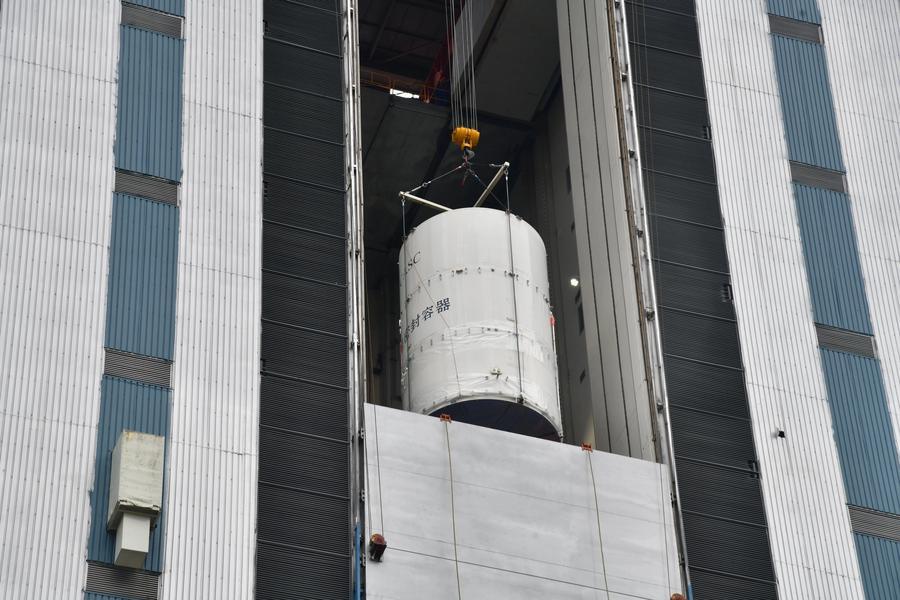
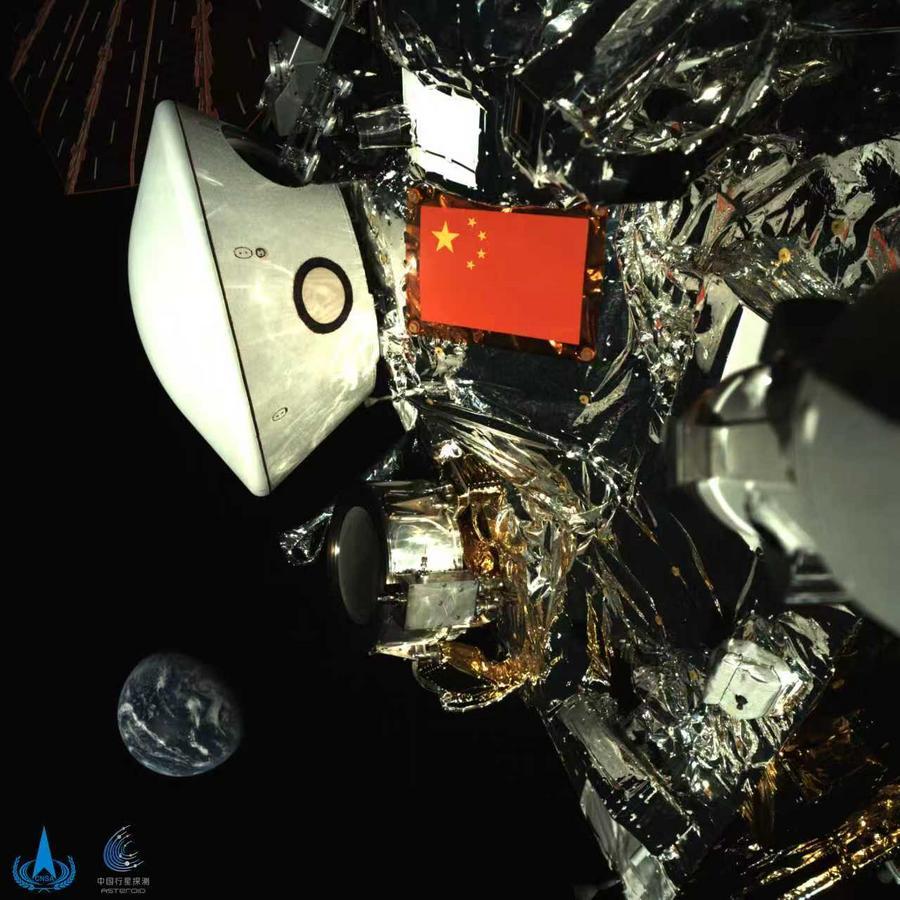
China's Tianwen-2 probe is transported to its launch area, after completing its scheduled assembly, testing and fueling at the technical area of the Xichang Satellite Launch Center in southwest China's Sichuan Province, May 18, 2025. (Photo by Shi Yichen/Xinhua)China's Tianwen-2 probe, atop a Long March-3B carrier rocket, lifts off from the Xichang Satellite Launch Center in southwest China's Sichuan Province, May 29, 2025. China launched its first asteroid sample-return mission, Tianwen-2, in the early hours of May 29, an endeavour to shed light on the formation and evolution of asteroids and the early solar system. The Tianwen-2 mission aims to achieve multiple goals over a decade-long expedition: collecting samples from the near-Earth asteroid 2016HO3 and exploring the main-belt comet 311P, which is more distant than Mars. (Xinhua/Cai Yang)This image released by the China National Space Administration (CNSA) on Oct. 1, 2025 shows a view of the Tianwen-2 probe alongside Earth, captured by the probe during its deep-space journey. The newly released image, acquired by a monitoring camera mounted on the probe's robotic arm, showcases China's five-starred red flag and the white return capsule against the backdrop of a distant, blue Earth. (CNSA/Handout via Xinhua)■