CAIRO, Dec. 20 (Xinhua) -- As 2025 draws to a close, practical cooperation between China and Middle Eastern countries has continued to grow in both depth and scope, even as the region remains unsettled by conflict and uncertainty.
Over the past year, Chinese investors have launched or expanded ventures from the Gulf to North Africa, helping governments across the region accelerate growth, create jobs, and reduce reliance on hydrocarbons.
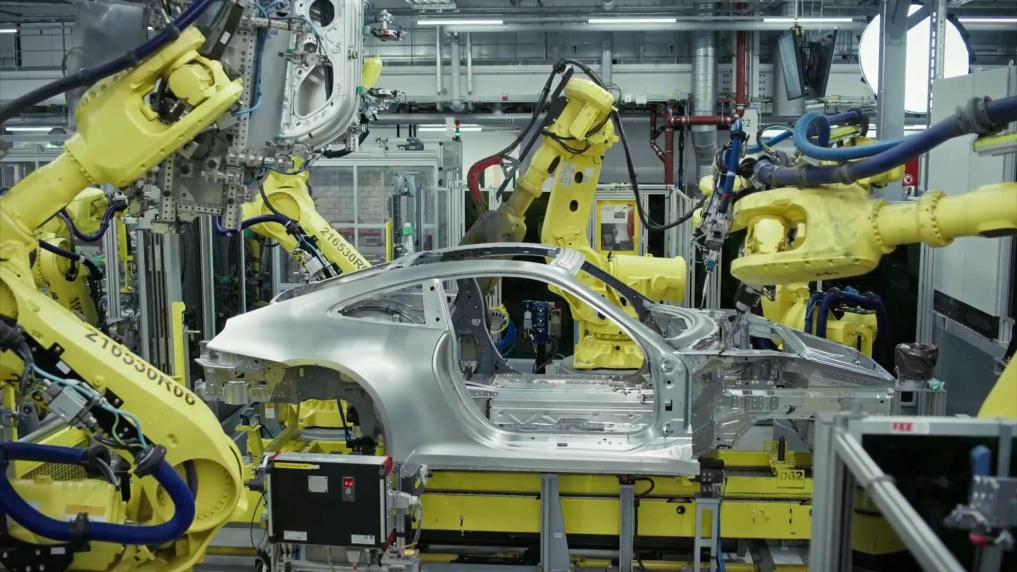
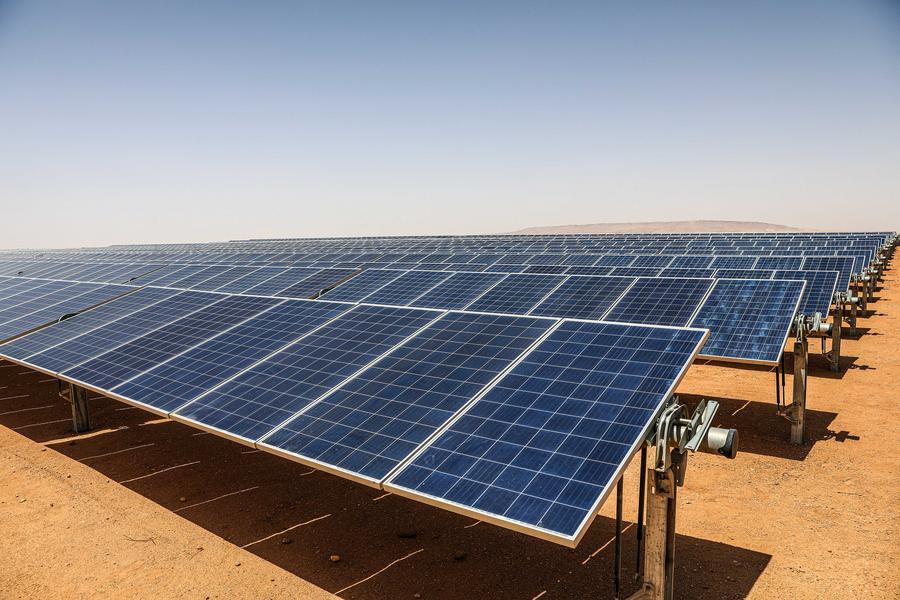
While infrastructure, oil, and gas remain important powerhouses, China-Middle East cooperation has increasingly moved into renewable energy, electric vehicles, artificial intelligence, aerospace, and other sectors central to the region's future.
A GROWING PIE OF OPPORTUNITIES
"Opportunities are everywhere here," Li Shuijin, head of a drill equipment company from China's Guizhou Province, told Xinhua at King Khalid International Airport in Saudi Arabia, reflecting on a week-long business tour across the kingdom.
"Our products will definitely find a market," he added. "With the Middle East developing rapidly and its friendly ties with China, the market here is a pie that's only getting bigger."
Li's sentiment mirrors a broader trend: an increasing cohort of Chinese companies is turning its gaze toward the Middle East, chasing opportunities in the region's fast-growing economy.
According to China's General Administration of Customs, trade between China and the Arab League countries reached 240 billion U.S. dollars in the first seven months of 2025, up 3.2 percent year on year and the highest level on record for the period.
In November, British think tank Asia House reported that China had become the Gulf's largest trading partner, with bilateral trade volume surpassing the Gulf's trade with the United States, Britain, and the eurozone combined.
A key highlight is that, while traditional areas such as energy and infrastructure have remained on a solid footing, partnerships in cutting-edge sectors have also picked up speed.
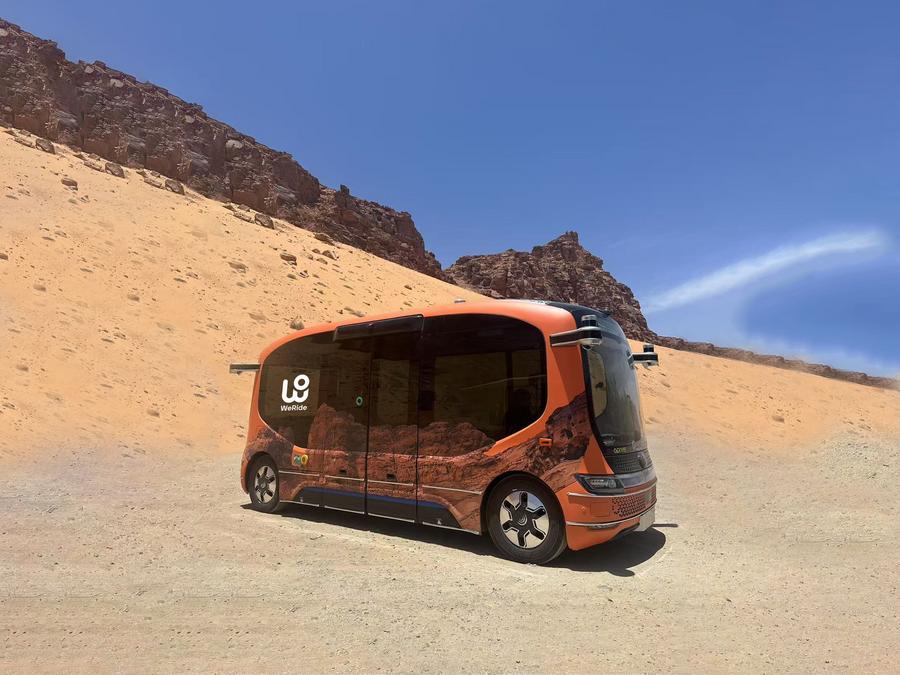
Chinese tech firms such as Baidu and WeRide have rolled out autonomous-driving projects in the United Arab Emirates (UAE) and Saudi Arabia. In December, CAS Space, a leading Chinese commercial rocket company, successfully launched the 11th Kinetica 1 rocket carrying satellites for the UAE and Egypt. In Saudi Arabia, Chinese-made robots equipped with AI algorithms are now being used to maintain large solar farms.
"There is a qualitative leap into high-tech and future-oriented industries in the cooperation between China and Middle East countries," said Abu Bakr al-Deeb, an economic researcher and advisor to the Cairo-based Arab Center for Research and Studies.
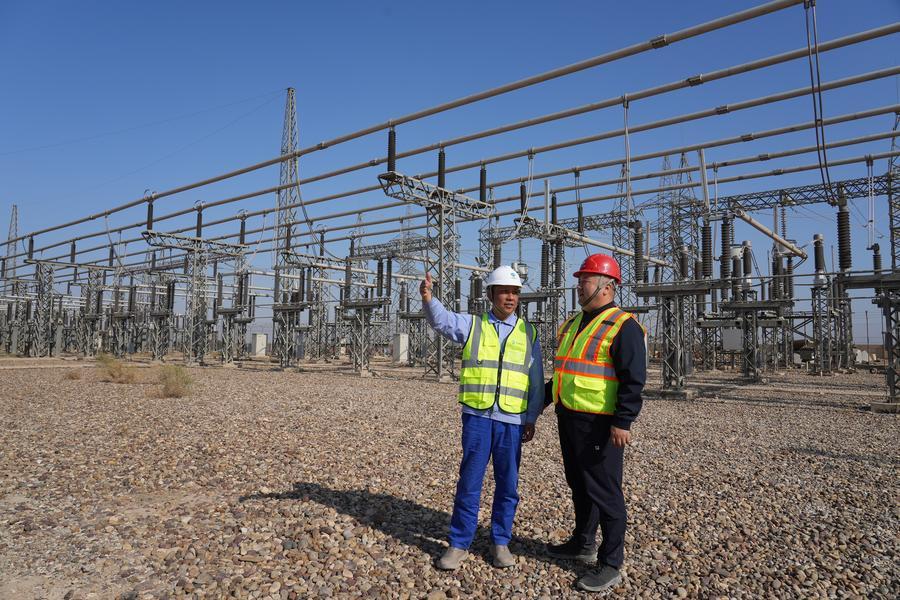
These projects are not just about business. "From generating jobs to improving facilities, the results of cooperation with China can be felt in every aspect of daily life here," said Mecheri Adel, an engineer working on a Chinese solar project in Algeria. "They have become an essential part of our way of life."
COOPERATION WITH COMPLEMENTARY STRENGTHS
The increasingly fruitful partnership, observers have noted, is driven by strong complementarities. As Middle Eastern economies pivot to digital infrastructure, renewable energy, and sustainable growth, China brings mature, cost-efficient solutions.
"China has made significant advances in high-tech industries and continues to strengthen its capabilities in these critical areas, while Middle Eastern countries face an urgent need to build up these sectors," said Mohammed al-Jubouri, a professor at al-Iraqia University in Baghdad. "Cooperation in these emerging industries is becoming a key engine of China-Middle East engagement."
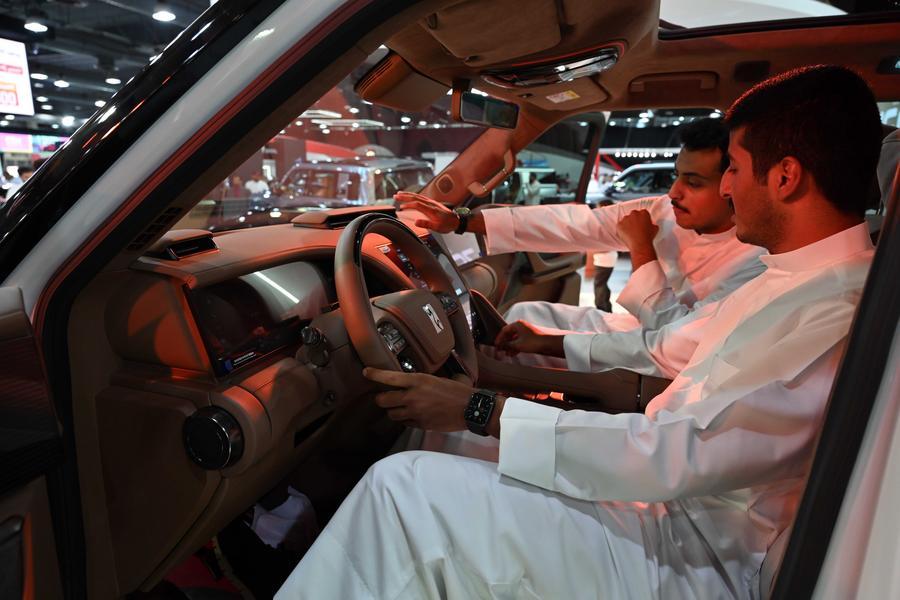
The spread of Chinese electric vehicles (EVs) epitomizes this trend. Leveraging their global leadership in EV technology and cost efficiency, Chinese automakers have secured a strong presence across the Middle East, helping drive the region's green transformation.
Meanwhile, China's technological rise has also attracted growing investment from Middle Eastern countries. In the first 10 months this year, Middle Eastern investors were reported to participate in over 10 investment deals in China, totaling more than 4 billion dollars and spanning such sectors as finance, healthcare, and renewable energy.
"Middle Eastern countries' pursuit of high-quality growth closely aligns with the experience China has accumulated through its own modernization drive," said Chen Fei, deputy director of the Business Development Department at SEPCOIII Electric Power Construction Co., Ltd. "What started as a shared demand is now evolving into a mutual recognition of mindsets and development philosophies, which is laying a firm foundation for deeper ties in the years ahead."
"Past cooperation has proven that when China's capacity for delivery converges with the Middle East's determination for development, an exceptional development equation emerges," noted Hebah Abbas, a member of the Executive Committee of the World Utilities Congress 2026, "one capable of generating cross-sectoral projects, turning opportunities into reality, and translating ambition into concrete action."
A PARTNERSHIP FOR THE FUTURE
As tensions ease in parts of the Middle East, analysts and business insiders have observed that more countries are shifting their focus toward development. In this context, China is increasingly viewed as a pivotal partner.
"The Middle East is entering a phase where economic influence eclipses military primacy, and strategic rivalry is increasingly mediated through trade, technology, and investment," Ahmed Kandil, a senior fellow of Egypt's Al-Ahram Center for Political and Strategic Studies, said in a recent op-ed piece. China would provide the region "with an unprecedented opportunity to pursue integration, stability, and growth."
This view is broadly shared by regional analysts, who agree that huge potential for China-Middle East cooperation is yet to be tapped. "Already a major partner with a comprehensive and positive presence in the Middle East, China's legendary achievements in planning and engineering can deliver even more transformative results in the region," said Shraga Biran, head of Israel's Institute for Structural Reforms.
Other analysts pointed to China's awareness of local realities and respect for the unique development philosophies of each nation. "Unlike Western nations, China does not monopolize or exploit its partners. Instead, it strengthens the economies and industrial development of its partner countries," al-Jubouri, the Iraqi professor, told Xinhua.
Echoing al-Jubouri's point, al-Deeb also believes that it's China's adherence to non-interference and a win-win approach, highly valued by Middle East policymakers and business leaders, that gives their cooperation enduring vitality.
"Upon this foundation of goodwill and trust, every project and agreement between the two sides brings us a step closer to a China-Arab community with a shared future," said the researcher.