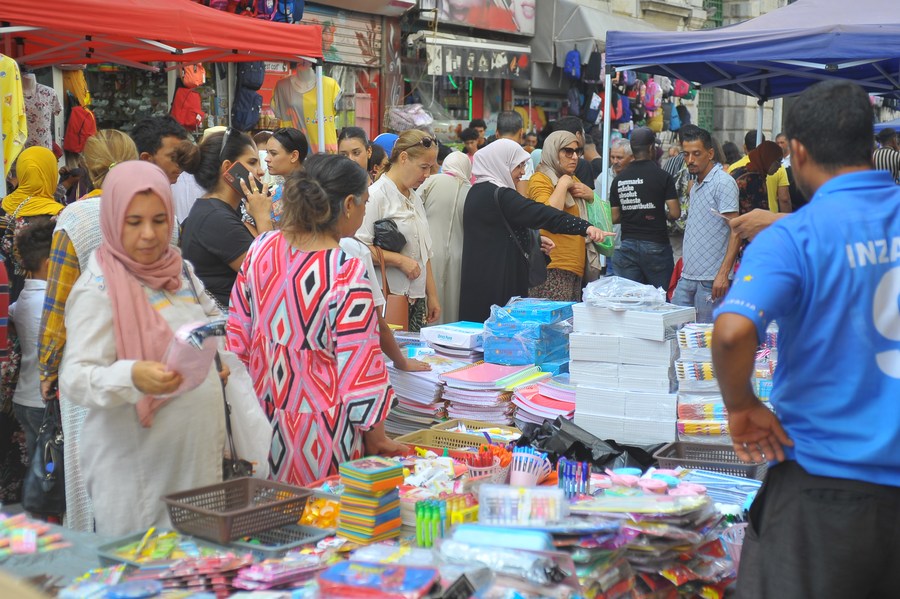
People shop for stationery at a fair before the start of a new school year in Tunis, Tunisia, Sept. 6, 2023. (Photo by Adel Ezzine/Xinhua)
by Xinhua writer Ayten Laamar
TUNIS, Sept. 14 (Xinhua) -- In a stationery shop in the center of Tunisia's capital Tunis, parents are busy buying school supplies for their children in preparation for the start of the new school year on Friday.
"The back-to-school shopping is a nightmare for me because of the crazy prices of school supplies," said Sanaa Mabrouk, a 38-year-old widowed mother of two high school students.
Mabrouk has spent more than 800 Tunisian dinars (254.4 U.S. dollars) on her two children's school supplies. "It's disheartening to see how expensive the children's schooling has become," she said.
When shopping for his three children, Salem Ammar, a 44-year-old clothes vendor in Tunis, said he is shocked at the high costs of books and stationery.
Ammar had worked extra hours on the weekends in order to save money for his children's school supplies. However, he still found that he could not afford everything at once.
"Although Tunisia has had free and compulsory education for more than 60 years, the high cost of incidentals has made education a burden for parents," he said.
Lotfi Riyahi, head of the Tunisian Organization to Inform the Consumer, said the back-to-school expenses for the 2023-2024 academic year increased by 15 to 18 percent compared to that of last year.
Ali Amri, a 50-year-old office manager in Tunis, told Xinhua that he had to set a limit on the stationery budget for his two primary school-aged daughters, as inflation has affected all aspects of life in Tunisia.
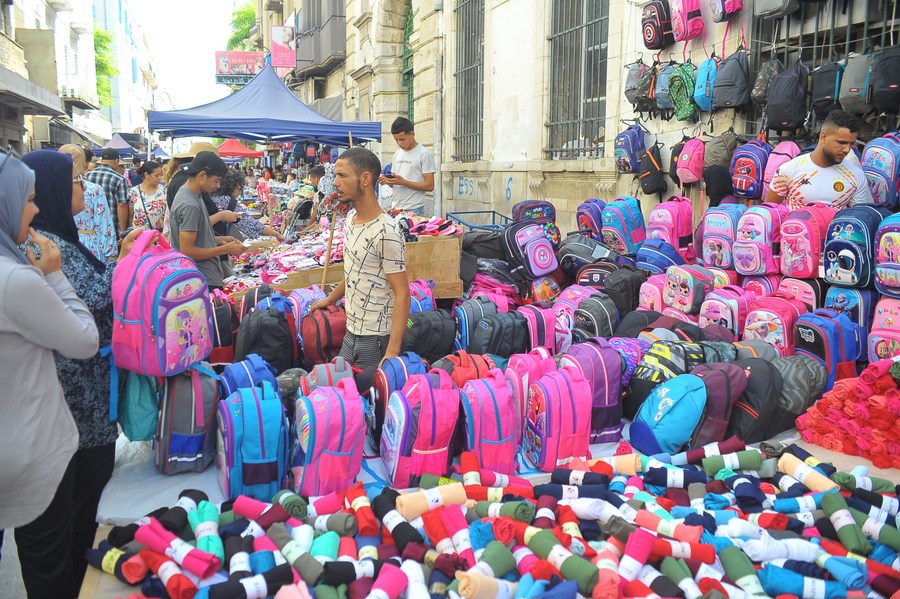
People shop for stationery at a fair before the start of a new school year in Tunis, Tunisia, Sept. 6, 2023. (Photo by Adel Ezzine/Xinhua)
Tunisia's annual inflation rate rose to 9.3 percent in August from 9.1 percent in July, a report by the National Institute of Statistics revealed on Sept. 5.
Ammar Dhia, the head of the Tunisian Consumer Defense Organization, said in late August that a significant number of Tunisian families that survive on the minimum wage, which does not exceed 160 U.S. dollars per month, are exhausted to cope with the ongoing price hikes.
"A global crisis is to blame for the increase in school supply prices, and the Tunisian citizens are feeling its negative impact," he added.
The conflict between Russia and Ukraine, two of the world's leading exporters of lumber, is partly to blame for the increase in stationery prices. Meanwhile, Tunisia, which depends largely on imports, is paying more for school supplies due to the strong U.S. dollar.
"It's true that we are going through very hard living conditions, but we are trying to provide our children with the best we can to make their future better," Amri said.
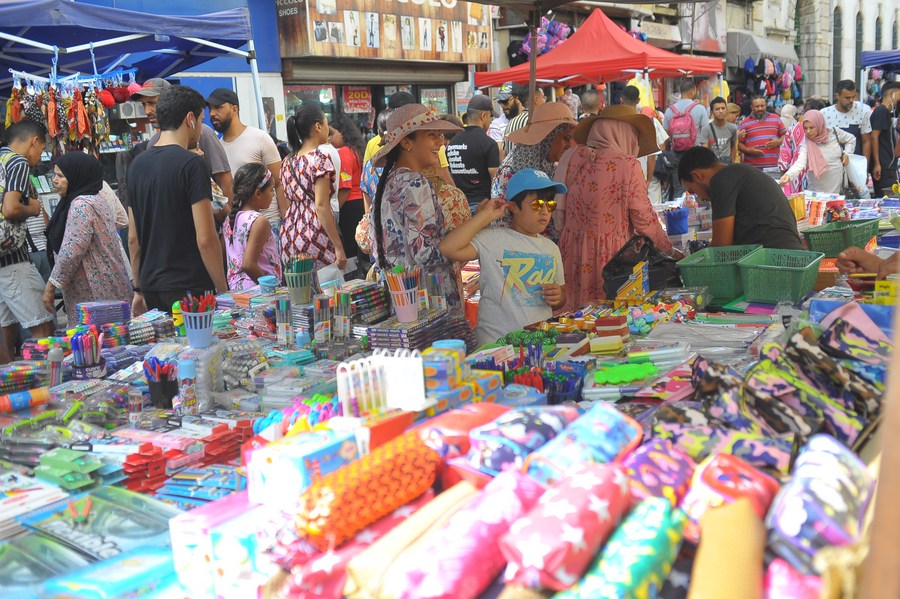
People shop for stationery at a fair before the start of a new school year in Tunis, Tunisia, Sept. 6, 2023. (Photo by Adel Ezzine/Xinhua)■