
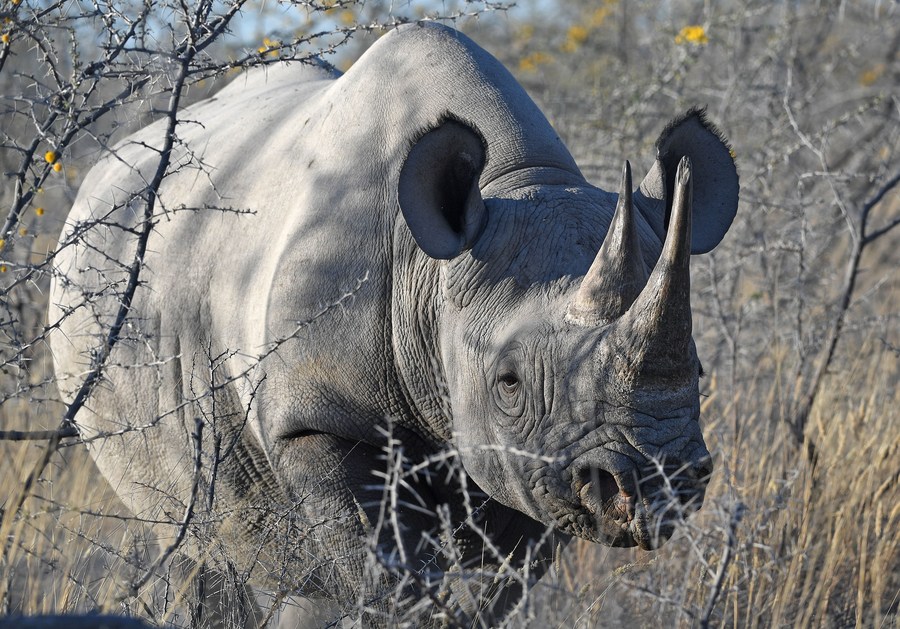
A rhino is pictured in the Etosha National Park in Namibia, Aug. 15, 2022. (Xinhua/Chen Cheng)
Namibia's Ministry of Environment, Forestry and Tourism (MEFT) has availed one old post-reproductive male black rhinocero for sustainable hunting during the current hunting season (ending November 2023), within the provisions of the relevant national and international regulations.
WINDHOEK, July 11 (Xinhua) -- Namibia's Ministry of Environment, Forestry and Tourism (MEFT) has availed one old post-reproductive male black rhinocero for sustainable hunting during the current hunting season (ending November 2023), within the provisions of the relevant national and international regulations.
The individual animal to be hunted will be determined by the MEFT and the hunt will be accompanied by MEFT officials, Romeo Muyunda, spokesperson for the ministry, said Monday in an updated statement.
"Rhino, just as in any wildlife species in the country, is a resource according to the constitution and our conservation principles, must be utilized to benefit the current and future generations of this country," he said.
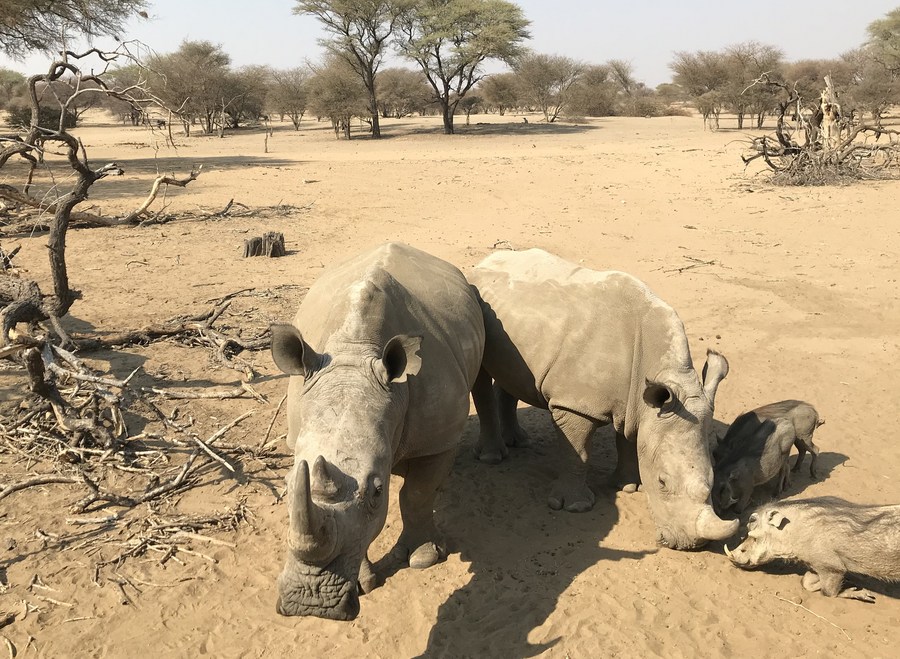
Photo taken on Sept. 7, 2019 shows rhinos in Okapuka Ranch, central Namibia.(Photo by Sun Yin/Xinhua)
Furthermore, Muyunda explained that old-aged rhinos become non-reproductive in a population, and some will even cause territorial fights that may injure and cause mortalities to young reproductive bulls.
According to Muyunda, funds generated from sustainable hunting will go toward the Game Product Trust Fund account. The fund supports general conservation in the country, particularly the investment in anti-poaching activities.
In 2015, a similar hunt was conducted and Namibia generated 350,000 U.S. dollars through the exercise, Muyunda noted.
Namibia has the largest population of black rhinos in the world thanks to its innovative conservation methods and unwavering dedication. ■