
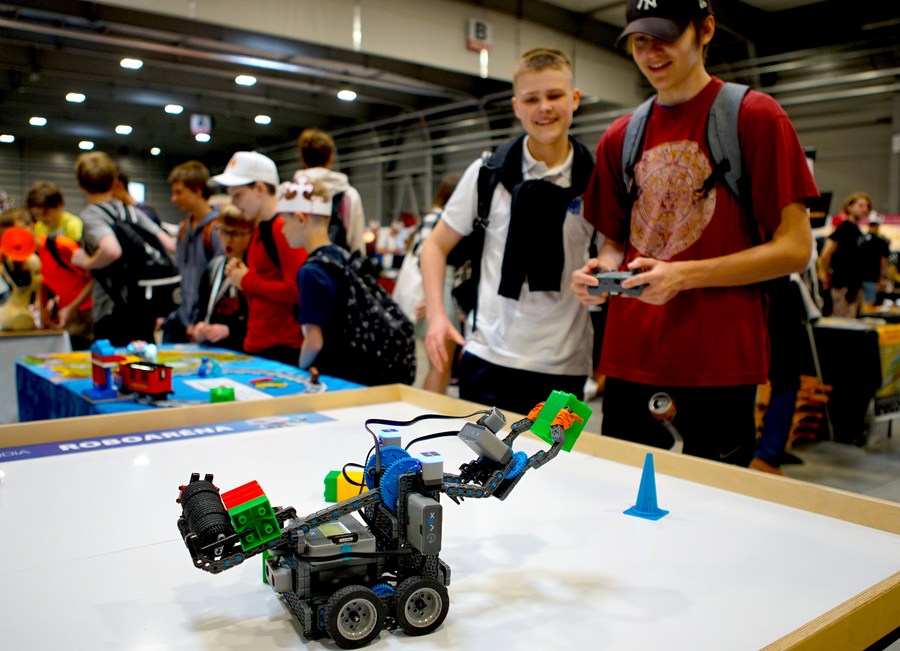
A boy controls a robot at the Science Fair in Prague, the Czech Republic, on June 8, 2023. (Photo by Dana Kesnerova/Xinhua)
The AI Act that European Parliament voted on Wednesday is the first attempt in the world to regulate the technology.
BRUSSELS, June 14 (Xinhua) -- The European Parliament (EP) on Wednesday adopted its position on the European Union's (EU) future Artificial Intelligence (AI) Act, paving the way for final negotiations between the EP, the European Commission and the EU member states, officials said here on Wednesday.
The EP foresees a total ban on AI for biometric surveillance, emotion recognition and predictive policy; a clear disclosure for content produced by generative AI; and a high-risk classification for AI systems used to influence voters in elections.
The vote in the EP was 499 in favor, 28 against and 93 abstentions.
The AI Act is the first attempt in the world to regulate the technology. The act aims at protecting citizens from possible malevolent use of AI, while making sure that technological innovation is not hindered, according to Romanian deputy Dragos Tudorache, the EP's co-rapporteur on the AI Act.
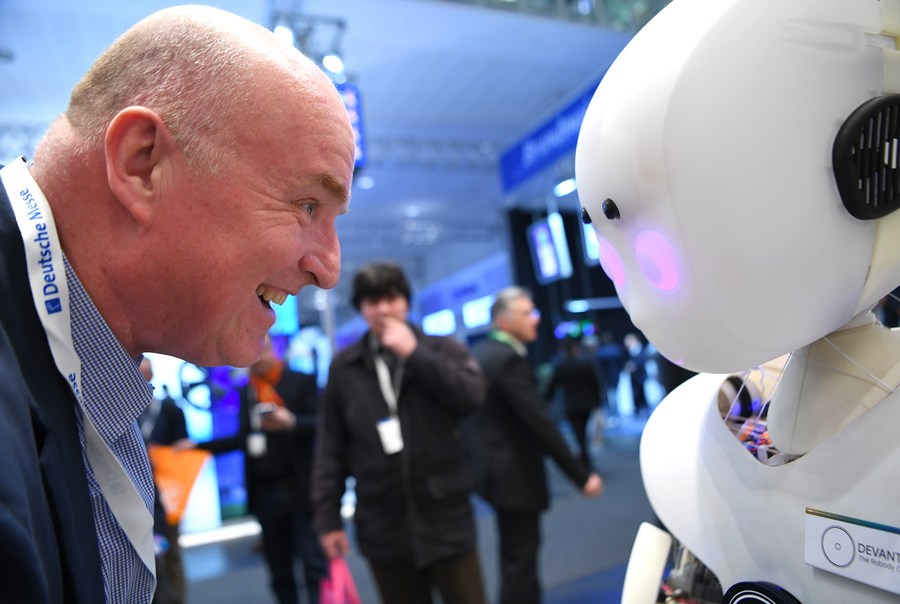
A visitor interacts with an intelligent robot at Hannover Messe 2023 in Hannover, Germany, April 19, 2023.(Xinhua/Ren Pengfei)
"Is this the right time for the EU to regulate AI? It most certainly is because of the profound impact that AI has, and because companies self-regulating will not be enough to safeguard our citizens and our societies," Tudorache said ahead of the vote.
Prohibited AI practices include real-time and post-remote biometric identification systems in public spaces; biometric categorization systems based on sensitive characteristics, such as race or gender; predictive policing systems; emotion recognition systems; and untargeted scraping of facial images from the internet or closed circuit television (CCTV) footage to create facial recognition databases, according to the EP.
High-risk AI usage will include systems that pose significant harm to people's health, safety, fundamental rights or the environment, AI systems used to influence voters and the outcome of elections, and recommender systems used by social media platforms.
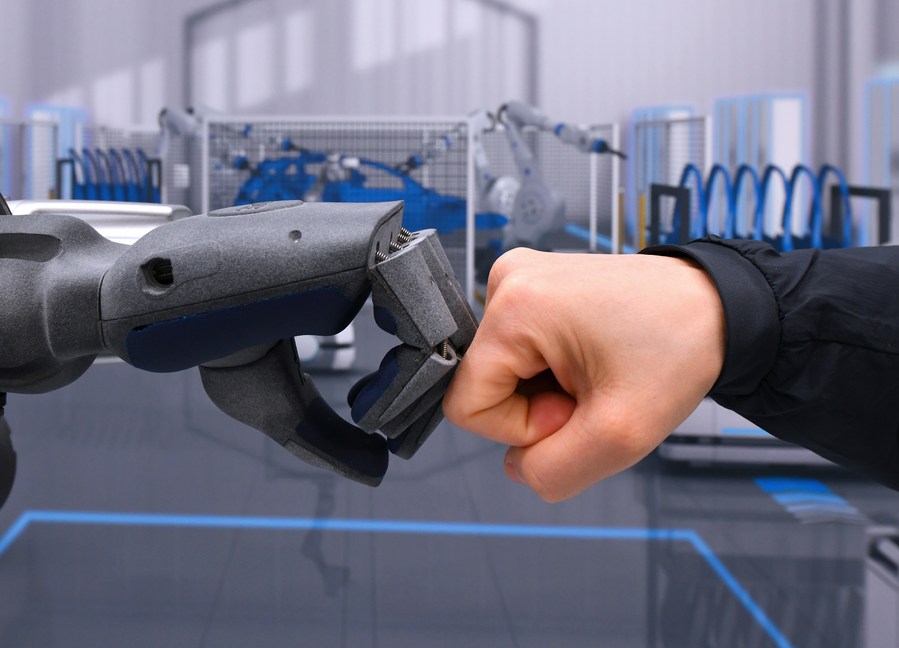
A visitor interacts with an intelligent robot at Hannover Messe 2023 in Hannover, Germany, April 19, 2023. (Xinhua/Ren Pengfei)
General purpose AI will have to follow a set of rules, including registration and risk assessment for foundation models, and the obligation for content produced by generative AI to be labeled as such.
In order to support innovation in the field of AI, the EP added exemptions for research activities and AI components provided under open-source licenses. AI should also be tested in real-life environments before it is deployed.
Citizens' rights to file complaints about AI and to be informed on decisions based on high-risk AI systems will also be boosted.
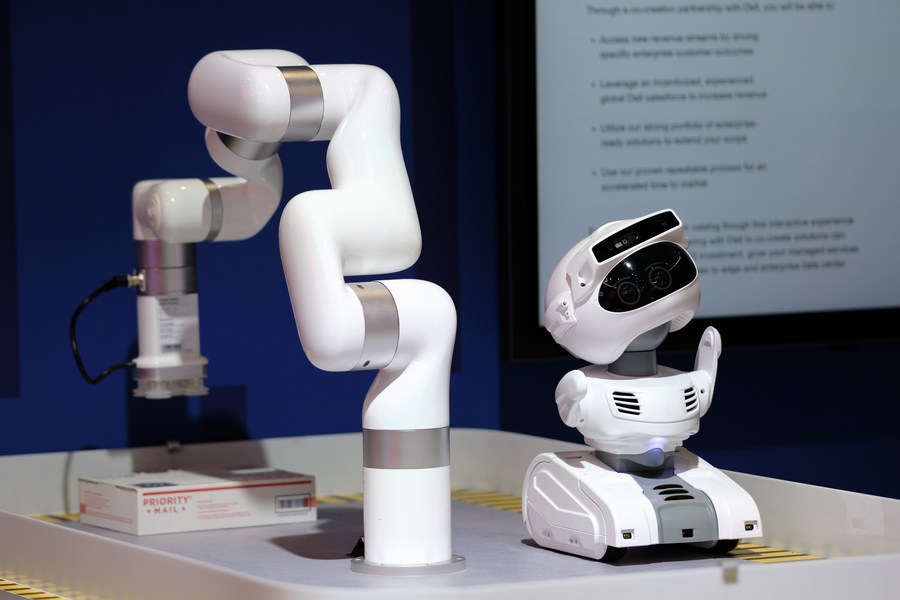
A smart robot and a robotic arm are pictured on display at the 2023 Mobile World Congress (MWC) in Barcelona, Spain, Feb. 28, 2023. (Xinhua/Meng Dingbo)
"We want AI's positive potential for creativity and productivity to be harnessed but we will also fight to protect our position and counter dangers to our democracies and freedoms during the negotiations with Council", Brando Benifei, the EP's Italian co-rapporteur on the AI Act, said. ■