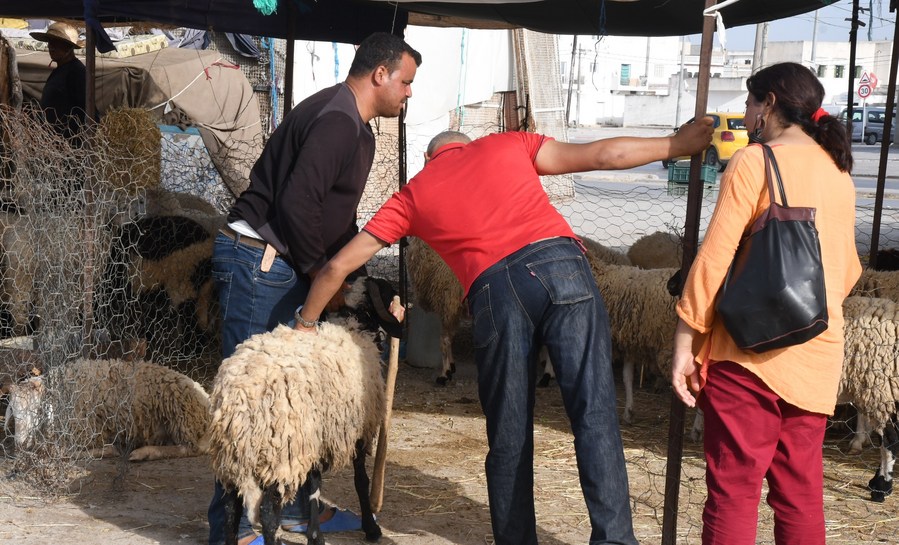
Tunisians buy live sheep at a sheep market in Tunis, Tunisia to prepare for Eid al-Adha on June 29, 2022. (Photo by Adel Ezzine/Xinhua)
Co-buying a sheep with relatives is getting more and more prevalent in Tunisia, as it helps maintain the festive atmosphere, allows people to enjoy mutton rarely seen at the table, and more importantly, saves money.
by Xinhua writers Ayten Laamar, Xu Supei, Huang Ling
TUNIS, July 8 (Xinhua) -- "This is it. I'm gonna take this one," Lassaad Ouannes, a Tunisian taxi driver in his 40s, picked a sheep for two families at a livestock market in the northern province of Ariana ahead of the Eid al-Adha.
"I was so shocked when I found the sheep price is much higher than it was last year," the father of two told Xinhua. "I have to buy the sheep together with my brother to split the cost."
Suffering from chronic back problems, Lassaad can work only four hours a day. He lives with the family in his mother's house in Ariana because he can not afford to build or rent one.
"The sheep price varies by size, from 550 Tunisian dinars to 1,500 dinars (179 U.S. dollars to 488 dollars). The price of a small sheep became even higher than the monthly minimum wage," he said.
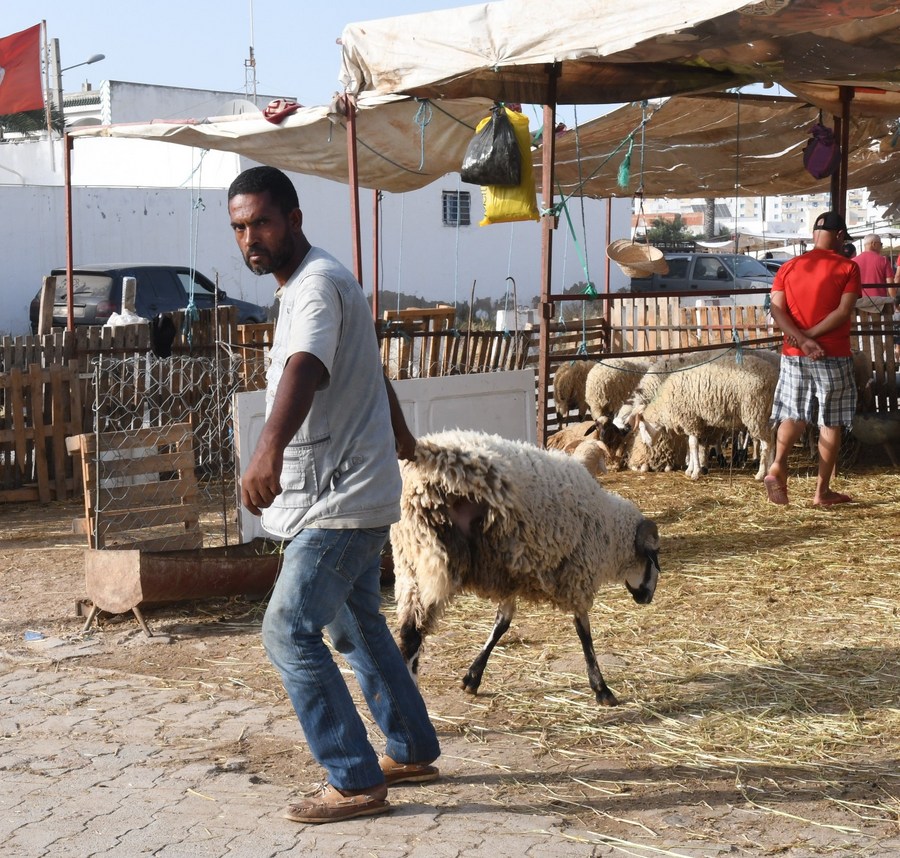
A sheep seller selects live sheep for customers for the upcoming Eid al-Adha at a sheep market along a street in Tunis on June 29, 2022. (Photo by Adel Ezzine/Xinhua)
Eid al-Adha, or the Feast of Sacrifice, is one of the most anticipated celebrations in the Muslim world. By tradition, each family should buy a live sheep to slaughter during the festival.
As Tunisia's inflation rockets to 8.1 percent, the highest since October 1991, households are feeling the squeeze.
Co-buying a sheep with relatives is getting more and more prevalent in the North African country, as it helps maintain the festive atmosphere, allows people to enjoy mutton rarely seen at the table, and more importantly, saves money.
"There are many other expenditures during the festival. We also need to buy other stuff to prepare our traditional dishes," Lassaad's wife Awatef said, complaining about high prices of essential goods.
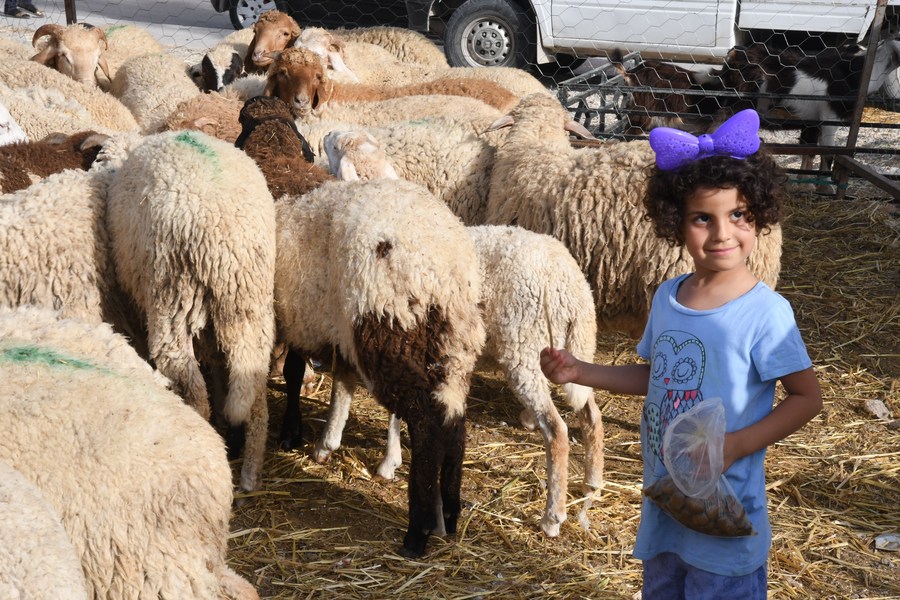
A girl stands next to a herd of sheep at a livestock market in Tunis, Tunisia on June 29, 2022. (Photo by Adel Ezzine/Xinhua)
The Tunisian economy has gone from bad to worse in recent years. While the economy has struggled since the Arab Spring uprising in 2011, its problems are further aggravated by the COVID-19 pandemic and the repercussions of the Russia-Ukraine conflict.
On May 17, Tunisia's central bank raised its key interest rate by 75 points to 7 percent to combat high inflation which rose for the eighth straight month to 7.8 percent that month and then 8.1 percent in June.
In order to prevent prices from sharply rising, the Tunisian government announced in June a limit on the average price of live sheep, which is still 10 percent higher than last year.
For livestock farmers in the North African country, it was also a big challenge to sell their herds ahead of the Eid.
One week ago, Mohamed Mili, a 59-year-old farmer came from the northern province of Bizerte to the livestock market in Ariana, where he rented a stall to sell his 30 sheep.
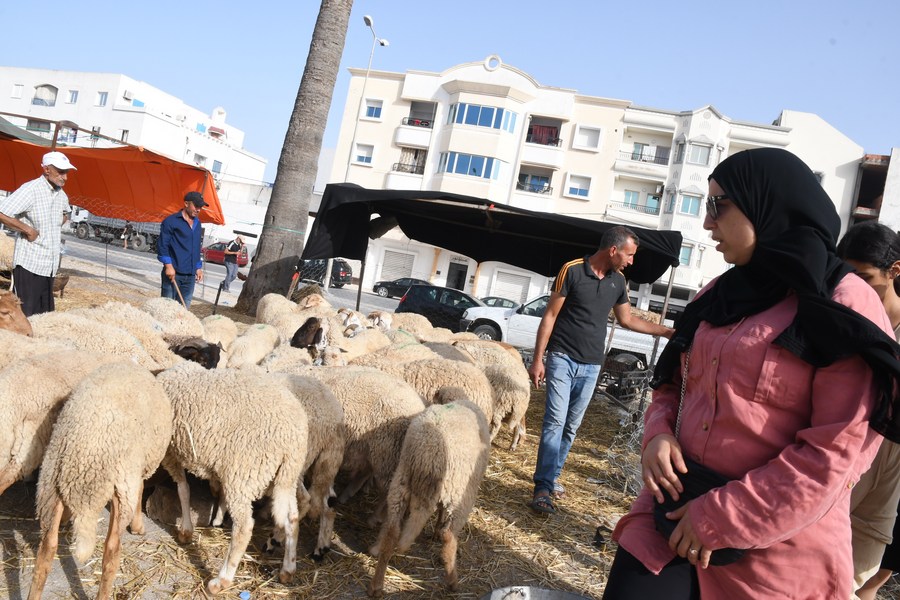
Tunisians buy live sheep at a livestock market in Tunis, Tunisia on June 29, 2022 to prepare for Eid al-Adha. (Photo by Adel Ezzine/Xinhua)
Till now, he has sold only 10 of them, as many people come to check the price and leave without buying anything.
"Maybe the price has scared the customers, but it is reasonable given the surging costs of fodder," Mili grumbled.
The price of compound feed has witnessed an unprecedented rise of about 40 percent this year, according to recent data provided by the Tunisian Union of Agriculture and Fisheries.
The union noted that most types of compound feed are supplied from abroad, and the local prices are affected by international ones.
"Eid al-Adha represents the most important selling season for us. We have been preparing for it for one year. At this time of year in the past, I would have sold out all my sheep," the father of three sighed. ■