BEIJING, March 5 (Xinhua) -- The development of artificial intelligence (AI), one of the buzzwords at China's ongoing annual "two sessions," is accelerating in the country and shaping the global AI ecosystem.
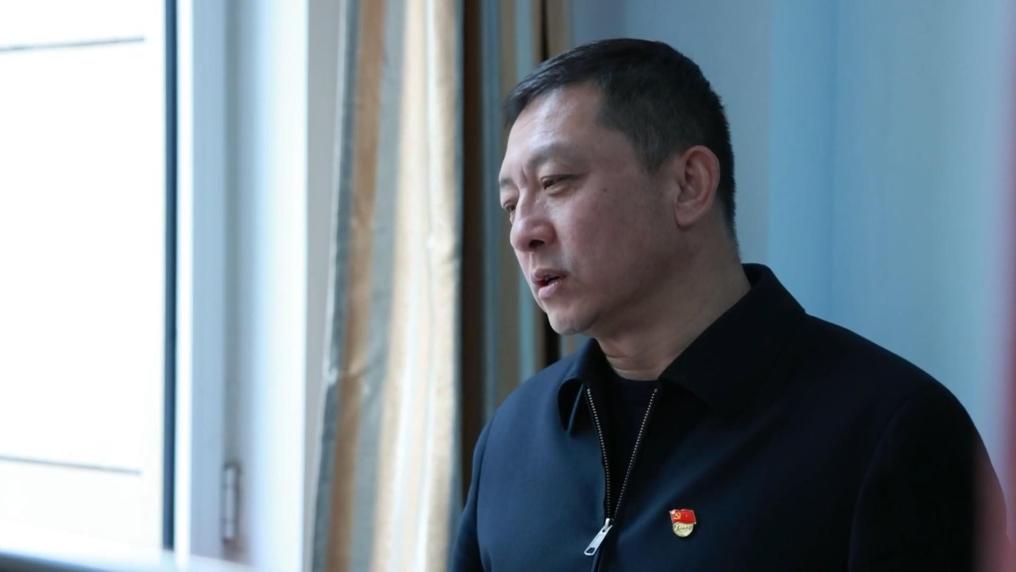
Chinese tech firms' open-source large AI models rank first globally in downloads, significantly lowering the barriers to AI adoption, reducing usage costs and enhancing AI accessibility, said Minister of Industry and Information Technology Li Lecheng Thursday on the sidelines of the annual session of the national legislature.
Data from a top global AI platform, OpenRouter, showed that API calls, or user visits, to Chinese large models began surpassing U.S. levels in February, highlighting China's rising influence in the global AI ecosystem.
Chinese models occupy three of the top five spots globally by usage -- MiniMax's M2.5, Moonshot's Kimi K2.5 and DeepSeek's V3.2 -- mainly driven by their high cost-performance, according to the platform.
This year, China's AI models, some gaining popularity through open-weight offerings, continue to evolve rapidly and compete to create a new "DeepSeek moment," the breakthrough that shook tech and global investment circles last year and is seen as a catalyst for China's tech-driven economic growth.
ByteDance's text-to-video tool Seedance 2.0, which can generate a multi-shot film sequence in roughly 60 seconds with rather simple prompts, has recently sparked a short video creation craze across the global cyberspace.
"The childhood era of artificial intelligence generated content (AIGC) is over," said Feng Ji, creator of the globally hit game Black Myth: Wukong, when discussing Seedance 2.0.
China is also rapidly injecting its newfound AI capabilities into globally popular consumer electronics.
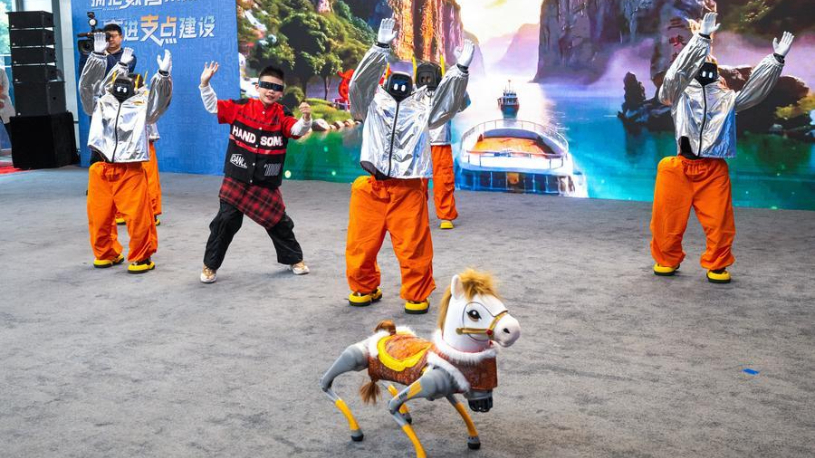
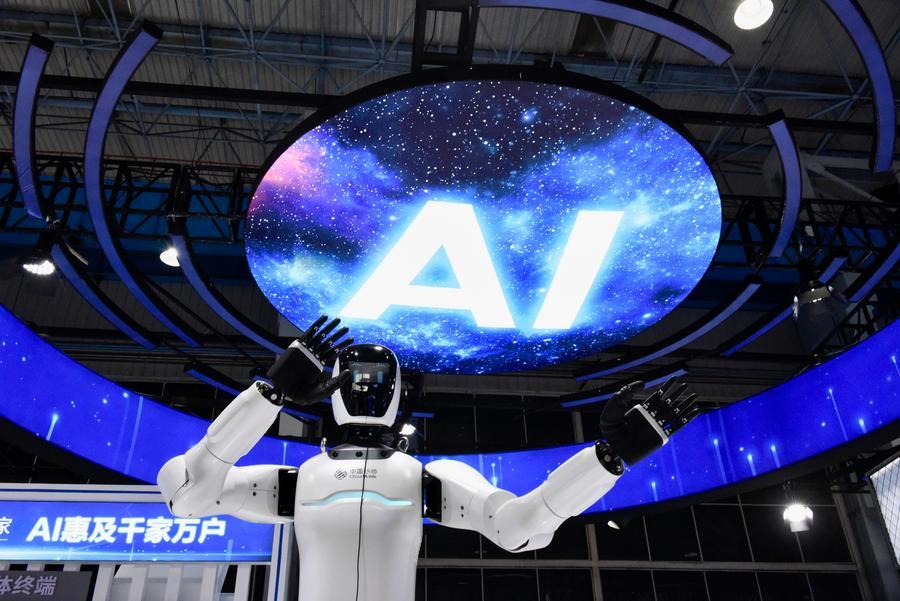
After making a splash at CES Las Vegas in January, Chinese smart devices have once again seized the global spotlight this week at the 2026 Mobile World Congress (MWC) in Barcelona -- from Alibaba's Qwen smart glasses making their overseas debut, to AI agent-integrated smartphones, and humanoid robots that offer companionship services.
AgiBot's booth was swarming with visitors at the Barcelona event. The Shanghai-based embodied intelligence firm is now on the hunt for European partners.
Chinese tech firms are not showcasing isolated technological breakthroughs, but integrated architectures, said Luigi Gambardella, president of the Brussels-based international digital association ChinaEU.
China boasts a complete industrial ecosystem, a deep pool of innovation talent and an increasingly vibrant environment for breakthroughs, said Li. "We are confident this dynamic landscape will keep producing world-class smart products."
Zhou Yunjie, a national legislator and chairman of China's home appliance giant Haier Group, said the company will invest no less than 100 billion yuan (about 14.5 billion U.S. dollars) in the coming five years to strengthen the foundation of AI-native technologies.
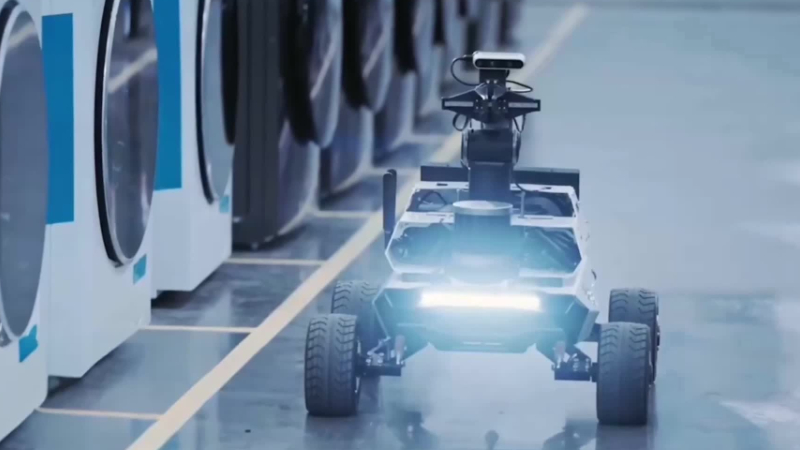
Tang Dongsheng, a national political advisor, said embodied intelligence is not about show-off, but about solving real-world problems.
China plans to advance and expand its "AI Plus" initiative, promote faster application of new-generation intelligent terminals and AI agents, and encourage large-scale commercial application of AI in key sectors and fields, according to the government work report submitted Thursday to the country's top legislature for deliberation.
The draft outline of the country's 15th Five-Year Plan, also submitted on the same day, shows that, over the next five years, AI will be harnessed to advance basic science, transform traditional and frontier industries, create new consumption scenarios, innovate governance, and enrich daily life.
China aims to advance computing infrastructure, model and algorithm development, and the supply of high-quality data resources to support the growing demands of AI development, according to the draft outline.
International cooperation and joint governance on AI have also been incorporated into the five-year plan. To make AI a global "public good," Li pledged that China will uphold open and shared AI development, working with countries worldwide to explore and establish governance frameworks and rules with broader consensus. ■