
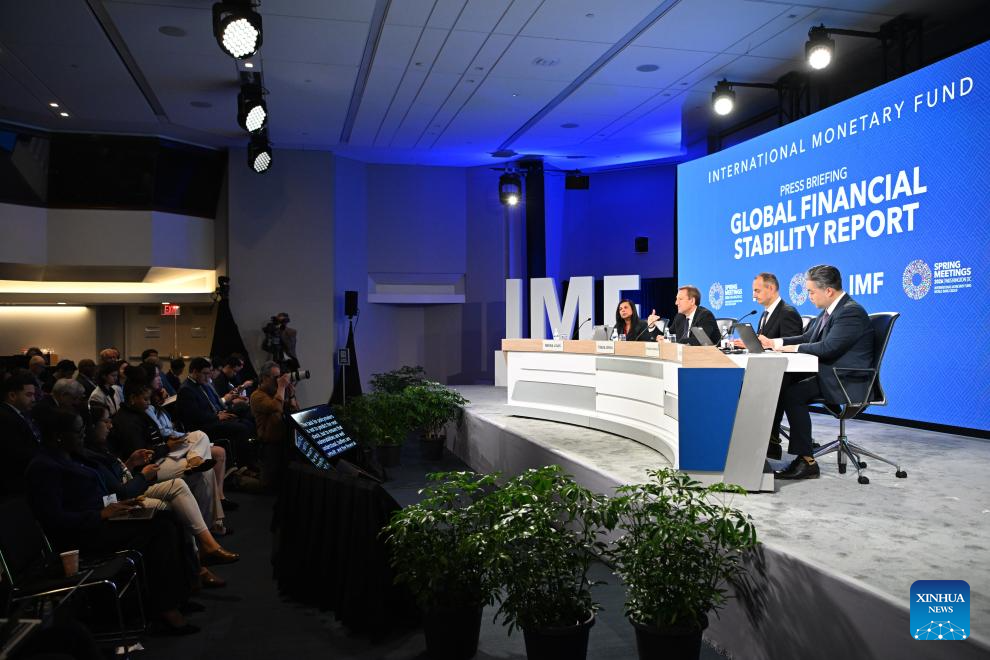
Tobias Adrian (3rd R), director of the International Monetary Fund's (IMF's) Monetary and Capital Markets Department, speaks at a press briefing on Global Financial Stability Report in Washington, D.C., the United States, on April 14, 2026. IMF on Tuesday released its Global Financial Stability Report, warning that risks to global financial stability are rising amid the current situation in the Middle East. (Xinhua/Li Rui)
NEW YORK, April 14 (Xinhua) -- The International Monetary Fund (IMF) on Tuesday released its Global Financial Stability Report, warning that risks to global financial stability are rising amid the current situation in the Middle East.
"The global financial system is confronting the ongoing war in the Middle East, potential inflationary pressures, rising risks of further tightening in financial conditions, and several channels through which market turmoil could escalate into financial instability," the report said.
The longer the conflict continues, the greater the risk that global financial conditions could tighten further and more abruptly, it suggested.
The report listed several channels that could test the financial system's resilience and lead to financial stability risks.
First, greater bond market volatility could tighten funding markets, as rising debt-to-GDP levels have led to larger bond yield gyrations.
Second, emerging markets may face currency and capital outflow pressures as carry trades unwind and terms of trade worsen.
Third, an abrupt tightening of financial conditions can lead to forced selling by hedge funds, option sellers, leveraged exchange-traded funds and other nonbank financial intermediaries (NBFIs) that have expanded through leverage.
Fourth, signs of more borrower defaults in private credit could cascade into broader concerns about corporate credit, particularly for highly leveraged borrowers subject to the artificial intelligence (AI) disruption.
Also, booming investments in AI may slow significantly if the Middle East conflict were to persist.
The IMF urged policymakers to act decisively to bolster resilience amid the Middle East conflict, suggesting that monetary policy preserve price stability and be attuned to spillovers from actual inflation to inflation expectations, while remaining data dependent.
It also recommended a fiscal stance shift toward appropriately tight settings to place public debt on a stable path, with new spending focused on protecting vulnerable groups from the inflation shock.
Closing data gaps, improving cross-jurisdictional data sharing, and enhancing oversight are critical, as NBFIs grow more leveraged and more connected to banks, the report said. ■
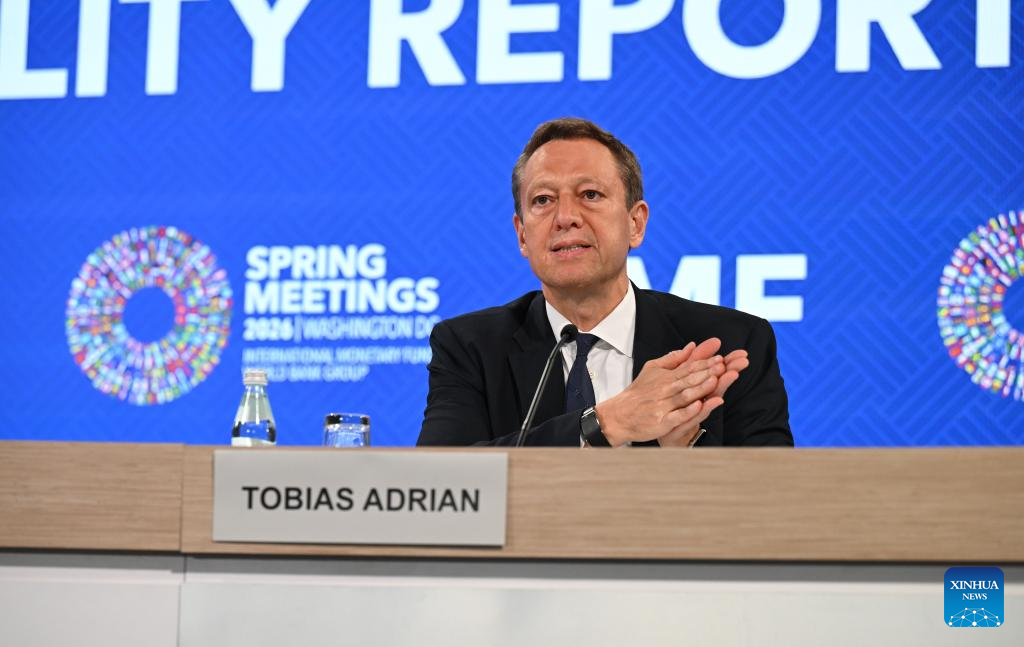
Tobias Adrian, director of the International Monetary Fund's (IMF's) Monetary and Capital Markets Department, speaks at a press briefing on Global Financial Stability Report in Washington, D.C., the United States, on April 14, 2026. IMF on Tuesday released its Global Financial Stability Report, warning that risks to global financial stability are rising amid the current situation in the Middle East. (Xinhua/Li Rui)
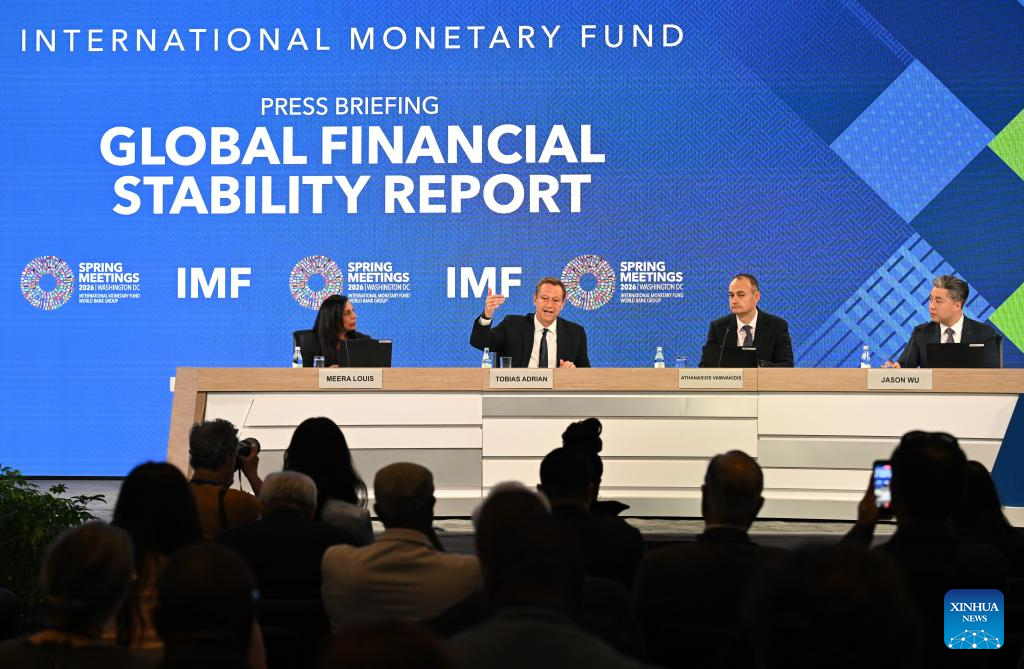
Tobias Adrian (3rd R), director of the International Monetary Fund's (IMF's) Monetary and Capital Markets Department, speaks at a press briefing on Global Financial Stability Report in Washington, D.C., the United States, on April 14, 2026. IMF on Tuesday released its Global Financial Stability Report, warning that risks to global financial stability are rising amid the current situation in the Middle East. (Xinhua/Li Rui)
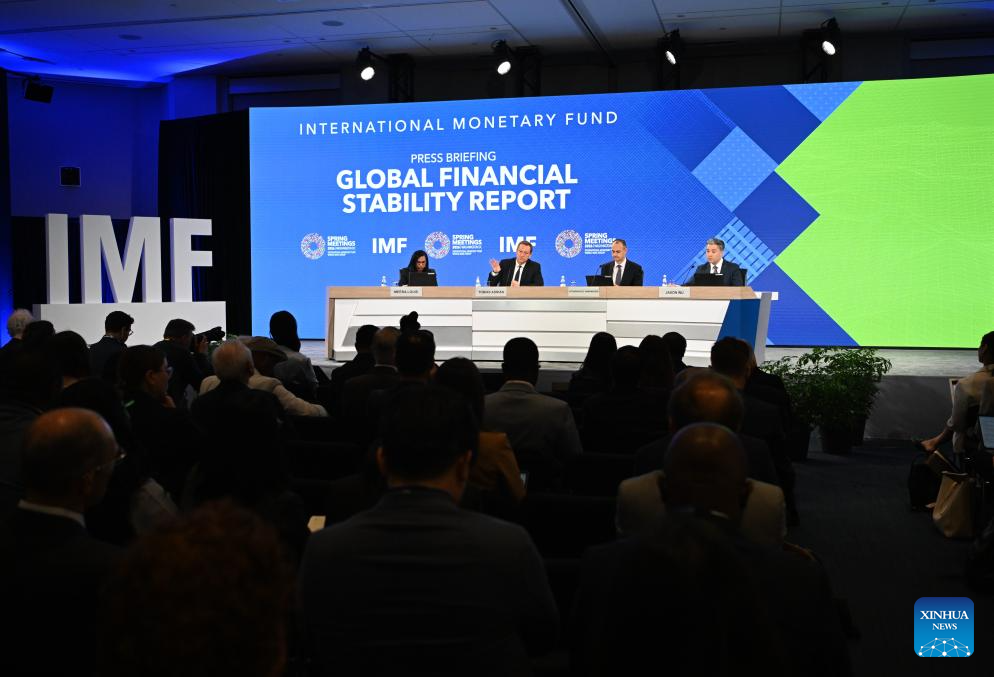
Tobias Adrian (3rd R), director of the International Monetary Fund's (IMF's) Monetary and Capital Markets Department, speaks at a press briefing on Global Financial Stability Report in Washington, D.C., the United States, on April 14, 2026. IMF on Tuesday released its Global Financial Stability Report, warning that risks to global financial stability are rising amid the current situation in the Middle East. (Xinhua/Li Rui)
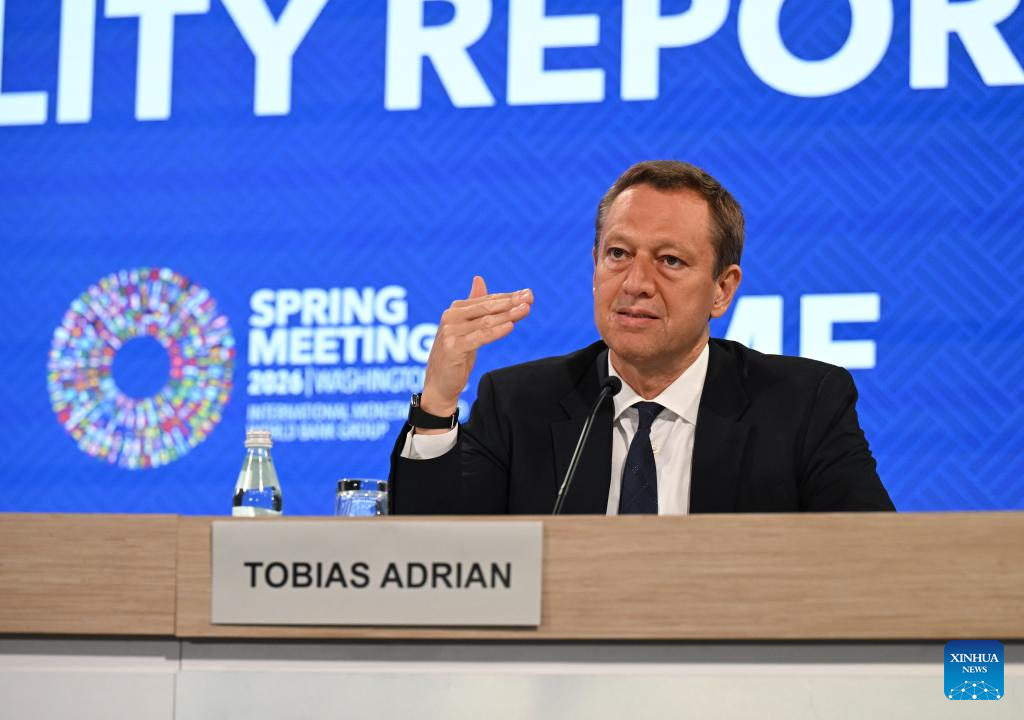
Tobias Adrian, director of the International Monetary Fund's (IMF's) Monetary and Capital Markets Department, speaks at a press briefing on Global Financial Stability Report in Washington, D.C., the United States, on April 14, 2026. IMF on Tuesday released its Global Financial Stability Report, warning that risks to global financial stability are rising amid the current situation in the Middle East. (Xinhua/Li Rui)
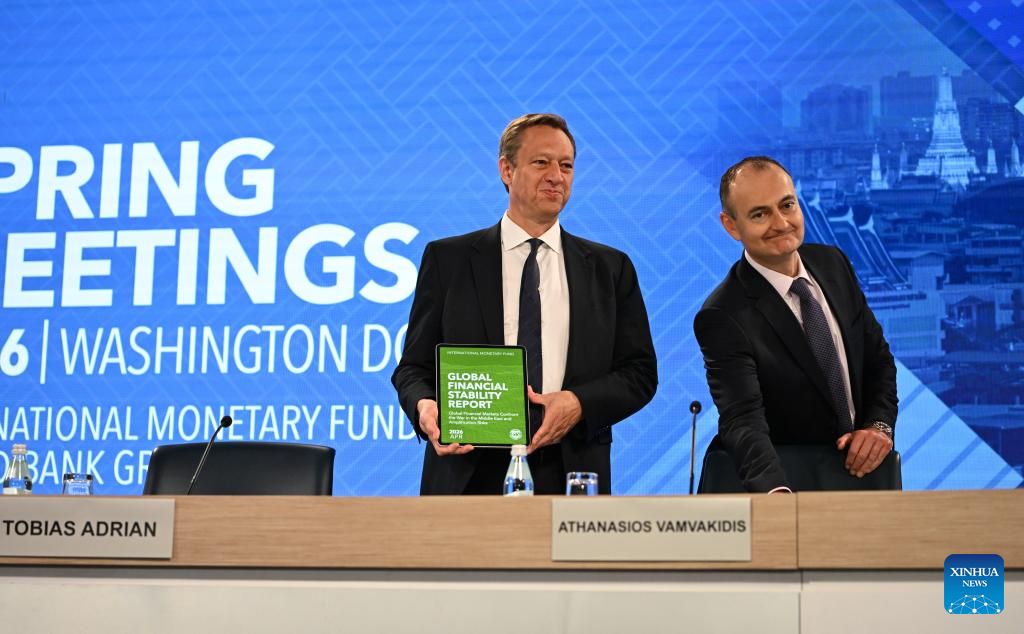
Tobias Adrian (L), director of the International Monetary Fund's (IMF's) Monetary and Capital Markets Department, presents the latest Global Financial Stability Report at a press briefing in Washington, D.C., the United States, on April 14, 2026. IMF on Tuesday released its Global Financial Stability Report, warning that risks to global financial stability are rising amid the current situation in the Middle East. (Xinhua/Li Rui)
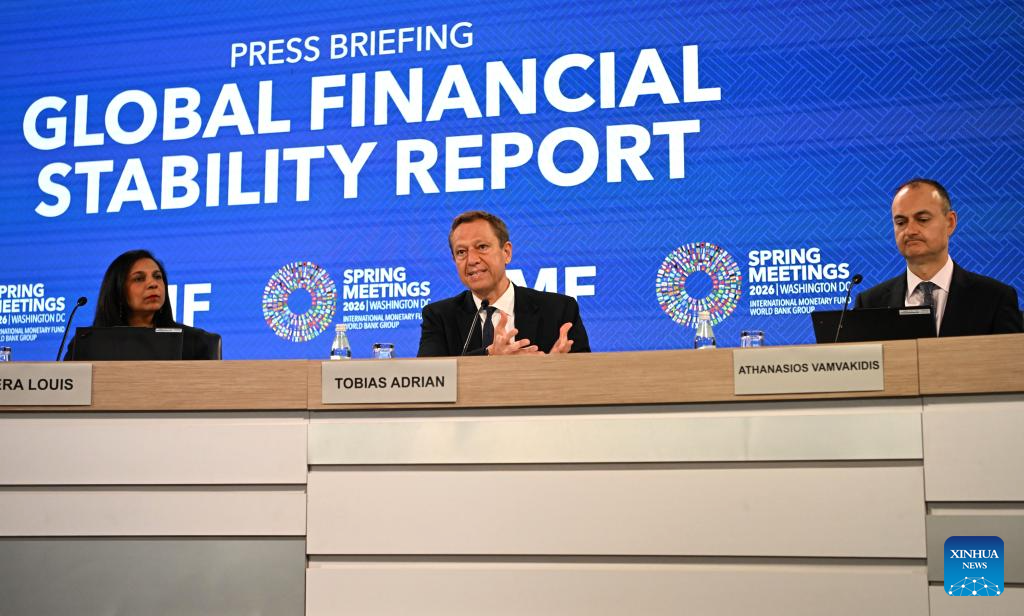
Tobias Adrian (C), director of the International Monetary Fund's (IMF's) Monetary and Capital Markets Department, speaks at a press briefing on Global Financial Stability Report in Washington, D.C., the United States, on April 14, 2026. IMF on Tuesday released its Global Financial Stability Report, warning that risks to global financial stability are rising amid the current situation in the Middle East. (Xinhua/Li Rui)
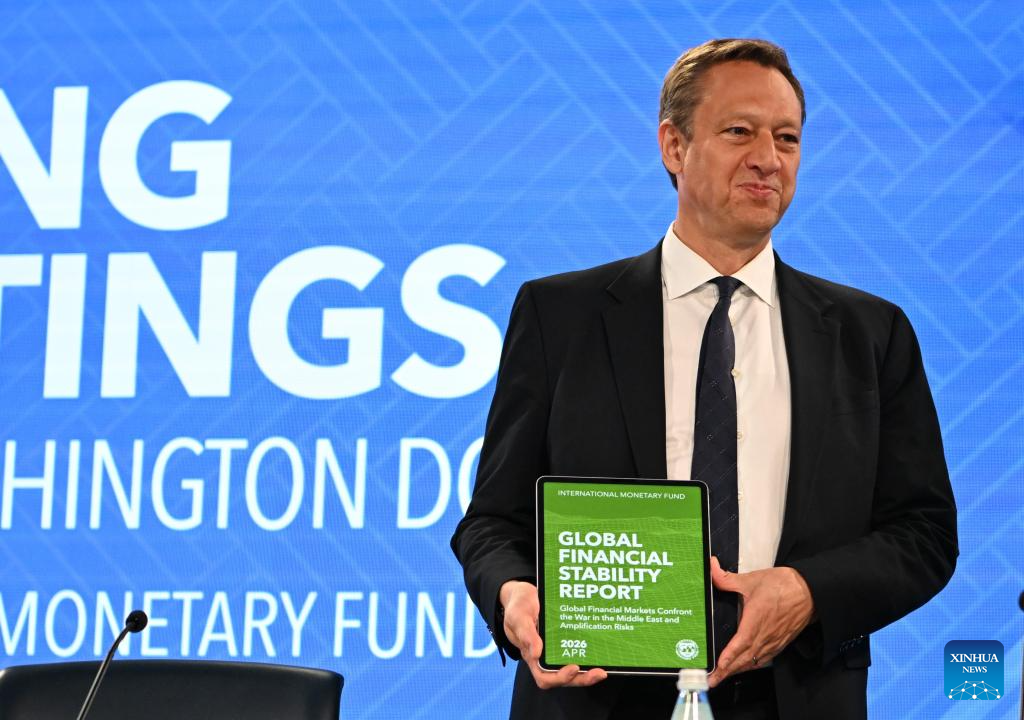
Tobias Adrian, director of the International Monetary Fund's (IMF's) Monetary and Capital Markets Department, presents the latest Global Financial Stability Report at a press briefing in Washington, D.C., the United States, on April 14, 2026. IMF on Tuesday released its Global Financial Stability Report, warning that risks to global financial stability are rising amid the current situation in the Middle East. (Xinhua/Li Rui)