
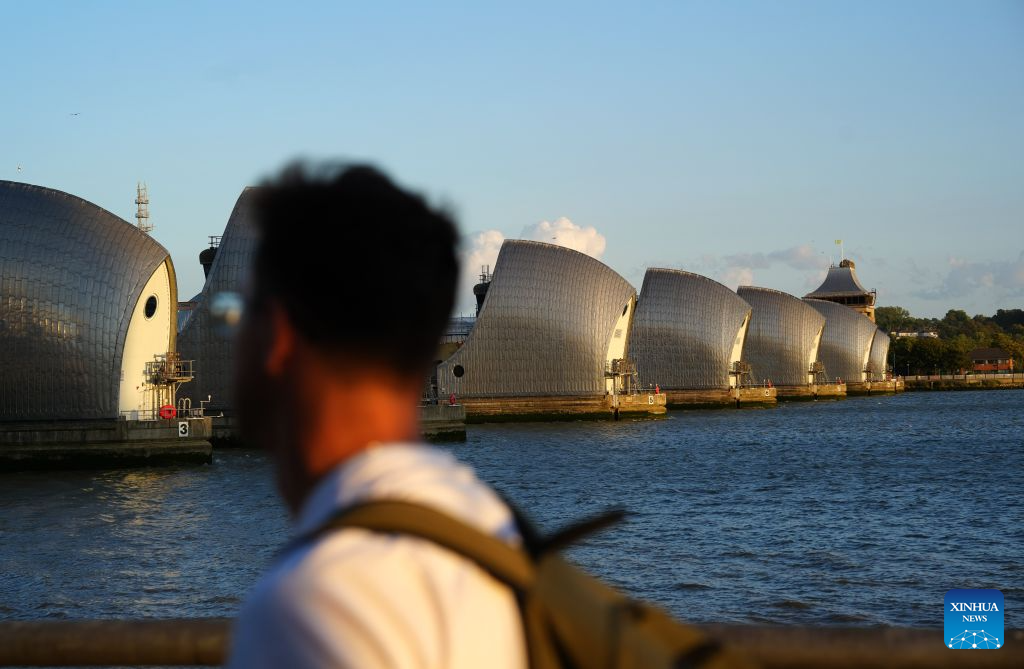
A man walks along the bank of River Thames in London, Britain, on Aug. 19, 2026. (Xinhua/Zhang Feng)
by Xinhua Writers Zhang Feng, Yu Aicen, and Larry Neild
LONDON, Aug. 28 (Xinhua) -- There is a long tradition of Britons complaining about the grey, rainy summers. However, that reality is now changing, as an extended spell of extreme heat and drought has swept across the country.
FARMING UNDER PRESSURE
In the fields of Leicestershire in England, heat scorched the parched, cracked earth, and the landscape was yellow and withered. William Oliver, a 37-year-old farmer, walked toward his wheat field, shovel in hand.
"This year's drought is unusual," Oliver said, gazing at the stubble left behind after the harvest. Late August is normally the height of the wheat harvest, he told Xinhua, but amid prolonged heat and drought this summer, harvesting had to begin three weeks earlier to minimize damage to the crops.
The fourth generation of his family to run the farm, Oliver has managed the approximately 2,000-acre (about 8 square kilometers) family farm since 2011, growing wheat, corn, and rapeseed. He also raises poultry.
"The drought has been so severe that we'll probably suffer an economic loss close to 20 percent," Oliver said.
In July this year, England received just 6.5 millimeters of rainfall. This represented 10 percent of the country's long-term meteorological average for the month, making it the driest July on record.
"We lack the infrastructure to cope with extreme heat and drought," Oliver said, standing inside a warehouse filled with hay bales.
His farm is not equipped with a professional and efficient irrigation system, leaving agricultural production heavily dependent on rainfall. Government support for infrastructure construction, he said, remains insufficient.
During visits to farms across England, several farmers told Xinhua that agricultural production this year has been "challenging." Early harvest, low yields and an increased risk of fire are common difficulties facing farmers.
"If hot and dry weather continues, we may have to change the way we farm," said Rob Ford, a farmer in Cheshire.
British Prime Minister Andy Burnham recently said that this has "probably been the hardest summer for British farming in a generation."
WILDFIRES ON THE RISE
Since the beginning of 2026, Britain has been hit by five heatwaves. In June, more than 2,000 heat-related deaths were reported in the country. Some hospitals were forced to cancel surgeries because operating rooms became too hot.
Meanwhile, as the heat and drought persisted, the frequent outbreak of wildfires has become a harsh reality that British society could no longer ignore.
On Aug. 14, British people received ear-splitting alarms on their phones from the government, issuing an emergency warning that the risk of wildfires nationwide was "very high", and banning all activities that could start a fire.
The day before the alert was issued, a serious fire broke out in Stourbridge. Hot and dry conditions contributed to the "apocalyptic" blaze. Billowing smoke darkened the sky, and 19 homes were destroyed.
Several days after the fire was extinguished, the air was still pungent with the smell of charred debris. Flames had destroyed the roofs of a number of homes, and spread towards the railway. The surrounding grassland was reduced to scorched earth.
In conversations with local residents, two words came up repeatedly: "heartbroken" and "helpless."
The prolonged heat and drought had left residents of the town physically and emotionally exhausted. "Along with the houses, memories of growing up were burned away," said one local resident.
BRITAIN FEELS THE HEAT
In addition to transforming Britain's countryside, the drought and heat have also changed the face of its cities.
In Regent's Park, Hyde Park and other public spaces in London, the usual summer crowds have significantly thinned. The once-lush green lawns have now turned yellow and brown across large areas, resembling the African savannah during the dry season.
Along the banks of the River Thames, meanwhile, residents gathered to escape the heat and cool off, hoping that the extreme weather would soon come to an end.
As the drought intensified and water supplies ran low, many places in Britain introduced hosepipe bans, prohibiting residents from using hoses to water plants and wash cars. Those who violated the restrictions could face fines of up to 1,000 pounds (about 1,350 U.S. dollars).
This summer, the impact of extreme heat and drought went far beyond the weather itself.
For a country that has long known a mild and humid climate, a hotter and drier future is gradually becoming a reality. It has now become urgent for the government to address the inadequacies in infrastructure and public governance, in order to meet the challenges posed by increasingly frequent extreme weather events. ■
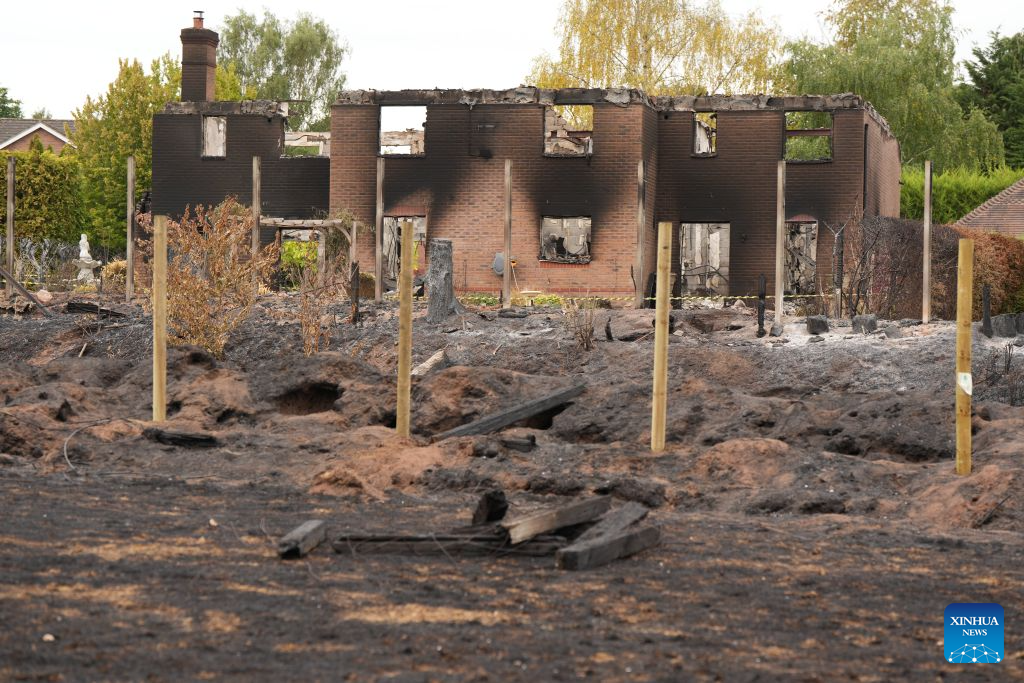
This photo taken on Aug. 17, 2026 shows the house destroyed by a fire in Stourbridge, Britain. (Xinhua/Zhang Feng)
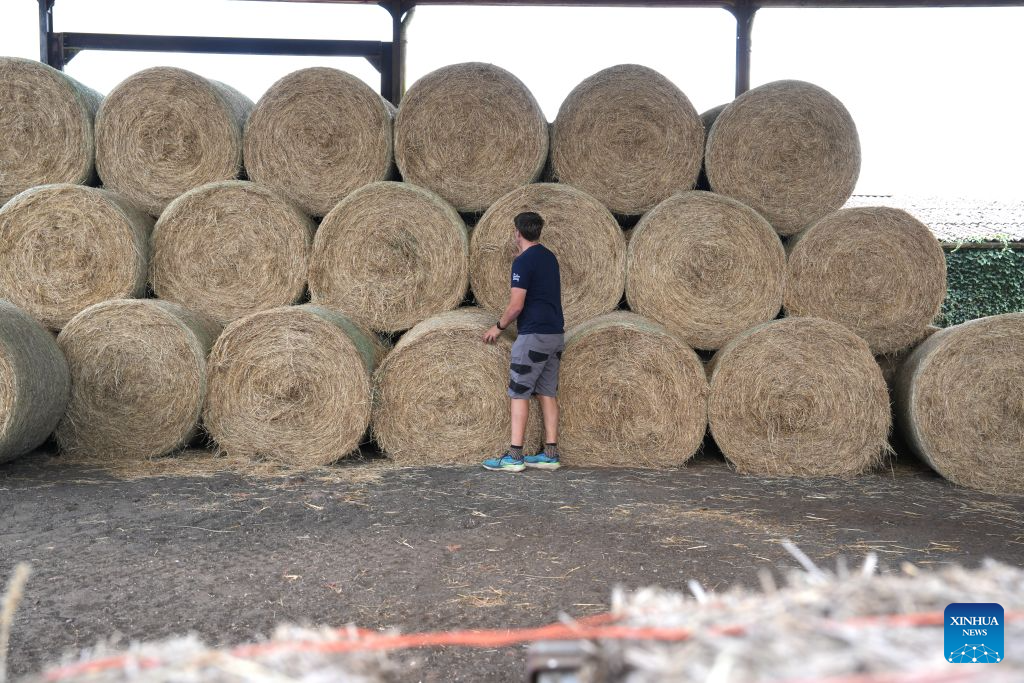
Farmer William Oliver arranges bales of hay in a barn in Leicestershire, Britain, on Aug. 24, 2026. (Xinhua/Zhang Feng)