
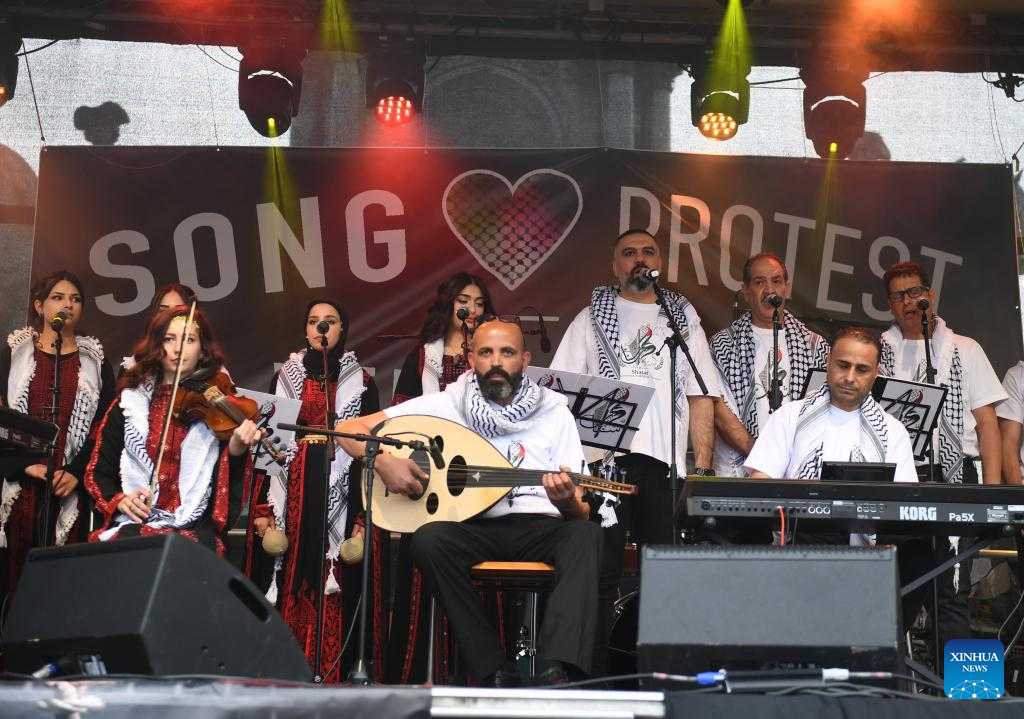
Protesters hold a concert during a rally against the Eurovision Song Contest in Vienna, Austria, May 15, 2026. Eurovision Song Contest 2026 concluded with its grand final in Vienna on Saturday, but the event's 70th anniversary was overshadowed by its deepest-ever crisis, as five countries boycotted the competition over Israel's participation, exposing widening cracks across Europe. (Xinhua/He Canling)
VIENNA, May 17 (Xinhua) -- Eurovision Song Contest 2026 concluded with its grand final in Vienna on Saturday, but the event's 70th anniversary was overshadowed by its deepest-ever crisis, as five countries boycotted the competition over Israel's participation, exposing widening cracks across Europe.
Bulgaria took the crown, but the most dramatic moment came when Israel's entry -- ranked low by juries -- shot to first place after the public vote, triggering a massive chorus of boos.
Founded in 1956 as a post-war initiative aimed at uniting Europe through entertainment, the world's largest live music event now finds itself at the center of one of the continent's most divisive geopolitical disputes. Spain, Ireland, the Netherlands, Slovenia and Iceland withdrew from this year's competition, marking an unprecedented rupture.
For the first time in Eurovision's history, multiple broadcasters, including Spain's state broadcaster RTVE, refused not only to send contestants but also to air the event -- a significant financial and symbolic blow, given Spain's status as one of the "Big Five" contributors to the European Broadcasting Union (EBU).
"A contest founded on unity, peace, and connection has never felt more divided," the founders of Ireland's popular Eurovision podcast Eirevision wrote on social media in December 2025, announcing they would suspend coverage.
But not everyone walked away. Bulgaria, Moldova and Romania have returned after skipping the event for artistic or financial reasons in recent years. Still, the number of participants, at 35, was the lowest since 2003.
WHEN WAR TURNS MUSIC POLITICAL
Protests over what critics called the EBU's double standards regarding Israel ran through this year's contest from the opening ceremony to the grand final. Thousands joined demonstrations in multiple European cities, including Vienna, Brussels, London and Dublin, while brief disruptions also spilled into the venue during both the semifinal and final.
On Saturday, some 3,000 protesters marched against Israel's participation in Vienna. "Slovenia showed Palestine documentaries instead of Eurovision -- that's a strong act of solidarity," Natasha, a local protester, told Xinhua. "Every country should take a stance against genocide."
The controversy erupted months before the first note was sung. In December 2025, after the EBU declined to bar Israel, saying broadcaster KAN had not breached contest rules, criticism of double standards quickly intensified. Ireland -- the joint record-holder for most Eurovision wins alongside Sweden -- saw its public broadcaster RTE call continued participation "unconscionable given the ongoing and appalling loss of lives in Gaza."
"In the face of illegal war and also genocide, silence is not an option. And we cannot remain indifferent to what continues to happen in Gaza and in Lebanon," Spanish Prime Minister Pedro Sanchez said Friday in a video message posted on X, adding that Spain chose to be "on the right side of history."
Opposition also came from within the cultural sector. More than 1,100 musicians and cultural workers signed an open letter accusing the EBU of hypocrisy, saying its responses had "removed any illusion of Eurovision's claimed 'neutrality'."
UNITY VS DIVISION AT EUROVISION
British TV personality and music manager Sharon Osbourne said that attempts to exclude Israelis from the international stage "twist art into a tool of division and erode the shared humanity that the arts are meant to preserve."
But critics questioned whether Eurovision can still claim to stand for European values. Irish Member of the European Parliament Cynthia Ni Mhurchu said that allowing Israel to compete amid the humanitarian crisis in Gaza was eroding the very European values on which the contest was founded.
"It's very problematic because it creates a normalization of the violence that is going on. They say Eurovision is not political, but they made it political," said Belgian actress Katrien De Ruysscher, co-initiator of an alternative cultural event, "United for Palestine," held in Brussels.
The conflict also played out in everyday spaces. A cafe owner in the Dutch city of Den Bosch told local media he found himself caught between the contradictory pressures of a deeply divided Europe: screening the contest in his cafe could be read as ignoring Gaza, while not showing Israel's performance risked being denounced as antisemitic.
Predictions for Eurovision's future vary widely. For Dean Vuletic, historian and author of the book "Postwar Europe and the Eurovision Song Contest," the contest has survived political crises before and "has "always managed to survive."
But for some, survival is not enough. "It has to go back to the real values of the contest, which was after the Second World War: to unite countries. And now the countries are all separated. So I don't believe that within its current form, it will continue to exist," De Ruysscher added.
"Singing connects people," Herbert, a protester from Austria, told Xinhua outside the grand final venue on Saturday. "We want a future in Europe with people living together in harmony." ■
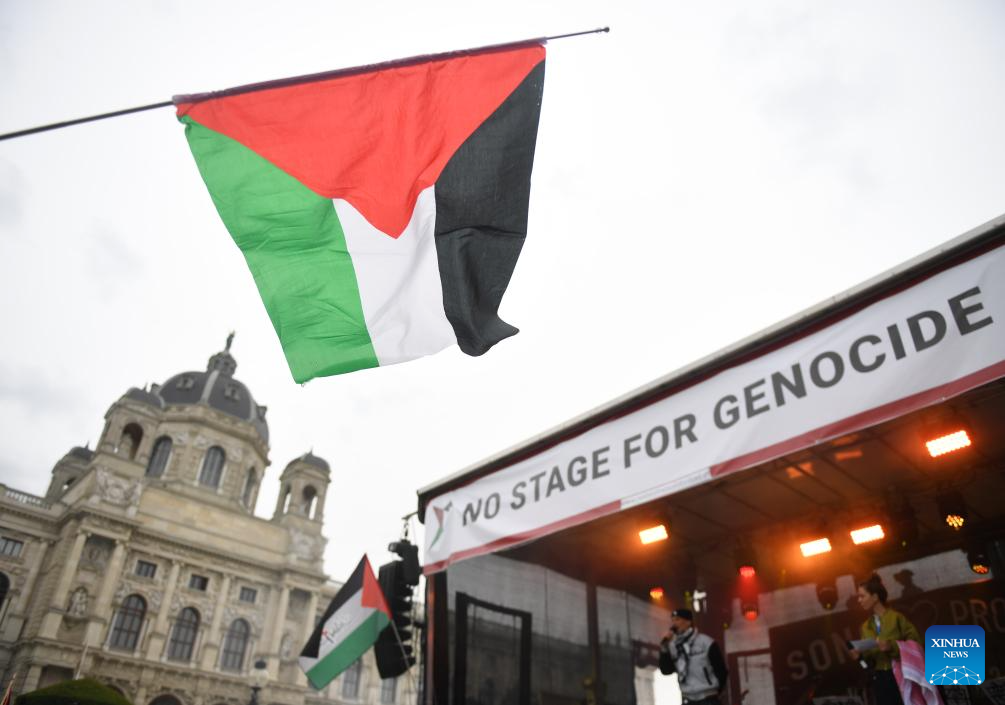
Protesters hold a concert during a rally against the Eurovision Song Contest in Vienna, Austria, May 15, 2026. Eurovision Song Contest 2026 concluded with its grand final in Vienna on Saturday, but the event's 70th anniversary was overshadowed by its deepest-ever crisis, as five countries boycotted the competition over Israel's participation, exposing widening cracks across Europe. (Xinhua/He Canling)
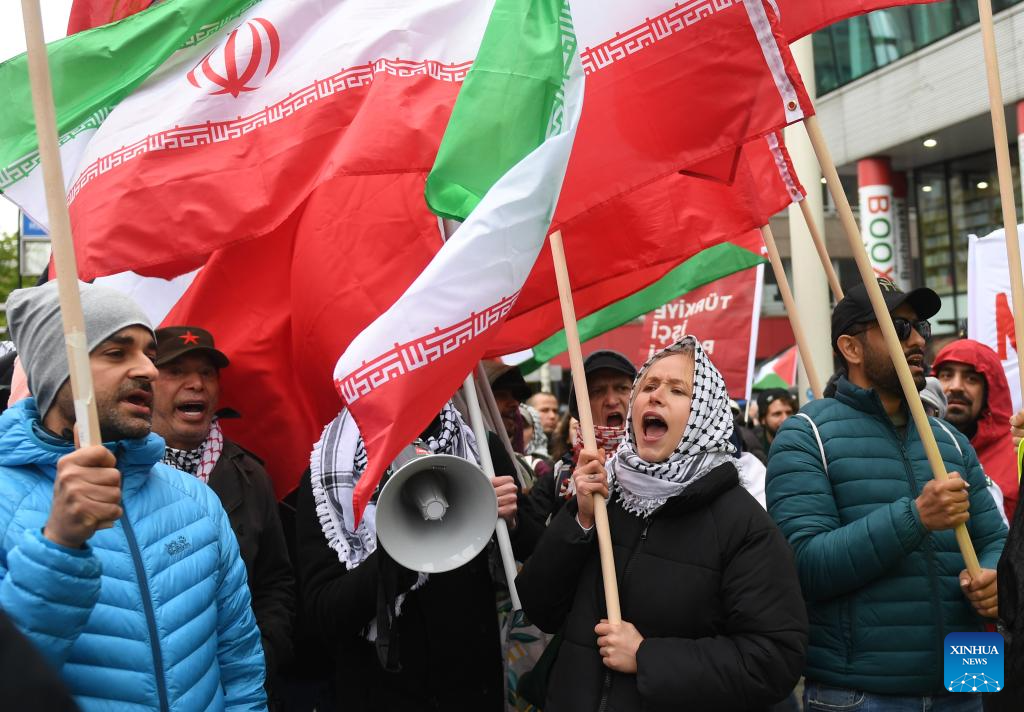
Protesters holding Iran's national flags participate in a rally against the Eurovision Song Contest in Vienna, Austria, May 16, 2026. Eurovision Song Contest 2026 concluded with its grand final in Vienna on Saturday, but the event's 70th anniversary was overshadowed by its deepest-ever crisis, as five countries boycotted the competition over Israel's participation, exposing widening cracks across Europe. (Xinhua/He Canling)
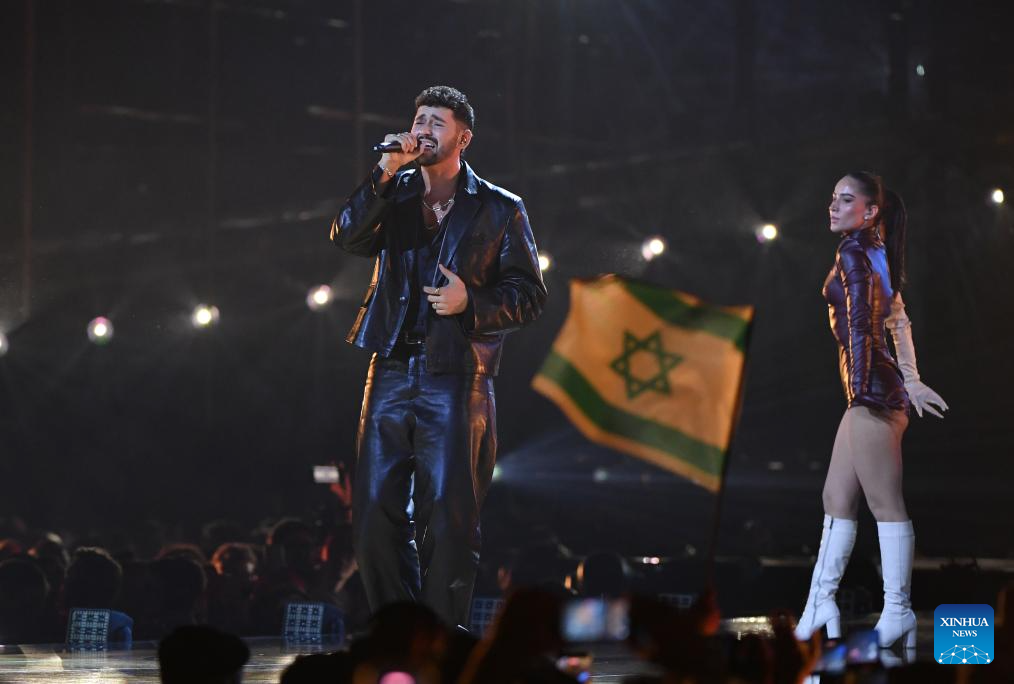
Israel's Noam Bettan (L) performs during the grand final of the Eurovision Song Contest 2026 in Vienna, Austria, May 16, 2026. Eurovision Song Contest 2026 concluded with its grand final in Vienna on Saturday, but the event's 70th anniversary was overshadowed by its deepest-ever crisis, as five countries boycotted the competition over Israel's participation, exposing widening cracks across Europe. (Xinhua/He Canling)

Bulgaria's Dara (C) lifts the trophy at the awarding ceremony during the grand final of the Eurovision Song Contest 2026 in Vienna, Austria, May 16, 2026. Eurovision Song Contest 2026 concluded with its grand final in Vienna on Saturday, but the event's 70th anniversary was overshadowed by its deepest-ever crisis, as five countries boycotted the competition over Israel's participation, exposing widening cracks across Europe. (Xinhua/He Canling)
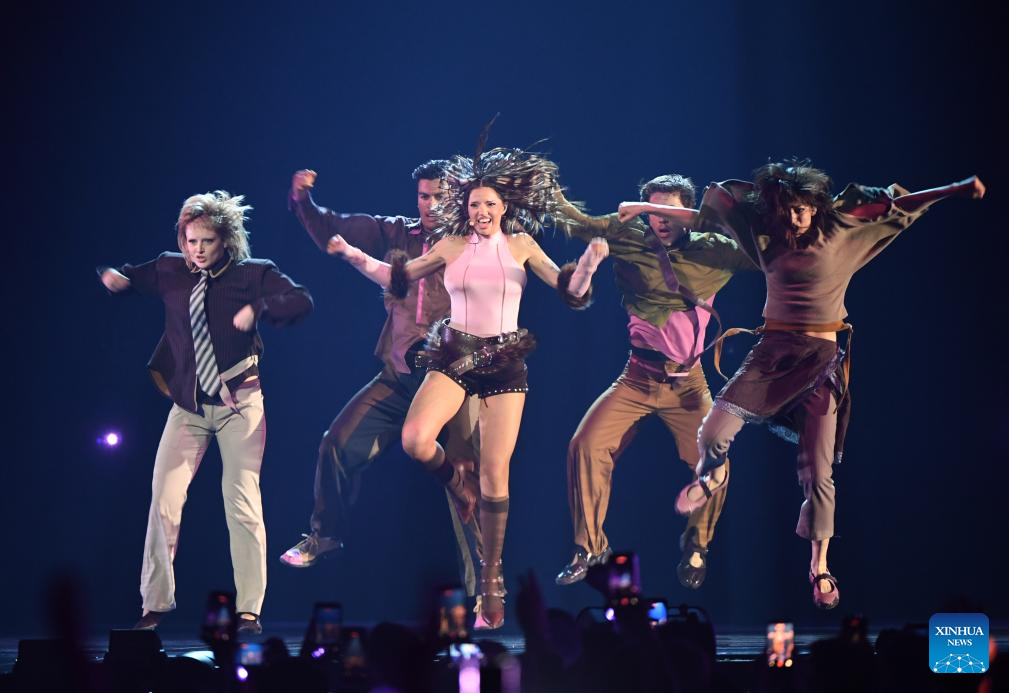
Bulgaria's Dara (C) performs during the grand final of the Eurovision Song Contest 2026 in Vienna, Austria, May 16, 2026. Eurovision Song Contest 2026 concluded with its grand final in Vienna on Saturday, but the event's 70th anniversary was overshadowed by its deepest-ever crisis, as five countries boycotted the competition over Israel's participation, exposing widening cracks across Europe. (Xinhua/He Canling)
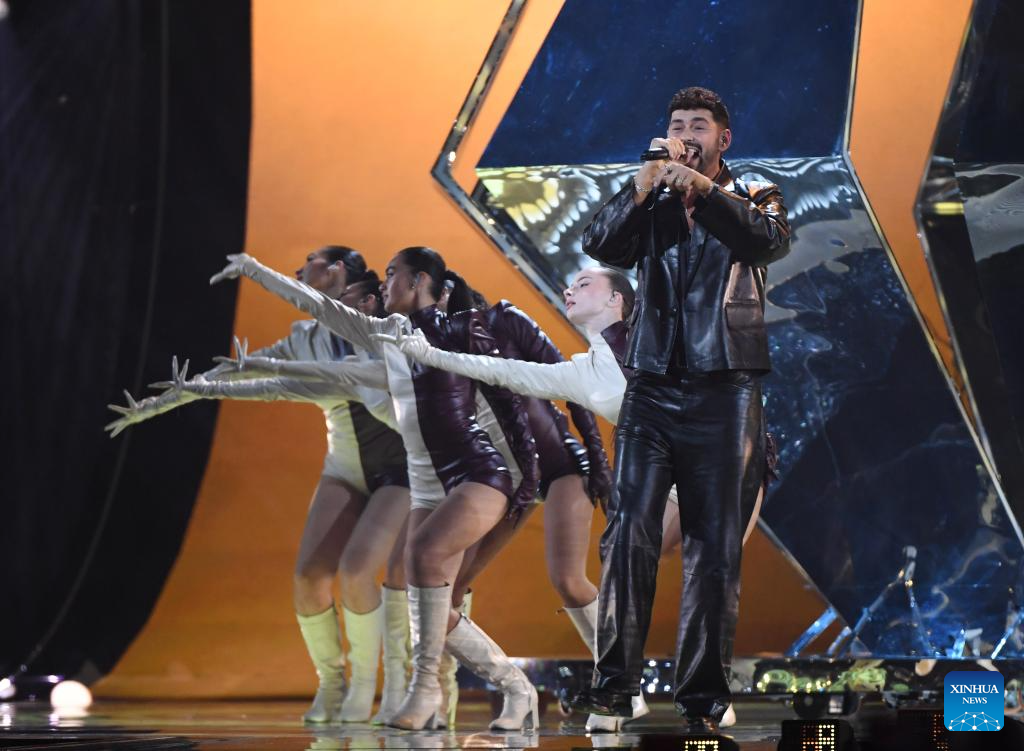
Israel's Noam Bettan (R) performs during the grand final of the Eurovision Song Contest 2026 in Vienna, Austria, May 16, 2026. Eurovision Song Contest 2026 concluded with its grand final in Vienna on Saturday, but the event's 70th anniversary was overshadowed by its deepest-ever crisis, as five countries boycotted the competition over Israel's participation, exposing widening cracks across Europe. (Xinhua/He Canling)