
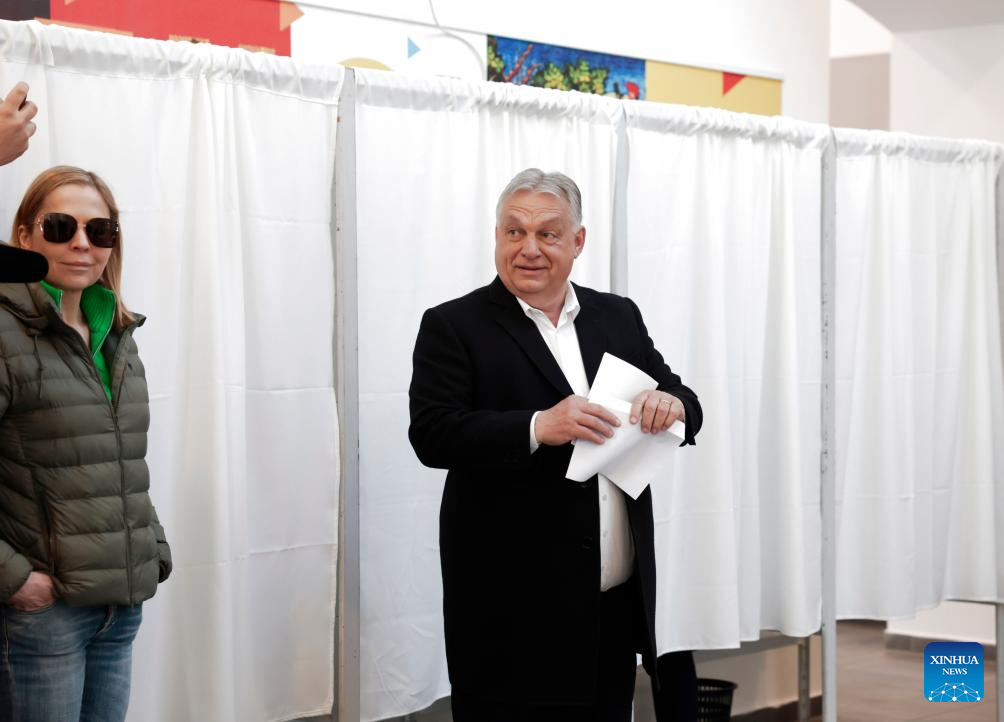
Hungarian Prime Minister Viktor Orban is pictured at a polling station in Budapest, Hungary, April 12, 2026. Hungary's parliamentary elections kicked off at 6:00 a.m. local time (0400 GMT) on Sunday, with about 8.1 million eligible voters, according to the National Election Office. (Photo by Laszlo Balogh/Xinhua)
BUDAPEST, April 12 (Xinhua) -- Hungary's parliamentary elections kicked off at 6:00 a.m. local time (0400 GMT) on Sunday, with about 8.1 million eligible voters, according to the National Election Office.
About 7.6 million voters can cast ballots in person at more than 10,000 polling stations nationwide, while some 500,000 voters eligible for mail-in voting have already begun voting by post.
Voting will continue until 7:00 p.m. (1700 GMT), with vote counting to begin after polls close and initial results expected later in the evening.
A total of five parties or alliances are competing in the election. The latest opinion polls show relatively strong support for Hungary's ruling alliance of Fidesz and the Christian Democratic People's Party, led by Prime Minister Viktor Orban, as well as for the opposition party Tisza, led by Peter Magyar.
Europe is facing multiple overlapping crises, and Hungary needs "strong national unity" to cope with energy, financial and economic pressures, Orban said after casting his ballot at a polling station in Budapest.
He said that he had come to win, but stressed that if opposition leader Magyar received more votes, he would accept the result, adding that "the will of the people must be respected."
Magyar urged supporters to remain "calm, positive and composed" after casting his vote in Budapest and called on Hungarians to turn out for what he described as a historic election.
"There will be a change of system in Hungary," he said, pledging that, if elected, his government would move quickly on anti-corruption measures, seek Hungary's accession to the European Public Prosecutor's Office, and push for the release of frozen European Union funds.
Among smaller parties, the far-right Our Homeland Movement is seen as having a chance of entering parliament, while others, including the Democratic Coalition and the Hungarian Two-Tailed Dog Party, are generally considered unlikely to clear the threshold.
This election marks Orban's fourth parliamentary race since returning to power in 2010, with the outcome set to determine whether he can secure a fifth consecutive term.
Under Hungary's electoral law, parliamentary elections are held every four years. Hungary's parliament has 199 seats, including 106 elected in single-member constituencies and 93 allocated to parties that enter parliament. The party or alliance securing a majority of seats has the right to form a government. ■
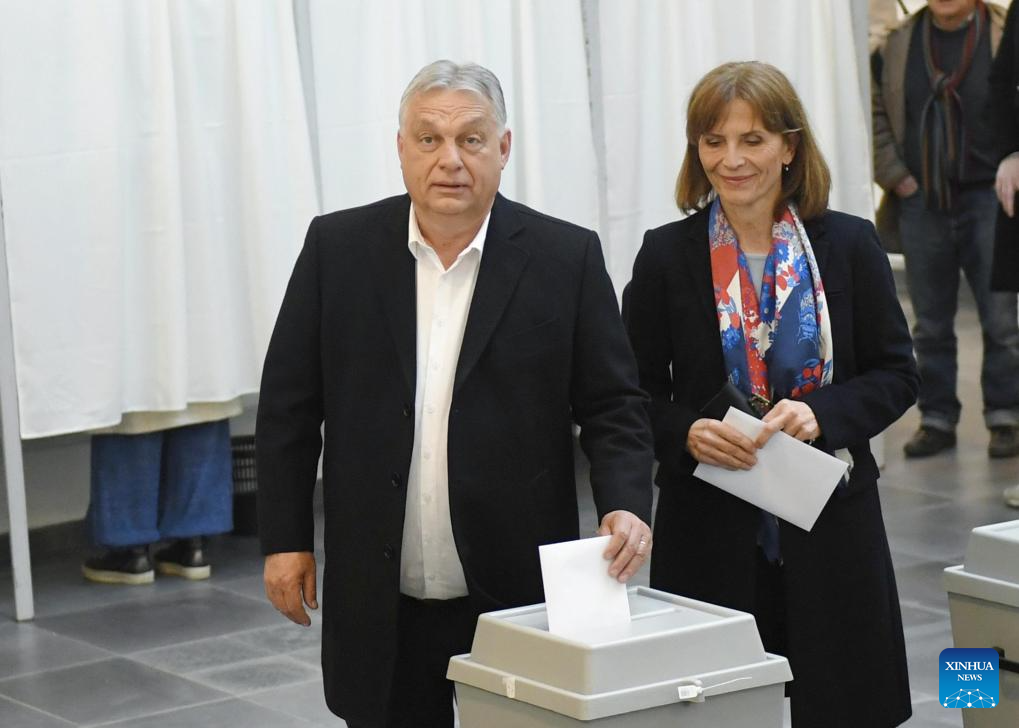
Hungarian Prime Minister Viktor Orban casts his ballot at a polling station in Budapest, Hungary, April 12, 2026. Hungary's parliamentary elections kicked off at 6:00 a.m. local time (0400 GMT) on Sunday, with about 8.1 million eligible voters, according to the National Election Office. (Xinhua/He Canling)
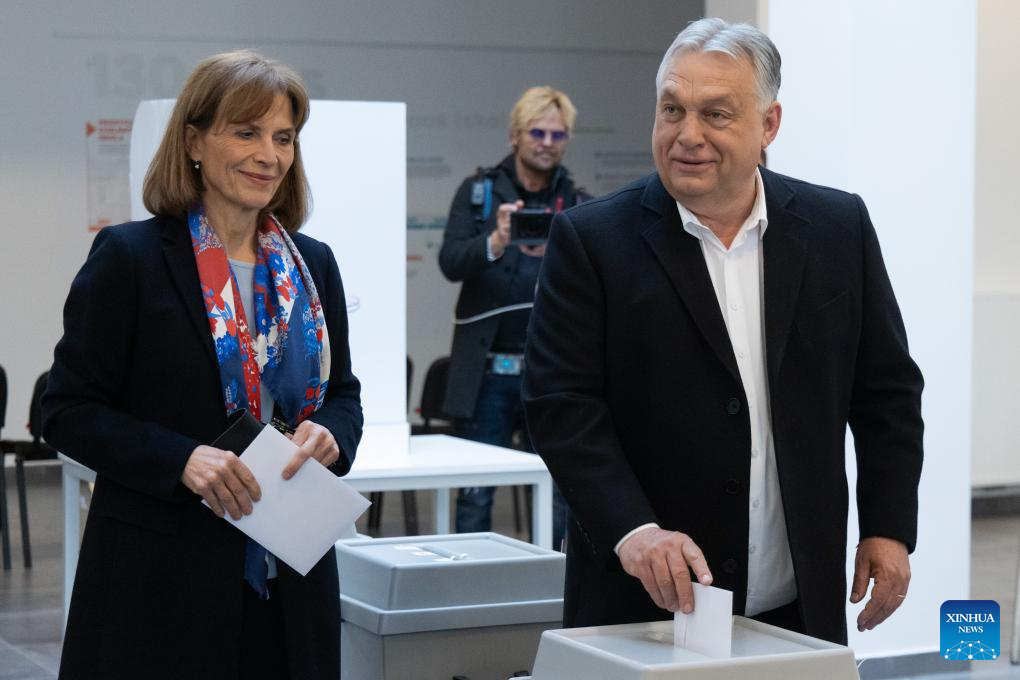
Hungarian Prime Minister Viktor Orban (R) and his wife Aniko Levai cast their ballots at a polling station in Budapest, Hungary, April 12, 2026. Hungary's parliamentary elections kicked off at 6:00 a.m. local time (0400 GMT) on Sunday, with about 8.1 million eligible voters, according to the National Election Office. (Photo by Attila Volgyi/Xinhua)
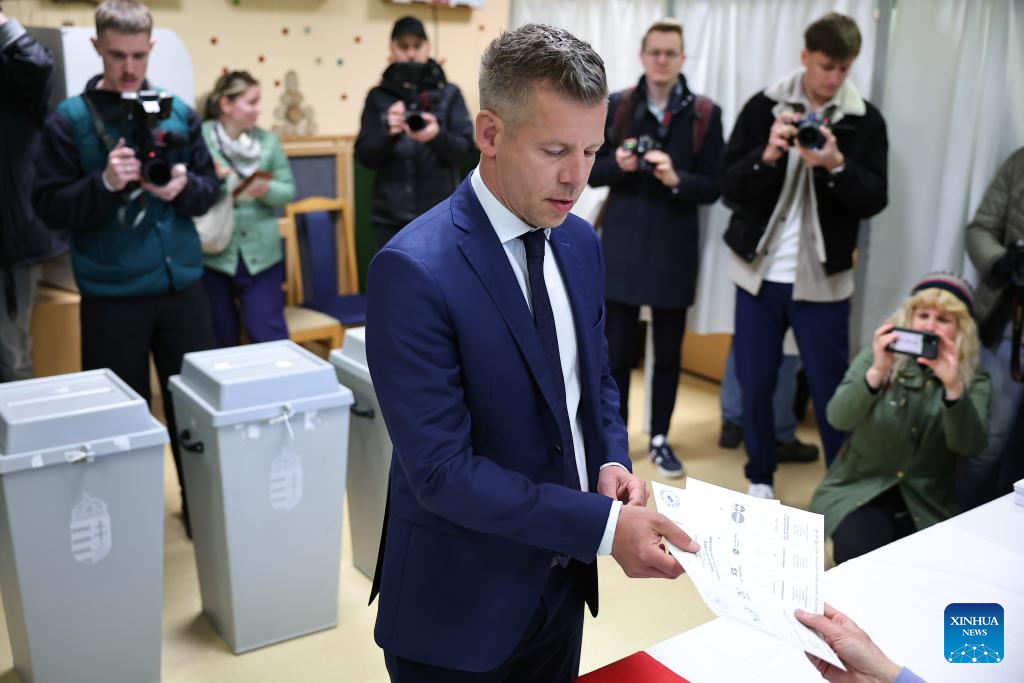
Peter Magyar, leader of Hungary's opposition party Tisza, is pictured at a polling station in Budapest, Hungary, April 12, 2026. Hungary's parliamentary elections kicked off at 6:00 a.m. local time (0400 GMT) on Sunday, with about 8.1 million eligible voters, according to the National Election Office. (Photo by David Balogh/Xinhua)
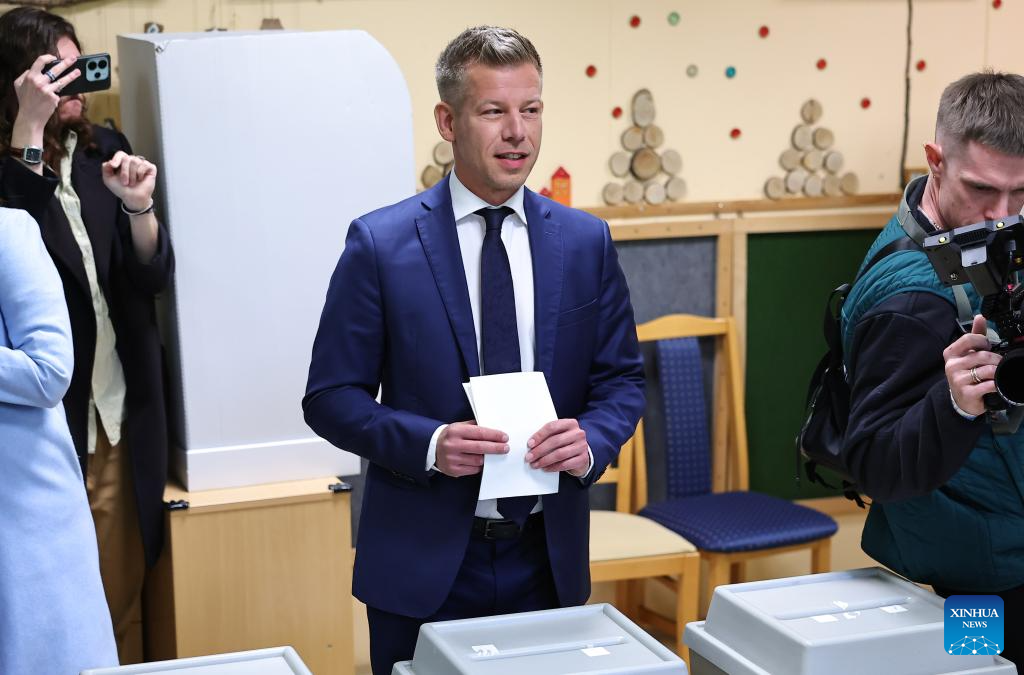
Peter Magyar, leader of Hungary's opposition party Tisza, casts his ballot at a polling station in Budapest, Hungary, April 12, 2026. Hungary's parliamentary elections kicked off at 6:00 a.m. local time (0400 GMT) on Sunday, with about 8.1 million eligible voters, according to the National Election Office. (Photo by David Balogh/Xinhua)
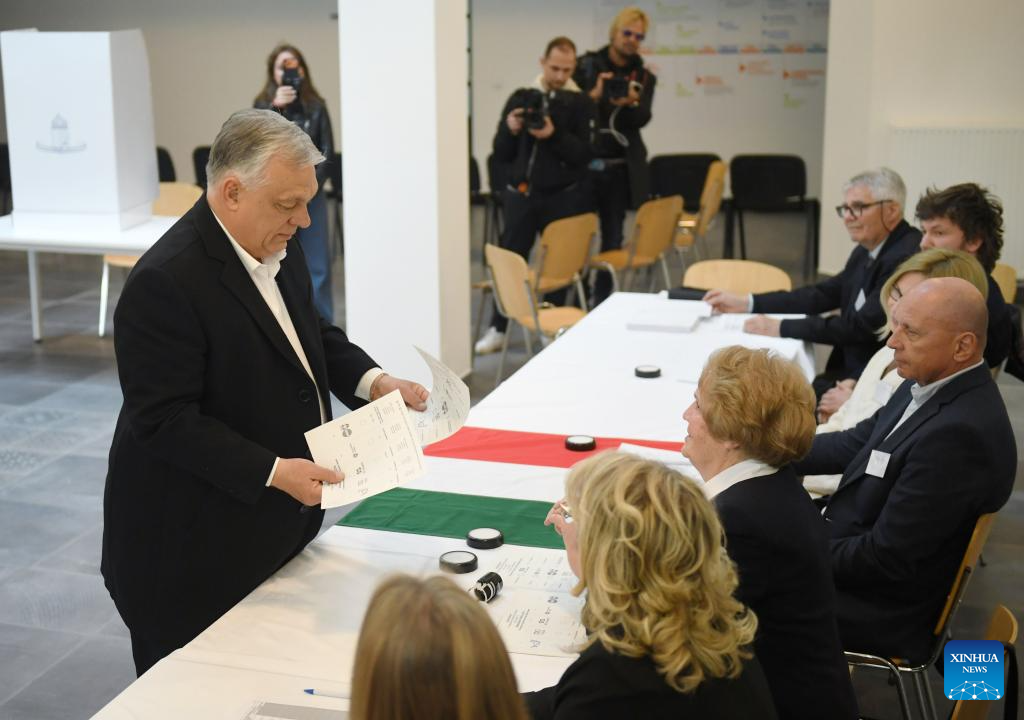
Hungarian Prime Minister Viktor Orban is pictured at at a polling station in Budapest, Hungary, April 12, 2026. Hungary's parliamentary elections kicked off at 6:00 a.m. local time (0400 GMT) on Sunday, with about 8.1 million eligible voters, according to the National Election Office. (Xinhua/He Canling)

A voter casts his ballot at a polling station in Budapest, Hungary, April 12, 2026. Hungary's parliamentary elections kicked off at 6:00 a.m. local time (0400 GMT) on Sunday, with about 8.1 million eligible voters, according to the National Election Office. (Photo by David Balogh/Xinhua)

A dog accompanies its owner at a polling station in Budapest, Hungary, April 12, 2026. Hungary's parliamentary elections kicked off at 6:00 a.m. local time (0400 GMT) on Sunday, with about 8.1 million eligible voters, according to the National Election Office. (Photo by David Balogh/Xinhua)
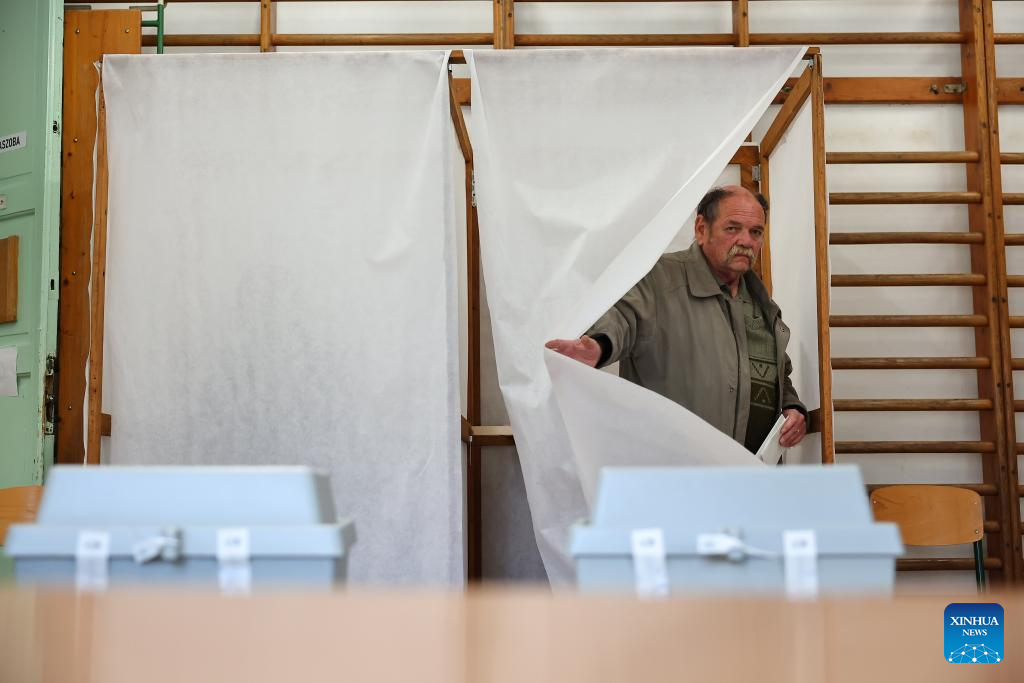
A voter casts his ballot at a polling station in Budapest, Hungary, April 12, 2026. Hungary's parliamentary elections kicked off at 6:00 a.m. local time (0400 GMT) on Sunday, with about 8.1 million eligible voters, according to the National Election Office. (Photo by David Balogh/Xinhua)
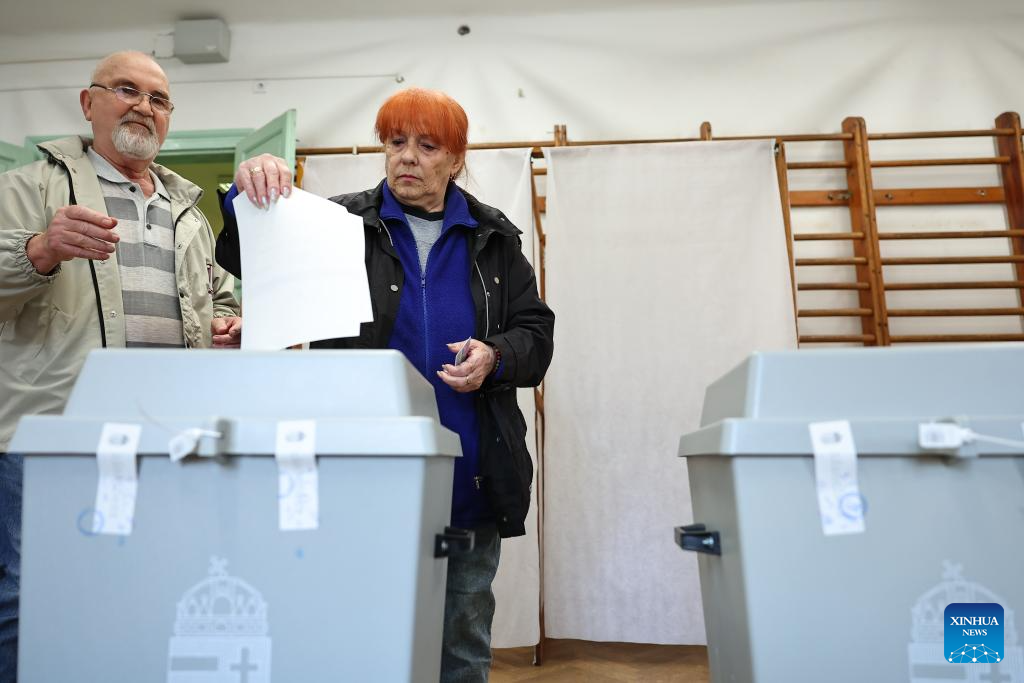
Voters cast their ballots at a polling station in Budapest, Hungary, April 12, 2026. Hungary's parliamentary elections kicked off at 6:00 a.m. local time (0400 GMT) on Sunday, with about 8.1 million eligible voters, according to the National Election Office. (Photo by David Balogh/Xinhua)