
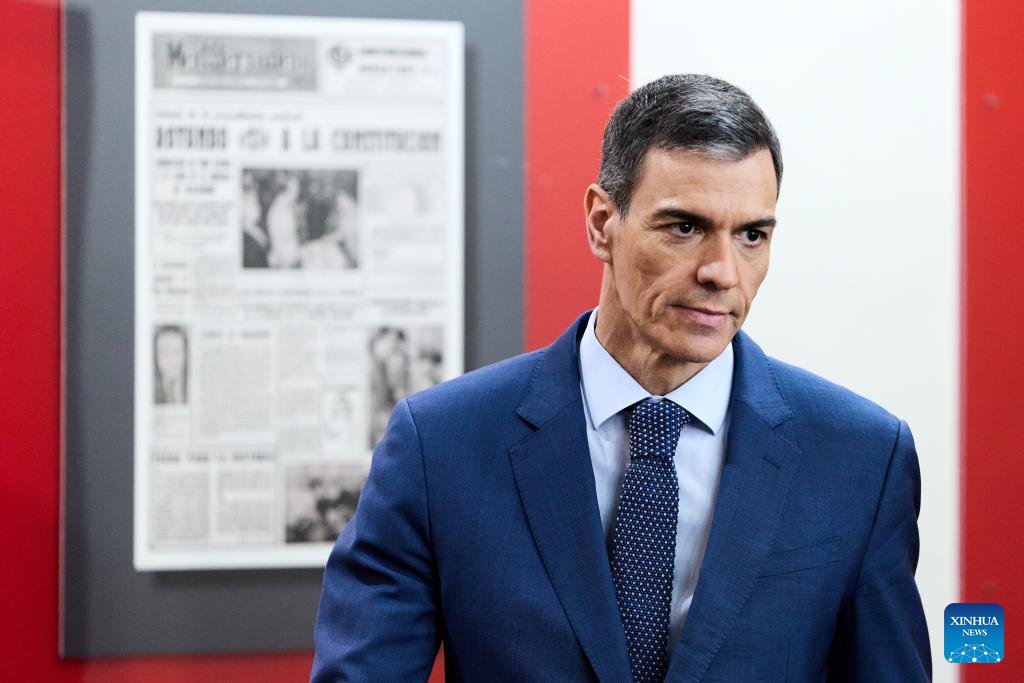
Spanish Prime Minister Pedro Sanchez attends a press conference in Madrid, Spain, on March 20, 2026. (Xinhua/Meng Dingbo)
MADRID, March 20 (Xinhua) -- Spanish Prime Minister Pedro Sanchez on Friday announced a series of urgent measures to bolster the country against the economic effects of the ongoing conflict in the Middle East and protect consumers from rising prices.
The measures, worth over 5 billion euros (5.75 billion U.S. dollars), were laid out in two decrees. The first was aimed at supporting businesses, while the second focused on curbing rising housing and rental costs.
Speaking to the press, Sanchez admitted that the measures "won't prevent the effects of this illegal war from reaching Spain," but promised that "at least they will make them less corrosive and somewhat more bearable."
Among the measures approved in an emergency cabinet meeting were a reduction of VAT from 21 percent to 10 percent on automotive fuels, electricity, and natural gas, as well as a reduction on special tax on hydrocarbons.
The Spanish government will also temporarily suspend its tax on electricity generation, while introducing a 15 percent personal income tax deduction for the purchase of electric and plug-in vehicles, along with additional tax deductions to support energy efficiency improvements, self-consumption and heat pumps, according to the measures.
"Extraordinary situations require extraordinary measures," insisted Sanchez, who highlighted the decrees contain "80 measures that will come into effect as soon as they are published in the Official State Gazette (BOE)."
The United States and Israel launched massive attacks on Iran on Feb. 28, disrupting global shipping, sending oil prices soaring and shaking the global economy.
European gas and oil prices rose sharply in early trading on Thursday. The Dutch TTF benchmark, a key reference for European gas supply contracts, surged more than 30 percent to 70.7 euros (81.3 U.S. dollars) per megawatt-hour at the open, before easing to around 67 euros (77 dollars) per megawatt-hour. The price has more than doubled from around 32 euros (37 dollars) megawatt-hour before the conflict began.
Oil prices also moved higher. Brent crude, the international benchmark, rose to above 116 dollars per barrel in early trading on Thursday. ■
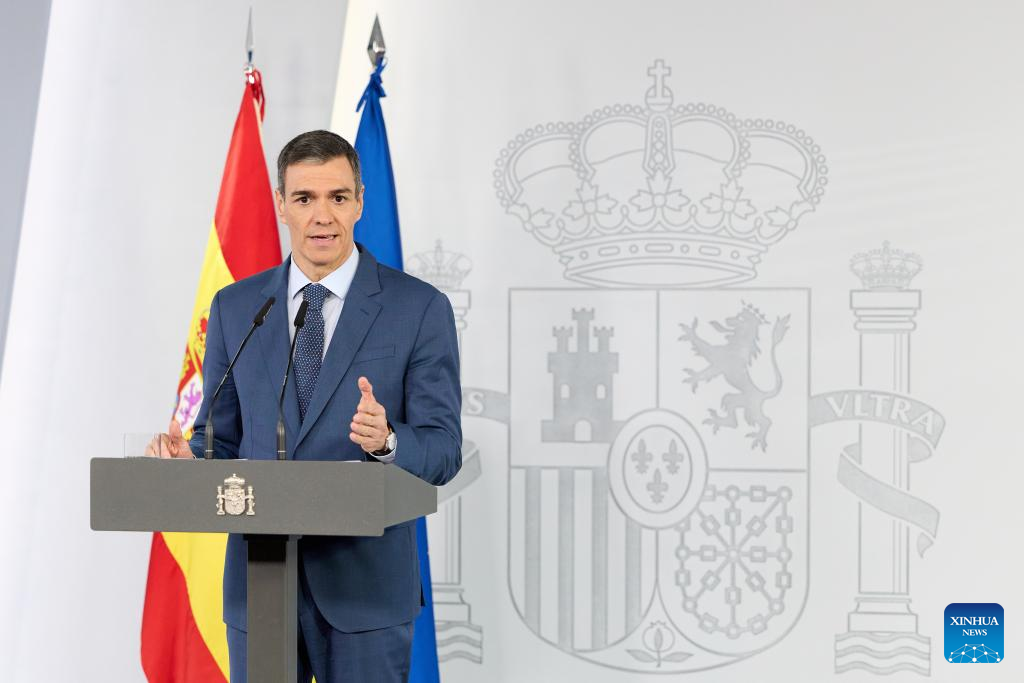
Spanish Prime Minister Pedro Sanchez speaks on a press conference in Madrid, Spain, on March 20, 2026. (Xinhua/Meng Dingbo)
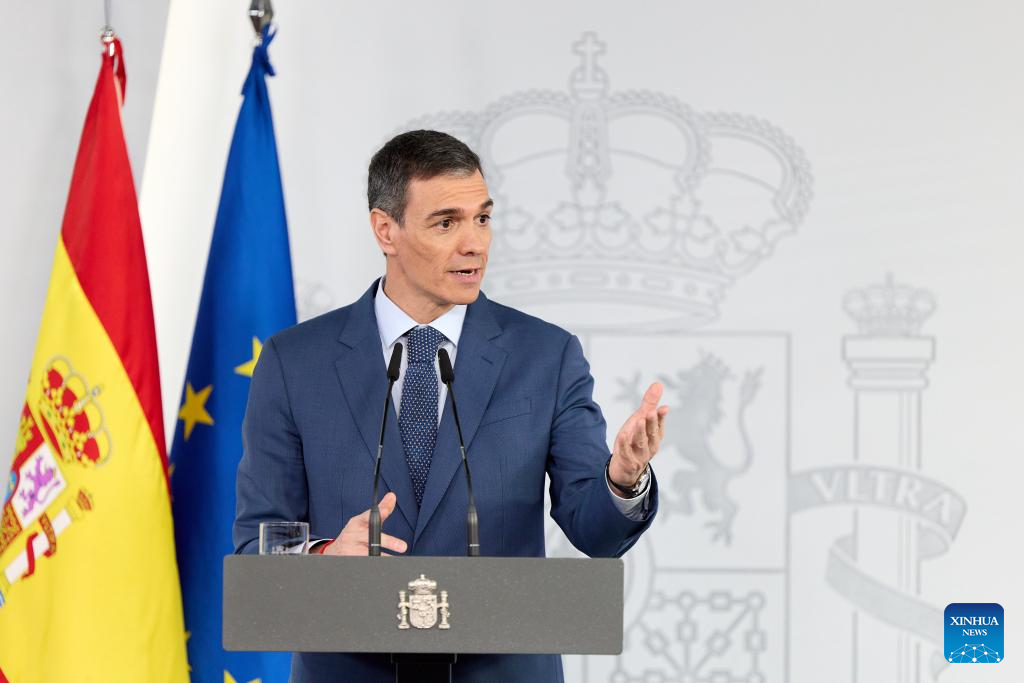
Spanish Prime Minister Pedro Sanchez speaks on a press conference in Madrid, Spain, on March 20, 2026. (Xinhua/Meng Dingbo)
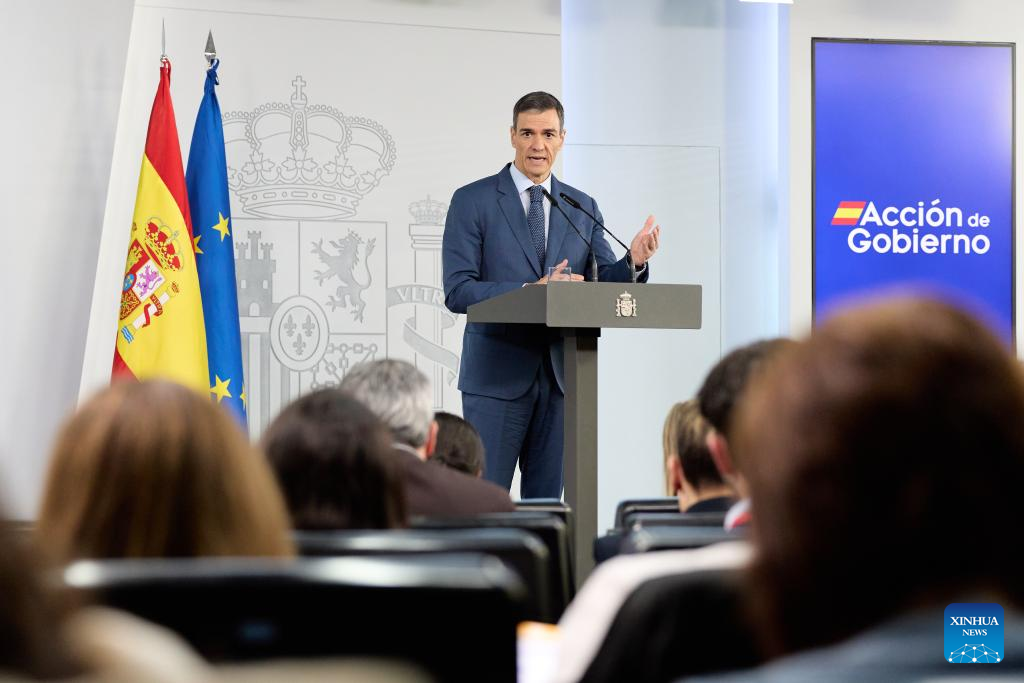
Spanish Prime Minister Pedro Sanchez speaks on a press conference in Madrid, Spain, on March 20, 2026. (Xinhua/Meng Dingbo)
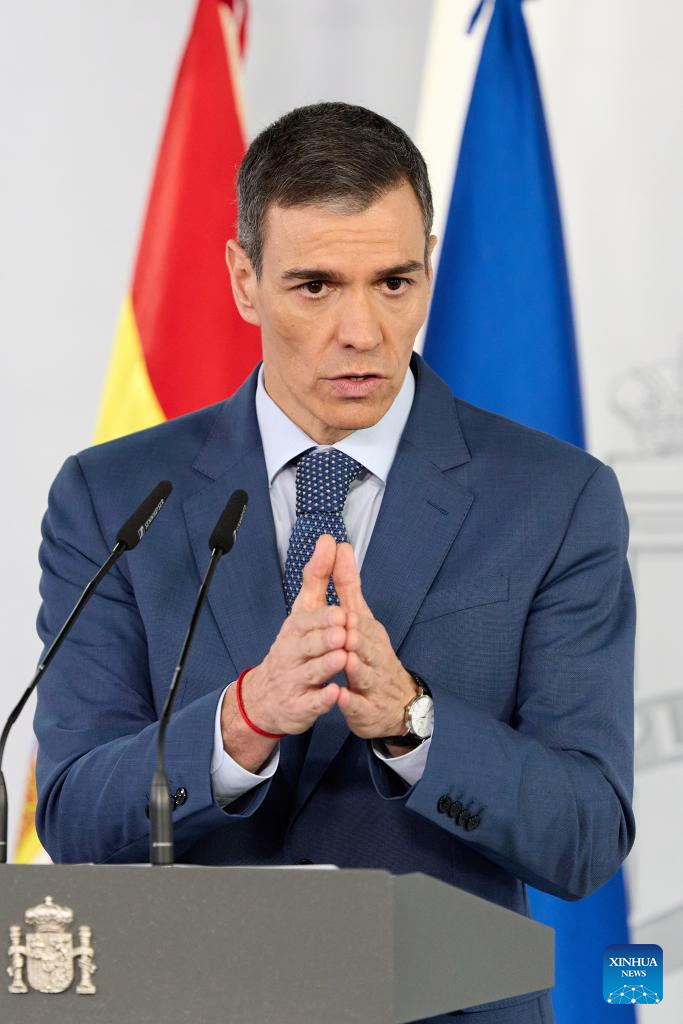
Spanish Prime Minister Pedro Sanchez speaks on a press conference in Madrid, Spain, on March 20, 2026. (Xinhua/Meng Dingbo)
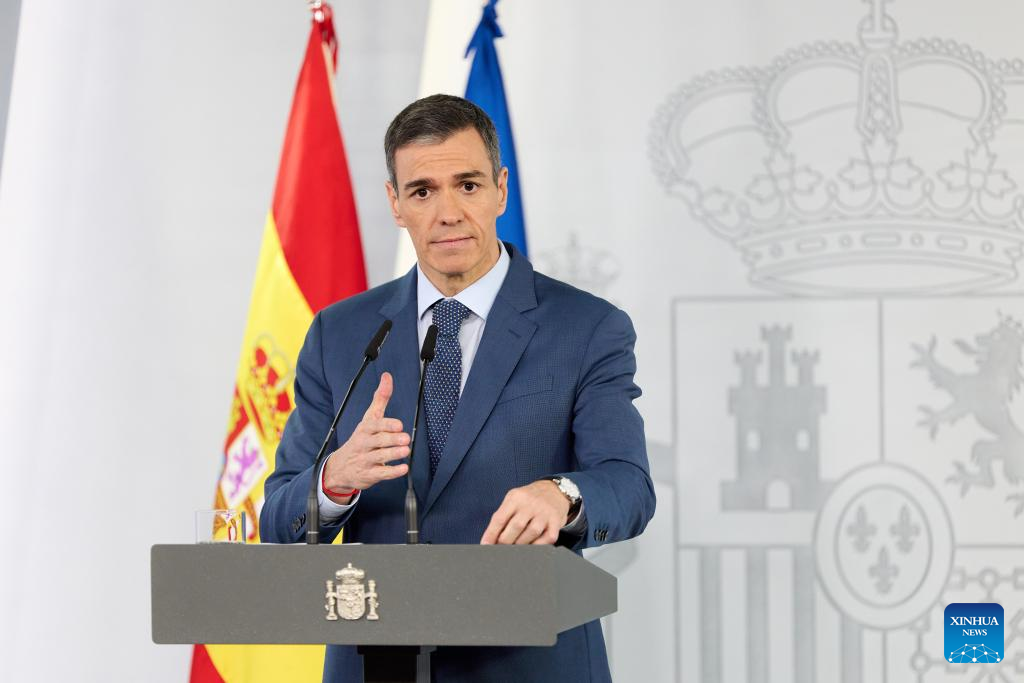
Spanish Prime Minister Pedro Sanchez reacts on a press conference in Madrid, Spain, on March 20, 2026. (Xinhua/Meng Dingbo)
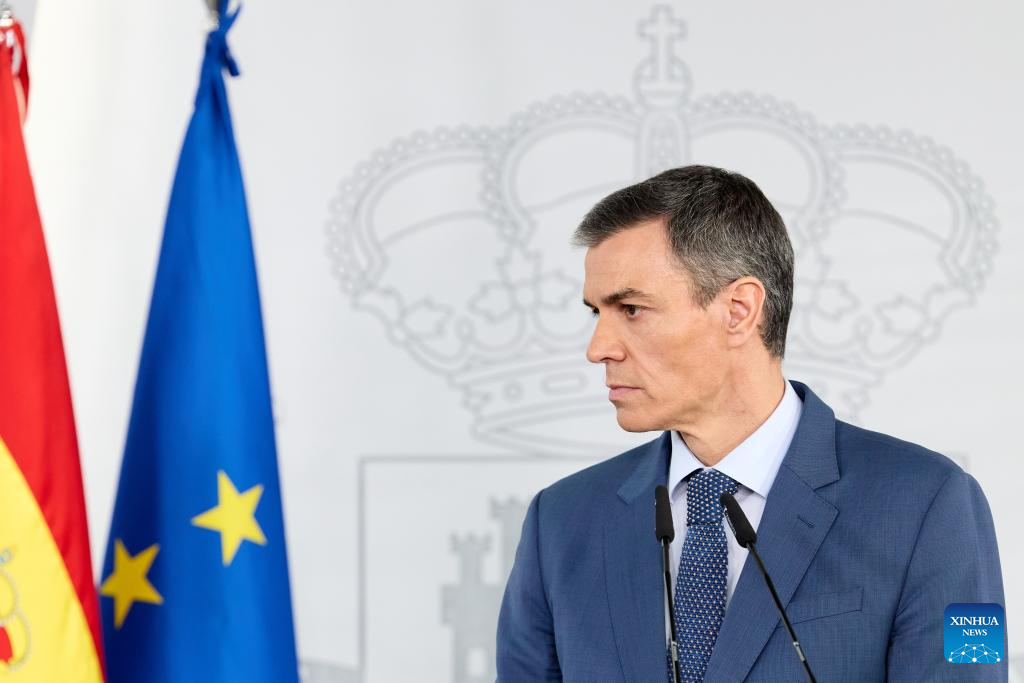
Spanish Prime Minister Pedro Sanchez reacts on a press conference in Madrid, Spain, on March 20, 2026. (Xinhua/Meng Dingbo)