
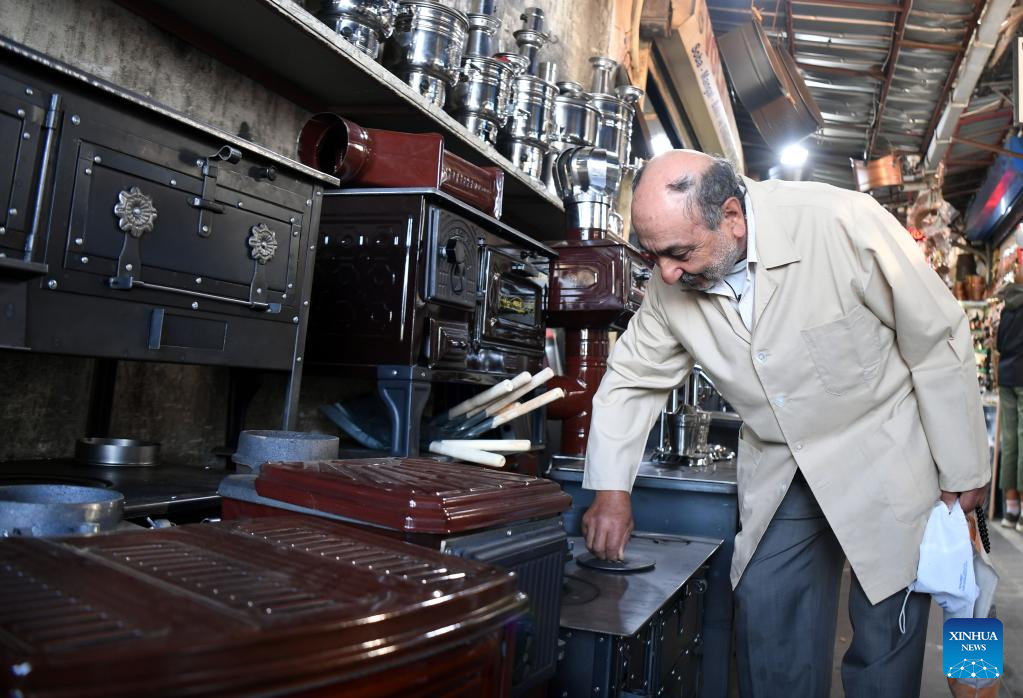
A man looks at a stove at a market in Istanbul, Türkiye, on Oct. 11, 2022. With consecutive hikes in the past six months, natural gas prices have increased by 85 percent in the country, forcing more and more Istanbul residents to consider transforming their heating systems based on natural gas into wood and coal-burning stoves. (Xinhua/Shadati)
by Zeynep Cermen
ISTANBUL, Oct. 13 (Xinhua) -- Emirali Gulmez, a retired Turkish citizen in his late 70s, lives alone in a slum on an always windy and chilly hill of Türkiye's largest city Istanbul.
Gulmez's tiny house is equipped with a natural gas heating system to keep him comfortable in the cold winter days, but he chose to stop using it last year as he could not afford the high bills amid soaring inflation in the country.
"Last year, I used natural gas for only 10 days and paid 480 Turkish liras (25.82 U.S. dollars). So, I gave up using natural gas because I couldn't handle the increasing bills. There is no other option for me," he told Xinhua at a stove bazaar in Eminonu Square on the European side of the city.
With consecutive hikes in the past six months, natural gas prices have increased by 85 percent in the country, forcing more and more Istanbul residents to consider transforming their heating systems based on natural gas into wood and coal-burning stoves. However, such alternatives are also costly amid high inflation.
Gulmez has long been thinking about replacing his old wood-burning stove with a new one, but the prices, which witnessed an almost 100 percent hike since last year, are discouraging.
"New stoves start from 400-500 liras, which are the cheapest -- sheet metal wood stoves. The normal ones (cast-iron stoves) are now priced at 2,500 to 3,000 liras. The prices of better ones can go up to 4,000 liras. So we are talking about a lot of money," Gulmez murmured, checking the details of a cast-iron wood stove.
Millions of workers and retirees in Türkiye are trying to make a living on a minimum wage of 5,500 liras and pensions, mostly ranging from 3,500 to 8,000 liras, in the face of climbing inflation rate that soared to 83.45 percent in September.
Despite soaring prices, store owners at the bazaar said the demand is robust, and their sales saw at least a 60 percent increase compared to 2021.
"I've been doing this job here for about 15 years. This year is different than the others. Because the demand is high in the face of this (global) problem with natural gas, and prices are rising," said Hakan Cetin, co-owner of a stove store.
According to Murat Celik, the owner of the stove producer Celik Soba, his factory has been accelerating its production round-the-clock to meet the increasing demands.
"Manufacturers are trying to deal with these excessive demands," Celik told Xinhua. "In the past, we used to be able to supply our goods in one week, but at present, the delivery time can reach one month or one and a half months."
After spending two hours in the bazaar and making numerous bargains, Gulmez gave up on replacing his old stove. "I am a retired person and not working. The prices are terrible, and pensions are not enough for anything," he said.
Faruk Topcu, a cafe owner in downtown Istanbul, was also among the clients of the bazaar. Last year, he used natural gas to heat only one room of his house to minimize the expenses. Topcu plans to buy a stove this year and not use gas at all.
"Since we cannot pay the natural gas bills, we must burn wood," he said, complaining about the surging wood prices, which have doubled since last year.
In 2021, the natural gas bill of a modest three-room house in the coldest months of winter was as high as 1,500 liras in Istanbul, a city of over 16 million.
Behind the ever-growing prices of almost all items, the devaluation of the Turkish currency against the U.S. dollar plays a significant role. The lira lost over 40 percent of its value since the beginning of this year, and one dollar stood at 18.58 liras as of Thursday morning.
According to Türkiye's Energy Market Regulatory Authority (EMRA), Türkiye imported 58.7 million standard cubic meters of natural gas in 2021, marking an increase of almost 22 percent compared to 2020. Russia ranked first in the exporter list, with the lion's share of 45 percent, followed by Iran and Azerbaijan.
EMRA said the rapidly rising energy prices due to the Russia-Ukraine conflict have now evolved into a "global energy crisis." In the face of such a crisis, the authority emphasized that Türkiye has been doing its best to ensure supply security and protect consumers from sharp price increases before the winter.
Turkish President Recep Tayyip Erdogan recently said that the government and relevant institutions have already prepared all the gas and coal supplies that his country will need this winter. "And our next aim is to find out how we can deliver natural gas to our citizens even cheaper," he noted. ■
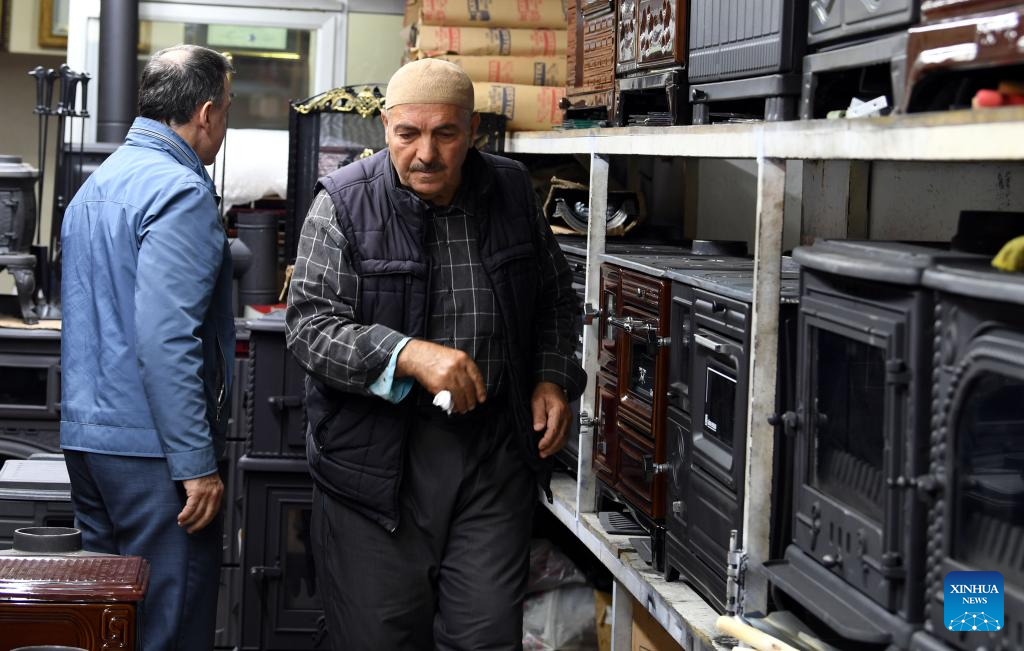
People choose stoves at a market in Istanbul, Türkiye, on Oct. 11, 2022. With consecutive hikes in the past six months, natural gas prices have increased by 85 percent in the country, forcing more and more Istanbul residents to consider transforming their heating systems based on natural gas into wood and coal-burning stoves. (Xinhua/Shadati)
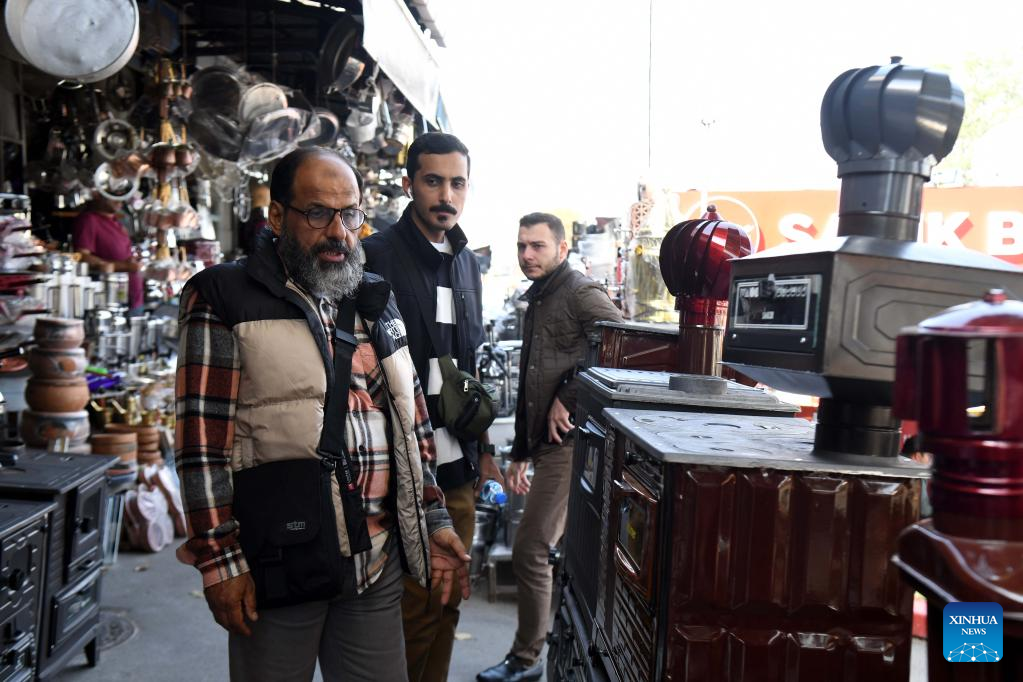
People choose stoves at a market in Istanbul, Türkiye, on Oct. 11, 2022. With consecutive hikes in the past six months, natural gas prices have increased by 85 percent in the country, forcing more and more Istanbul residents to consider transforming their heating systems based on natural gas into wood and coal-burning stoves. (Xinhua/Shadati)

Murat Celik, the owner of the stove producer Celik Soba, is interviewed with Xinhua at a stove bazaar in Istanbul, Türkiye, on Oct. 11, 2022. With consecutive hikes in the past six months, natural gas prices have increased by 85 percent in the country, forcing more and more Istanbul residents to consider transforming their heating systems based on natural gas into wood and coal-burning stoves. (Xinhua/Shadati)
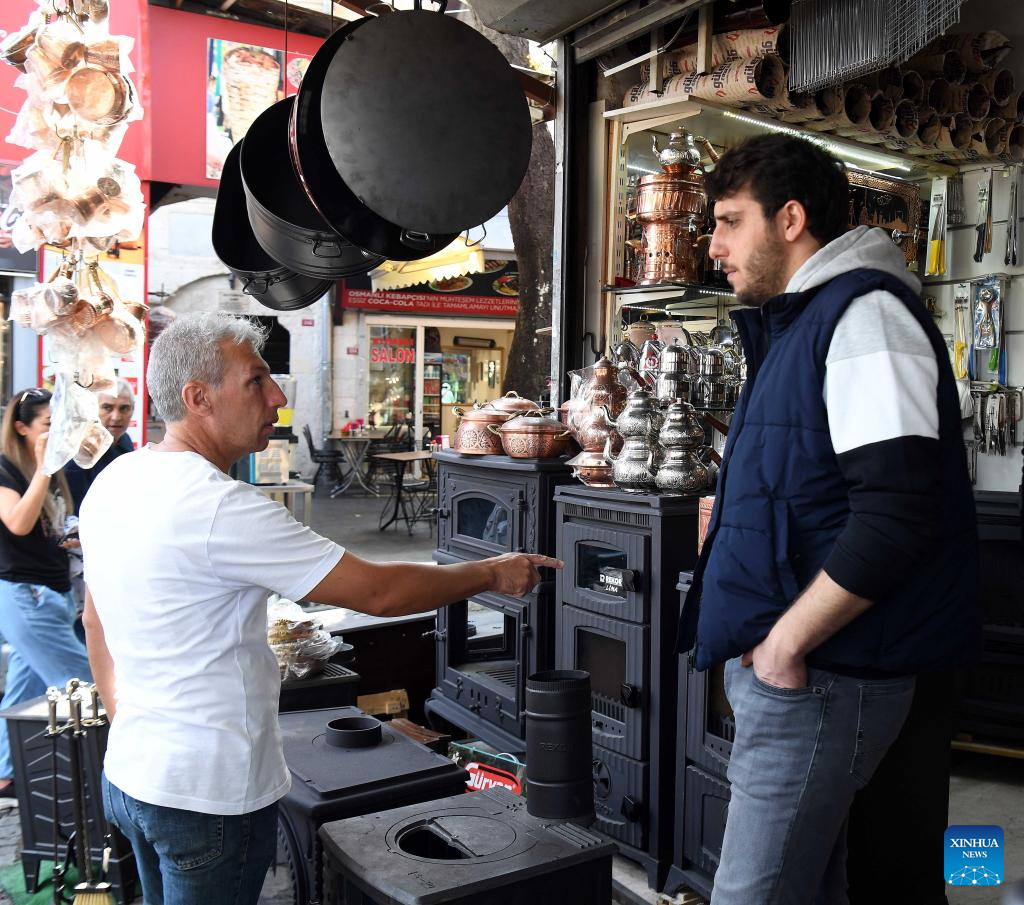
A man asks prices of stoves at a market in Istanbul, Türkiye, on Oct. 11, 2022. With consecutive hikes in the past six months, natural gas prices have increased by 85 percent in the country, forcing more and more Istanbul residents to consider transforming their heating systems based on natural gas into wood and coal-burning stoves. (Xinhua/Shadati)

Hakan Cetin, co-owner of a stove store, is interviewed with Xinhua at a stove bazaar in Istanbul, Türkiye, on Oct. 11, 2022. With consecutive hikes in the past six months, natural gas prices have increased by 85 percent in the country, forcing more and more Istanbul residents to consider transforming their heating systems based on natural gas into wood and coal-burning stoves. (Xinhua/Shadati)
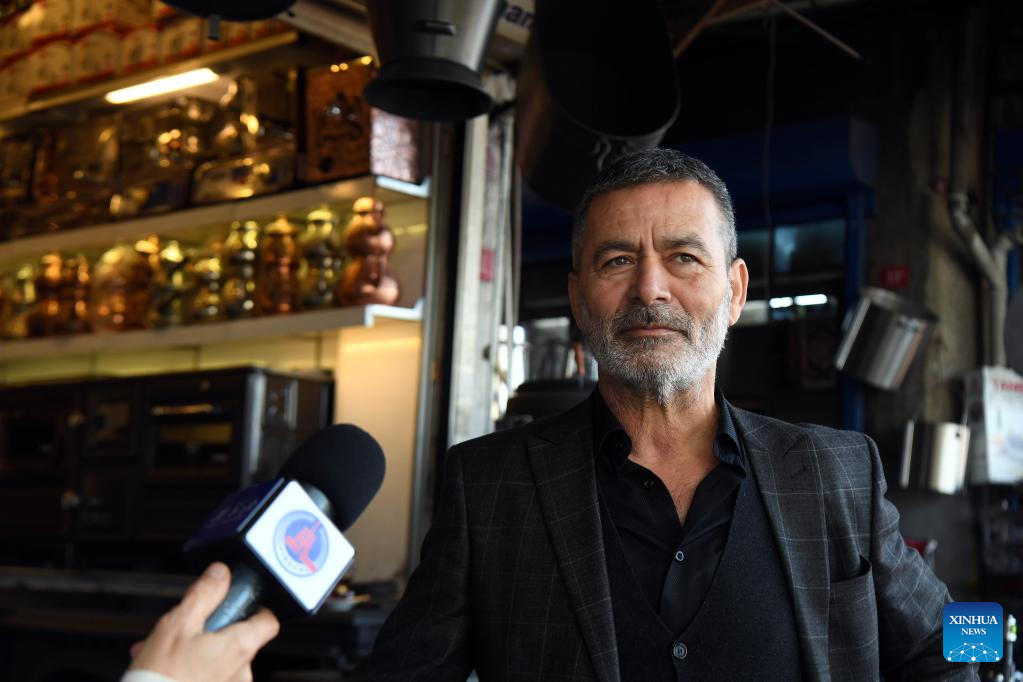
Faruk Topcu, a cafe owner in downtown Istanbul, is interviewed with Xinhua at a stove bazaar in Istanbul, Türkiye, on Oct. 11, 2022. With consecutive hikes in the past six months, natural gas prices have increased by 85 percent in the country, forcing more and more Istanbul residents to consider transforming their heating systems based on natural gas into wood and coal-burning stoves. (Xinhua/Shadati)
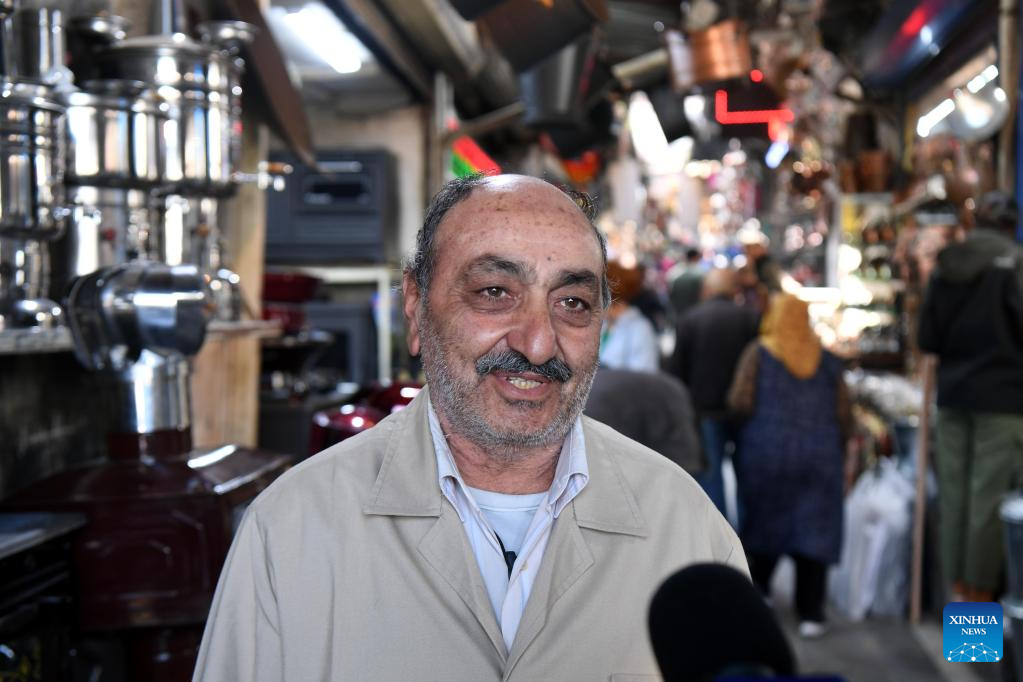
Emirali Gulmez, a retired Turkish citizen in his late 70s, is interviewed with Xinhua at a stove bazaar in Istanbul, Türkiye, on Oct. 11, 2022. With consecutive hikes in the past six months, natural gas prices have increased by 85 percent in the country, forcing more and more Istanbul residents to consider transforming their heating systems based on natural gas into wood and coal-burning stoves. (Xinhua/Shadati)