
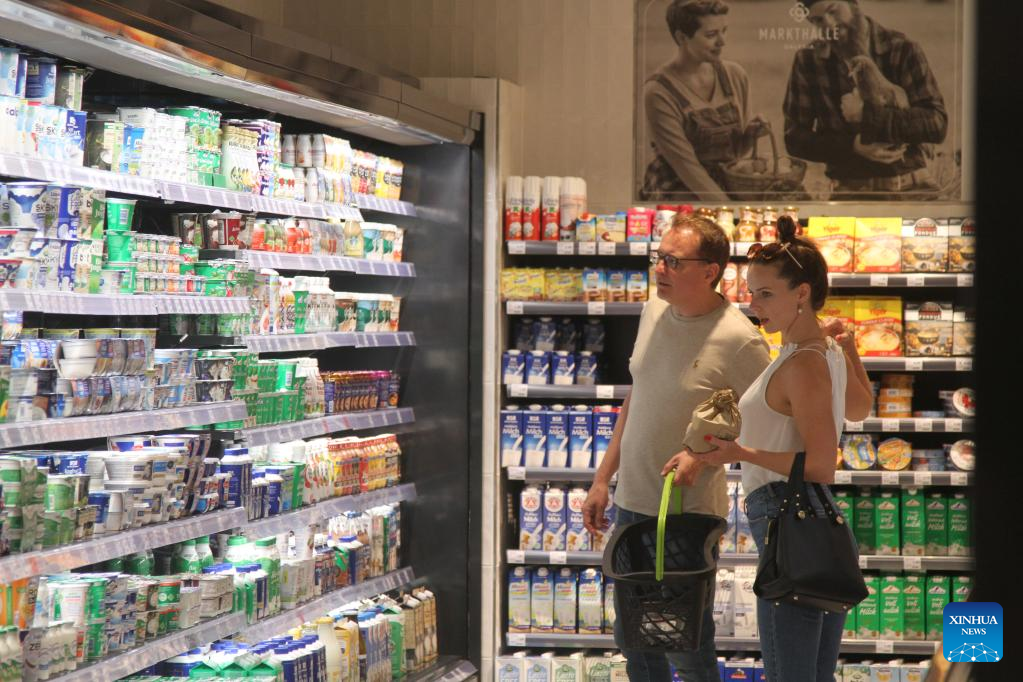
Customers shop at a supermarket in Frankfurt, Germany, on Aug. 1, 2022. Inflation in Germany has been running wild and pushing the cost of living up at a pace so fast that people, especially the most vulnerable, have to scramble to make their ends meet. (Xinhua/Shan Weiyi)
FRANKFURT, July 31 (Xinhua) -- Inflation in Germany has been running wild and pushing the cost of living up at a pace so fast that people, especially the most vulnerable, have to scramble to make their ends meet.
FEELING THE PINCH
Inflation in Germany unexpectedly accelerated in July. The Harmonised Index of Consumer Prices, which is used to measure consumer price inflation in the euro area, went up by 8.5 percent over the same month last year, according to the Federal Statistical Office.
Costs of energy and food both soared, with energy prices going up by 35.7 percent and food prices by 14.8 percent in July year on year. The price hikes have translated into inflated bills for households, and many people, especially the vulnerable group including pensioners and the unemployed, are feeling the pinch.
"There are so many things that I can't do anymore, like going out and going on holidays," a man who identified himself as Oscar told Xinhua on Saturday.
He is now even incapable of making ends meet and is forced to get by with free food handed out by churches and other charities. "It's quite hard for me to admit that I have to depend on these facilities, these services," he said.
For Elisa, inflation is palpably driving up the prices of a wide range of products and she has to pay more to put food on her table and refill her tank. "In winter, there will be higher heating costs, and electricity is getting more expensive," she said, adding that her husband has already asked her to cut down spending.
INFLATION RELIEF HELPS, BUT NOT A LOT
The German government has hammered out quite a few inflation relief packages to prevent it from spiraling out of control.
Among them, a heavily discounted budget nationwide travel pass for nine euros a month has been made available for people from June to August. The Transport Ministry is providing 2.5 billion euros (around 2.55 billion U.S. dollars) as subsidy for the scheme.
The federal government has also temporarily reduced energy tax from June to August, lowering 29.55 cents per liter for petrol and 14.04 cents per liter for diesel.
The relief measures helped in part to bring the inflation down slightly in June to 8.2 percent from 8.7 percent in May.
However, the transitory one-off measures will not have a lasting effect on inflation, which, according to analysts, is extremely difficult to tame.
HAS INFLATION PEAKED?
Leading German economic research institute the Ifo Institute announced on Thursday that the inflation is likely to go down in the second half of 2022 after hitting record highs in previous months.
According to the head of business cycle analysis and forecasts of Ifo, Timo Wollmershauser, prices in Germany may still go up but at a slower pace, which means Germany has left the peak of inflation behind.
Ifo came to the conclusion on the basis of a survey of German companies in manufacturing, retail trade, wholesale, construction and service sectors.
Alexander Krueger, chief economist with German private bank Hauck Aufhauser Lampe Privatbank, doubted that the inflation peak is over in Germany. With the imminent threat of gas supply bottlenecks, the upward risks of inflation remain high, he said. "There is still not sign of a trend reversal."
Faced with a high inflation, the European Central Bank has lifted key interest rates by 50 basis points in July. It also reaffirmed that inflation in the euro area is likely to remain high and the central bank keeps the door open to further interest rate hikes in the future. ■
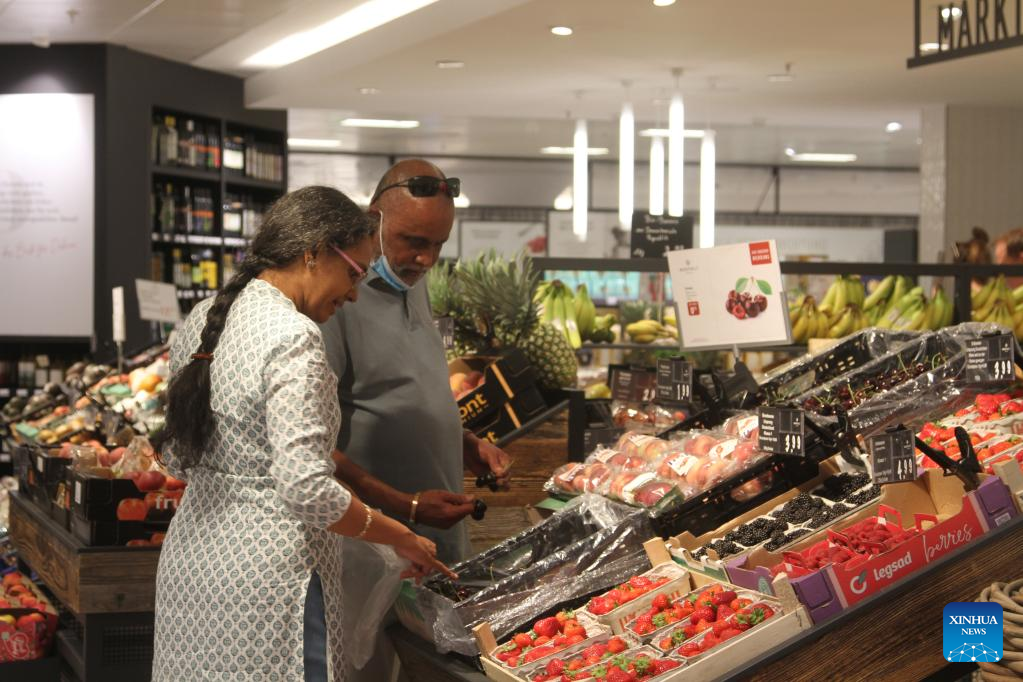
Customers shop at a supermarket in Frankfurt, Germany, on Aug. 1, 2022. Inflation in Germany has been running wild and pushing the cost of living up at a pace so fast that people, especially the most vulnerable, have to scramble to make their ends meet. (Xinhua/Shan Weiyi)