
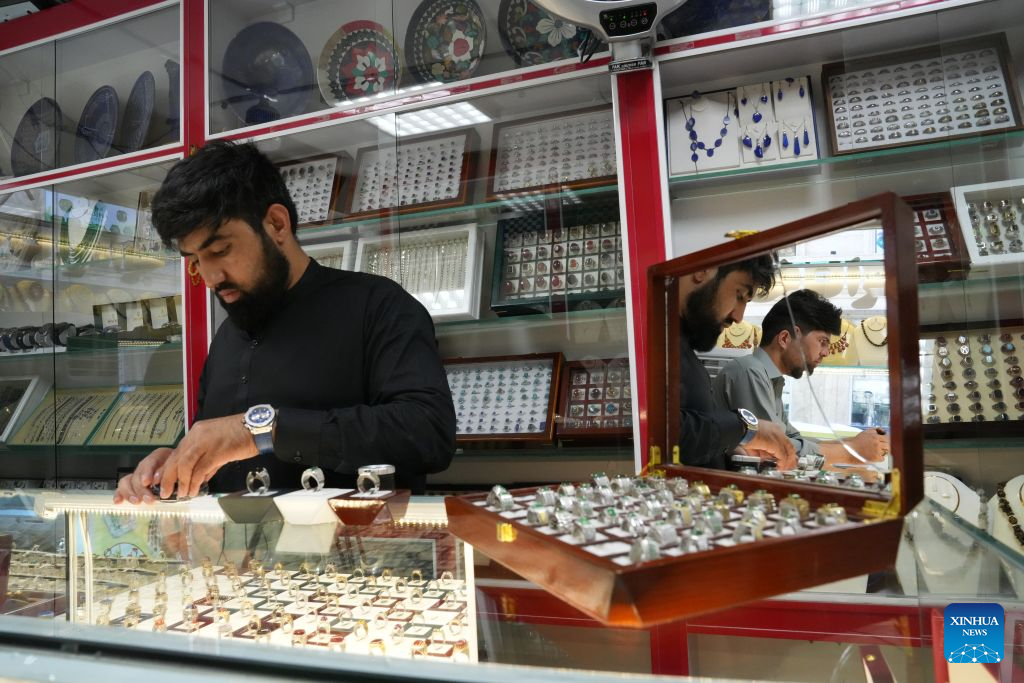
This photo taken on Aug. 23, 2026 shows gemstones at a shop in Kabul, Afghanistan. (Photo by Saifurahman Safi/Xinhua)
KABUL, Aug. 24 (Xinhua) -- Behind the glass counters of Kabul's antique sellers' street, blue lapis lazuli, green emeralds, red rubies and multicolored tourmaline reflect the light of a market that has long connected Afghanistan's mineral-rich mountain regions with buyers across the globe.
For traders and jewelry designers in the capital, the stones represent more than valuable commodities. They are part of Afghanistan's cultural heritage and, potentially, a source of employment, export income and international recognition.
"Most customers, especially those who come from outside Afghanistan, are interested in emerald, ruby and tourmaline," said Khalid Haidari, who has worked in the city's antique market for 18 years.
"For many buyers, however, the appeal of Afghan jewelry extends beyond the stones themselves. Traditional designs remain especially popular."
Local merchants said that Afghan gemstone jewelry has gained rising popularity in overseas markets, with China serving as a key export destination. Online platforms have provided local sellers and designers with new ways to present their products to customers abroad and arrange exports without relying entirely on physical stores or international exhibitions.
Yet Afghanistan's natural gemstone wealth has not automatically translated into a mature domestic industry.
"The stones from Afghanistan are of very high quality," Haidari said. "The main problem is that the equipment and standards needed for extraction and shaping are not sufficiently available."
This presents a major bottleneck for the industry, as a gemstone's commercial value is largely created after extraction. Cutting, polishing, design, certification, packaging and marketing can transform a raw mineral into a high-value finished product.
Nader Khan, who has worked in the gemstone trade for 30 years and has operated on antique sellers' street for 15 years, said Afghan stones remain highly competitive in foreign markets.
"Afghan lapis lazuli, emeralds and rubies are of a quality that is difficult to find elsewhere," Khan said.
He said customers also attach great importance to handmade work and domestic designs. In his view, processing more stones inside Afghanistan would help preserve their original character while creating employment opportunities for local workers.
"We process the stones here with the machinery available to us and turn them into different designs," Khan said.
Khan also cautioned that sending stones abroad for additional modern processing could raise costs and risk affecting the stones' original quality. Developing local processing capacity, he said, would allow Afghan producers to retain more value while preserving the distinct cultural identity of their products.
The future of Afghanistan's gemstone trade is closely linked to access to international customers.
"International exhibitions had previously provided important opportunities for sellers to display their products and expand sales. The decline in such events has reduced direct contact," Khan said.
"Chinese customers remain among the most active buyers in Kabul's gemstone market, particularly for lapis lazuli and nephrite," Khan added.
At the same time, online sales are creating a new route to consumers. Afghan sellers and designers are using digital platforms to display jewelry, communicate with buyers and send products overseas.
The shift has opened opportunities for small businesses, but it also requires reliable product photography, accurate information about gemstones, secure delivery and consistent quality.
"I am very satisfied with my work, and most of my customers are particularly interested in lapis lazuli, emeralds and rubies," Ahmad, an online seller, said.
The charm of Afghan gemstones goes beyond their market value. For buyers, these precious stones carry unique emotional and cultural significance.
A piece of jewelry may serve as a souvenir, a gift, a symbol of cultural identity, or a reminder of a particular journey. Such associations add meaning to a product whose value begins in the earth but is completed through human workmanship.
"Customers use gemstones with a good design at home to improve their mood and to overcome some health problems because seeing the stone gives them a feeling of calmness and happiness," Ahmad told Xinhua.
Sula, a customer visiting the market to buy a gift for a friend, chose tourmaline bracelets, describing them as attractive, memorable and valuable.
The gemstone trade also unlocks profound cultural development potential. Distinctive traditional Afghan designs stand out in the competitive global jewelry market. Combined with high-quality local gemstones, these handcrafted pieces are both commercially competitive and closely connected to the country's profound history. ■
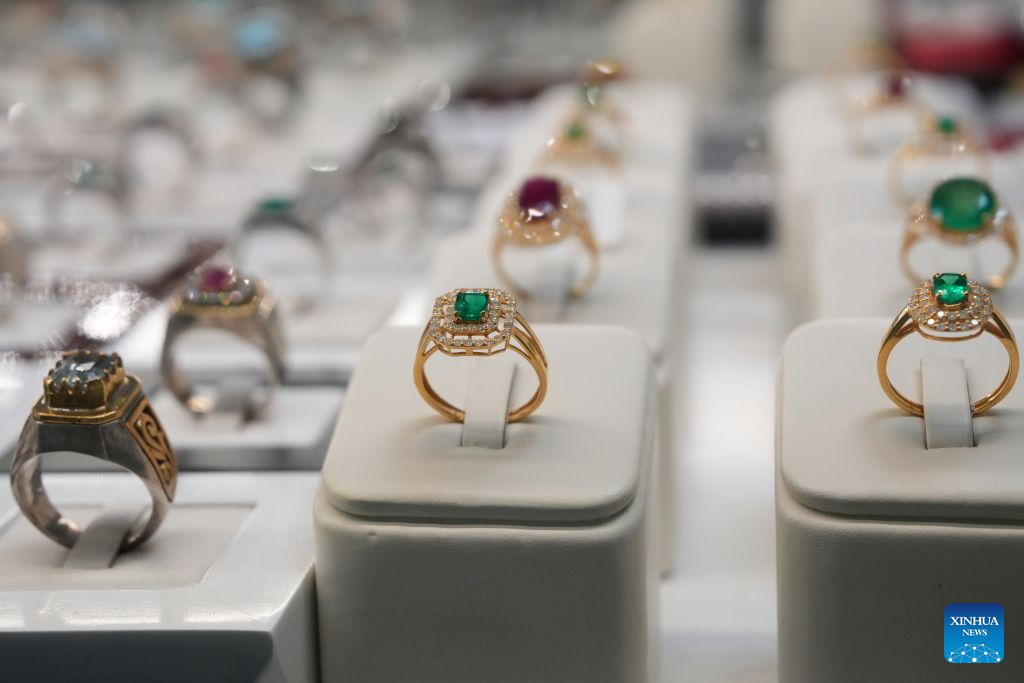
Rings inlaid with gemstones are pictured at a store in Kabul, Afghanistan, on Aug. 23, 2026. (Photo by Saifurahman Safi/Xinhua)
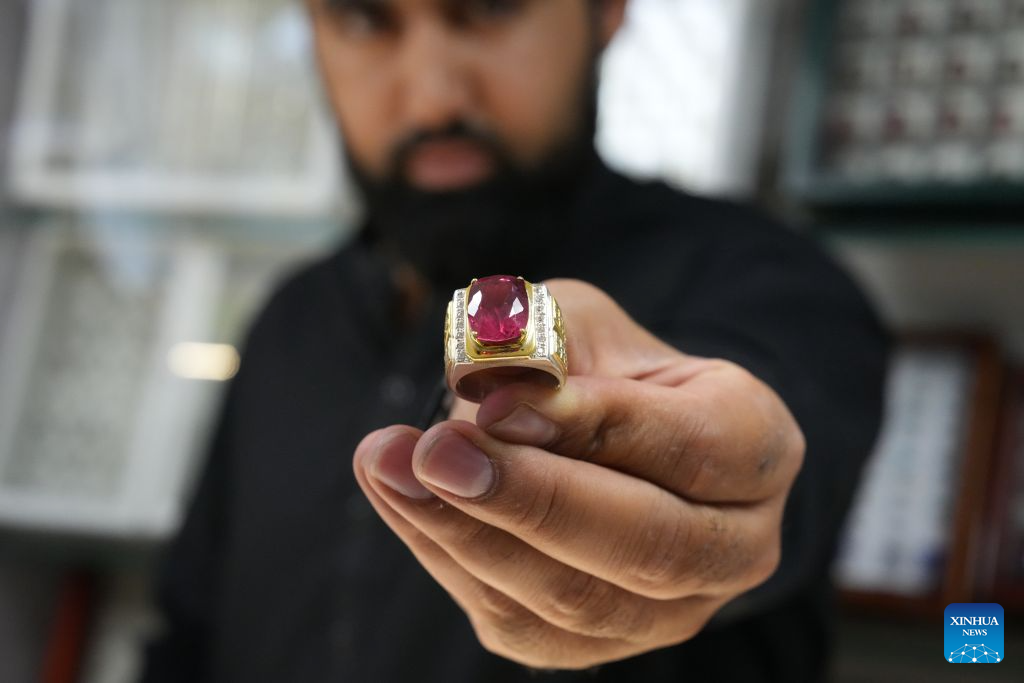
A vendor displays a ring inlaid with a gemstone at his shop in Kabul, Afghanistan, on Aug. 23, 2026. (Photo by Saifurahman Safi/Xinhua)
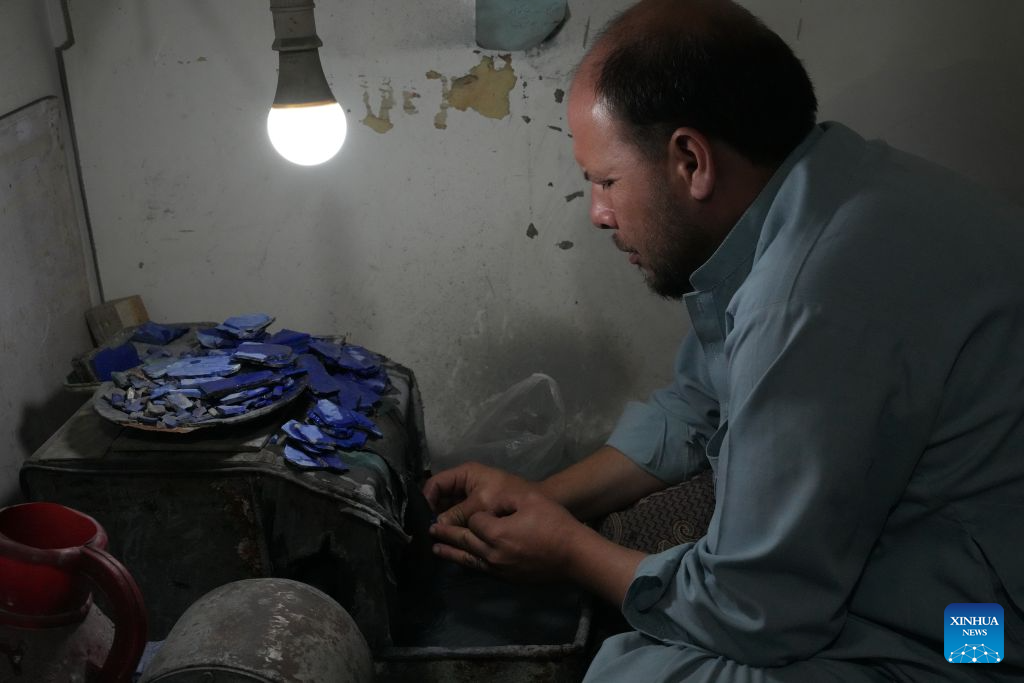
A worker cuts a gemstone at a small shop in Kabul, Afghanistan, on Aug. 23, 2026. (Photo by Saifurahman Safi/Xinhua)