
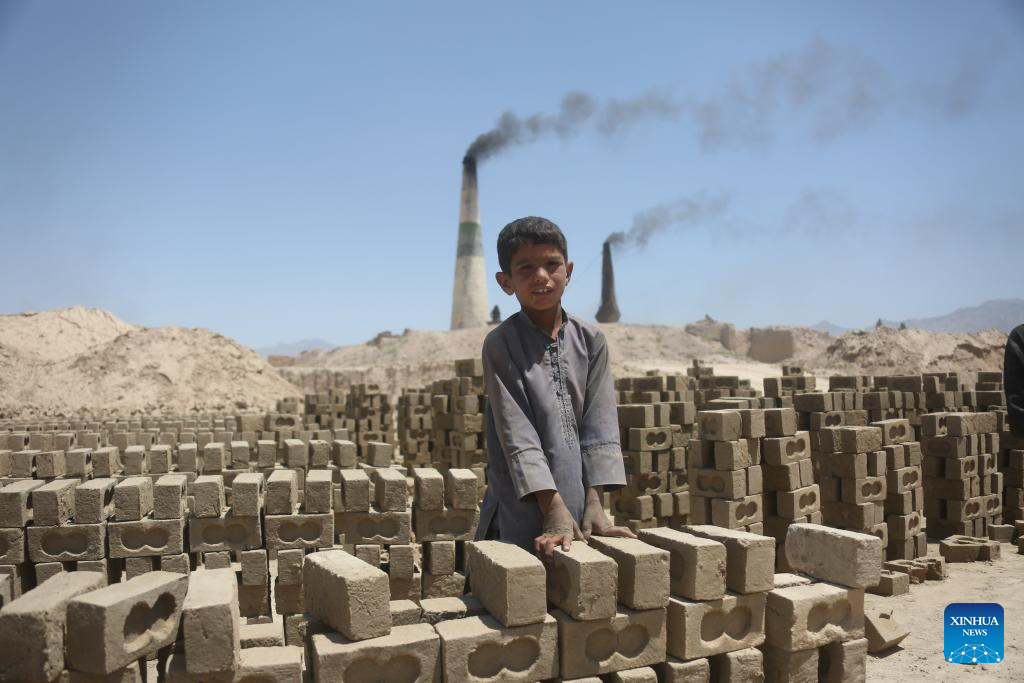
An Afghan child works at a brick factory in Kabul, Afghanistan, June 9, 2026. As the international community observes the World Day Against Child Labor on June 12, millions of Afghan children are leaving school to work in brick kilns, markets, construction sites, and workshops, driven by grinding poverty that has upended families across the poverty-stricken country. (Photo by Saifurahman Safi/Xinhua)
KABUL, June 11 (Xinhua) -- As the international community observes the World Day Against Child Labor on June 12, millions of Afghan children are leaving school to work in brick kilns, markets, construction sites, and workshops, driven by grinding poverty that has upended families across the poverty-stricken country.
Ten-year-old Sulaiman's face is covered in dust. His hands are calloused, and his small frame lags physically behind his peers. Before dawn every morning, he heads to a brick factory, a place where books are strange and a pen is far beyond his reach.
"I arrange bricks every day and work alongside my sick father," Sulaiman said.
Like millions of other Afghan children, Sulaiman dreams of wearing clean clothes and moving to school each morning. Instead, he walks to the factory. "I want to go to school and study, but I am forced to work," he told Xinhua.
Afghanistan's decades of war and crippling international and U.S. sanctions have left the economy in ruins, with extreme poverty and unemployment being pervasive throughout the country. The crisis has driven millions of Afghans, including children, to flee their homes, abandon education, and take up any available work, from working in brick kilns to street vending, in a desperate attempt to keep their families alive.
According to global charity Save the Children, citing data from the Integrated Food Security Phase Classification (IPC) released in March, nearly 9 million children, or one in three, are facing severe hunger in Afghanistan, and 3.7 million children under five are acutely malnourished. Two-thirds of those surveyed by the agency reported visible signs of poor growth in their children, including thinness and stunting.
Zahidullah, a father of three, suffers from poor health and bears the responsibility of providing for a family of seven.
Every morning, he has to bring his 11-year-old daughter and two sons, aged 14 and nine, to work instead of sending them to school. Still, he clings to a fragile hope that one day they will be able to choose education over labor.
"My dream is for my children to become doctors or engineers and serve their country," he said.
There are no inclusive official statistics on child labor in Afghanistan, but children are visibly working across the impoverished country, shining shoes, washing cars, selling goods, toiling in metal workshops, garment factories, construction work and even hazardous mining.
The Ministry of Labor and Social Affairs has established training centers for orphaned and vulnerable children engaged in grueling work across Afghanistan's 34 provinces, including the capital Kabul, according to ministry spokesman Samiullah Ibrahimi.
"Over the past year, the ministry has addressed around 13,500 cases involving orphaned and unaccompanied children, providing the necessary support and intervention to safeguard their welfare and well-being," Ibrahimi told Xinhua.
"Besides education, the training centers pay attention to all the needs of children, including health, food, clothing, and housing," he added.
But for many, such support remains out of reach.
Fifteen-year-old Sediqullah spends his days selling plastic bags on a bustling corner of Kabul's crowded marketplaces to provide for his mother and three sisters. He said his father died of cancer six years ago.
"I am the sole breadwinner of my family," he said. "I earn between 150 and 200 Afghanis (nearly 1.60 to 2.40 U.S. dollars) per day. Poverty and economic hardship have compelled me to work."
Despite his circumstances, Sediqullah harbors a deep aspiration to attend school and pursue an education. But the family's dire financial situation has deprived him of that opportunity.
"With all my heart, I wish to study and receive an education," he said wistfully. "But if I go to school, my family will be left without food or support." ■
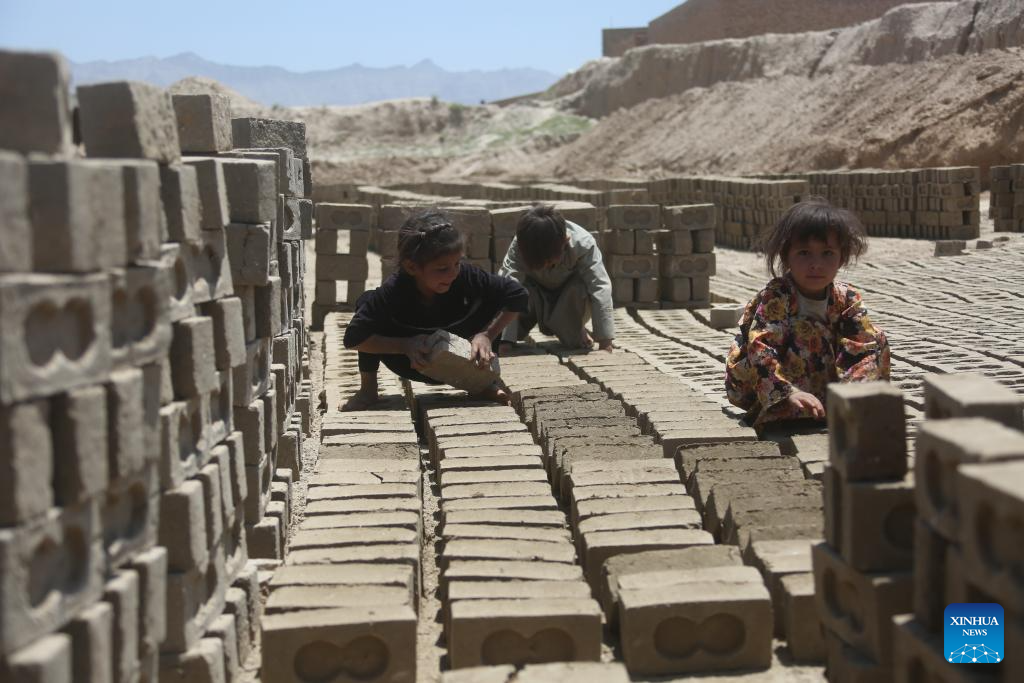
Afghan children work at a brick factory in Kabul, Afghanistan, June 9, 2026. As the international community observes the World Day Against Child Labor on June 12, millions of Afghan children are leaving school to work in brick kilns, markets, construction sites, and workshops, driven by grinding poverty that has upended families across the poverty-stricken country. (Photo by Saifurahman Safi/Xinhua)
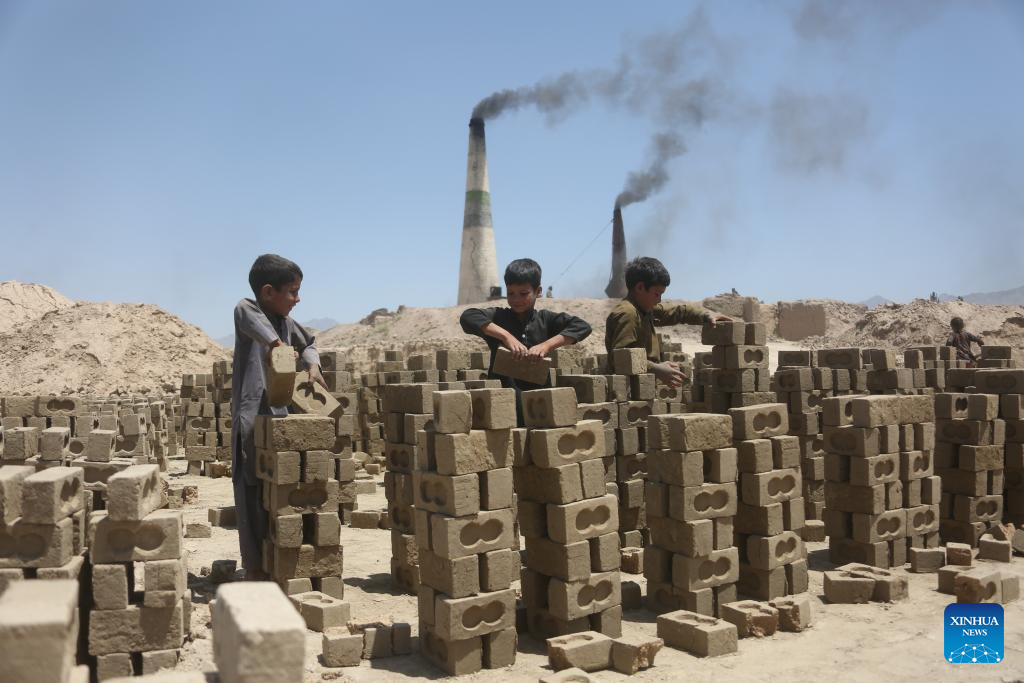
Afghan children work at a brick factory in Kabul, Afghanistan, June 9, 2026. As the international community observes the World Day Against Child Labor on June 12, millions of Afghan children are leaving school to work in brick kilns, markets, construction sites, and workshops, driven by grinding poverty that has upended families across the poverty-stricken country. (Photo by Saifurahman Safi/Xinhua)
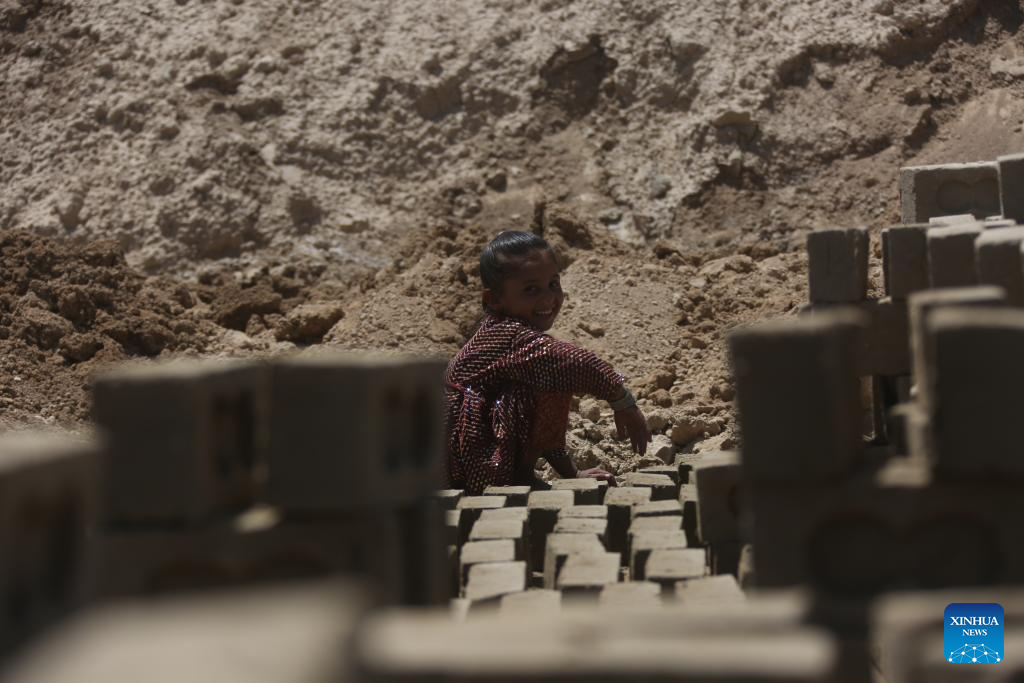
An Afghan child works at a brick factory in Kabul, Afghanistan, June 9, 2026. As the international community observes the World Day Against Child Labor on June 12, millions of Afghan children are leaving school to work in brick kilns, markets, construction sites, and workshops, driven by grinding poverty that has upended families across the poverty-stricken country. (Photo by Saifurahman Safi/Xinhua)
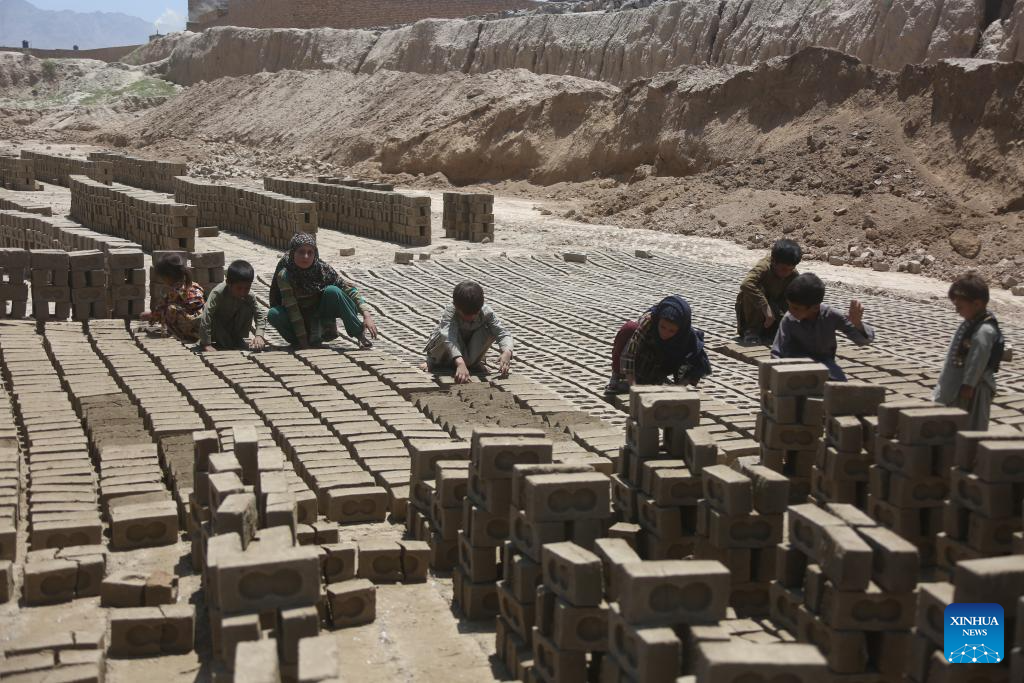
Afghan children work at a brick factory in Kabul, Afghanistan, June 9, 2026. As the international community observes the World Day Against Child Labor on June 12, millions of Afghan children are leaving school to work in brick kilns, markets, construction sites, and workshops, driven by grinding poverty that has upended families across the poverty-stricken country. (Photo by Saifurahman Safi/Xinhua)
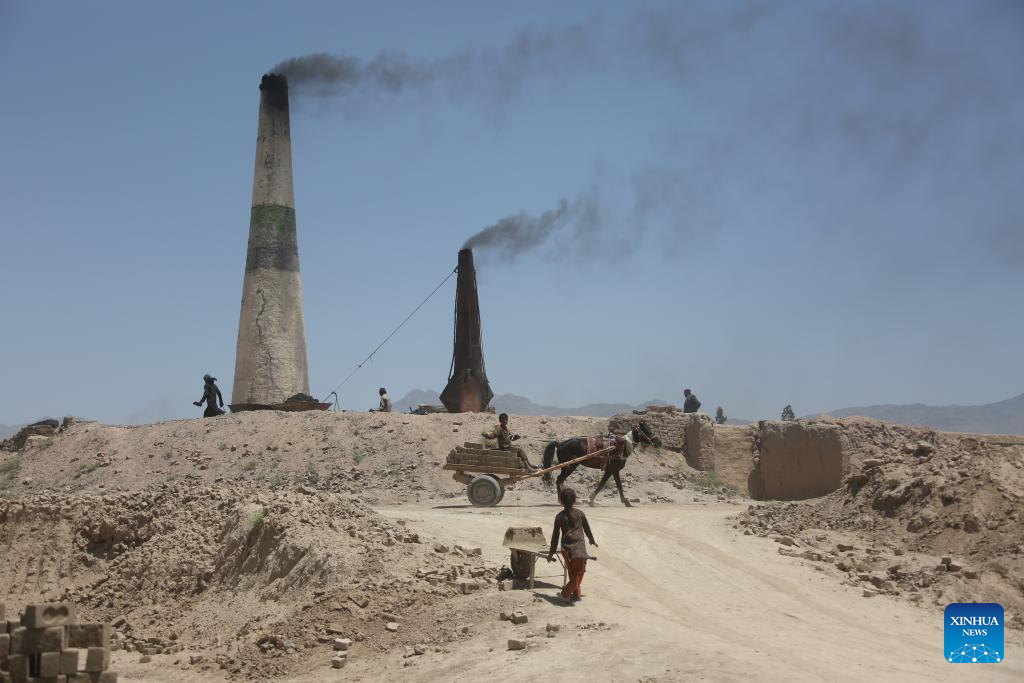
Afghan children work at a brick factory in Kabul, Afghanistan, June 9, 2026. As the international community observes the World Day Against Child Labor on June 12, millions of Afghan children are leaving school to work in brick kilns, markets, construction sites, and workshops, driven by grinding poverty that has upended families across the poverty-stricken country. (Photo by Saifurahman Safi/Xinhua)