
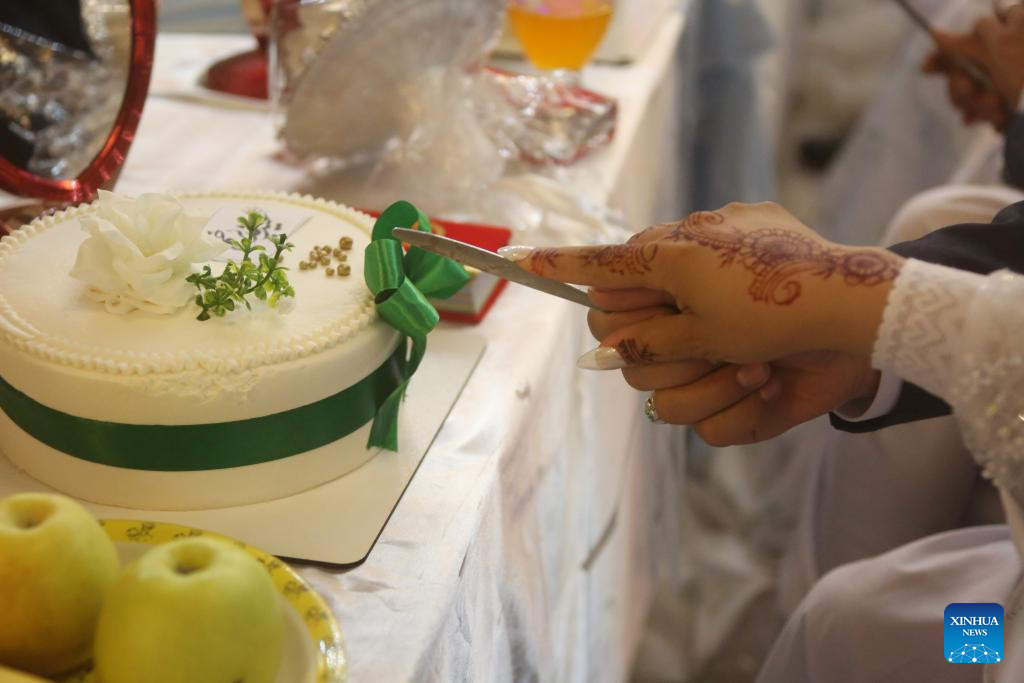
This photo taken on June 1, 2026 shows a mass wedding party in Kabul, Afghanistan. (Photo by Saifurahman Safi/Xinhua)
KABUL, June 2 (Xinhua) -- Amid Afghanistan's prolonged economic hardship, high unemployment and costly wedding traditions, hundreds of young couples are turning to mass wedding ceremonies as an affordable way to begin married life.
On the western outskirts of Kabul, around 400 couples on Monday exchanged wedding vows in a mass wedding ceremony made possible by a local charity and generous donors. For many participants, whose engagements had stretched on for years due to financial difficulties, the event marked the end of a long wait and the beginning of a new chapter.
Among them were Hussain and Ameena, a young couple whose marriage had been delayed for more than three years because they could not afford a traditional wedding.
Hussain, a 28-year-old IT professional, sat beside his bride with a broad smile as they joined hundreds of other couples in celebrating the occasion.
"Today, I am truly happy to be part of a simple, meaningful and affordable wedding ceremony," Hussain told Xinhua.
Now married, he is looking ahead with optimism. "We hope to expand our graphic design business in the coming years," he said.
Wedding celebrations in Afghanistan are often expensive, placing a heavy financial burden on families. Traditional ceremonies commonly involve gatherings of 1,000 to 2,000 guests, along with substantial bride-price payments from the groom's family to the bride's family.
These payments, known locally as "Toyana," "Qaleen," "Sheer Baha" or "Walwar," remain a deeply rooted custom across much of the country.
Depending on a family's social standing and location, such payments can range from 200,000 to more than 1 million afghanis (about 3,200 to 16,000 U.S. dollars). The high costs often force young people to postpone marriage for years, while some seek employment abroad through risky, irregular migration routes in hopes of earning enough money to start a family.
Baqer Saeed, organizer of the mass wedding, said cultural attitudes toward marriage expenses need to change.
"A successful marriage should be built on mutual understanding and realistic expectations, not excessive spending," Saeed told Xinhua.
He said mass weddings offer a practical solution because they relieve families of overwhelming financial pressure while allowing couples to begin married life with confidence and peace of mind.
Organizers of mass weddings often provide newlyweds with basic household goods and kitchen utensils, helping them establish their new homes with necessities.
As poverty and unemployment continue to affect millions of Afghans, many young people remain unable to marry or spend years waiting to do so. Supporters argue that promoting simpler and more affordable weddings could help alleviate social pressures, enhance family stability, and provide young people with a more realistic path toward marriage.
The Afghan government has also urged citizens to abandon extravagant wedding customs and adopt more modest and affordable practices.
Saeed also encouraged more families to embrace simpler wedding ceremonies, particularly given Afghanistan's challenging economic conditions.
"If we want to build strong families and a stable society, we need to move away from extravagant wedding celebrations and unnecessary expenses," he said.
Mohammad Aman Etemadi, a construction worker who supports a family of five, shared a similar view.
Dressed in new clothes for the occasion, Etemadi described the event as both encouraging and timely.
"Given the current economic situation in Afghanistan, initiatives like this are extremely valuable for young people," he said. "Many are facing serious financial difficulties, and ceremonies like these are far more affordable."
According to Etemadi, a traditional wedding can cost between 700,000 and 800,000 Afghanis, or roughly 11,000 to 13,000 U.S. dollars.
"I would like to see similar programs expanded to help more young people and families across Afghanistan," he added. ■
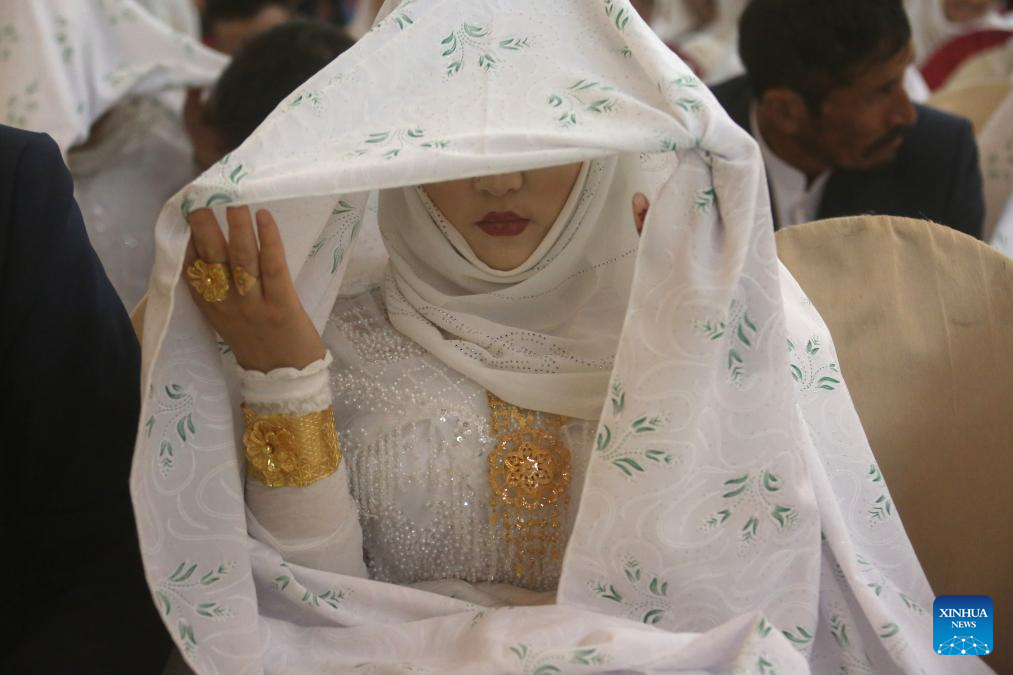
A bride attends a mass wedding ceremony in Kabul, Afghanistan, June 1, 2026.(Photo by Saifurahman Safi/Xinhua)